Blog

Day One: Community Health

The following is part of a series of posts about the Developing Health Course 2012 run by CMF.

Arriving at the beautiful Oak Hill College for the first day of this course, I was taken aback by the peaceful grounds. 5 miles inside the M25, it was a rather a surprise to drive into a green, leafy park, with a large period building with a refreshingly cool, modern interior. Seriously, I think I want to live here.

Global Overview

After a vital cup of tea, we kicked off with the first talk, from Ted Lankester. He is an engaging, amusing speaker, with an obvious passion for helping those in the world who don’t have access to adequate healthcare. He runs InterHealth, which heads up the Community Health Global Networks.

There were lots of shocking statistics, talking of a billion people in extreme poverty and extremes in inequality – in Nairobi some areas have an under 5 mortality rate of 15 per 1000, others have a rate of 254 per 1000. 29,000 children dying each day, mostly from diarrhoea, malaria, neonatal infection, pneumonia, preterm delivery: preventable disease. A general picture of a world that not improving, probably getting a little worse.

He pointed out that in the last 30 years, there’s been a realisation that the hub of the health system is families and communities, not doctors and hospitals. The future is primary care, recognizing common problems and working upstream to prevent them.

If people keep falling down a hill, its important to have an ambulance at the bottom. But its far more important to go to the top and put up a fence…

Filled with anecdotes and humour, I ended this talk wishing I could leave right now, get on a plane and go somewhere, anywhere to help…

Establishing an effective primary healthcare service

MedAir LogoHelen Shawyer came next, doing rather well at giving me a destination for that dream, with a discussion about her 18 months helping establish a local health setup in South Sudan: the world’s newest country.

An inspiring story of her experiences working with an influx of refugees, government turmoil and life saving individuals rising up from the community.

There was a lot of information, but I’ll leave you with her lessons learnt:

  1. Community Involvement and ownership is vital. Weekly meetings with community commitees enabling you to…
  2. Have a shared vision. Get local stakeholders involved, make sure the team is on board, that everyone feels welcome.
  3. Prioritise. You can’t do everything well.
  4. The value of monitoring. Signs of improvements, guidance for change and demonstrates accountability.
  5. Partnerships can be a great encouragement. Google groups, charities, NGOs, nearby.
  6. Our God is faithful. Without resources, wisdom and energy, God is your fortress. Met as a team to devote each morning.

ABC of Community Health.

ABC BlocksTed came back, to talk in more details about the advantages, challenges and downfalls of building community health teams. He split his talk into 6 points, meaning his talk should have been called Six Steps to Community Health. Oh well…

Step 1: Consider community assets and needs – There’s been a big change of emphasis over the last decade: assessing assets – needs are important, but find the strengths also. Has the community requested a programme? Does the community have major health needs? Are there any other programmes working in the area? Is the community ready to work with you? If there is no community: eg refugee camps, you need to work slowly, and wait for relationships and leaders to emerge.

Step 2: Gather your team – Its vital you encourage an affirming, motivated and unified team. Lead by personal example and accessible leadership. Ensure excellent management, treat your team as your most precious resource – remember their birthdays!

Step 3: Know your community – Build friendship with community leaders, live with them: “drink tea and play football” with them. Listen to their fears, their needs and their hopes. Recognize their gifts and their abilities. Do not inappropriately raise expectations.

Step 4: Work with the community – Engage with the community to grasp their needs. Use focus groups, participatory appraisal, community mapping and surveys. Listen to the community’s ideas on how they can meet their own needs and use their own assets. Work together on agreed tasks and projects. Go for one or two quick wins, and something long term and sustainable.

Step 5: Set up a CHW programme – Community health workers. Generally selected community members trained in primary care functions. Currently 325,000 health guides in India currently, aiming to have more. Ethiopia training 30,000 female community based extension workers. If done right, can be very effective. They should be paid/shoudn’t be paid… an ongoing argument best dealt with a balanced approach.

Step 6: Set up community groups – Use existing groups or consider setting up women’s groups, adolescent groups of community action groups. Working in schools and setting up a child-to-child programme (teach the children, and they will teach one another and adults). Use local congregations and faith groups – but they must serve on the basis of “need not creed” or it can be divisive (as well as blatantly un-Christian).

Disaster Relief

Health in Conflict/Disaster situationsAfter a welcome lunch break, Emma Roberts welcomed us back with a very informative talk about the practicalities of disaster and conflict relief.

The nuts and bolts of getting on the ground after a crisis are apparently festooned with acronyms. It was an insightful explanation of standard charity procedure on a grand scale as the NGO and WHO machine roars into action. Accompanied with plenty of practical advise about how to act if you find yourself first on the ground, and details of how charities co-ordinate a response.

Not my specific area of interest, but enlightening none the less, and if nothing else it taught me about Sphere. If I’m ever stuck in a crisis, and need to know such key details as minimum food & water needs per person? Sphere’s my (other) Bible.

Mental Health for Refugees
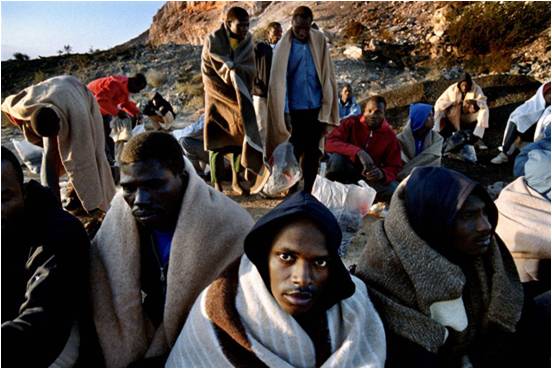
Photo of refugeesDropping us in straight at the deep end, Maureen Wilkinson began to build a picture: “You are living in a village with your friends and family, and you hear that the rebels are coming. You hear bullets whistling through the undergrowth, and now you have to think… What next?”

She worked us through emotions, beliefs and actions that refugees experience: “Will my family be killed?”, “If we have to run away, which child do I leave behind?”. Children will have been raped, seen murders, been separated from their families.

We need to be aware of the tremendous impact on mental health that such widescale loss, fear, trauma and bereavement can cause. Every time a refugee has to have another hostile interview, these emotions can come straight back. Our lack of awareness of cultural behaviours can cause problems too – if a woman considers it to be totally inappropriate to be in a room with a man on her own, how distressed will she be if a young male doctor tries to start a consultation?

Post Traumatic Stress Disorder, crippling Anxiety, severe Depression, all are common. Evidence shows that there is no proven benefit to universal debriefing after events, but we need to provide a space for those that need to talk, working through those emotions, beliefs and actions. Appropriate approaches are vital: for example, allowing children to draw, dance, sing and talk will allow healing.

What does it mean to be Faith-Based?

London Underground Mind The Gap logoThe final talk of the day, from Nick Henwood, was a very interactive session, looking at some of the conflicts that medical professionals have between their training and faith. He put us in small groups, and tried to make us fight each other.

There are many different world views, and ours will define how we practice. We will have differing values as we look at God, Self, Others and Creation, and this also changes our behaviour.

Nick drew simplified versions of a secular “Me” model, an animalist “We” model and the Christian model of “Interdependence”. The point being that a Western self centred ideology can be unhealthy, whilst an Eastern model of laid back acceptance of life can be unproductive. Ideally, Christianity gives us that valuing of self through valuing others.

The way that we understand health involves “Minding the Gap” – ensuring we do not allow a chasm to form between our strict biomedical view of health and a more holistic understanding of spiritual health. We looked ways of integrating our faith and mission into medical practice with a couple of case studies: Umoja & Micah (can’t find links, will email Nick for them).

His final points:

  1. Ensure your helping does not hurt.
  2. You don’t change on the plane – put integrated approaches into practice now.
  3. Explore some community development plans and try them out.

 And with that, the day was over, and I escaped. More tomorrow!

CMF Developing Health Course

CMF Logo

For years now, I’ve had a real passion about Africa, and, also for years, I’ve been in training as a doctor. They are passions that have grown together, and my excitement about them overlaps.

I’ve also been a fringe member of CMF – the Christian Medical Fellowship – since my first year in medical school, and recently I discovered that they run an annual course entitled “Developing Health“. It seemed too good to pass on, so this summer I managed to corral the required annual and study leave, and am attending.

I blogged about the course each day, and have each below as a record of the course. If you want to learn some bits and pieces about developing world medicine, the stuff I learnt on this course was solid gold!

Day One: Community Health
Day Two: Medicine
Day Three: Tropical Medicine
Day Four: HIV/AIDS
Day Five: Paediatrics
Day Six: Aspects of Mission Work 
Day Seven: Surgery
Day Eight: Trauma & Orthopaedics
Day Nine: Women’s Health
Day Ten: More Women’s Health
Day Eleven: Conclusion 

Acknowledging Life

Photo of Joe and LoisA few nights ago, we said goodbye to some great friends, Joe & Lois, on their way to live forever(ish) in Zimbabwe. This, on the same day that the senior partner at my practice retired, and my wife and I decided to move to Boston in 2 months.

I’ve been feeling a tremendous amount of emotion, as if something tangible has been torn from me; my brain is looking into the future, and feeling a loss that hasn’t even happened yet.

Why such a response? It’s strange, because I’m genuinely happy about all these changes!

I’m joyful that two friends are going to live in my favourite continent, under huge, romantic skies and terrifying political regimes, with a vast multitude of surprisingly friendly insects to keep them company.

I’m pleased that a fellow doctor is taking up a well earned retirement, with his health, his wife and the money to enjoy his days following his heart’s content.

I’m excited that my family and I are moving to Boston, a town I’d barely even heard of until Tuesday, and yet will soon be calling “home”.

So, if these are all such positive events, why am I so sad? I thought I’d look a little through the breadth of our literature and culture to find some consolation. In this, as with most emotions in life, Shakespeare has something apt to offer:

Parting is such sweet sorrow.


As one GCSE revision website explains this, the quote above puts my feelings in a different light: “It is therefore delightful that parting can hurt so much“. The sadness just reflects how much I love the Ovendens, how much I value my colleague, how much we treasure our Sheffield friends.

Tennyson made a similarly iconic statement (which is just as well, since that’s what famous poets are meant to do):

I hold it true, whate’er befall;
I feel it when I sorrow most;
‘Tis better to have loved and lost
Than never to have loved at all.

It is better to have loved and lost, than never to have loved at all. Whilst most people know that quote as used in a romantic context, it was actually a poem written by Tennyson about losing a good friend.

In realisation of this, I’m going to try and avoid being sad about this any more. In fact, the next two months needs to be a celebration of everything and everyone we love, value and respect in Sheffield. I want to laugh with you all – as The Jam said:

To be caught smiling is to acknowledge life.


Let’s really acknowledge life together, my friends. For a final verse (if cut in half), I leave you with Philippians 4:1:

So, brothers and sisters, I love you and miss you. You are my joy…


Air Magic

A photo of a BasketballIt always happens; I get to that point of year where shorts suddenly become acceptable, and then I remember a momentous truth – I am the greatest living basketball player on earth.

And yes, I’m 5 ft 9, and yes, I can’t shoot straight, and yes, I’m rather unfit, and yes, I always try to spin the ball on my finger, but instead drop it every time, but the fact remains – I love basketball.

I think it epitomizes everything I enjoy in life: simple, achievable goals; competition; sunshine; spending time with friends; Michael Jordan; being shamed by 12 year olds at the park…

Today I challenged one of the practice partners, Dr Hegde, to a game. I left this message on his screen:

I brought a basketball to work today. The question remains…
Are you man enough? …

Halfway through my second patient, a reply popped back on my screen:

Although I am sure I would undoubtedly teach you a basketballing lesson, I have a meeting this lunchtime, why don’t you use the time to have a practice.
Regards,
Air Magic Hegde

My impression? I need a basketball nickname! Recommendations in the comments please…

Nick’s iPad Review

My brother, Nick is a pretty big Apple fanboy, a breed of people I generally disagree with. He just bought an iPad, but didn’t get on with it, selling it after a couple of weeks.

Surprised by this, I thought it would be interesting to hear his take on it in a review…

Steve Jobs with the iPadA New Market

Steve Jobs said, at the announcement of the iPad in January 2010, that it is only possible to make a successful new market by being “far better at some things” than neighbouring markets.

My experiences with the iPad 2 show an amazing, innovative, well thought out product. For people who buy coffee table books, or only browse the web at a very basic “let’s check facebook” level, it’s pretty ace.

However, it’s neighbouring markets are smartphones, and laptops. It’s too big to fulfill some of the key needs of a phone – if you have the capacity to carry a tablet, you probably have room for a laptop – and its not got the versatility of a full PC. So, for the average geek, it probably fails to fully displace these markets.

Appearance

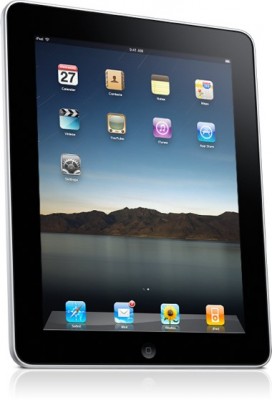
The iPad 2

The look of the iPad 2 is really, really good, and it fits into your hand beautifully – so slick and futuristic, you feel like someone out of Star Trek. Apple have put a lot of money into making it light and thin (so much so, at launch the iPad 2 was worth more than it’s weight in silver). The build is thin, which may excite some people, but the general size is still too big to easily carry around for long periods, which means you have to get a bag (may I recommend the Cool Bananas 24Seven).

But, as said, it does look very nice, and if that’s your thing, this is perfect. The build quality it top notch: solid, thin, light and sturdy – not a millimetre of bending if you lift it up from one corner. The only definite complaint is that the curved back forces the volume buttons and the cable socket round quite an awkward corner, and it’s hard to plug in the charger cable.

The screen looks great, with viewing angles as close to 180° as makes no difference, and the colours are solid. The gloss finish feels very nice, and the screen is bright enough to prevent the majority of glare. Videos looks amazing. The sound quality is surprisingly deep considering how thin the speakers have to be, and Jobs’s claim of a month of standby battery charge seems to be very accurate.

Software

The operating system is great and really is very intuitive, if restrictive. If you’re used to an iPhone or iPod touch, then this is no different, there are a few quirks which really could and should be ported to the smaller Apple devices (for example the brightness can be adjusted from the multitasking bar).

But for the most part, Apple’s control of both hardware and the software works really well in the mobile market. There’s very few times where it slows down noticeably, and there are enough well thought out tricks that Apple have put in to make using it a little easier.

In a recent update they allowed the keyboard to be split, meaning that if you are holding the device in two hands you can type fairly effectively with your thumbs. However, the keyboard can be moved up the screen which means that it can block whatever you’re typing into and having this happen sometimes seems to be the best compromise.

Sadly, I found that typing for any period of time really makes your hands ache – I’ve heard a lot of people mention that buying a bluetooth keyboard sorts out this problem. But with a tablet this expensive should you have to buy more kit to make it work…?

Cameras

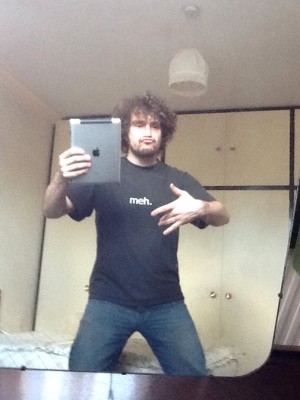
Nick holding an iPad

The cameras are adequate, although the outward facing camera is higher quality than the one facing the the user. While this seems pretty understandable, the only time I used the camera was to take photos of myself, or to use Facetime, so it would be better if the user-facing camera was of a higher quality.

It’s also important to remember that you look like the idiot on the right (me) every time you take a photo. The lack of a flash also ruins a lot of perfectly good photos, unless you’re standing in bright sunlight.

Ultimately, with flash enabled camera phones producing such high quality pictures in comparison, there’s practically no point in using the iPad 2 for this purpose.

Useability

All the above is irrelevant without asking the question – how is it to use? The answer is that it’s really nice to use, initially. I would come home and plop on the sofa and pick up my iPad and check my facebook, load up some news websites, no problems.

But within a few minutes, I would get frustrated having to switch apps, tired of clunkily changing between sites. I inevitably ended up switching to my laptop after about 10 minutes.

The bottom line is that in no way can the iPad replace even a basic laptop or netbook. It makes a very good companion but it can’t compete. So… anyone want to buy an iPad?

Being Judas

Picture of me, holding a sign saying "I am Judas"

This Easter I’ve been acting in the St Tim’s Passion Play. For those of you not familiar with the concept, it’s a reenactment of the biblical account of Jesus living, dying and resurrecting.

I was cast as Judas. This, of course, was treated with a great deal of humour from, well, everyone who knows me. There were cries of “type-casting!”, and I rather enjoyed pointing out that last time I was in a passion play, my role was “Second Demon”, so this was a promotion, of sorts.

And so the preparation began: there were lines to be learnt and countless rehearsals to attend. My wife bought a costume for me (by ransaking the bottom shelves of the least appealing charity shop in our high street). Jokes were made during practices – my favourite being Jesus getting everyone to flamboyantly clap, hands above head, during the buildup to the crucifixion.

Slowly, piece by piece, a sincere production was put together. Yet in the midst of it all, I rather failed to consider if there might be any deeper meaning to my role.

Soon enough, Good Friday was on us, our first performance begun, and, to a packed church, the birth and life of Jesus unfolding. I turned up, changed into my authentic 2,000 year old clothes, then waited behind the stage for my part. My only concern was the recollection of my lines, no deeper thought running through my head.

Then, my first scene came “Disciples chatting about Jesus”. Improvisation of some bible verses aside, this went well, and I moved onto “The Last Supper”, which played out without a hitch.

My final scene was an easy one – no speaking part; simply walk on with some soldiers, hug, kiss (and ultimately, betray) Jesus, then off again on stage left.

Our cue came, and on we marched. I hesitantly walked up to Jesus; crying, loving Jesus, who embraced me wholeheartedly. Then I kissed his cheek, his tears on my lips, and it hit me:

I am Judas.

Suddenly everything moved so fast. I stumbled back, and the soldiers swooped in. I walked off stage hesitantly, and stood behind the curtain, watching on as my Lord was thrown around, beaten, whipped and murdered. I weeped for a few moments, because it became very clear:

I am Judas.

Sure, my name is Chris, and I’ve never been near Nazareth, but the point remains: for me alone, Jesus would gladly have suffered the cross.

But he was wounded for our transgressions;
he was crushed for our iniquities;
upon him was the chastisement that brought us peace,
and with his stripes we are healed.

Isaiah 53:5 (ESV)

So, remember: don’t resent Judas, he is a reflection of all of us. We are Judas. Over the next two days, try to reflect on that, because it really is at the heart of Good Friday. And it will make Easter all the sweeter!

Why Windows 8 is going to be rubbish: Lowry’s Law.

WA screenshot of Windows 8 Metroindows 8 is going to fail. It’s going to be widely criticised, and it’ll frustrate and annoy people intensely, likely driving lots of consumers to Apple.

But “Why?”, I hear you cry. It’s nothing to do with the software itself, but due to Lowry’s law, an immutable law of Windows releases.

In with the new

Before I carry on, a little explanation for those of you not addicted to tech blogs. Windows 8 is the latest release of the Windows operating system. Microsoft have just released the “Consumer Preview” version, which is a free to download, draft version of the software.

The result of this is that millions of people have had a chance to play around with Windows 8.

There have been lots of changes under the hood in Windows 8, but by far the most noticeable to users is the change to two competing interfaces. Most of you will be very familiar with the normal Windows desktop – icons on a background, with the Start Menu, and a taskbar along the bottom. The Start Menu has now been killed off, and replaced with “Metro” – the colourful boxes you can see above on the right.

To hate or not to hate

Reactions have been mixed, with pretty negative reviews from a lot of high profile blogs. Statements such as “It’s going to be an utter nightmare“, “a failure to learn from mistakes of Vista” and “like two very different operating systems trying to be one” lead to some concerns. A former Microsoft employee has created a website called FixingWindows8.com, a site that’s been so popular I’ve not yet been able to load it, due to the traffic crashing the server.

Perhaps the worst indictment is that of tech guru Chris Pirillo’s non tech-savvy father. Here is a video of him totally failing to work out how to use Windows 8:

[iframe src=”http://www.youtube.com/embed/v4boTbv9_nU” width=”100%” height=”427″]

Personally, I installed the Consumer Preview, and used it for around an hour. I found the two interfaces completely contradictatory, and time wasting. I found nothing of value in Metro, and the loss of the Start Menu a devastating hit to the efficiency of my workflow. I couldn’t cope with trying it any longer than that, and immediately uninstalled it.

Lowry’s Law

However, my opinions, the opinions of consumers and tech professionals matter not: Windows 8 is going to be awful due to the (newly named) Lowry’s Law

Lowry’s Law: Every other serious consumer Windows release is rubbish.

Let’s look at the evidence. (Windows didn’t really take off until 3 came out, so Windows 1 & 2  aren’t classed as serious releases).

Windows 3 – sold 10 million copies in 3 years. Led to Windows becoming the dominant operating system worldwide. Introduced mouse pointers, copy and paste, and countless other features we take as standard today. Good

Windows 95 – an innovative change, that set the tone for future versions of Windows for the next 15 years – however, pretty buggy, and still reliant on an MS DOS framework, causing driver issues galore. Famous for its prolific BSODs. Rubbish.

Windows 98 – basically 95 v2.0 – cleaned up the bugs, ditched DOS and added the internet. Good.

Windows ME – released in a hurry because XP wasn’t ready yet. Disgustingly buggy, with no real new features over 98. Known as the “Mistake Edition”, along with other less polite terms. Rubbish.

Windows XP – probably the most successful operating system ever. Slick, friendly, crash-free and resource efficient – it’s 11 years old, and still 40% of internet users are running it. That’s a definite “Good”.

Windows Vista – came installed on millions of cheap laptops, at a time when cheap hardware wasn’t quite enough to run Vista comfortable. Coupled with over zealous security pop ups, and lots of driver issues, I think its been the biggest driver of consumers to Apple in the last 5 years. Rubbish.

Windows 7 – basically Vista v2.0 – cleaned up the bugs and dialed down the security pop ups. Time had passed and drivers had been created for Vista and 7, and cheap laptops had the spec to run it well. Good.

Windows 8 – It’s not looking good.


Conclusion

So that’s it. 20 years of evidence support Lowry’s Law, meaning there’s an undeniable truth that Windows 8 is going to be rubbish. However, things are looking great for Windows 9…