Blog

Read It Played Wiz War

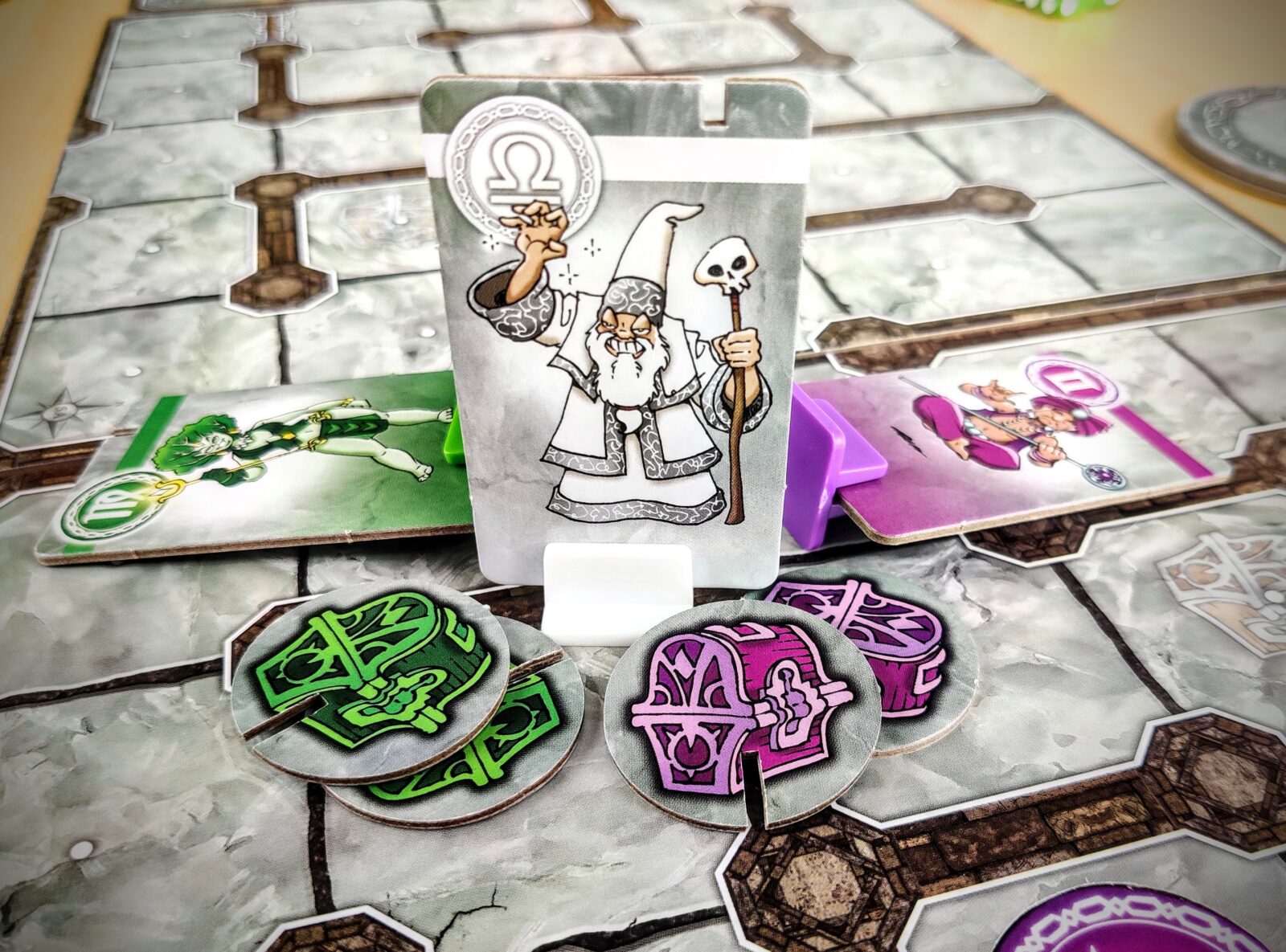
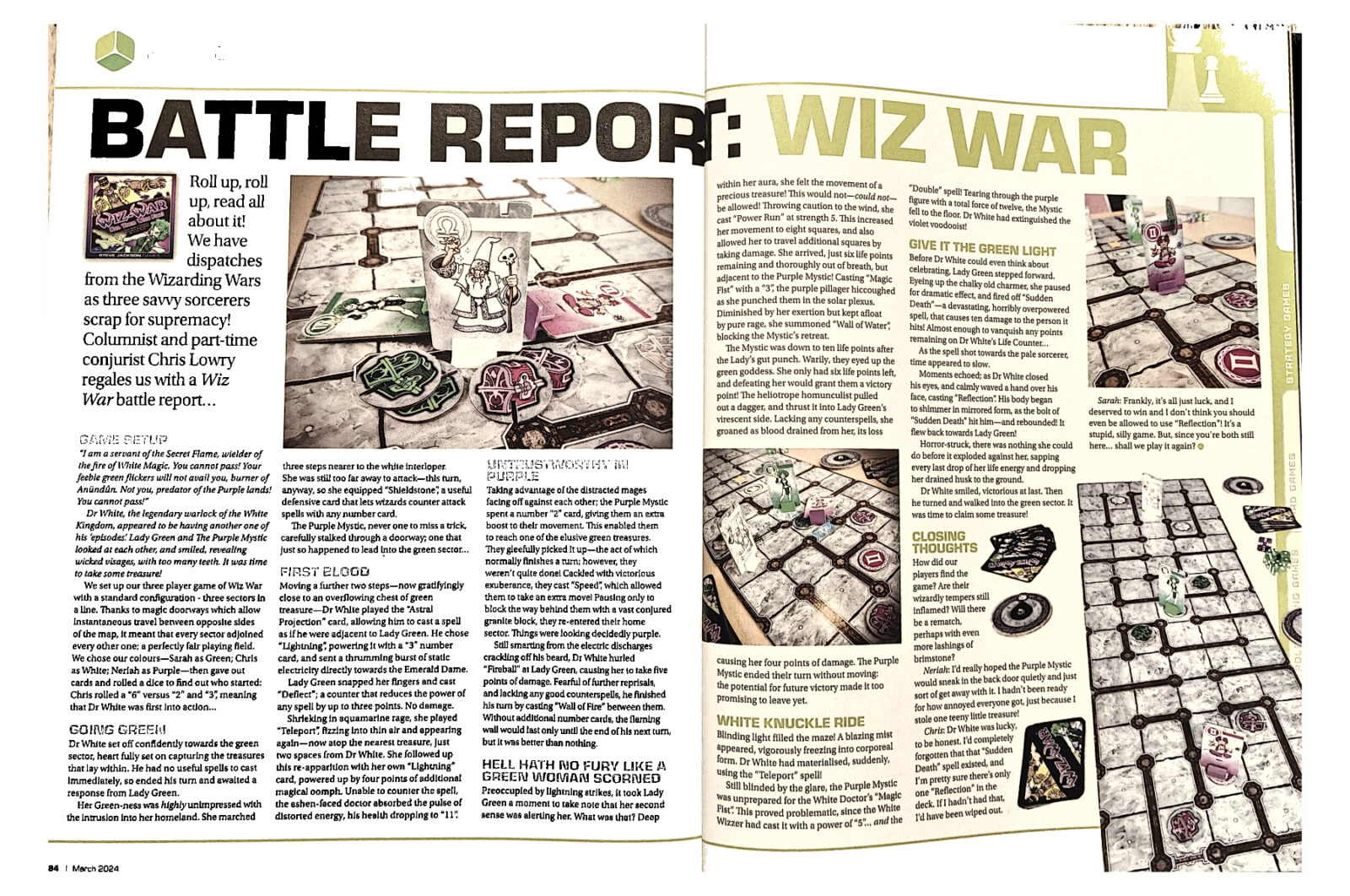
Roll up, roll up, read all about it! We have dispatches from the Wizarding Wars as three savvy sorcerers scrap for supremacy! Columnist and part-time conjurist Chris Lowry regales us with a Wiz War battle report…

Game Setup

“I am a servant of the Secret Flame, wielder of the fire of White Magic. You cannot pass! Your feeble green flickers will not avail you, burner of Anündûn. Not you, predator of the Purple lands! You cannot pass!”

Dr White, the legendary warlock of the White Kingdom, appeared to be having another one of his ‘episodes’. Lady Green and The Purple Mystic looked at each other, and smiled, revealing wicked visages, with too many teeth. It was time to take some treasure!

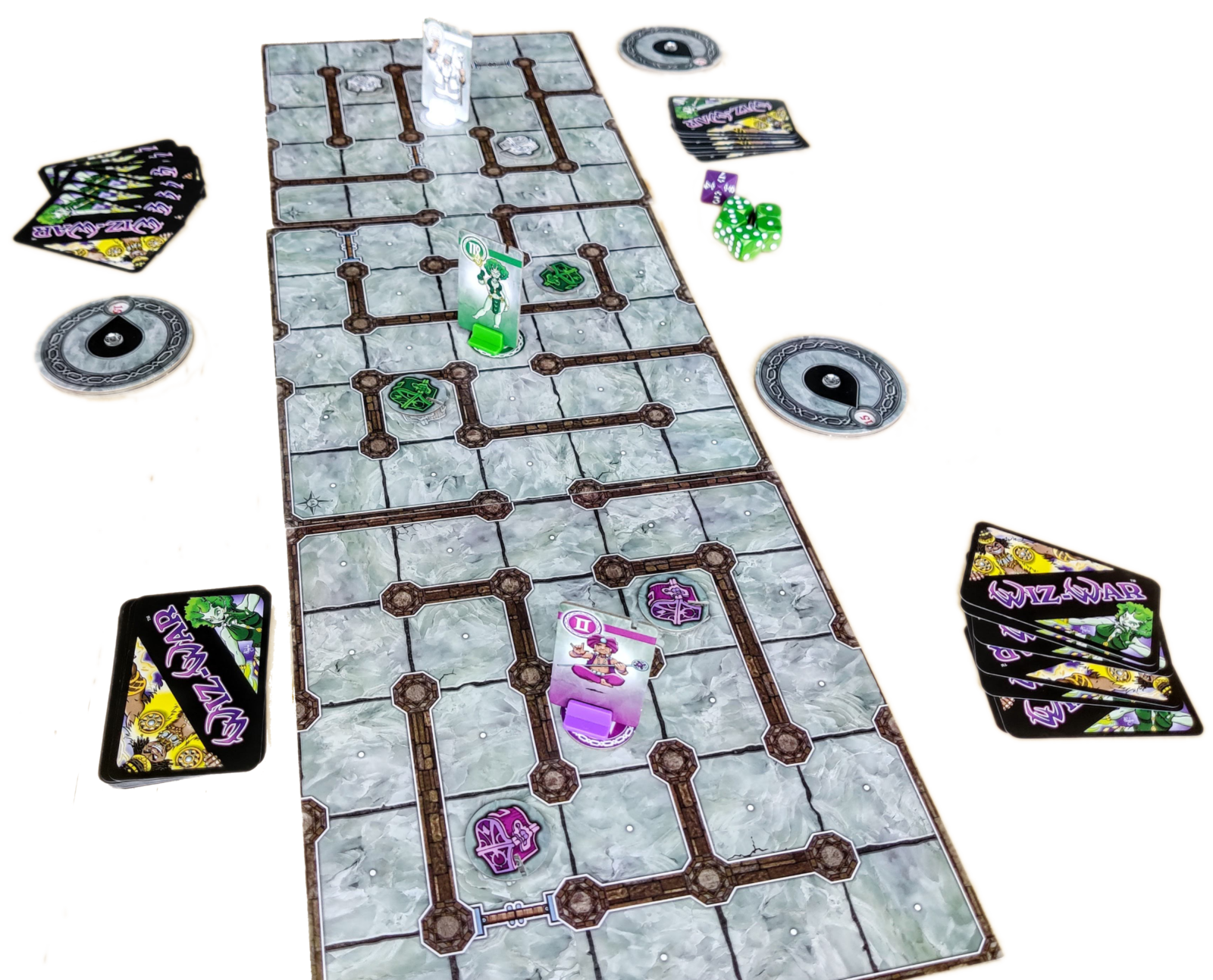
We set up our three player game of Wiz War with a standard configuration – three sectors in a line. Thanks to magic doorways which allow instantaneous travel between opposite sides of the map, it meant that every sector adjoined every other one; a perfectly fair playing field. We chose our colours—Sarah as Green; Chris as White; Neriah as Purple—then gave out cards and rolled a dice to find out who started: Chris rolled a “6” versus “2” and “3”, meaning that Dr White was first into action…

Going Green

Dr White set off confidently towards the green sector, heart fully set on capturing the treasures that lay within. He had no useful spells to cast immediately, so ended his turn and awaited a response from Lady Green.

Her Green-ness was highly unimpressed with the intrusion into her homeland. She marched three steps nearer to the white interloper. She was still too far away to attack—this turn, anyway, so she equipped “Shieldstone”, a useful defensive card that lets wizards counter attack spells with any number card.

The Purple Mystic, never one to miss a trick, carefully stalked through a doorway; one that just so happened to lead into the green sector…

First Blood

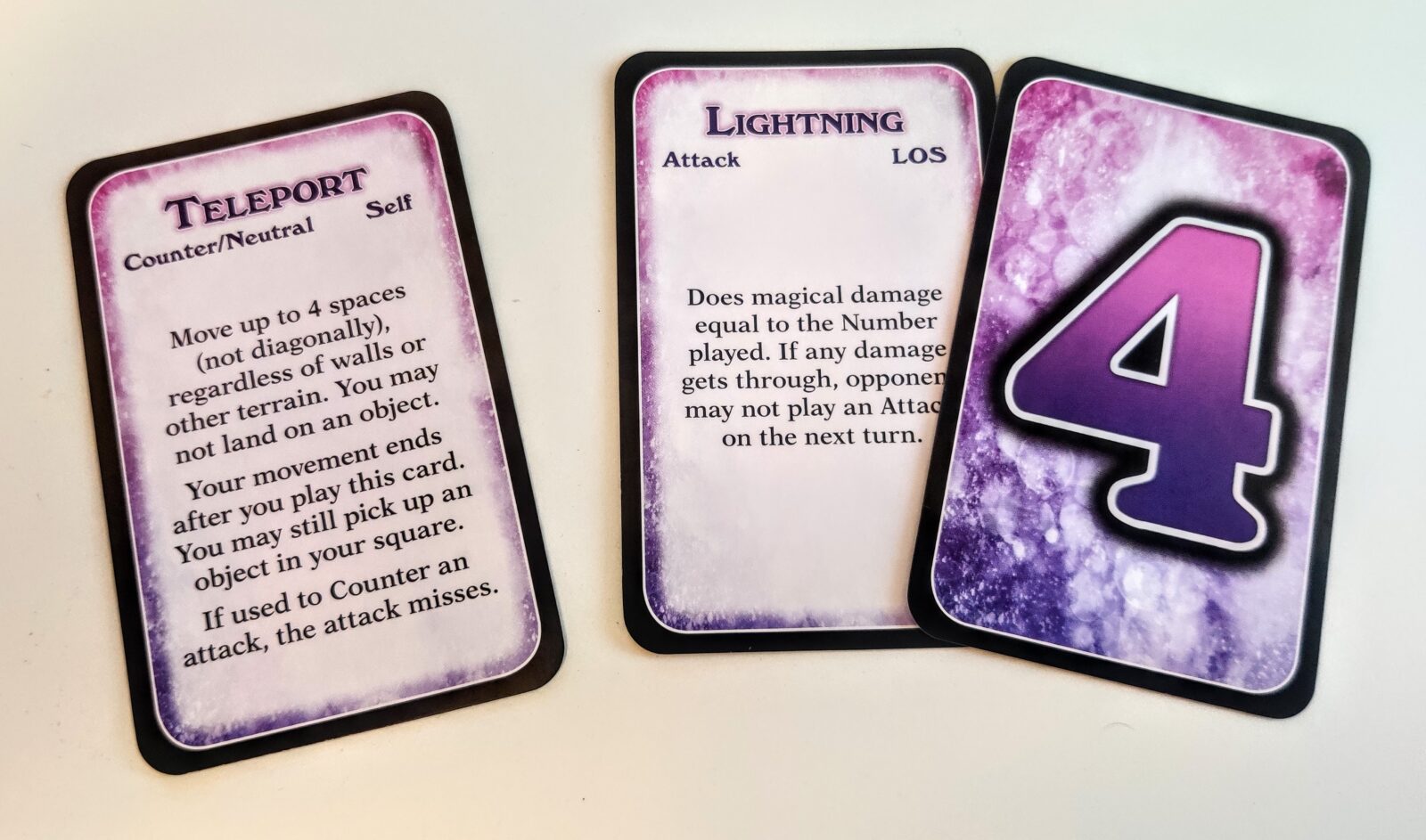
Moving a further two steps—now gratifyingly close to an overflowing chest of green treasure—Dr White played the “Astral Projection” card, allowing him to cast a spell as if he were adjacent to Lady Green. He chose “Lightning”, powering it with a “3” number card, and sent a thrumming burst of static electricity directly towards the Emerald Dame.

Lady Green snapped her fingers and cast “Deflect”; a counter that reduces the power of any spell by up to three points. No damage.

Shrieking in aquamarine rage, she played “Teleport”, fizzing into thin air and appearing again—now atop the nearest treasure, just two spaces from Dr White. She followed up this re-apparition with her own “Lightning” card, powered up by four points of additional magical oomph. Unable to counter the spell, the ashen-faced doctor absorbed the pulse of distorted energy, his health dropping to “11”.

Untrustworthy in Purple

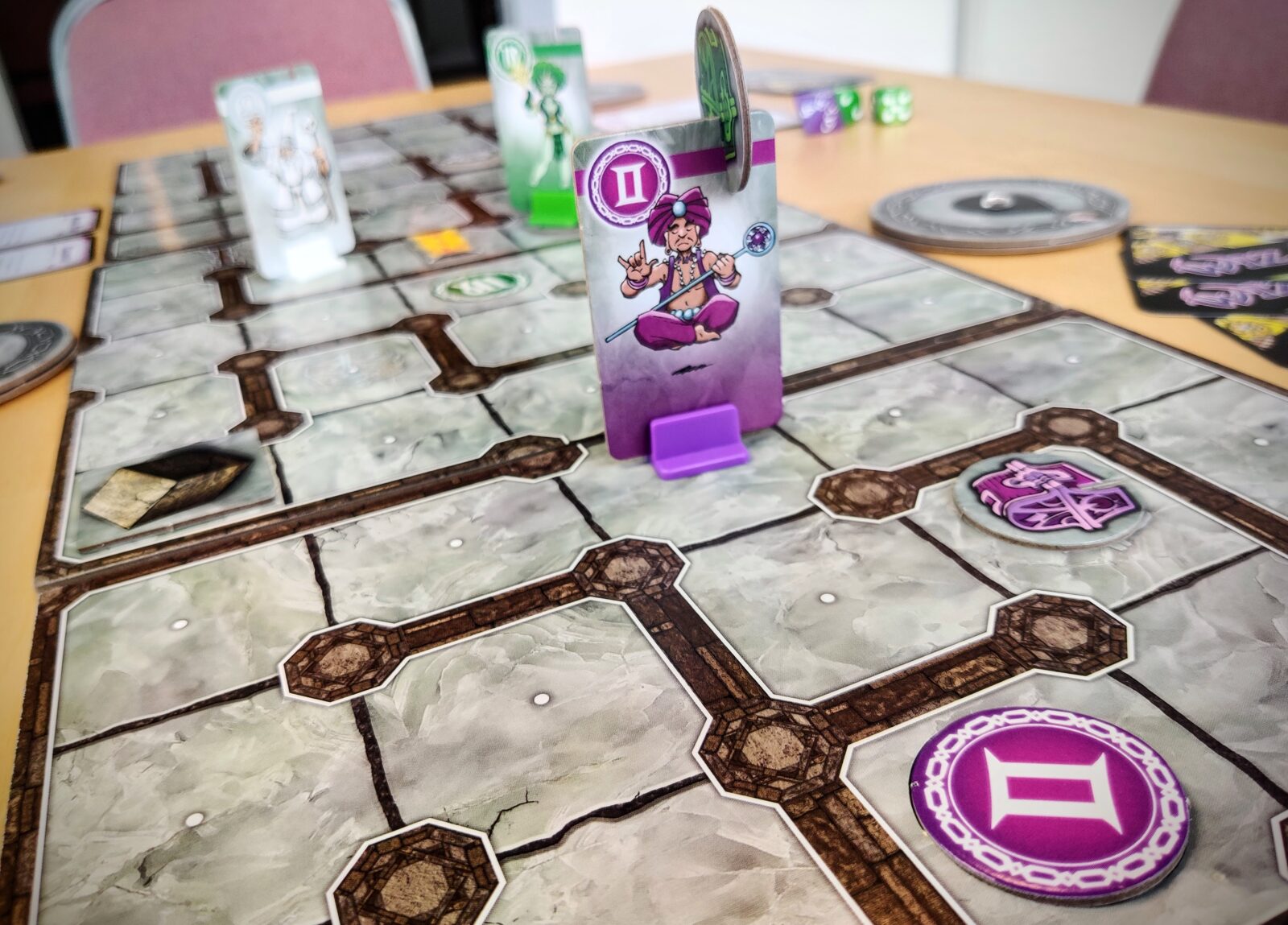
Taking advantage of the distracted mages facing off against each other; the Purple Mystic spent a number “2” card, giving them an extra boost to their movement. This enabled them to reach one of the elusive green treasures. They gleefully picked it up—the act of which normally finishes a turn; however, they weren’t quite done! Cackled with victorious exuberance, they cast “Speed”, which allowed them to take an extra move! Pausing only to block the way behind them with a vast conjured granite block, they re-entered their home sector. Things were looking decidedly purple.

Still smarting from the electric discharges crackling off his beard, Dr White hurled “Fireball” at Lady Green, causing her to take five points of damage. Fearful of further reprisals, and lacking any good counterspells, he finished his turn by casting “Wall of Fire” between them. Without additional number cards, the flaming wall would last only until the end of his next turn, but it was better than nothing.

Hell Hath No Fury Like A Green Woman Scorned

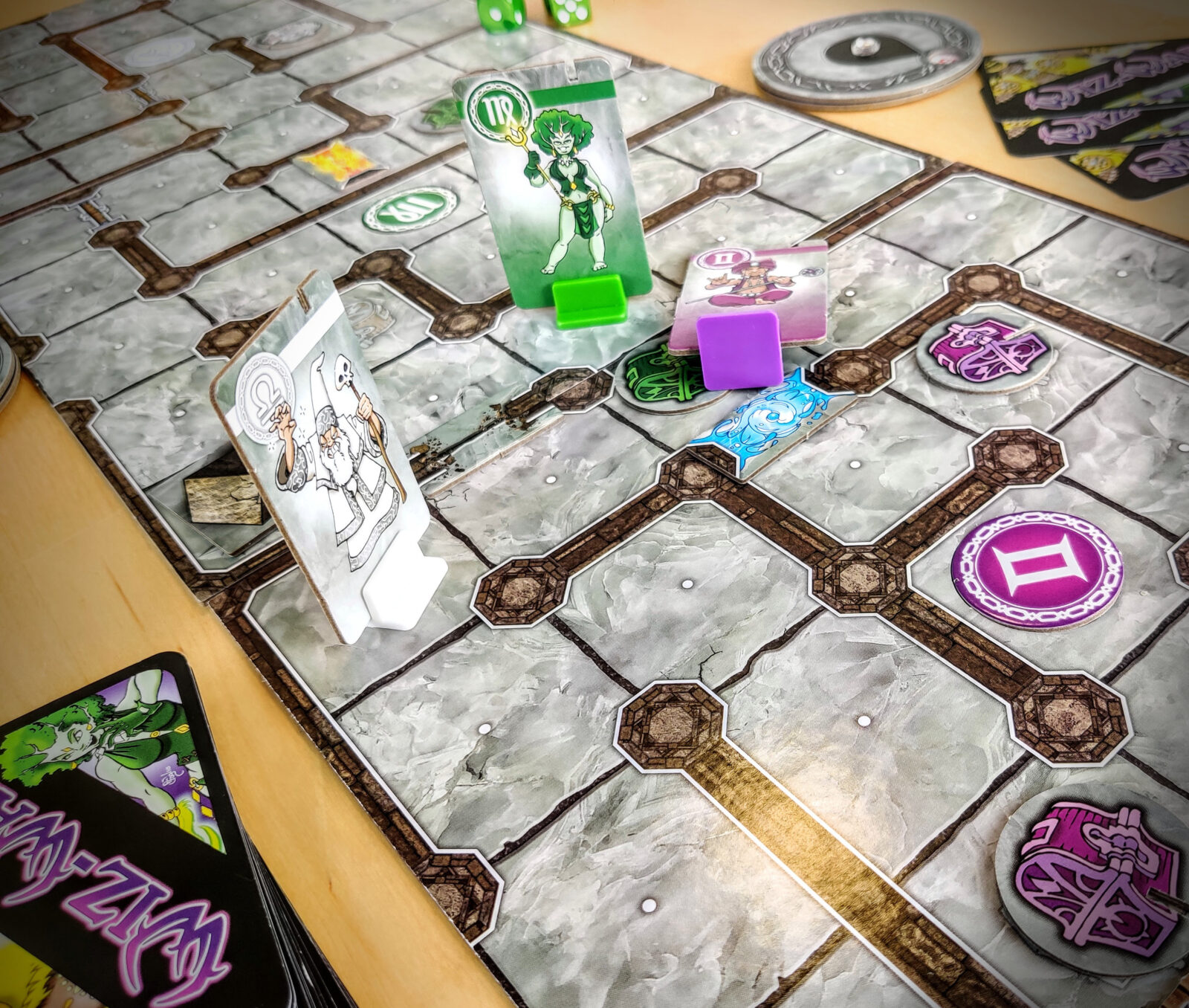
Preoccupied by lightning strikes, it took Lady Green a moment to take note that her second sense was alerting her. What was that? Deep within her aura, she felt the movement of a precious treasure! This would not—could not—be allowed! Throwing caution to the wind, she cast “Power Run” at strength 5. This increased her movement to eight squares, and also allowed her to travel additional squares by taking damage. She arrived, just six life points remaining and thoroughly out of breath, but adjacent to the Purple Mystic! Casting “Magic Fist” with a “3”, the purple pillager hiccoughed as she punched them in the solar plexus. Diminished by her exertion but kept afloat by pure rage, she summoned “Wall of Water”, blocking the Mystic’s retreat.

The Mystic was down to ten life points after the Lady’s gut punch. Warily, they eyed up the green goddess. She only had six life points left, and defeating her would grant them a victory point! The heliotrope homunculist pulled out a dagger, and thrust it into Lady Green’s virescent side. Lacking any counterspells, she groaned as blood drained from her, its loss causing her four points of damage. The Purple Mystic ended their turn without moving: the potential for future victory made it too promising to leave yet.

White Knuckle Ride

Blinding light filled the maze! A blazing mist appeared, vigorously freezing into corporeal form. Dr White had materialised, suddenly, using the “Teleport” spell!

Still blinded by the glare, the Purple Mystic was unprepared for the White Doctor’s “Magic Fist”. This proved problematic, since the White Wizzer had cast it with a power of “5”… and the “Double” spell! Tearing through the purple figure with a total force of twelve, the Mystic fell to the floor. Dr White had extinguished the violet voodooist!

Give It The Green Light

Before Dr White could even think about celebrating, Lady Green stepped forward. Eyeing up the chalky old charmer, she paused for dramatic effect, and fired off “Sudden Death”—a devastating, horribly overpowered spell, that causes ten damage to the person it hits! Almost enough to vanquish any points remaining on Dr White’s Life Counter…

As the spell shot towards the pale sorcerer, time appeared to slow.

Moments echoed; as Dr White closed his eyes, and calmly waved a hand over his face, casting “Reflection”. His body began to shimmer in mirrored form, as the bolt of “Sudden Death” hit him—and rebounded! It flew back towards Lady Green!

Horror-struck, there was nothing she could do before it exploded against her, sapping every last drop of her life energy and dropping her drained husk to the ground.

Dr White smiled, victorious at last. Then he turned and walked into the green sector. It was time to claim some treasure!


Closing Thoughts

How did our players find the game? Are their wizardly tempers still inflamed? Will there be a rematch, perhaps with even more lashings of brimstone?

Neriah: I’d really hoped the Purple Mystic would sneak in the back door quietly and just sort of get away with it. I hadn’t been ready for how annoyed everyone got, just because I stole one teeny little treasure!

Chris: Dr White was lucky, to be honest. I’d completely forgotten that that “Sudden Death” spell existed, and I’m pretty sure there’s only one “Reflection” in the deck. If I hadn’t had that, I’d have been wiped out.

Sarah: Frankly, it’s all just luck, and I deserved to win and I don’t think you should even be allowed to use “Reflection”! It’s a stupid, silly game. But, since you’re both still here… shall we play it again?

Talking to Martin Wallace about Brass: Birmingham

?? Note that there’s a reference to BGG The First Ten Double page feature with a (see page ##) which needs the correct page number put on it! Just search “#” to find it

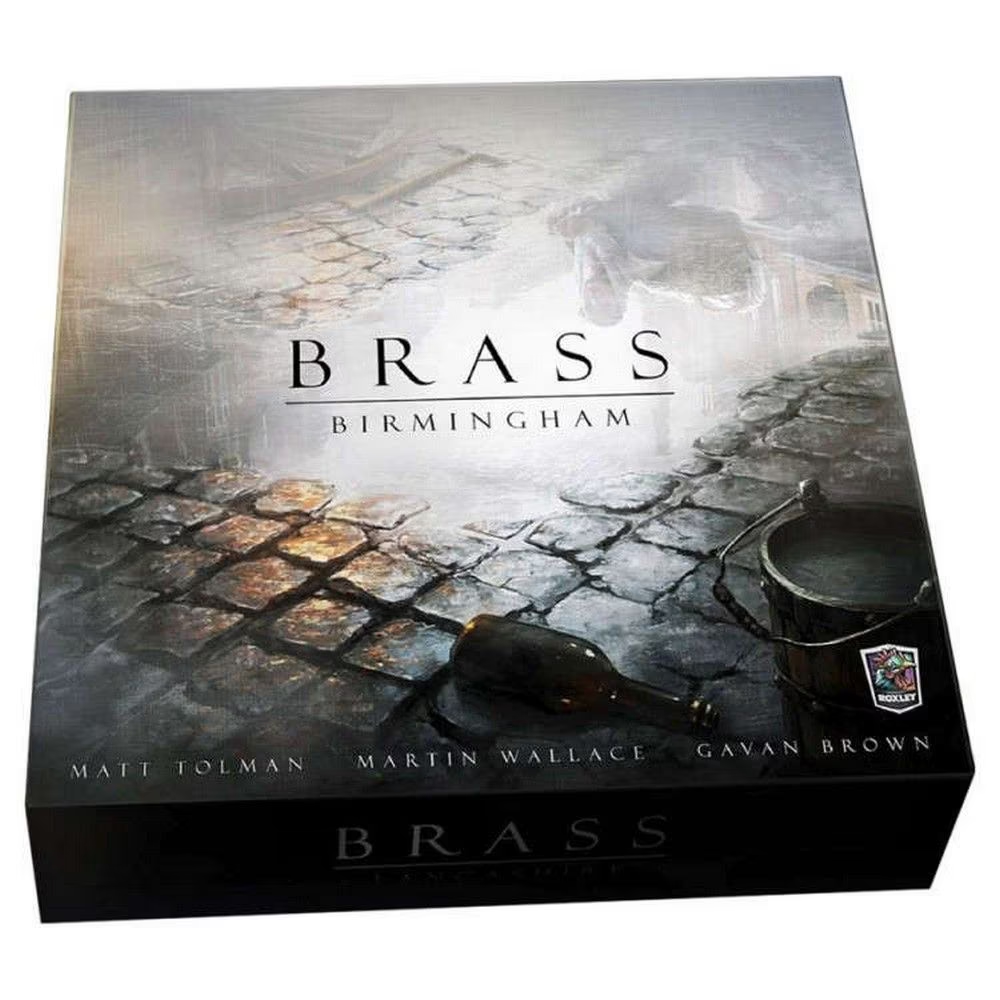
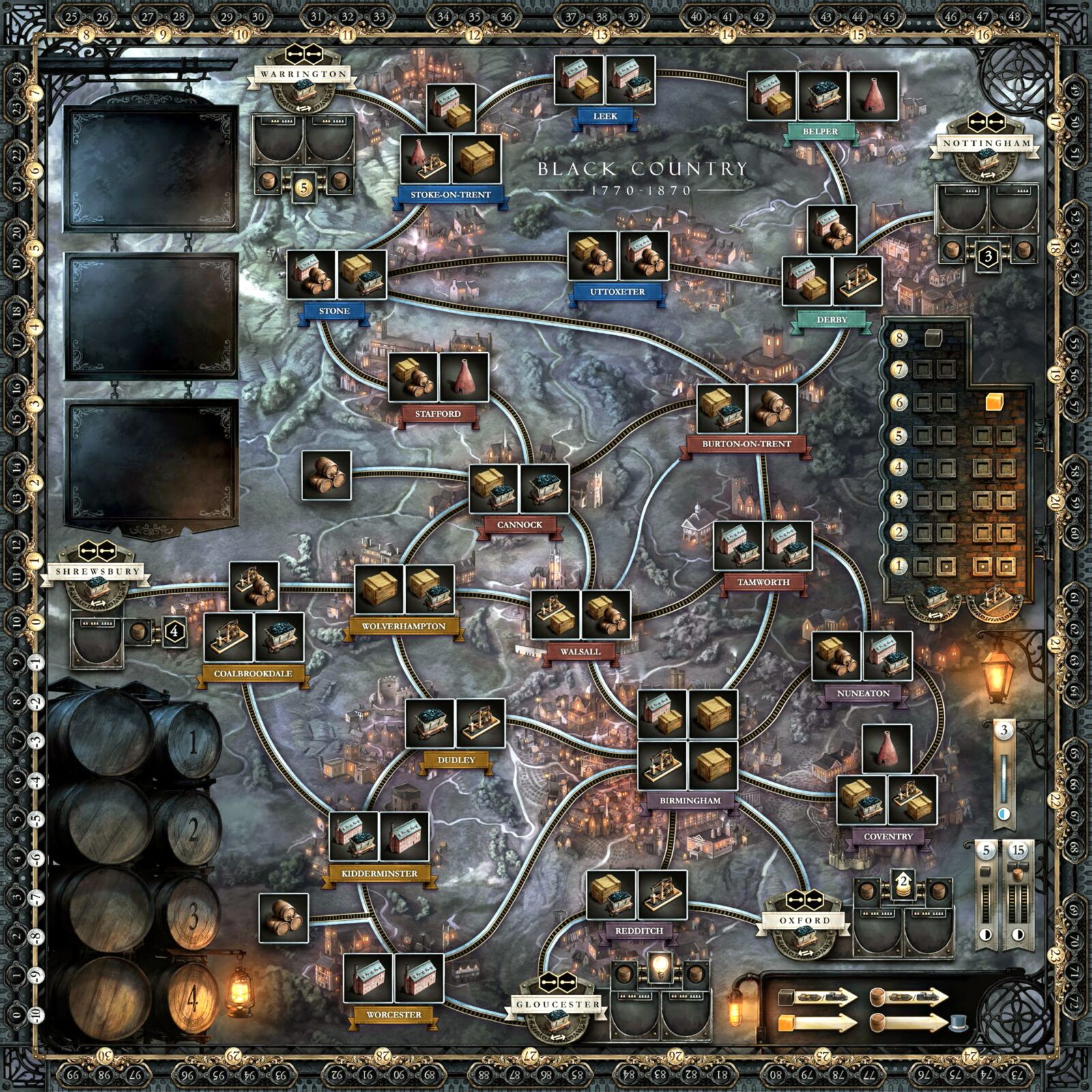
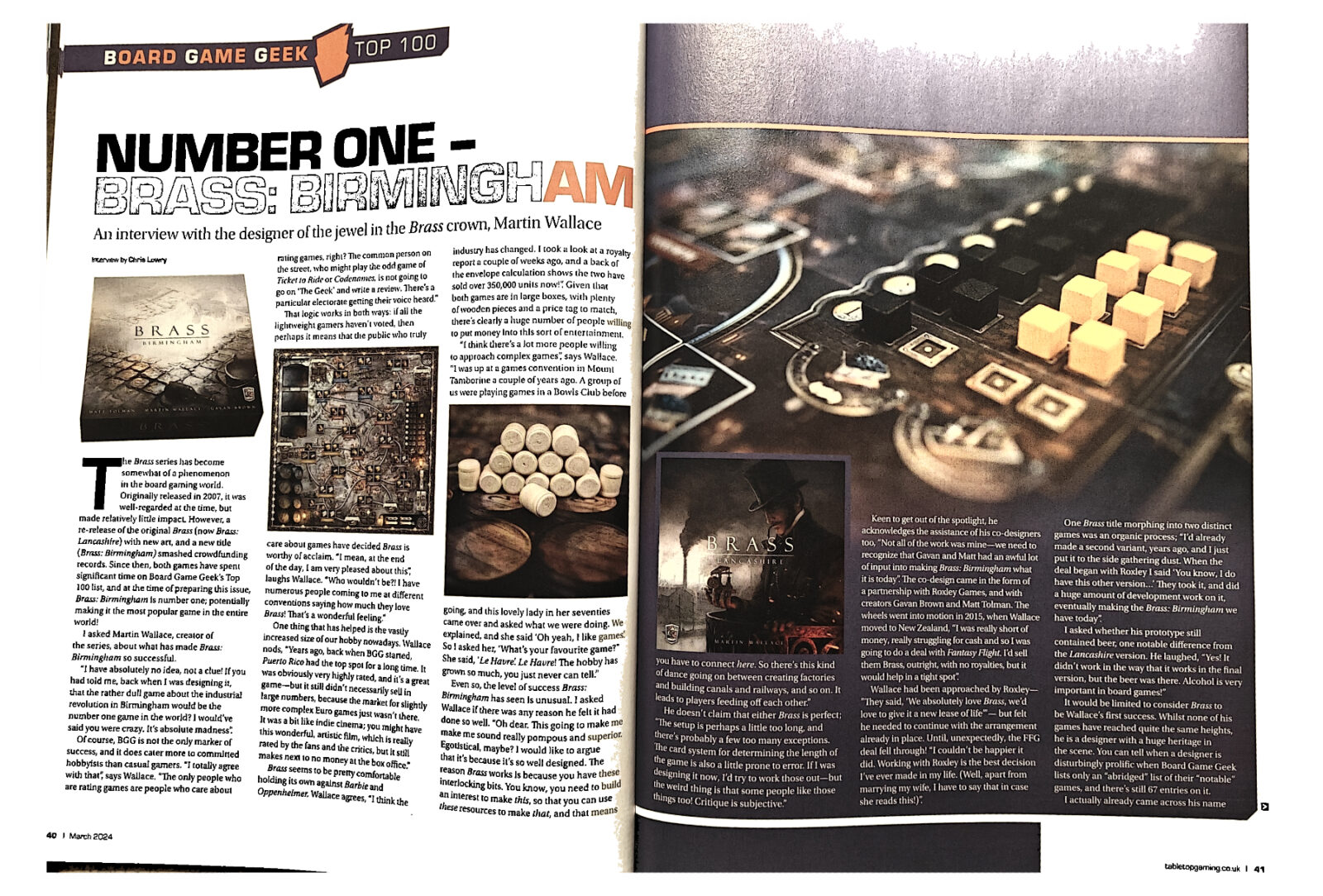
The Brass series has become somewhat of a phenomenon in the board gaming world. Originally released in 2007, it was well-regarded at the time, but made relatively little impact. However, a re-release of the original Brass (now Brass: Lancashire) with new art, and a new title (Brass: Birmingham) smashed crowdfunding records. Since then, both games have spent significant time on BoardGameGeek’s Top 100 list, and at the time of preparing this issue, Brass: Birmingham is number one; potentially making it the most popular game in the entire world!

I asked Martin Wallace, creator of the series, about what has made Brass: Birmingham so successful. “I have absolutely no idea, not a clue! I swear, not a freaking clue. If you had told me, back when I was designing it, that the rather dull game about the industrial revolution in Birmingham would be the number one game in the world? I would’ve said you were crazy. It’s absolute madness”.

Of course, BGG is not the only marker of success, and it does cater more to committed hobbyists than casual gamers. “I totally agree with that”, says Wallace. “The only people who are rating games are people who care about rating games, right? The common person on the street, who might play the odd game of Ticket to Ride or Codenames, is not going to go on ‘The Geek’ and write a review. There’s a particular electorate getting their voice heard.”

That logic works in both ways: if all the lightweight gamers haven’t voted, then perhaps it means that the public who truly care about games have decided Brass is worthy of acclaim. “I mean, at the end of the day, I am very pleased about this”, laughs Wallace. “Who wouldn’t be?! I have numerous people coming to me at different conventions saying how much they love Brass! That’s a wonderful feeling.”

One thing that has helped is the vastly increased size of our hobby nowadays. Wallace nods, “Years ago, back when BGG started, Puerto Rico had the top spot for a long time. It was obviously very highly rated, and it’s a great game—but it still didn’t necessarily sell in large numbers, because the market for slightly more complex Euro games just wasn’t there. It was a bit like indie cinema; you might have this wonderful, artistic film, which is really rated by the fans and the critics, but it still makes next to no money at the box office.”

Brass seems to be pretty comfortable holding its own against Barbie and Oppenheimer. Wallace agrees, “I think the industry has changed. I took a look at a royalty report a couple of weeks ago, and a back of the envelope calculation shows the two have sold over 350,000 units now!”. Given that both games are in large boxes, with plenty of wooden pieces and a price tag to match, there’s clearly a huge number of people willing to put money into this sort of entertainment.

“I think there’s a lot more people willing to approach complex games”, says Wallace. “I was up at a games convention in Mount Tamborine a couple of years ago. A group of us were playing games in a Bowls Club before going, and this lovely lady in her seventies came over and asked what we were doing. We explained, and she said ‘Oh yeah, I like games’. So I asked her, ‘What’s your favourite game?” She said, ‘Le Havre’. Le Havre! The hobby has grown so much, you just never can tell.”

Even so, the level of success Brass: Birmingham has seen is unusual. I asked Wallace if there was any reason he felt it had done so well. “Oh dear. This going to make me make me sound really pompous and superior. Egotistical, maybe? I would like to argue that it’s because it’s so well designed. The reason Brass works is because you have these interlocking bits. You know, you need to build an interest to make this, so that you can use these resources to make that, and that means you have to connect here. So there’s this kind of dance going on between creating factories and building canals and railways, and so on. It leads to players feeding off each other.”

He doesn’t claim that either Brass is perfect; “The setup is perhaps a little too long, and there’s probably a few too many exceptions. The card system for determining the length of the game is also a little prone to error. If I was designing it now, I’d try to work those out—but the weird thing is that some people like those things too! Critique is subjective.”

Keen to get out of the spotlight, he acknowledges the assistance of his co-designers too, “Not all of the work was mine—we need to recognize that Gavan and Matt had an awful lot of input into making Brass: Birmingham what it is today”. The co-design came in the form of a partnership with Roxley Games, and with creators Gavan Brown and Matt Tolman. The wheels went into motion in 2015, when Wallace moved to New Zealand, “I was really short of money, really struggling for cash and so I was going to do a deal with Fantasy Flight. I’d sell them Brass, outright, with no royalties, but it would help in a tight spot”.

Wallace had been approached by Roxley—”They said, ‘We absolutely love Brass, we’d love to give it a new lease of life’”— but felt he needed to continue with the arrangement already in place. Until, unexpectedly, the FFG deal fell through! “I couldn’t be happier it did. Working with Roxley is the best decision I’ve ever made in my life. (Well, apart from marrying my wife, I have to say that in case she reads this!)”.

One Brass title morphing into two distinct games was a organic process; “I’d already made a second variant, years ago, and I just put it to the side gathering dust. When the deal began with Roxley I said ‘You know, I do have this other version…’ They took it, and did a huge amount of development work on it, eventually making the Brass: Birmingham we have today”.

I asked whether his prototype still contained beer, one notable difference from the Lancashire version. He laughed, “Yes! It didn’t work in the way that it works in the final version, but the beer was there. Alcohol is very important in board games!”

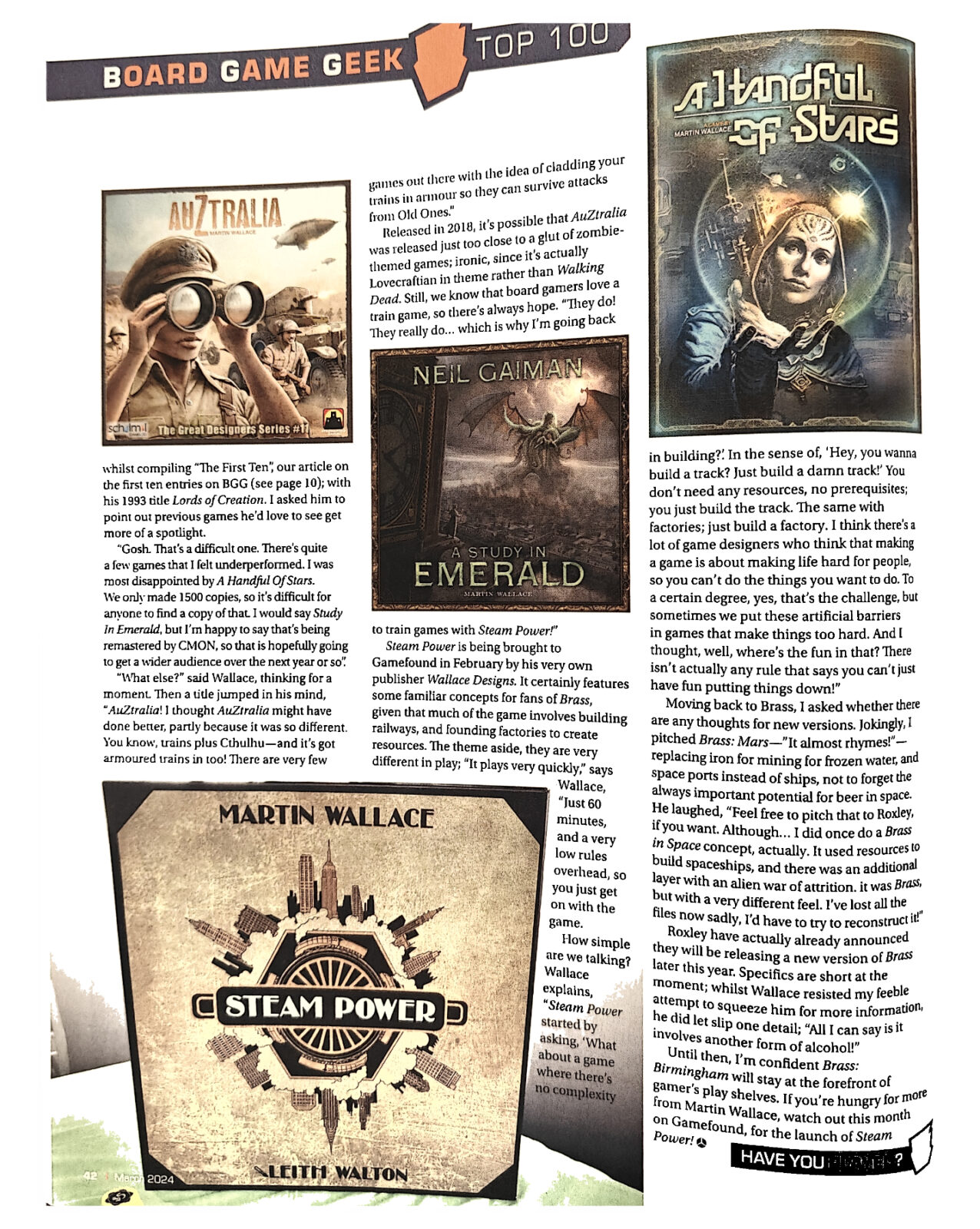
It would be limited to consider Brass to be Wallace’s first success. Whilst none of his games have reached quite the same heights, he is a designer with a huge heritage in the scene. You can tell when a designer is disturbingly prolific when Board Game Geek lists only an “abridged” list of their “notable” games, and there’s still 67 entries on it! I actually already came across his name whilst compiling “The First Ten”, our article on the first 10 entries on BGG (see page ##); with his 1993 title Lords of Creation. I asked him to point out two of his previous games he’d love to see get more of a spotlight.

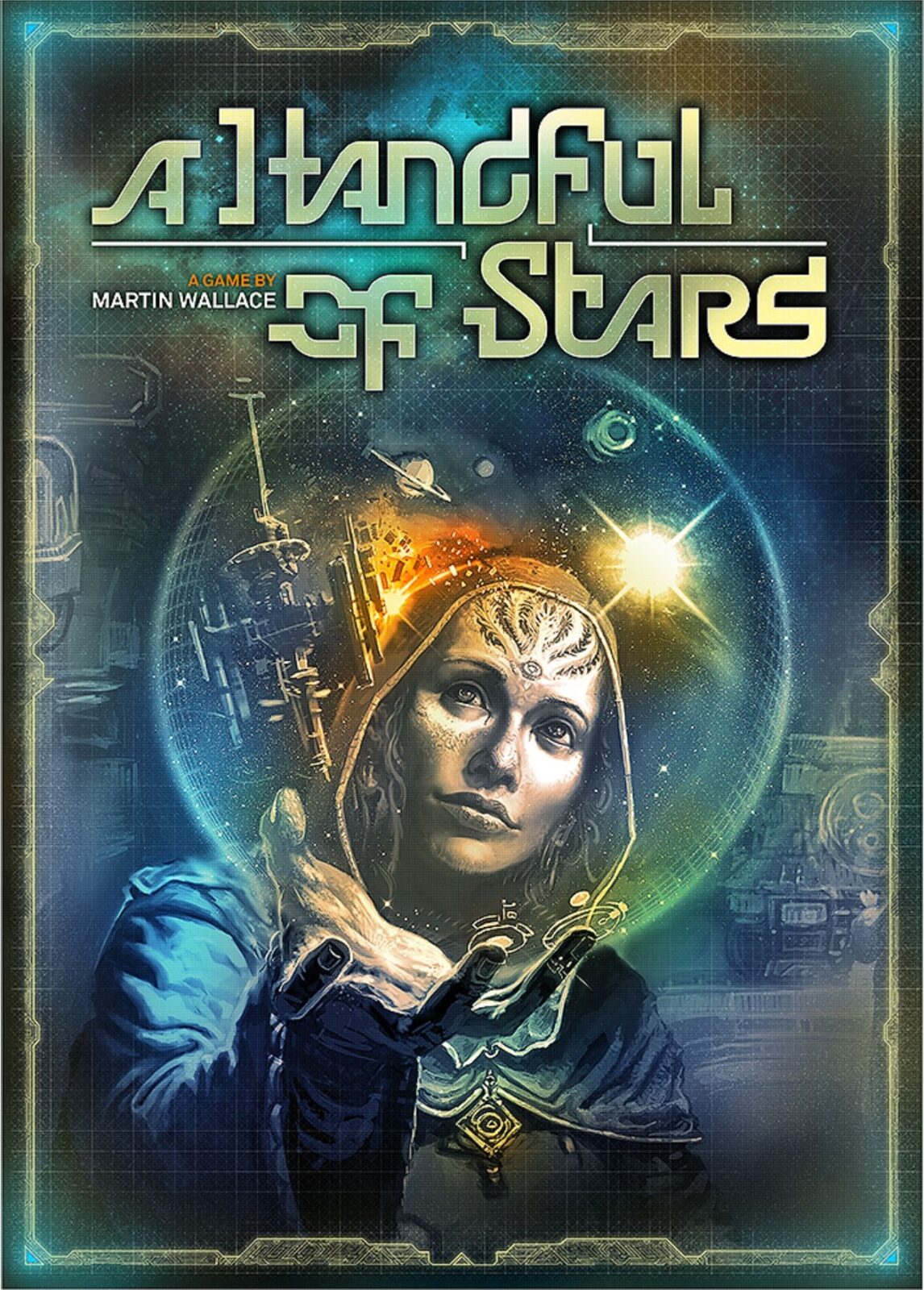
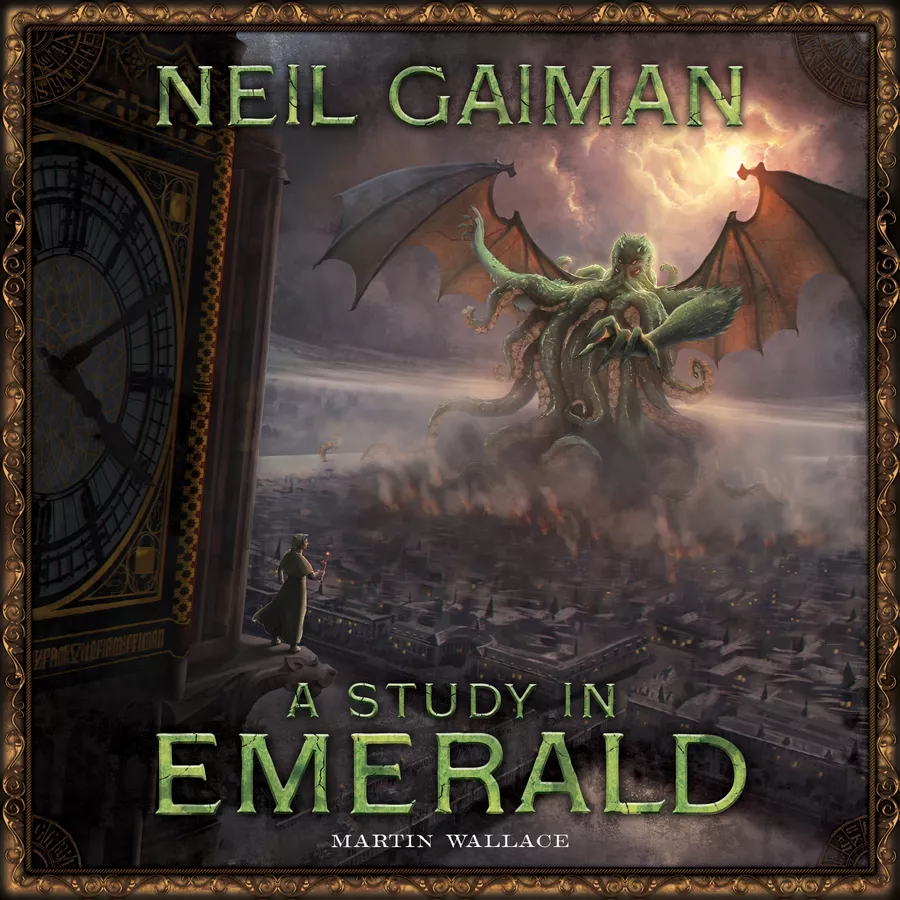
“Gosh. That’s a difficult one. There’s quite a few games that I felt underperformed. I was most disappointed by A Handful Of Stars. We only made 1500 copies, so it’s difficult for anyone to find a copy of that. I would say Study In Emerald, but I’m happy to say that’s being remastered by CMON, so that is hopefully going to get a wider audience over the next year or so”.

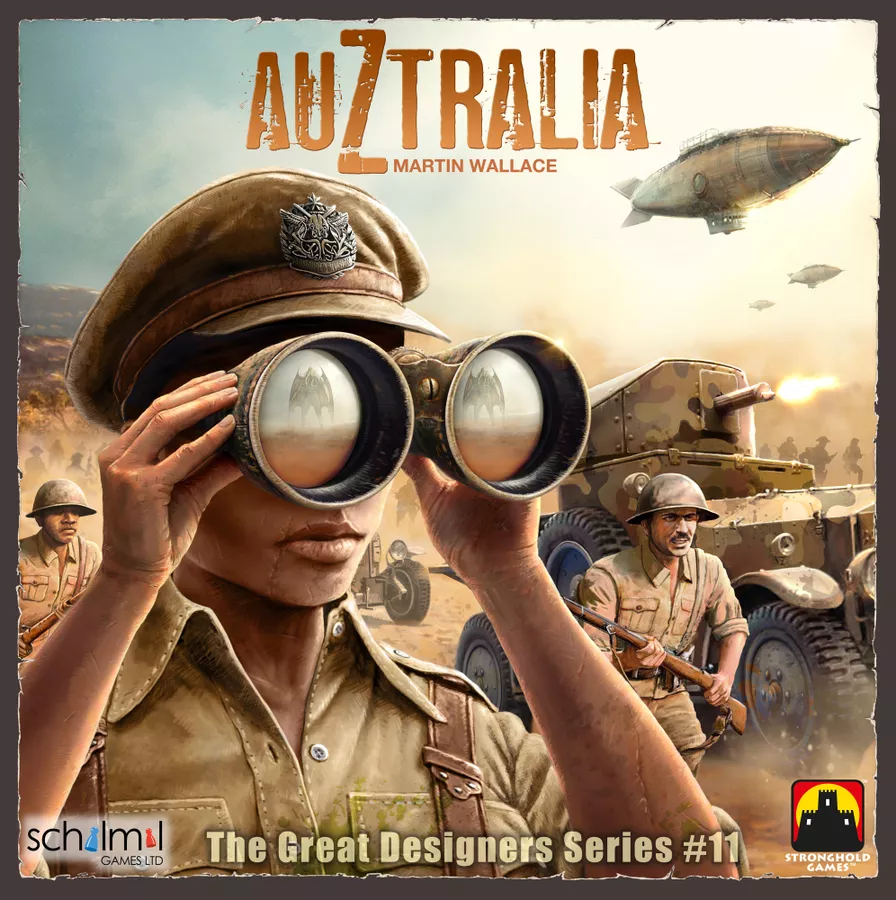
“What else?”, said Wallace, thinking for a moment. Then a title jumped in his mind, “AuZtralia! I thought AuZtralia might have done better, partly because it was so different. You know, trains plus Cthulhu—and it’s got armoured trains in too! There are very few games out there with the idea of cladding your trains in armour so they can survive attacks from Old Ones!”

Released in 2018, it’s possible that AuZtralia was released just too close to a glut of zombie-themed games; ironic, since it’s actually Lovecraftian in theme rather than Walking Dead. Still, we know that board gamers love a train game, so there’s always hope. “They do! They really do… which is why I’m going back to train games with Steam Power!”

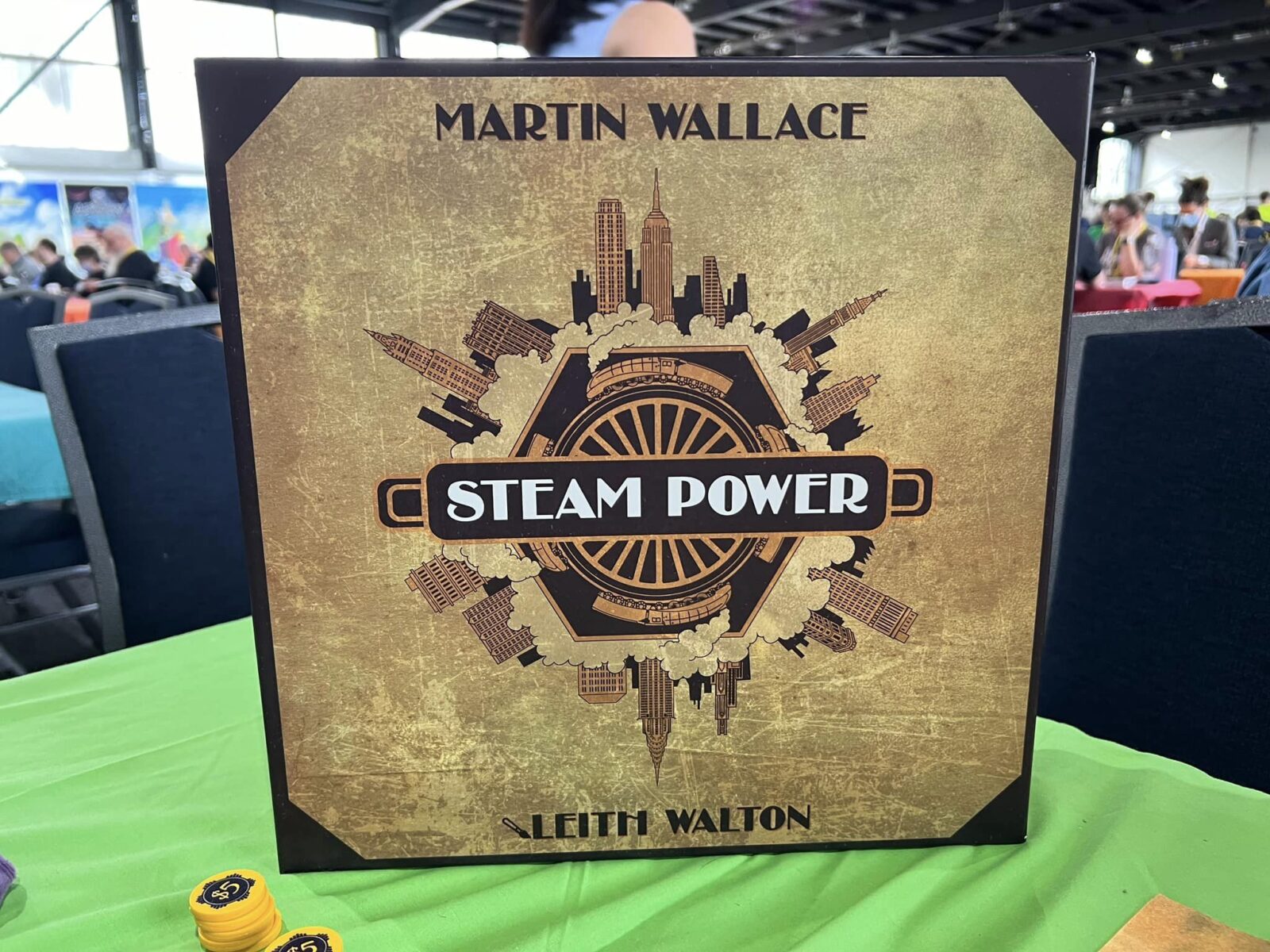
Steam Power is being brought to Gamefound in February by his very own publisher Wallace Designs. It **certainly features some familiar concepts for fans of Brass, given that much of the game involves building railways, and founding factories to create resources. The theme aside, they are very different in play; “It plays very quickly,” says Wallace, “Just 60 minutes, and a very low rules overhead, so you just get on with the game.

How simple are we talking? Wallace explains, “Steam Power started by asking, ‘What about a game where there’s no complexity in building?’. In the sense of, ‘Hey, you wanna build a track? Just build a damn track!’ You don’t need any resources, no prerequisites; you just build the track. The same with factories; just build a factory. I think there’s a lot of game designers who think that making a game is about making life hard for people, so you can’t do the things you want to do. To a certain degree, yes, that’s the challenge, but sometimes we put these artificial barriers in games that make things too hard. And I thought, well, where’s the fun in that? There isn’t actually any rule that says you can’t just have fun putting things down!”

Moving back to Brass, I asked whether there are any thoughts for new versions. Jokingly, I pitched Brass: Mars—”It almost rhymes!”—replacing iron for mining for frozen water, and space ports instead of ships, not to forget the always important potential for beer in space. He laughed, “Feel free to pitch that to Roxley, if you want. Although… I did once do a Brass in Space concept, actually. It used resources to build spaceships, and there was an additional layer with an alien war of attrition. it was Brass, but with a very different feel. I’ve lost all the files now sadly, I’d have to try to reconstruct it!”

Roxley have actually already announced they will be releasing a new version of Brass later this year. Specifics are short at the moment; whilst Wallace resisted my feeble attempt to squeeze him for more information, he did let slip one detail; “All I can say is it involves another form of alcohol!”

Until then, I’m confident Brass: Birmingham will stay at the forefront of gamer’s play shelves. If you’re hungry for more from Martin Wallace, watch out this month on Gamefound, for the launch of Steam Power!


Steam Power, launching in February on Gamefound


Brass: Lancashire review

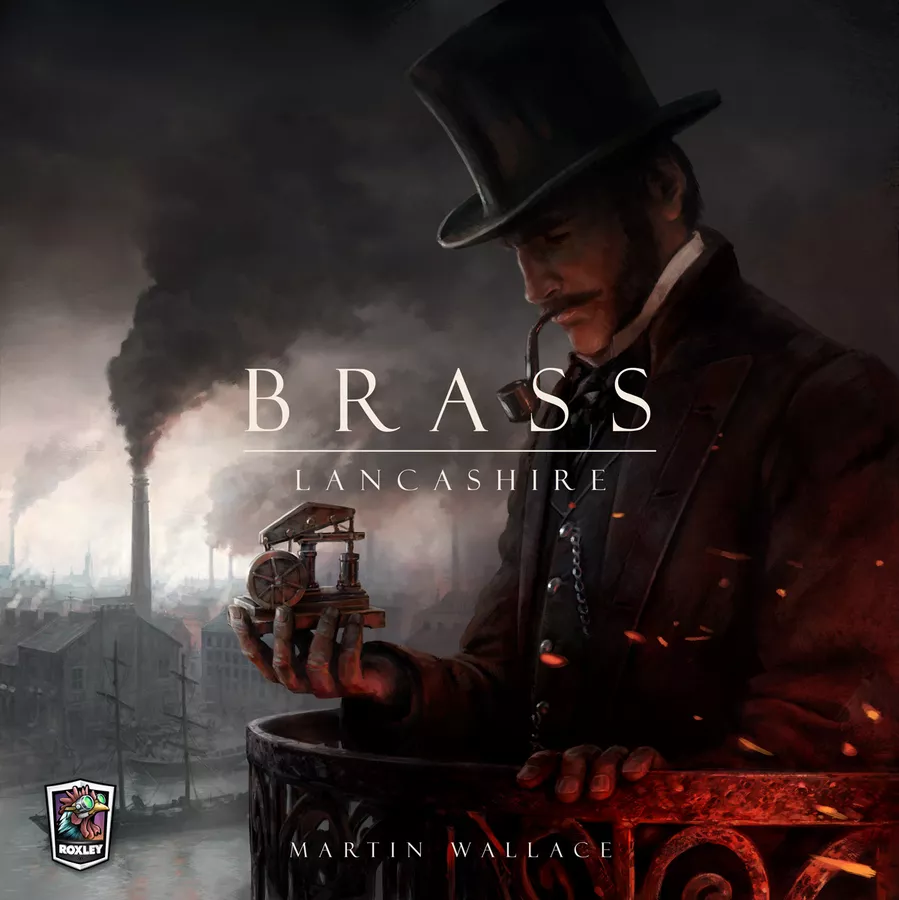
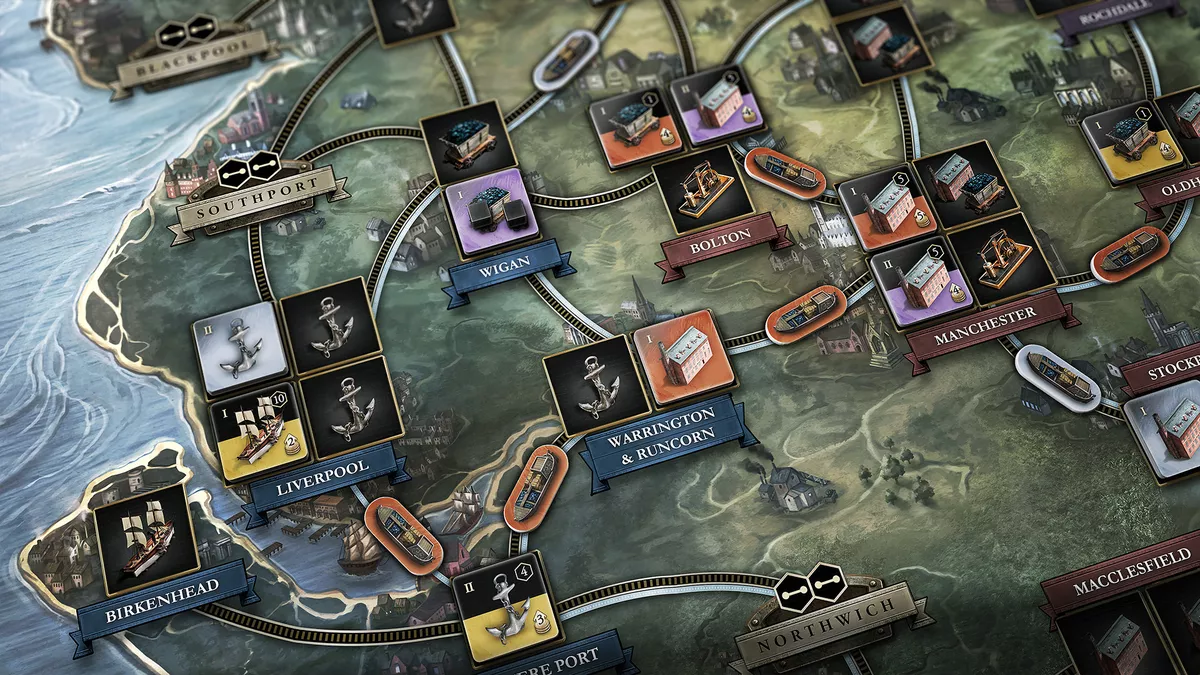
Brass: Lancashire is a re-mastered version of the 2007 game Brass. Set in the heart of Northern England’s industrial revolution, players compete to be the most successful cotton entrepreneur. In a cut-throat map-based economic battle, players sprawl a network of canals, railways and industries across the map, aiming to have the most successful empire after 100 years.

The game is split into two eras; firstly the canal era, with transport via watercourse the only option; followed by the rail era where a wider range of adaptable train lines can be used, but at a cost of burning coal. And if the nearest coal mine happens belongs to your opponent? That’s a shame, you’ve accidentally helped them whilst helping yourself!

Space on the map is intentionally limited for both transport and factories, meaning that players must work, begrudgingly together, transporting one another’s goods, and reliant on the very competitors they are trying to defeat. Victory points are scored at the end of the each era, based on transport links, and on which of your industry tiles have been “flipped”. Flipped industries have been activated, releasing their goods, and producing an income. At the end of each era, only those tiles that have been flipped are scored—so if you’ve built a gorgeous level IV cotton mill, but failed to actually use it, you won’t be getting any victory points for it.

Brass: Lancashire is a medium-to-heavy game, often lasting two to three hours. It involves a significant amount of game-state analysis; choosing whether to build a railway here, or invest in a shipyard there. Will you take a bank loan now when the costs are lower, or wait until you really need it, but at a higher price? Do you “develop”, to improve the tiles you can place in future, or just get some lesser tiles down onto the board instead? The game thus risks being bogged down with analysis paralysis; even playing and reacting to events on gut instinct remains a valid approach.

Ultimately, at the core of Brass: Lancashire, and the reason for its success, is player interaction. This is not a solo, point-salad Euro. Whether you’re building key routes so that your friends are forced to either detour or to pay you for the privilege, or anticipating which industries will be most valuable—and where—either way you’ll be wrestling with your friends for the spoils of 1870s Manchester in every game.

Virtual Lines In The Sand

The impact of AI Art on the Gaming World.

If 2023 was the year of AI hitting the mainstream, 2024 will be the year of the gaming world deciding “What on earth do we do about it?”.

What is Generative AI?

What do we mean when we say AI? Well, it’s a misleading term because we aren’t really talking about “Intelligence” at all. We generally mean “Generative AI”: a collective term for technologies that generate an output using computer networks.

The two key bits of tech are “large language models” and “diffusion models”. These programs use vast databases of written words and images to “understand” text, and to generate images based on those words. When you type “Draw me an apple” into a prompt and the website gives you a picture of an apple? That’s Generative AI in action.

When did Generative AI arrive?

Well, Generative AI has been around for a long time – the first models were available in primitive chatbots in the 1960s! – but the modern versions have been rapidly improving in quality since around 2014. Last year marked the first time when they had the ability to reliably compete with human effort.

In November 2022, a previously unknown product was launched onto the world: ChatGPT. A simple web form with the ability to turn users ideas into fully complete written work, poems and coursework, all in seconds. Within days people were launching entire books onto Amazon that they’d “written” in a few minutes.

Around the same time, the diffusion image models began to appear, most notably Stable Diffusion, DALL-E and Midjourney. Suddenly people with no artistic experience could creative purpose designed artwork at the drop of a (virtual) hat. Earlier models created uncanny models with extra fingers and too many limbs, but even in the space of a single year the AI companies have caught up and improved.

Time + Money vs Artists

Modern gaming is chock full of art. Modern board games have graphics on every tile, card, token and box. Art is also expensive to make and produce, both in time and finances. Anything that makes the process easier has the potential to be very disruptive.

We conducted a survey on social media, asking people’s initial reaction to the statement “How Do You Feel About AI Art?”. As you can see from the graph on the right, the results showed an interesting split – far more landing in the Against camp (69%), but also a reasonably strong showing for Pro (23%). Of course, our pool of responders are likely to be more invested in board games than others; it still appears to highlight strong opinions and division, especially amongst creatives working in the gaming industry.

We spoke to David, owner of Moorhade Games, who pointed out an advantage of using AI; “I am a one man show, and getting a project off the ground with limited funds is very difficult. It would be easy to use AI art and be done with it – but it would feel disingenuous, and cheapen what I am trying to create”.

Despite the obvious financial advantages, they don’t feel it is worth the trade-offs; “Many artists are not able to make a living off their art as is. If AI is able to take the job that an artist would be commissioned for, I think that is unethical. Money is a barrier, and makes it difficult. But the difficult road is often the one that is more wondrous.”

Yet this philosophy is not held by everyone, and contention is not necessarily stopping the uptake of AI Art. Stronghold Games recently stirred up controversy when they revealed that they plan to use Generative AI to create the artwork for their latest Terraforming Mars campaign.

Given that it raised over $2.2 million, many commentators felt that Stronghold could – or even should – support more artists directly, rather than potentially replacing them with algorithms.

When interviewed, Travis Worthington, from Indie Game Studios (Stronghold’s parent company), said “I think the reality is that people are focused on the artist compensation model. Terraforming Mars has always worked internally, so it’s always employed the Fryxelius brothers to develop the artwork, and quite honestly they’ve used a fair amount of stock images and other mostly free images out there to use. The decision to use AI still employs the same two artists.”

In employing the same people to oversee the work, their hope is actually that no artists will be impacted by their specific decision in this project. “I think the biggest reason why FryxGames, and quite honestly ourselves, are using [AI] is not the cost savings but the development time. You can always equate time with cost, but the time to go through and bring a product to market can be decreased dramatically by using Generative AI.”

Even so, Travis acknowledges that there is likely to be a wide repercussion across the gaming market.

“I don’t want to say that this is harmless technology. It’s clearly going to have a lot of impact, very specifically on illustrators. It already has – I’ve seen some reports in China that video game developers have laid off large parts of their illustration department because the artists that they keep on board are so much more productive leveraging AI technology. So it clearly has had an impact, and will continue to have an impact, on illustrators.”

FryxGames CEO himself Enoch Fryxelius posted a video where he confirmed a similar opinion, “I see no way to turn back time – Illustrators lose jobs for every new tool that is developed.”

The other side of the coin

Yet not every large name in the gaming business is taking the same approach to Generative AI. Wizards of the Coast, owners of the Dungeons & Dragons empire have recently announced they are updated their artist guidelines so that “artists must refrain from using AI art generation as part of their art creation process for developing D&D art.”

Sadly this came, not as a considered, intentional mission statement, but as a response to the public discovery (and backlash) that AI was used by an artist throughout the latest Bigby Presents Glory of the Giants expansion for the game.

Travis isn’t convinced this policy can work; “I think it’s gonna be very, very difficult for anyone to determine that AI was not used in any part of the process in developing art.”

Pawe? Kicman is a game designer with an interesting perspective on the issue. In 2022 he crowdfunded a CY_BORG expansion called P!LLS FVLL of GODS, which used solely AI art to represent the soulless dystopian setting of the game. Since its creation, however, he has completely changed his view on the use of AI

“I’ve come to understand how it works a little bit better and I’ve listened to other creators, their anxieties and objections. The whole ethical and legal situation has also become clearer – whilst still staying a little ambiguous too. Also, I don’t feel the image quality is of a standard that I wish to use in my games.”

He’s withdrawn P!LLS from sale until he can pay real artists to recreate the art for a re-issue. He is now focusing on solely human illustrated projects, with Whispers of the Woods live on Kickstarter as we go to publication.

Opening access to all

One anonymous responder to our survey was in favour of Generative AI, pointing out that “It’s great for small creators and self publishers; a force & effort multiplier”.

They aren’t alone in that opinion: “It is exciting and uplifting and democratizing”, says Seann McAnally, creator of Times That Fry Men’s Souls and publisher at Nerd Glows On.

*“*It allows small publishers to have the quality of art the market demands, without having to raise funds in advance via Kickstarter or whatever. There’s a lot of talk about AI taking income away from artists. I don’t have enough money to pay artists in the first place!”

Generative AI represents a potential opportunity for creatives who would never be able to employ artists to expand their range of output. “I don’t know a single artist who makes enough money to live on by illustrating game books. No one is losing much here, and indie publishers are gaining everything”.

Will consumers agree? Obviously most creatives buy lots of games themselves – Christian Nommay, from Knight Errant Games points out “I’m a writer and a consumer. In both case, I think AI art is wrong; it takes the job away of real artists and it makes lifeless and boring content. Why would I consume something from someone who didn’t put any love and passion in their work?”

Of course, Generative AI can produce art for someone who can’t draw – but it can also do it for those limited in other ways. Jacob Wood, creator of Accessible Games Quarterly spoke to us, “I’m a blind game designer and writer. I hire artists to create work for games and zines. As a blind person, I don’t look at art the same way others do. I appreciate the talent that goes into it and I love some good alt text to describe a vivid picture! But honestly, words on a page can do the same for me.”

Despite not being able to see artwork, he finds it has an importance to his creative process, “I still value art though, because I understand that other people value art. I also value the craft and talent of it all. I think there’s value in continuing to prop up the artists that make our games and books so great.”

Of course, opening access also means that the threshold for quality potentially drops. One respondent pointed out “I’m an art director with three years of formal training in art, and also an RPG publisher facing the prospect of being driven out of business. The market is being flooded with low quality AI generated products. Quality standards are plummeting and I’m worried that is killing gamer’s trust and interest in small creators.”

Oh, the humanity!

A consistent concern we hear is that using Generative AI lacks a human element, a force of life energy and meaning that is absent when allowing a machine to “create” something.

Diogo Nogueira’s take on the situation is clear-cut; “Art is intrinsically human. I can’t see any justification for automating human expression”.

A renowned graphic designer, artist, writer and game designer from Brazil; Diogo thinks AI is fundamentally empty, “I fear it’s cheap and widespread use will slowly distance us from the humanity in art and, in the end, make us even more alone.”

As a freelance artist working in games and RPG, Hodag RPG feels equally strongly, “The point of art, any art, is the act of creating it. The end result can be great, or not, but it’s the practice of art that is important”. When asked “Have you been impressed by any AI art you’ve seen?” his response was adamant “Never- it all looks like regurgitated digital paint slop!”

Kaya Oldaker, digital artist and creator of the Flowerpunk webcomic, feels the issue is not the technology itself, but how it’s used. “I am involved in the Solarpunk movement and am a staunch believer in climate justice – I am not against the idea of technology as a solution to modern problems as long as it benefits people instead of exploiting us.”

Whether it’s the heartbeat of human creativity resonating inside the work, or the people involved at the creative coal-face; the humanity of the approach to AI matters to many. Kaya says “I am not entirely against the concept of AI art, but how it has been conceived [will] further exploit working people, especially those in the creative sector.”

As Jacob explained, “Simply saying ‘I can do this with AI for a fraction of the cost’ is no excuse for paying people less. I am completely against firing your staff artists and replacing them with AI artists and “graphics finishers. There’s a fear that we’re going to put legitimate creators out of work and that is happening in the case of some major employers. But it doesn’t have to.”

The Future

Ultimately, the conversation about Generative AI probably comes down to hypothetical hand-wringing. It’s here, and it’s likely to stay whether or not we like it.

“I think it’s less about acceptance and more about apathy. The lack of care for what it represents and what it will do for the gaming industry is what scares me far more than folks who are passionate and excited about new tech”, says David Bock. His experience in the industry speaks volumes, both as a graphic designer for games such as Gloomhaven and Frosthaven, and head honcho at new publisher Binxadinx Games. “I get why they think it’s cool, but it’s the huge population of ‘I don’t care’ folks that will make it commonplace.”

Here at Tabletop Gaming, our concern is the quality and health of our hobby. David points out that there are significant ways that the industry may be disrupted in a negative way. Using nice art (and miniatures) to polish an otherwise turgid game is not a new problem, but lowering the threshold for bringing games to market may be a two-edged sword. As a new publisher, with a campaign Rocket Ranchers coming to Kickstarter in early February, quality control is important to him.

“As a freelance artist, I’ve dealt with several non-artist ‘over-the-shoulder’ leads who would see this as an opportunity to give less creative freedom to their artists and in some cases, eliminate creatives. My other major concern is the removal of the art barrier to publication. Poorly designed games or barely tested products can now be used to fleece consumers with AI art, fooling buyers into thinking it’s a quality product that passionate creators invested time in.”

Our policy at Tabletop Gaming is that we will not be using Generative AI – beyond the examples in this post – preferring to use our platform to highlight human designers, artists and creators. We are just one voice amongst many; we asked followers if they think AI Art will become completely accepted and adopted in the hobby we adore:

“Maybe”, reflects Diogo. “But, for me, it would still be meaningless. Like an empty shell. No humanity. No shortcomings of the artist. No intentionality. We are transferring the responsibility of making human expression to a machine”.

Only time will tell whether Generative AI proves to be a positive, a game-changing remover of obstacles; or an existential crisis for human expression? I suspect that – to a degree – both may be true.

//Brains and Bots

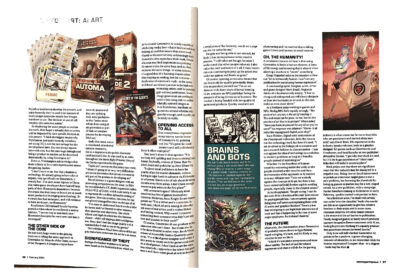
We can’t talk about Artists and AI Art without giving a demonstration! We paid Hodag RPG to draw us a quick image of “a goblin-made machine creating art. The machine is cobbled together with paintbrushes and cogs and mechanisms”. Then we fed exactly the same prompt into an image generator.
Encapsulate 2023

The End Of The Road

Words by Chris Lowry

Encapsulate started back in issue ##, looking at the cream of the crop of each year’s developments in the world of gaming. We began back in the distant days of #19xx and have now travelled all the way to the last year!

This is sadly the last outing for this feature, but if we have to stop, 2023 was a whirlwind of a year to end on! Still reeling from the crazy post-lockdown postal surges of 2022, several prolific gaming companies sunk under the weight of unforeseen expenses; most notably Holy Grail Games, the creators of Rallyman: GT and Dominations. Others companies like Blacklist Games, deeply invested in the ongoing momentum of running multiple crowdfunding campaigns one after another, went quiet and stopped responding to requests for updates.

It was also the first year where AI Art began to truly impact on the mainstream, with Stronghold Games causing controversy as they chose to use AI-generated art for the latest multi-million dollar Terraforming Mars expansion. The true crown though, for the year’s shooting-yourself-in-the-foot award, goes to Wizards of the Coast for their disastrous attempt to update the Open Gaming License, which caused a huge backlash and potentially harmed the D&D brand forever.

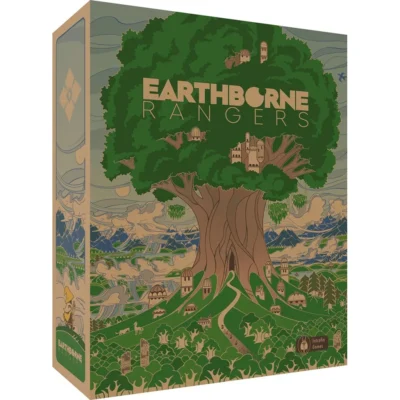
Earthborne Rangers

Earthborne Rangers is an exploration card game, with a deck of rangers and card play based around stats, events and a world that you discover through play. It sits on the shoulders of games like the 1500 card behemoth 7th Continent, open-world video games like Zelda: Breath of the Wild and more than a little on the limitless imaginative horizons of roleplaying games.

Earthborne Games deserve bonus points for their mission to create a locally produced and sustainable game, with FSC-certified wooden tokens and dice, and no plastic at all! Their Kickstarter initially funded in 2021 with over 4,700 backers, but the additional design constraints added some inevitable delays, hence it only appearing on our shelves two years later. Such is the cost of making a game that is fully compostable.

Board games toe a perilous line when it comes to narrative. There’s a certain degree of creative hand-holding they are expected to provide, a railroad of story that players expect to be fed to them. RPGs are free of this constraint; Earthborne Rangers probably comes the closest to a middle ground I’ve seen. It feels truly open world, even to the degree that some events happen around players, rather than to them. Does it lack a little on providing a “win” state? Perhaps, but the wide landscape of exploring a world, and inhabiting it as your own, is a reward worth that cost.

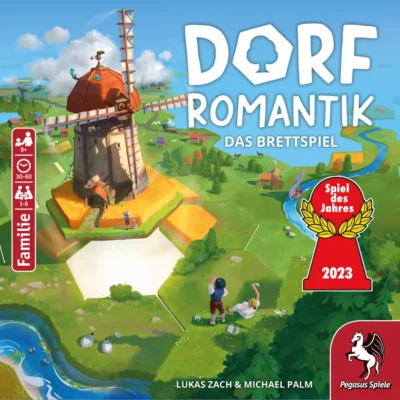
Dorfromantik

Not everything this year was vast and complicated. 2023 also brought us the delightfully relaxed Dorfromantik. Based on the equally chilled computer game from 2019, this is a co-operative tile-laying game where you score points with calm collection of groups. How you build your forests, villages, streams and railway tracks will impact on your ability to multiply your scoring chances.

As the placid accompaniment to its serene gameplay, Dorfromantik is aesthetically pleasing – just putting down the tiles to build a little world is a delight. The slice of cosy countryside these hexagons will leave on your kitchen table is worth the price of admission. For replayability, there are even some light legacy-style elements in the shape of some TOP SECRET boxes that include new ways to score; although there’s no stickers here or permanent changes to pieces.

Dorfromantic managed to swipe the prized Spiel des Jahres Game of the Year award for 2023 – partly because its a great family game that’s also supremely solo-friendly. It’s definitely not built to appeal to serious gamers looking for competitive confrontation, but as a casual distraction, or to play whilst waiting for other things to begin? Difficult to go wrong, and a 7.7 rating on Board Game Geek implies it has left plenty of gamers pretty satisfied.

Votes for Women

There’s the mechanics of an old school war game underneath this snappy-looking two person game. One player represents the American women’s suffragist movement, the other the grumpy oppressive establishment. Fast paced play couples with asymmetric goals and abilities – years of razor-edged games like Root and Oath have paved the way for map seizing warfare that isn’t a 13 hour Risk marathon.

If anything, Votes for Women immediately brings to mind the classic Cold War re-enactment Twilight Struggle, but manages to cover similar ground in a vastly more accessible manner. It would be possible to play without knowing any of the relevant history, but players will find themselves becomes educated, inexorably, through interaction with this excellent piece of design.

Lauded by voices across the review-o-sphere, and voted one of the top games of the year by Polygon and Smithsonian magazine, it’s certainly the tightest blend of historical simulation and fun we encountered during 2023. The production particularly stands out, with the wooden voting checks and cross marks both thematically perfect, and a tactile treasure in the fingers. The first edition sold out completely, and a new Kickstarter reprint will likely be nearing completing when you read this.

Frosthaven

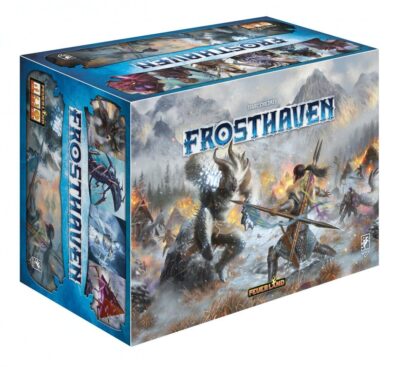
Discussion of 2023 wouldn’t be complete without a mention of Frosthaven. We even featured it in the previous year too, although it only arrived in gamers hands in 2023. The big – with the emphasis on “massive” – sibling to 2019’s Gloomhaven, Frosthaven is best described as more. More adventures, more frost, more systems, more content, more cost and much more box. Its the only game I’ve ever seen that it would not be silly to suggest using a wheelbarrow to manoeuvre around. It weighs 16 kg, around the same as my labrador.
So what, exactly, is it? It’s the most ambitious legacy game ever devised, a sprawling co-operative adventure with entertaining combat and detailed, satisfying character development. Set in the same world as Gloomhaven, you play as mercenaries in a small outpost north of capital city White Oak. Battling through harsh weather and invasion from forces like the Algox – weird mountain yetis – and Lurkers – sentient sea crabs, you will explore the world, live through the seasons, and aim to complete your character’s story arcs and lead them into retirement.

Throughout play the map, cards and other elements are upgraded using a barrage of stickers. These adjustments permanently change the world in which you are roaming. Does it technically mean that this is a £200 single-use game? Not really; especially given that you can download fan made sticker charts to keep your game pieces in pristine condition. Regardless of reusability, Frosthaven certainly represents a huge investment in time, money and shelf space! With 83,000 backers on a $13 million Kickstarter campaign, so far it hasn’t picked up many awards – although maybe that’s just because it’ll take another 10 years to finish playing it through – but it certainly made a huge splash in the world gaming community last year.

Making Loud & Balanced Podcasts

How to use DAW compression, normalizing and limiters to improve your audio

Producing a podcast is often a fairly simple thing to do, but I used to have issues with them being much too quiet. Here are my tips and techniques for doing it well. I use Reaper in the examples below, but any DAW (Digital Audio Workstation) suite will have similar processes and features…

Enjoy this post? Check out the podcasts I run over at the Beyond Cataclysm micro-publisher…

This Book I Read… is a sort-of-book-review podcast, featuring interviews with authors about their own work, and a book that has stuck with them, for good – or bad – reasons…

What Is Roleplay? is a beginner friendly look at the world of roleplay games, and the exciting world of fun, friendship and imagination they entail.

Normalising Tracks

Example of a clipped sound file from Wikipedia (by Gutten på Hemsen, CC BY-SA 4.0 , via Wikimedia Commons)

This is always a sensible step to take, even before you do any editing.

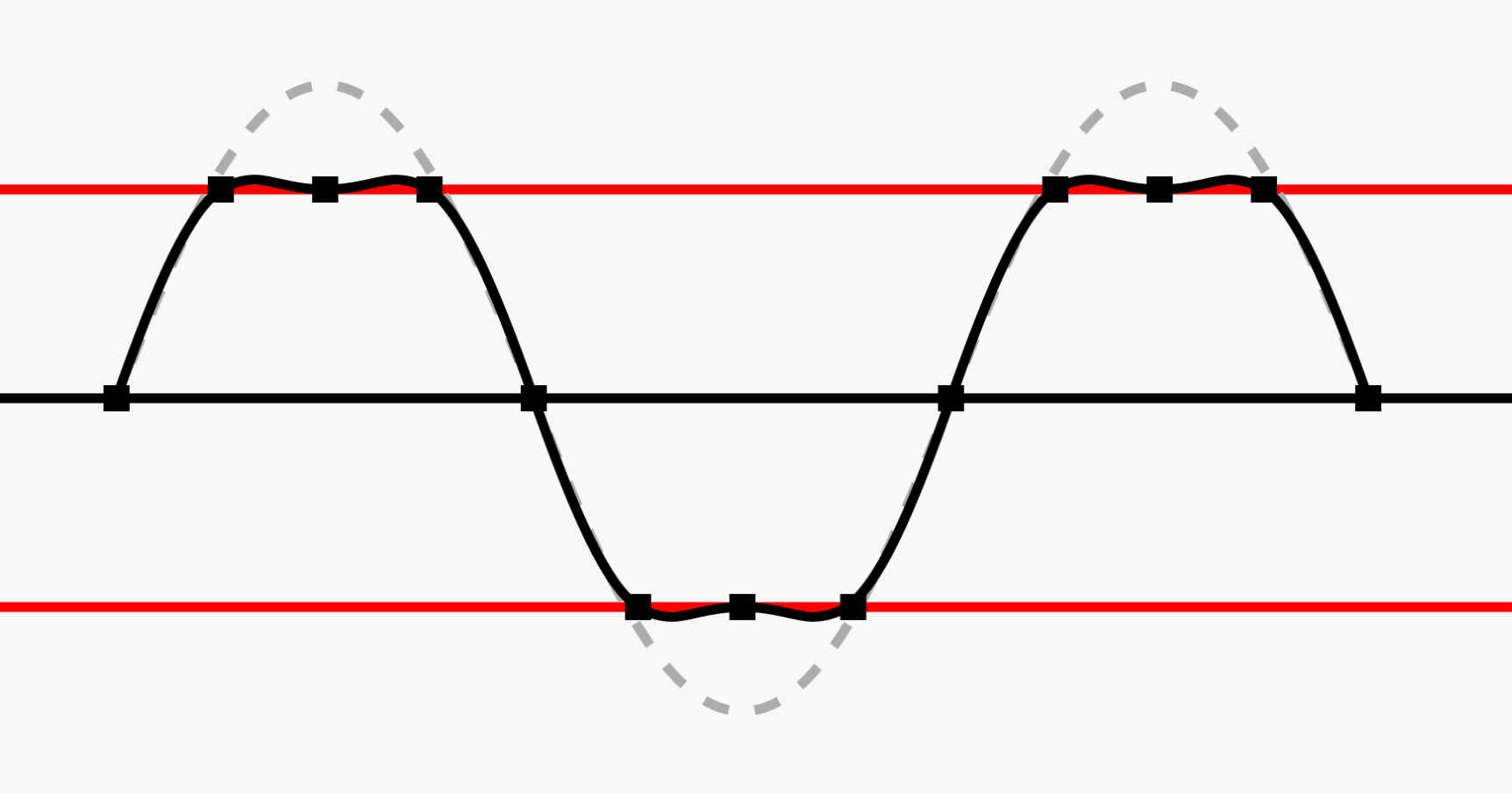
What this does is makes the entire clip as loud as possible, without it clipping. Clipping is where the digital soundwave gets too big, and gets chopped off, which can sound distorted or broken.

That’s just good for working more clearly with the audio you can see, as the preview will be nice and full, and should mean that all speaking tracks are roughly the same volume as each other which helps when balancing them with each other as you edit and then finalise your mix.

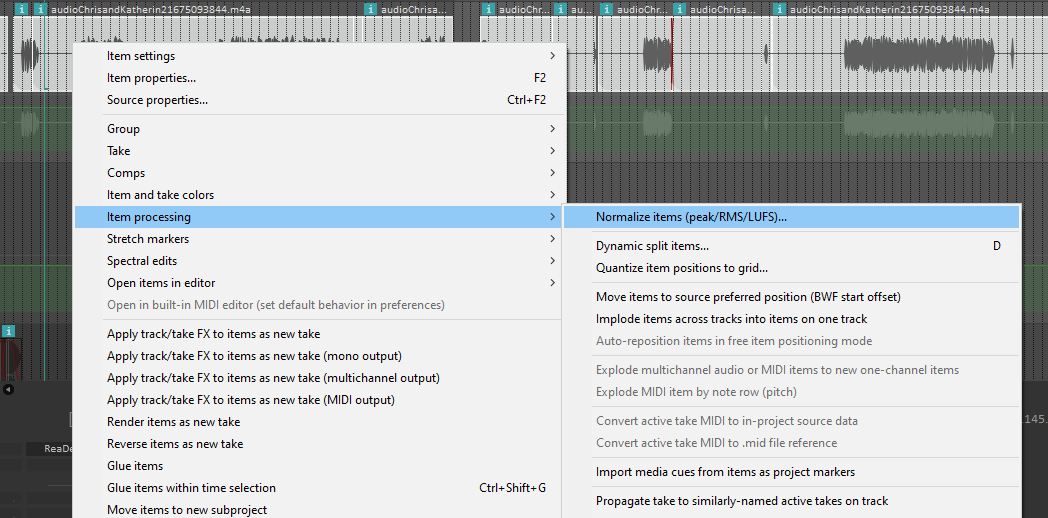
1. Select all the sections of your recording (Select all items in a track by double clicking the Track Control Panel on an empty bit – go to FX, go down and double click the empty grey just under it. Then, Right click any segment > Item processing > Normalize items.

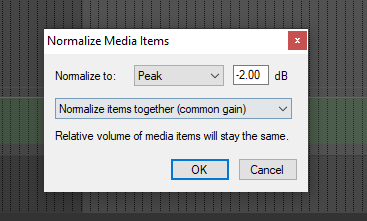
2. This brings up a dialog box with some options.

3. Peaking at -2db just gives you a little bit of head room – if you peak at 0db, it will hit absolutely maximum volume, any effects you add or fiddling that makes it louder will cause it to distort.

4. You definitely want Normalize items together (common gain), otherwise every segment will be adjusted to different values and will be very uneven.

Compression

Compression, for those who don’t know, squashes every piece of sound above a certain level, by a ratio. What that does is it reduces the difference between loud and quiet. A sudden laugh, rather than being twice as loud as talking, ends up 50% louder, for example, which is more comfortable and less jarring to listen to.

Setting up basic compression on a track is pretty easy.

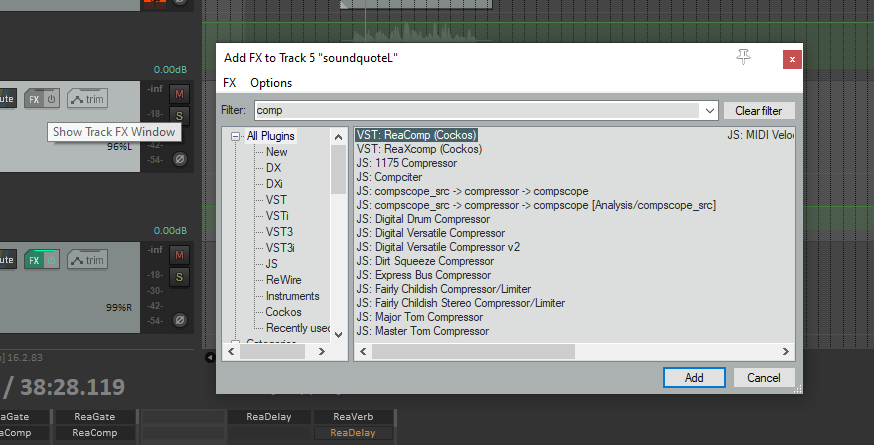
1. Click “FX” in the Track Control Panel, and a dialog will appear:

2. Select ReaComp, and you have a scary set of dials. Don’t stress. You really only need two of them at a basic level.

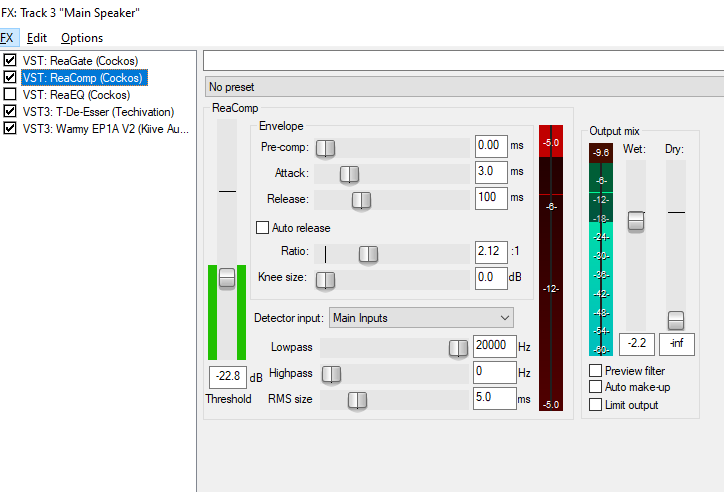
  • Threshold is the volume above which the compression kicks in
  • Ratio is how much it squashes audio above the threshold

3. Press play on your audio, and the threshold will fill with green. Drag the marker to just above where it gets to during quiet talking.

4. The idea is that only louder talking/shouting/laughing gets compressed. I would set the ratio at around 2, to have a mild but useful effect. Going much above 4 can make things sound very sudden and flat.

5. Below you can see one that I set up, with the red guage showing how much the compression is kicking in.

6. (Pro tip, you can always set up multiple compressions, with a second one with a higher threshold and higher ratio, so that the really loud sounds get squashed even more. I do that in the next section.)

Master Effects

Once I’ve basically finished editing, and compressed and EQ’d my individual tracks, I’m ready to export. Before I can do that though, I set up the following effects on the Master track:

  1. ReaEQ
  2. ReaComp
  3. ReaComp
  4. ReaLimit
  5. Loudness Meter

1. My EQ is set as a High Pass Filter. Basically it allows high frequencies through, but, in this case, cuts off anything much below 50Hz. Humans can’t hear below 20Hz, and it can cause earbud speakers trouble, and muddy the sound between different voices and various problems. There’s no downside to putting one on, and often a few benefits.

2. I then set two Compressions, one with a 2.0 ratio and one with 4.0 ratio , with the 2.0 coming on with loud talking, and the 4.0 just rarely stepping in on very loud bits.

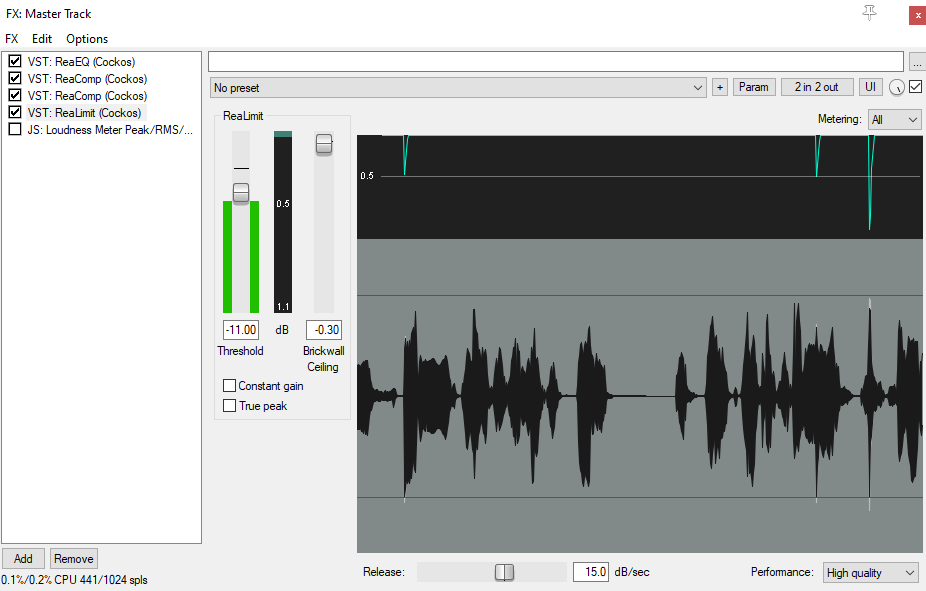
3. A Limiter (I use ReaLimit) is like an UberCompressor – it boosts the volume to a level, but also guards it firmly – anything that crosses the line is squashed like a pancake; hence the term “Brickwall”. The reason for this is that it’s better to have ‘flattened’ sounding volume peaks to ones that are distorted and clipped. Clipping is a big risk because we are boosting the volume as we adjust the threshold.

4. I set it with a Brickwall of -0.3, giving just a tiny bit of room above it, and a Threshold (the amount it boosts the volume by) to a point where the limit is only reached very occasionally, like the screenshot below. You need to press play and just watch a bit for that.

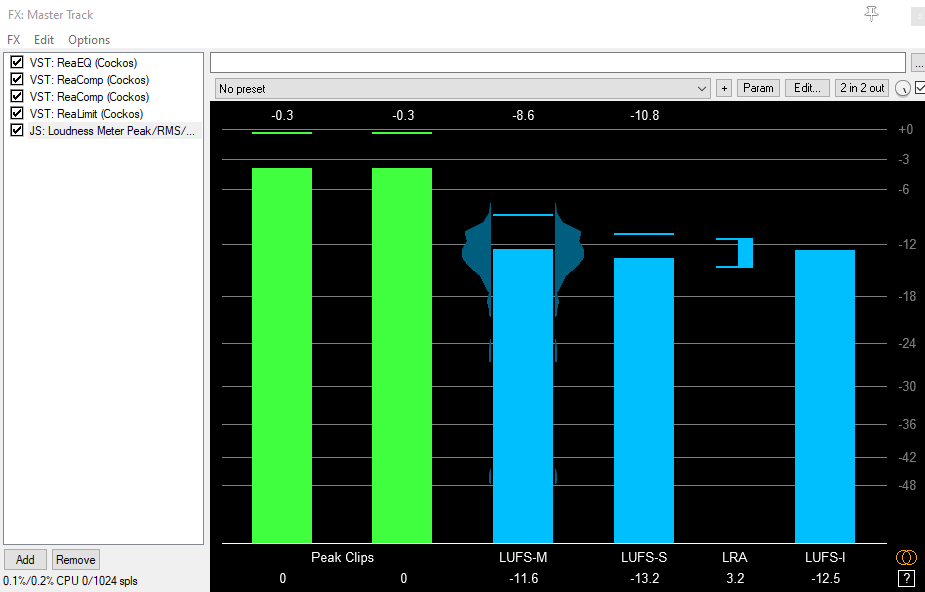
5. Finally, the Loudness Meter gives a guage of how loud your recording is ending up at.

6. All the podcast providers recommend different volumes – around a LUTS value of 14 to 16. Ours here is -12.5, which is a smidge too loud, but tells us we aren’t miles off course – But we will be adjusting it in our export anyway, as we export…

Exporting

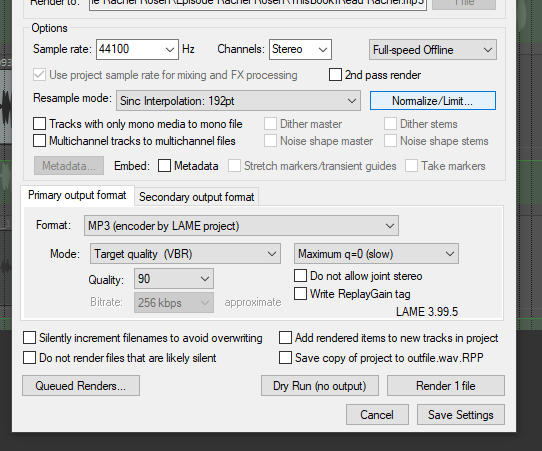
1. Go to File > Render, and you get another weird dialog box.

2. The important bit here is Normalize/Limit…

3. Set the LUFS-I value to -14, which should keep most podcast platforms happy, and you are good to go!

4. (Here’s the final render dialog, which shows it finished the job at exactly -14.0)

Top Ten Wooden Games


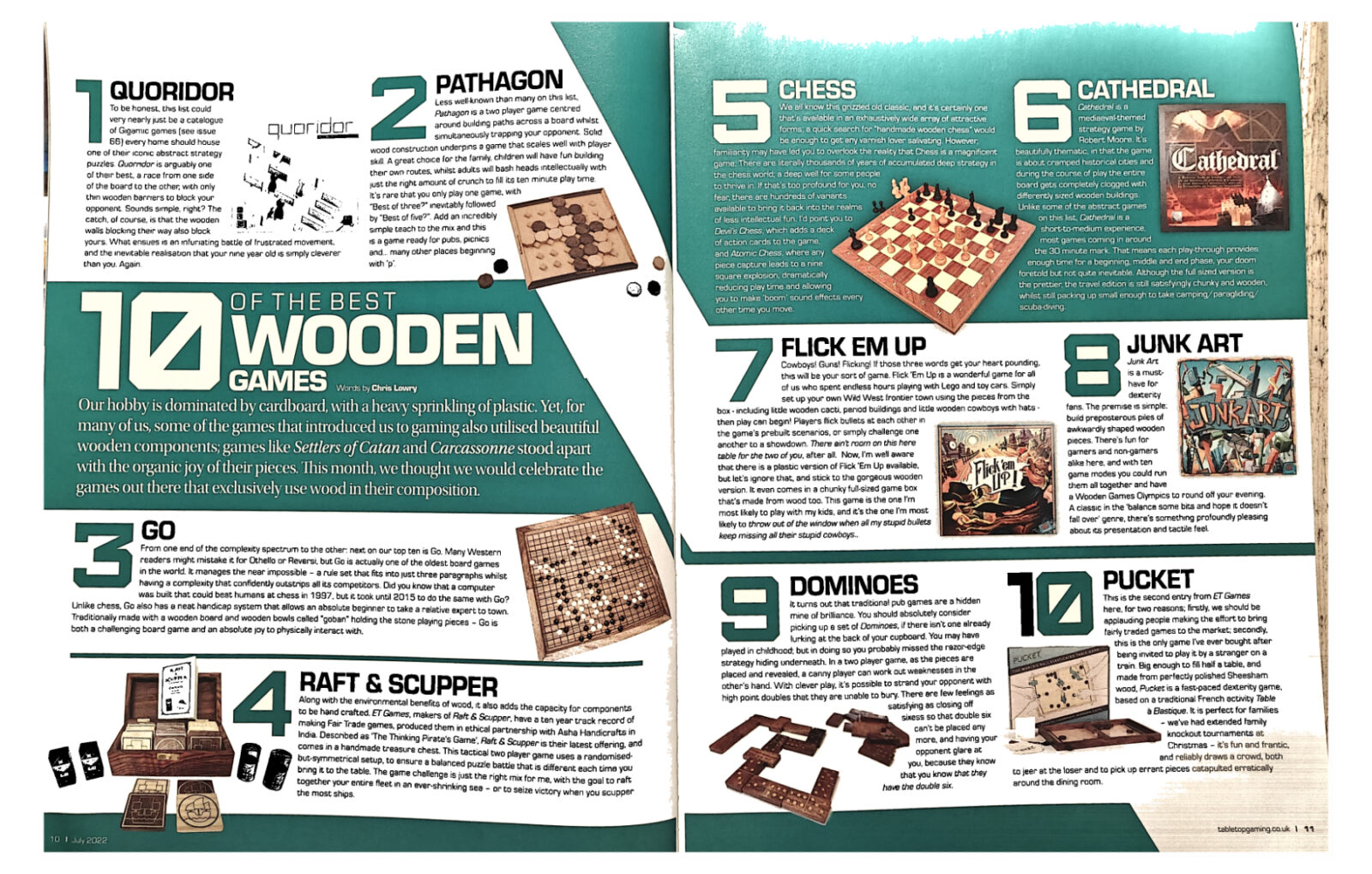
Our hobby is dominated by cardboard, with a heavy sprinkling of plastic. Yet, for many of us, some of the games that introduced us to gaming also utilised beautiful wooden components; games like Settlers of Catan and Carcassonne stood apart with the organic joy of their pieces. This month, we thought we would celebrate the games out there that exclusively use wood in their composition.

Quoridor

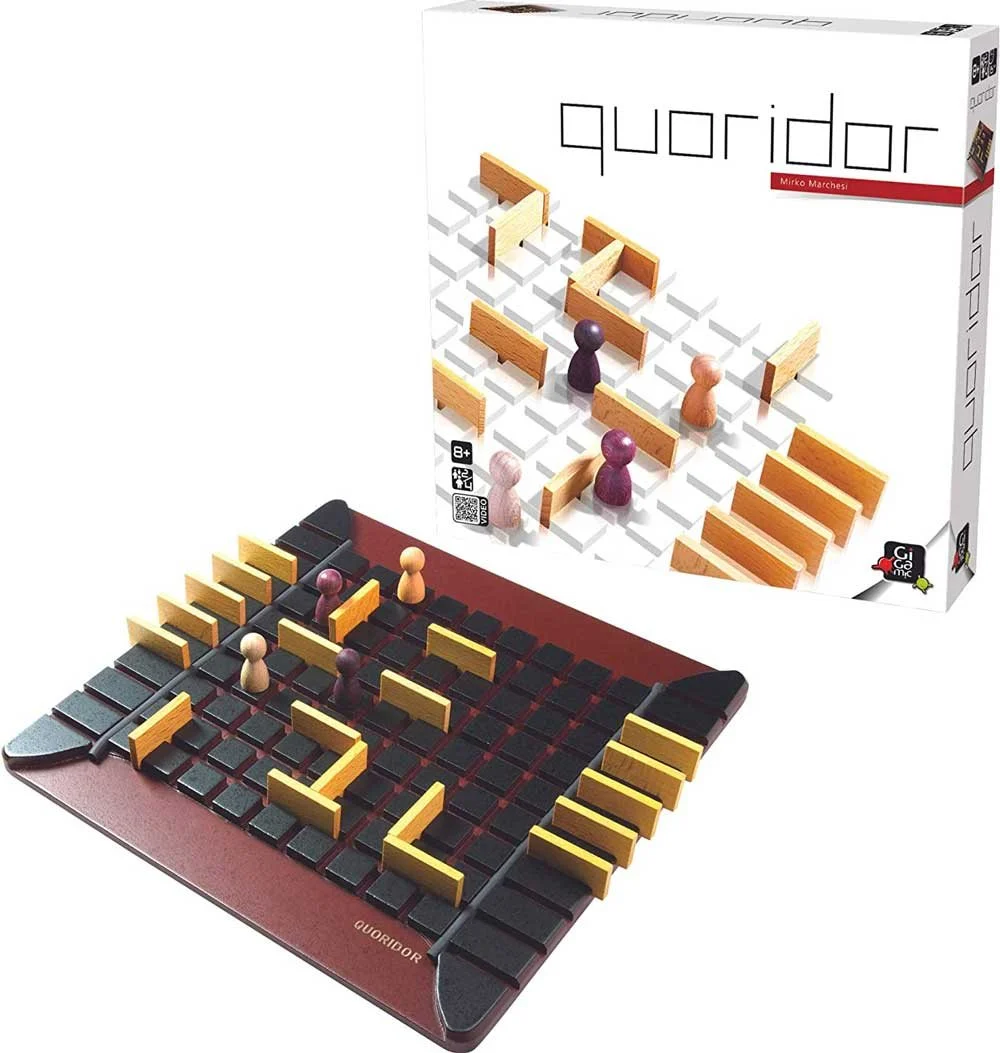
To be honest, this list could very nearly just be a catalogue of Gigamic games; every home should house one of their iconic abstract strategy puzzles. Quorridor is arguably one of their best, a race from one side of the board to the other, with only thin wooden barriers to block your opponent. Sounds simple, right? The catch, of course, is that the wooden walls blocking their way also block yours. What ensues is an infuriating battle of frustrated movement, and the inevitable realisation that your 9 year old is simply cleverer than you. Again.

An honourable mention here for Gigamic’s Quarto too, another equally-delicious, equally-enraging strategy game.

Pathagon

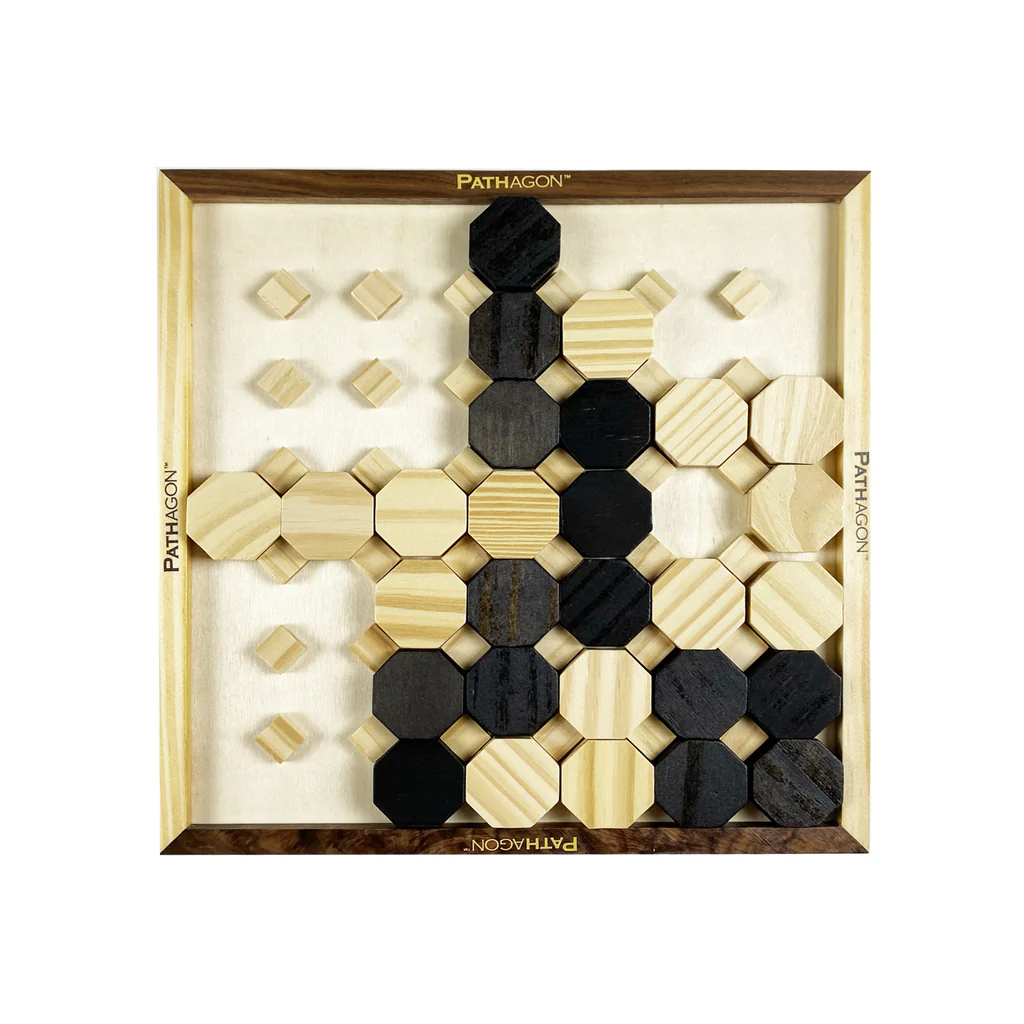
Less well-known than many on this list, Pathagon is a two player challenge, centred around building paths across a board, whilst simultaneously trapping your opponent. Solid wood construction underpins a game that scales well with player skill. A great choice for the family, children will have fun building their own routes, whilst adults will bash heads intellectually with just the right amount of crunch to fill its ten minute play time. It’s rare that you only play one game, with “Best of three?” inevitably followed by “Best of five?”. Add an incredibly simple teach to the mix and this is a game ready for pubs, picnics and… many other places beginning with “p”.

Go

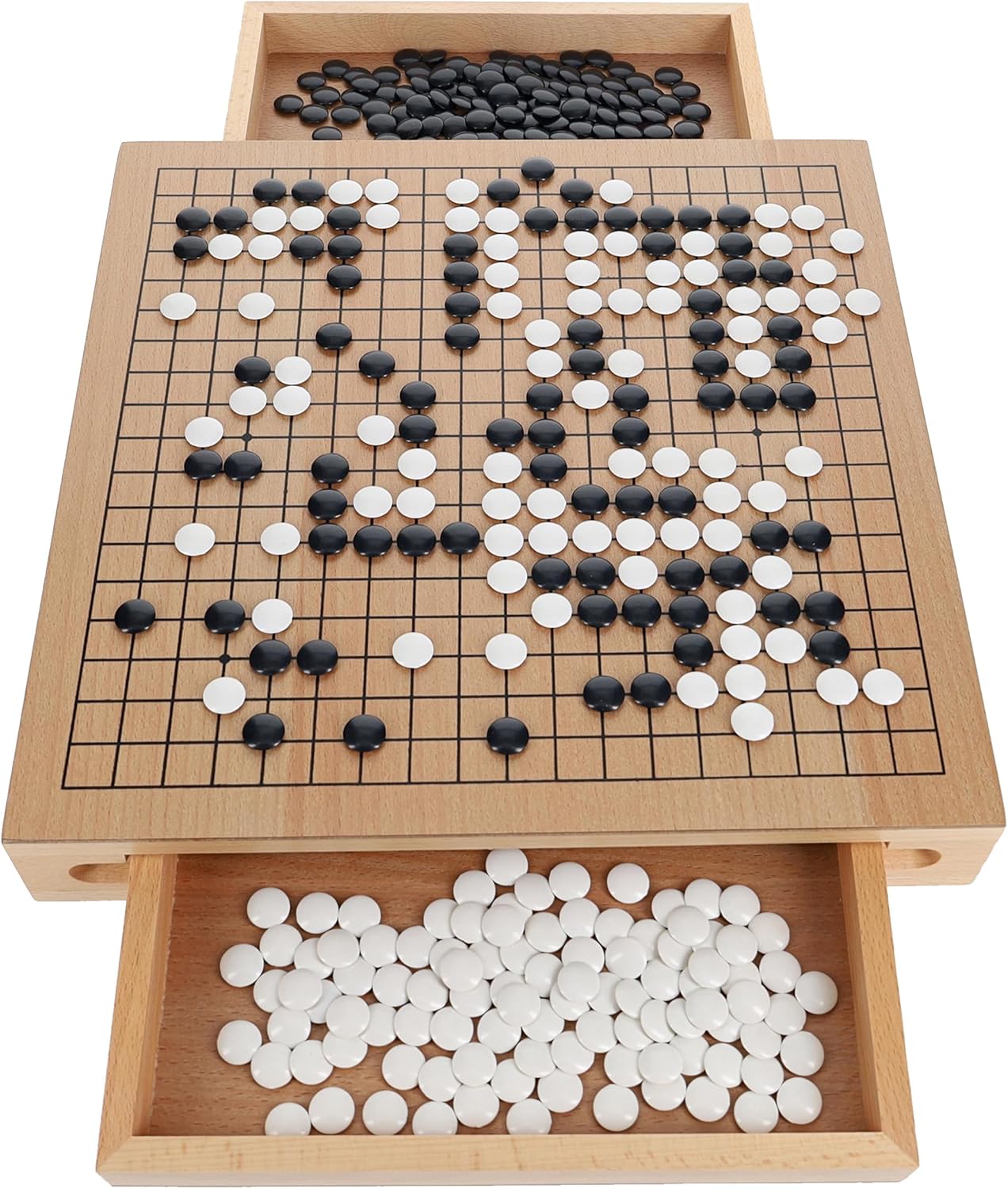
From one end of the complexity spectrum to the other: next on our top ten is Go. Many Western readers might mistake it for Othello or Reversi, but Go is actually one of the oldest board games in the world. It manages the near impossible – a rule set that fits into just 3 paragraphs whilst having a complexity that confidently outstrips all its competitors. Did you know that a computer was built that could beat humans at chess in 1997, but it took until 2015 to do the same with Go? Unlike chess, Go also has a neat handicap system that allows an absolute beginner to take a relative expert to town. Traditionally made with a wooden board and wooden bowls called “goban” holding the stone playing pieces; Go is both a challenging board game and an absolute joy to physically interact with.

Raft & Scupper

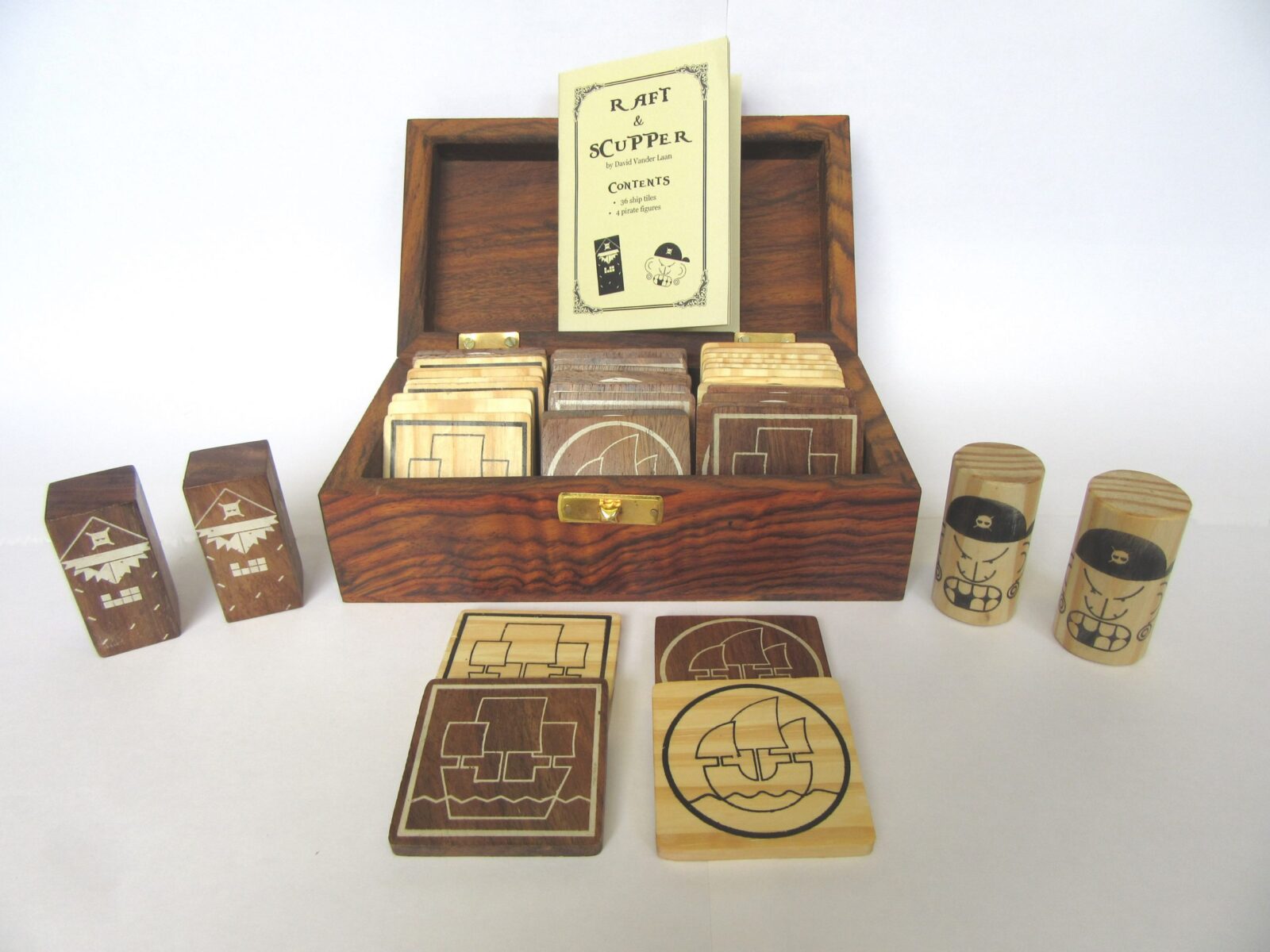
Along with the environmental benefits of wood, it also adds the capacity for components to be hand crafted. ET Games, makers of Raft & Scupper, have a ten year track record of making Fair Trade games, produced them in ethical partnership with Asha Handicrafts in India. Described as “The Thinking Pirate’s Game”, Raft & Scupper is their latest offering, and comes in a handmade treasure chest. This tactical two player game uses a randomised-but-symmetrical setup, to ensure a balanced puzzle battle that is different each time you bring it to the table. The game challenge is just the right mix for me, with the goal to raft together your entire fleet in an ever-shrinking sea – or to seize victory when you scupper the most ships.

Chess

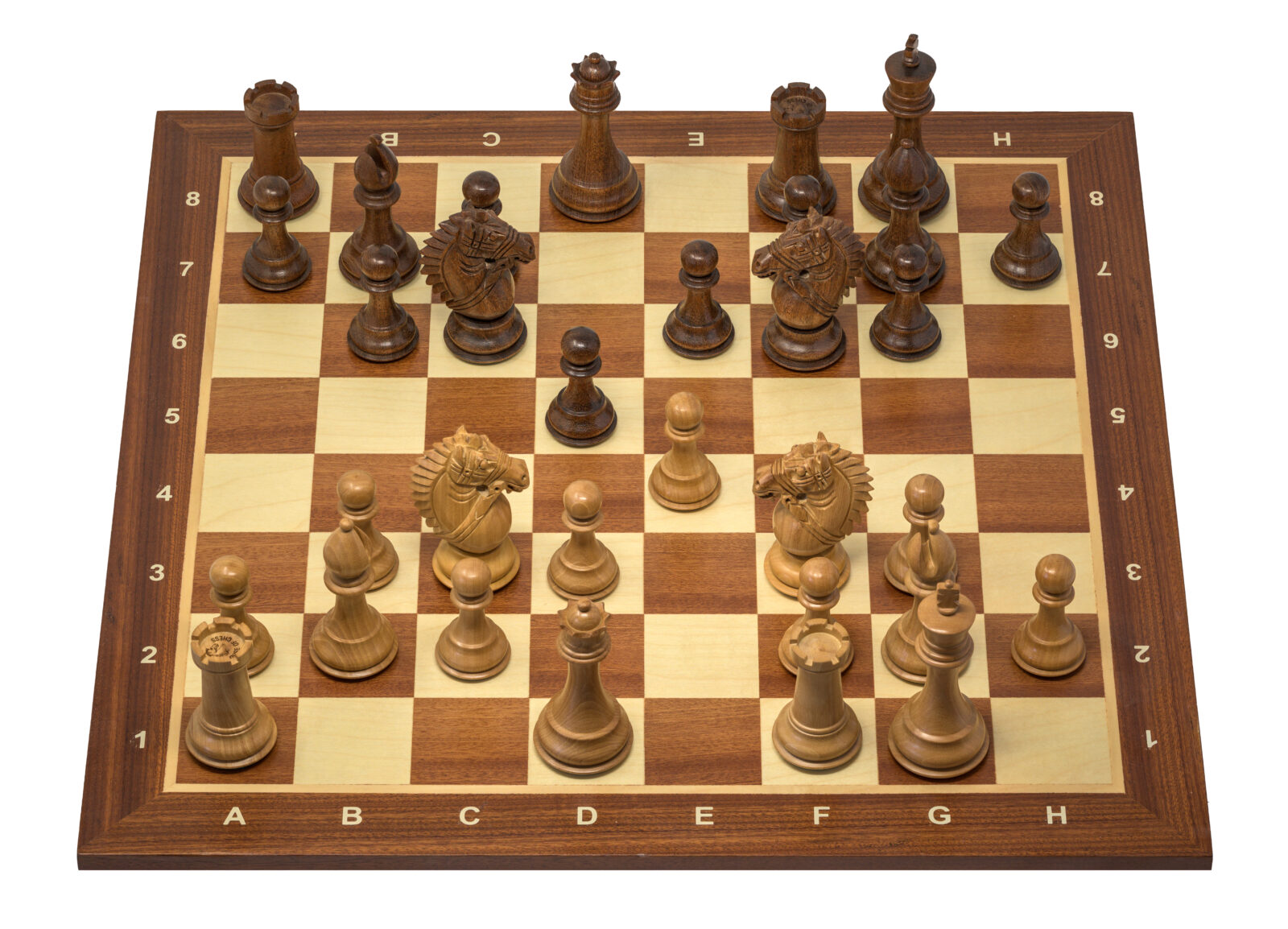
We all know this grizzled old classic, and it’s certainly one that’s available in an exhaustively wide array of attractive forms; a quick search for “handmade wooden chess” would be enough to get any varnish lover salivating. However, familiarity may have led you to overlook the reality that Chess is a magnificent game. There are literally thousands of years of accumulated deep strategy in the chess world; a deep well for some people to thrive in.

If that’s too profound for you, no fear, there are hundreds of variants available to bring it back into the realms of less intellectual fun. I’d point you to Devil’s Chess, which adds a deck of action cards to the game, and Atomic Chess, where any piece capture leads to a 9 square explosion, dramatically reducing play time and allowing you to make “boom” sound effects every other time you move.

Cathedral

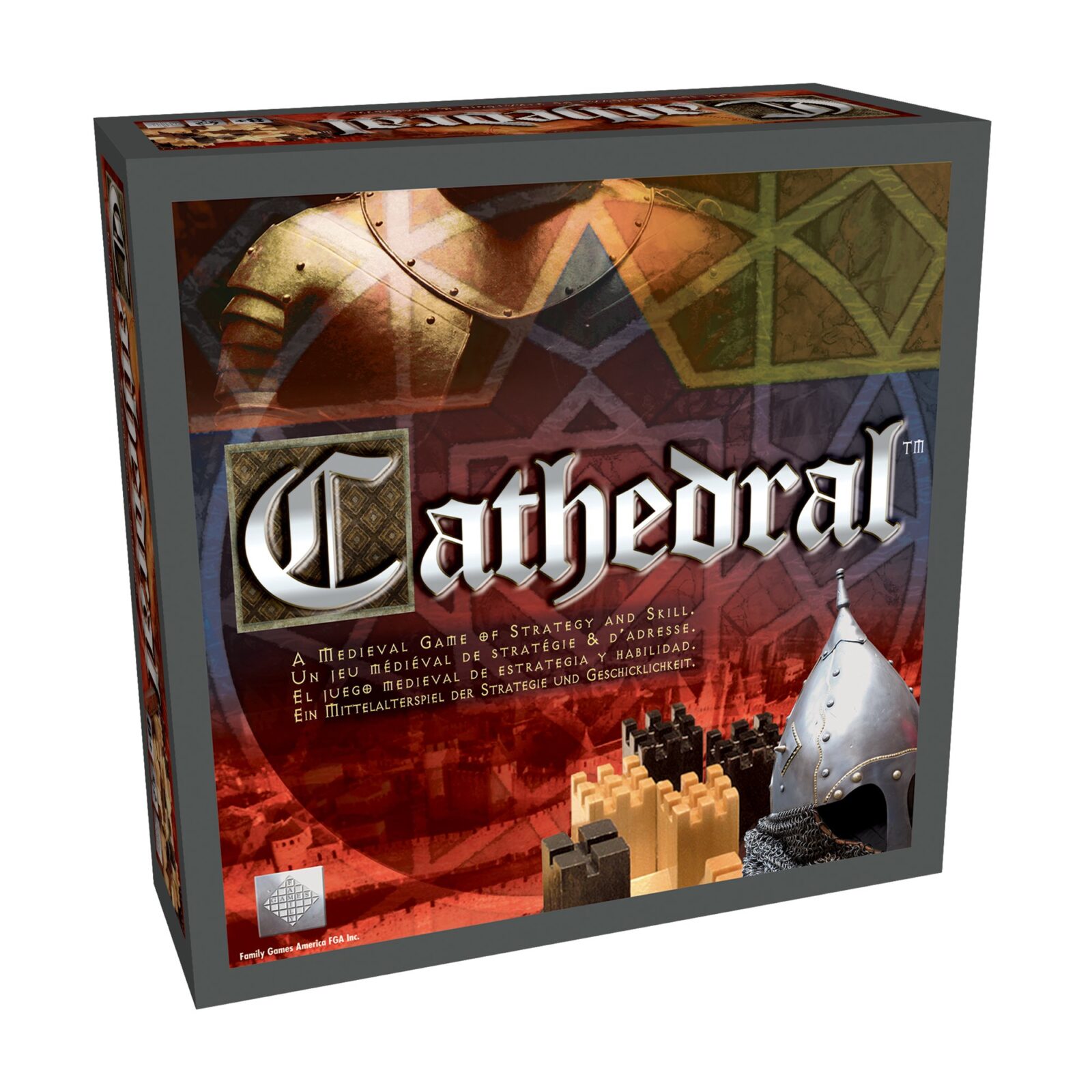
Cathedral is a mediaeval-themed strategy game by Robert Moore. It’s beautifully thematic, in that the game is about cramped historical cities and during the course of play the entire board gets completely clogged with differently sized wooden buildings. Unlike some of the abstract games on this list, Cathedral is a short-to-medium experience, most games coming in around the 30 minute mark. That means each play-through provides enough time for a beginning, middle and end phase, your doom foretold but not quite inevitable. Although the full sized version is the prettier, the travel edition is still satisfyingly chunky and wooden, whilst still packing up small enough to take camping/paragliding/scuba-diving.

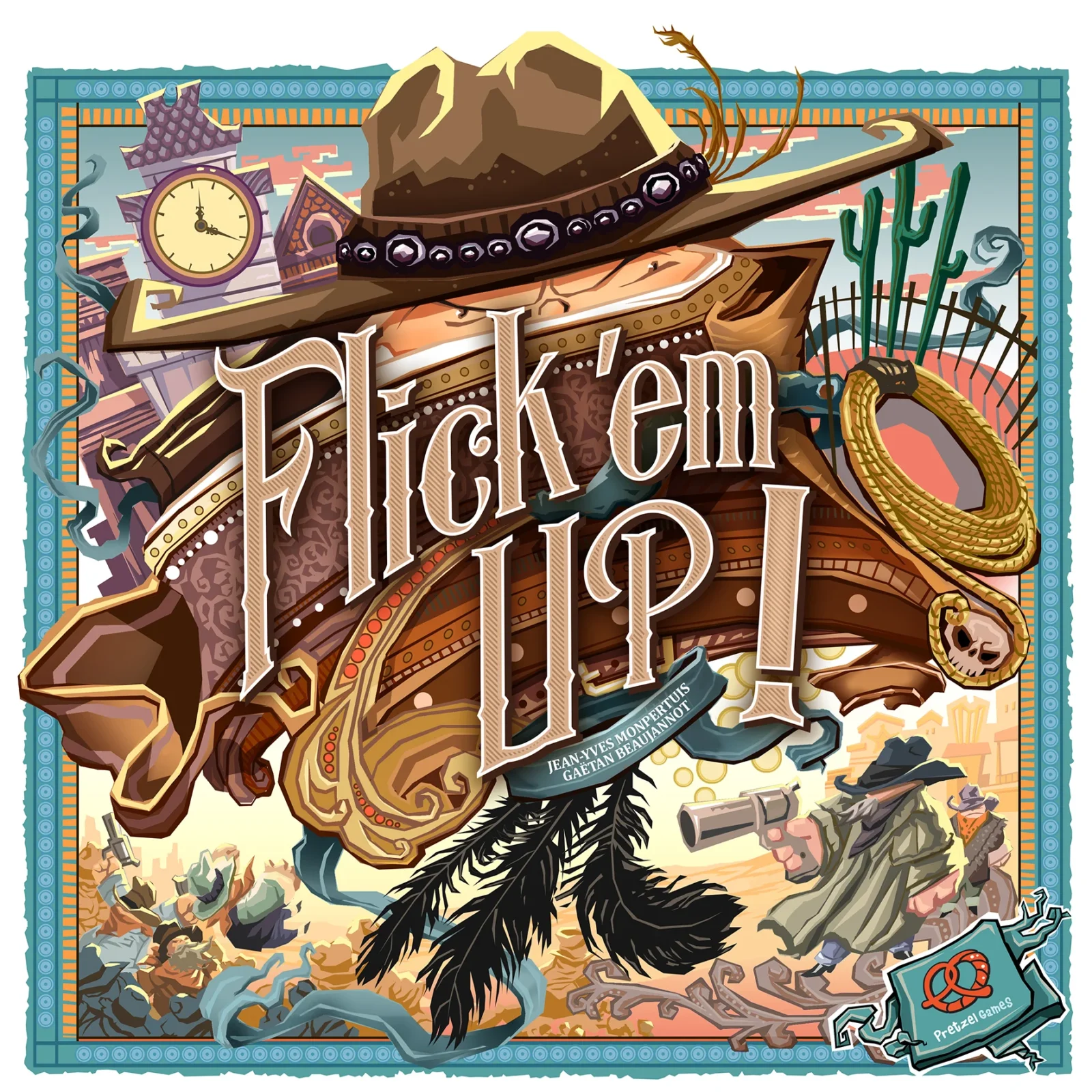
Flick Em Up

Cowboys! Guns! Flicking! If those three words get your heart pounding, this will be your sort of game. Flick ‘Em Up is a wonderful game for all of us who spent endless hours playing with Lego and toy cars. Simply set up your own Wild West frontier town using the pieces from the box – including little wooden cacti, period buildings and little wooden cowboys with hats – then play can begin! Players flick bullets at each other in the game’s prebuilt scenarios, or simply challenge one another to a showdown. There ain’t room on this here table for the two of you, after all.

Now, I’m well aware that there is a plastic version of Flick ‘Em Up available, but let’s ignore that, and stick to the gorgeous wooden version. It even comes in a chunky full-sized game box that’s made from wood too. This game is the one I’m most likely to play with my kids, and its the one I’m most likely to throw out of the window when all my stupid bullets keep missing all their stupid cowboys…


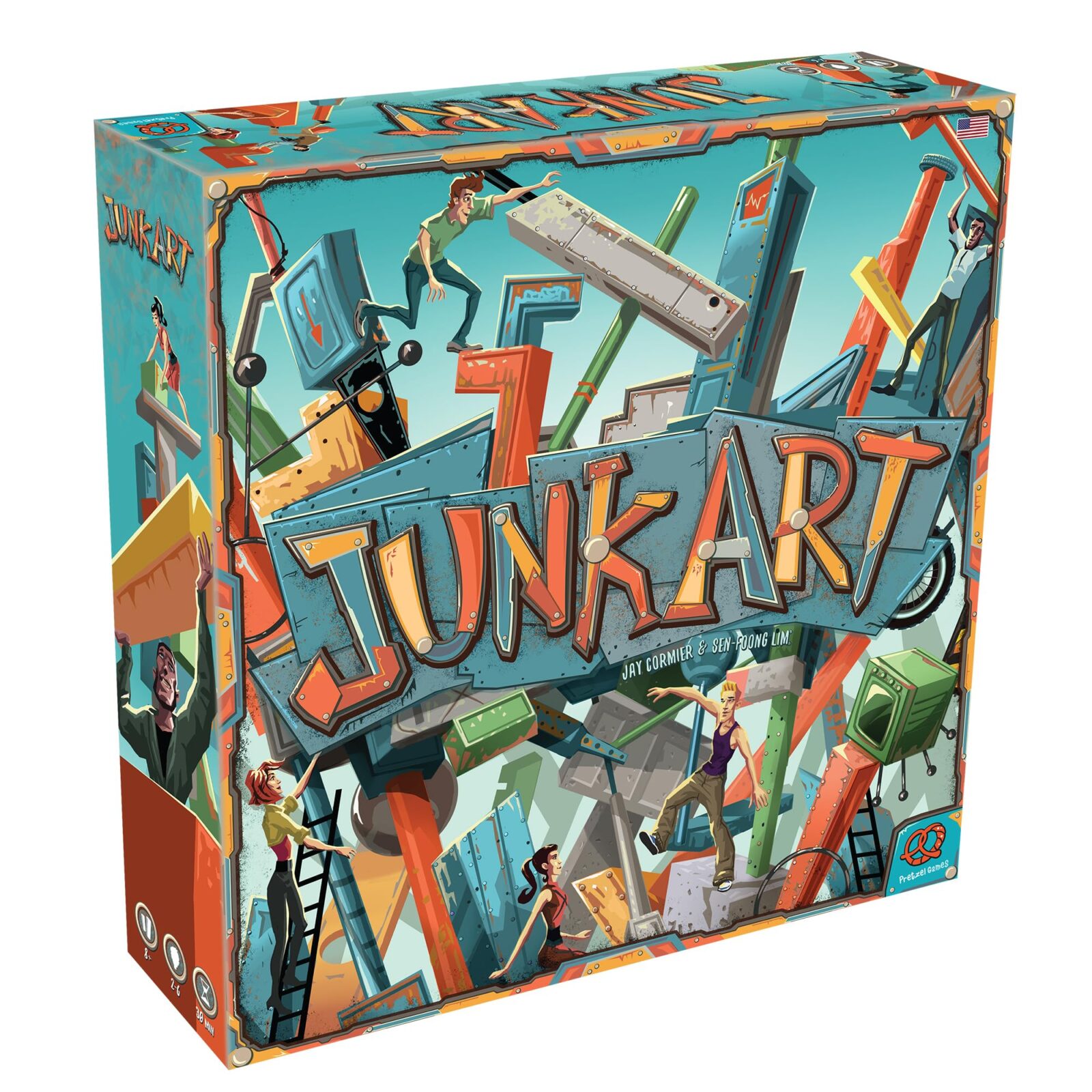
Junk Art

Junk Art is a must-have for dexterity fans. The premise is simple: build preposterous piles of awkwardly shaped wooden pieces. There’s fun for gamers and non-gamers alike here, and with ten game modes you could run them all together and have a Wooden Games Olympics to round off your evening.

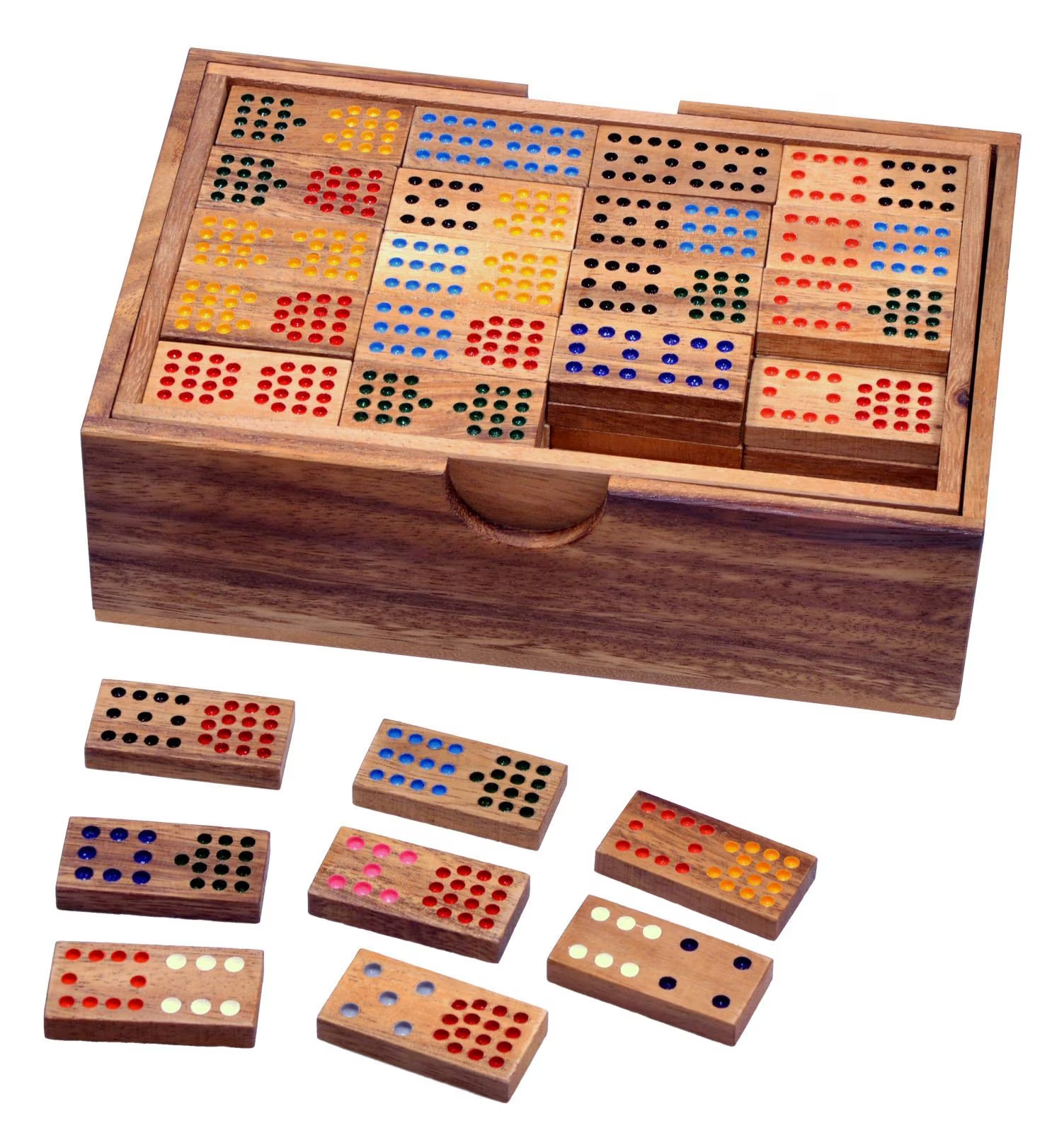
Dominoes

It turns out that traditional pub games are a hidden mine of brilliance. You should absolutely consider picking up a set of Dominoes, if there isn’t one already lurking at the back of your cupboard. You may have played in childhood; but in doing so you probably missed the razor-edge strategy hiding underneath. In a two player game, as the pieces are placed and revealed, a canny player can work out weaknesses in the other’s hand. With clever play, it’s possible to strand your opponent with high point doubles that they are unable to bury. There are few feelings as satisfying as closing off 6s so that double 6 can’t be placed any more, and having your opponent glare at you, because they know that you know that they have the double six.


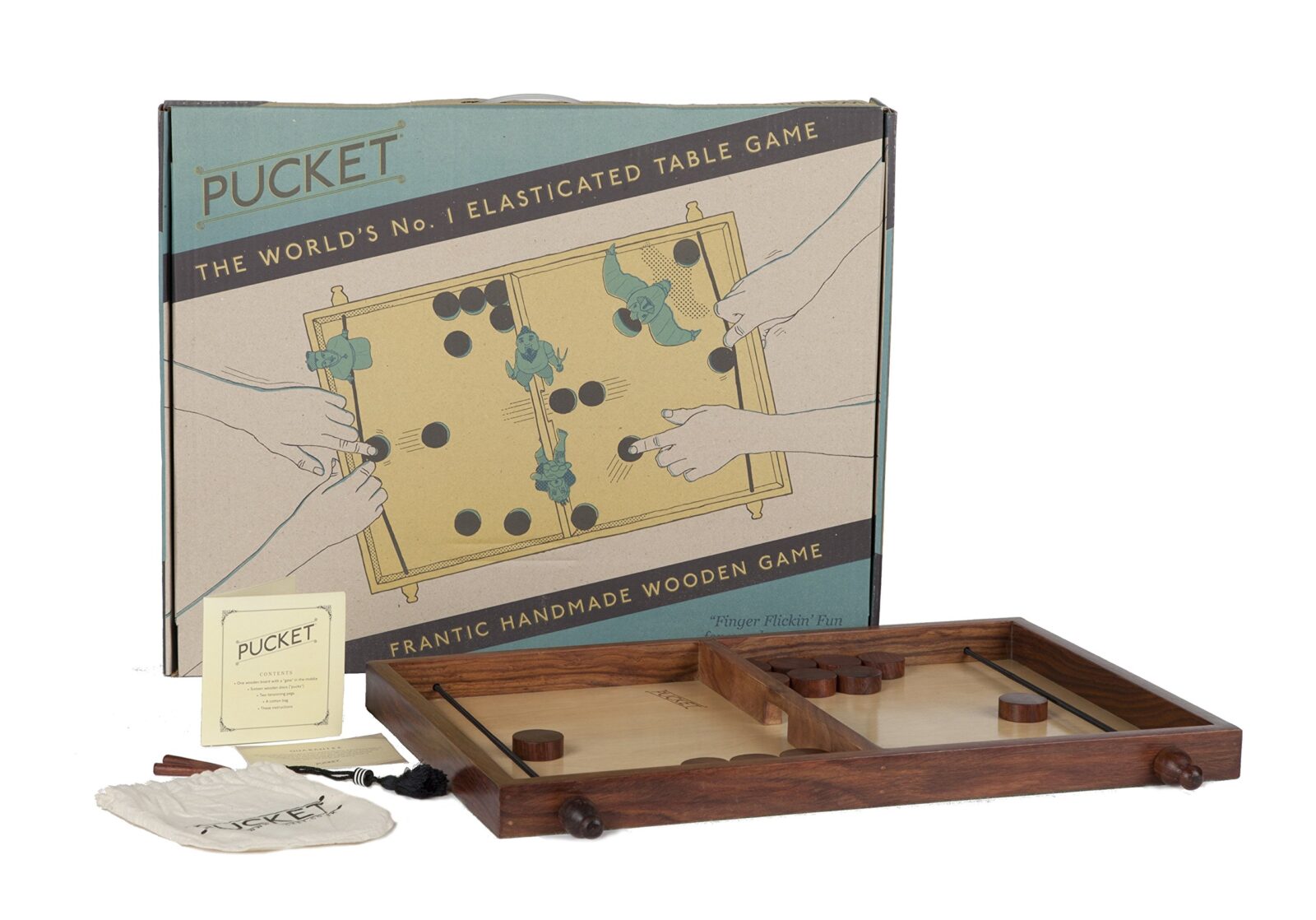
Pucket

This is the second entry from ET Games here, for two reasons; firstly, we should be applauding people making the effort to bring fairly traded games to the market; secondly,  this is the only game I’ve ever bought after being invited to play it by a stranger on a train. Big enough to fill half a table, and made from perfectly polished Sheesham wood, Pucket is a fast-paced dexterity game, based on a traditional French activity Table à Elastique. It is perfect for families – we’ve had extended family knockout tournaments at Christmas – it’s fun and frantic, and reliably draws a crowd, both to jeer at the loser and to pick up errant pieces catapulted erratically around the dining room.

A review written for Tabletop Gaming Magazine. Copyright and rights TTG Magazine 2022.