Blog

How to be a better player

Enjoying board games, and maybe becoming a nicer person along the way...

Planning a game night? Let’s make sure everyone is on the same page for expectations of fun and how to get on with each other!

Attending a game night? Not sure what the “social contract” is? Let’s discuss how to have fun and play games with the maximum enjoyment round the table.

“Urgh, this seems pretty complicated…”

There’s no getting round it—everyone who’s playing a boardgame needs to understand the rules.

They can seem initially confusing or difficult, but the reality is that in most games rules actually disappear into your subconscious after the first few rounds. Don’t be intimidated, just accept there’s a speed bump to get past before the good stuff begins.

Unfortunately, we’ve all had the experience of someone coming along to a game night who doesn’t quite understand the necessity of committing to 15 minutes of learning. They’ll say “wow, why so complicated?” repeatedly during the rules teach, they’ll sigh, they won’t pay attention… and then they need everything explaining again. Don’t be that person!

How to learn rules better

  1. Watch a rules explanation on YouTube before you arrive. Almost every game has one. Watch It Played, for example, is an entire channel of cheerful Canadians who will explain the broad sweep of how to play many games. You’ll notice that often these video can actually be 30 minutes or longer; that’s a time investment it’s worth making in order to really enjoy yourself later.
  2. Download the rulebook on your phone. Again, nearly every manufacturer makes these available for free, and it’ll provide you with a quick reference that’s searchable too. Plus it’ll save asking the organiser to explain simple rules or concepts over-and-over again.
  3. Finally, LISTEN to “the rules teach” when your friend explains the game. Don’t moan, don’t start other conversations; simply try to focus, and pick up the details that you’ll need in order to play. If you don’t understand a concept, ask a question; others may also be struggling too, and it keeps everyone engaged.

“How do I win?”
There’s nothing worse than sitting through three hours of a tabletop experience and then realise you’ve got no strategy to win. I mean, there are lots of worse things in the world, like olives, but I’ve been given a narrower remit for this article…

It’s important you know how to win, otherwise it’s not really a competition for anyone. I once played Ticket to Ride with someone who literally didn’t realise the purpose of the game was to complete routes. Frustrating for them, yes, but for me too—my victory was meaningless if it was against an opponent who didn’t know how to play!

At the end of the rules explanation, pipe up if you don’t know these three elements:

  1. “What is the goal here?” You aren’t looking for every nuanced idea, just a broad strategy. So, for Ticket to Ride “You want to collect the most points by building train lines and completing route cards. If you have long route cards you’ll probably win… unless you don’t complete them, because you’ll get penalised instead of rewarded.”
  2. “What’s a good first move?” Strategy in games often evolved through the rounds, but in Catan, for example, if you don’t pick good starting locations then your game is almost over before it began.
  3. “How much player interaction is there?” Some games are fiercely interactive, with players directly blocking or attacking each other. Others are almost solo puzzles that you happen to play adjacent to one another. In Camel Up, placing guesses for the overall winner and losers is rewarded by how quickly you do it. If all your opponents all begin to place down their guesses in early turns, they may block you from scoring highly later on.

“I’m going to destroy all of you!”
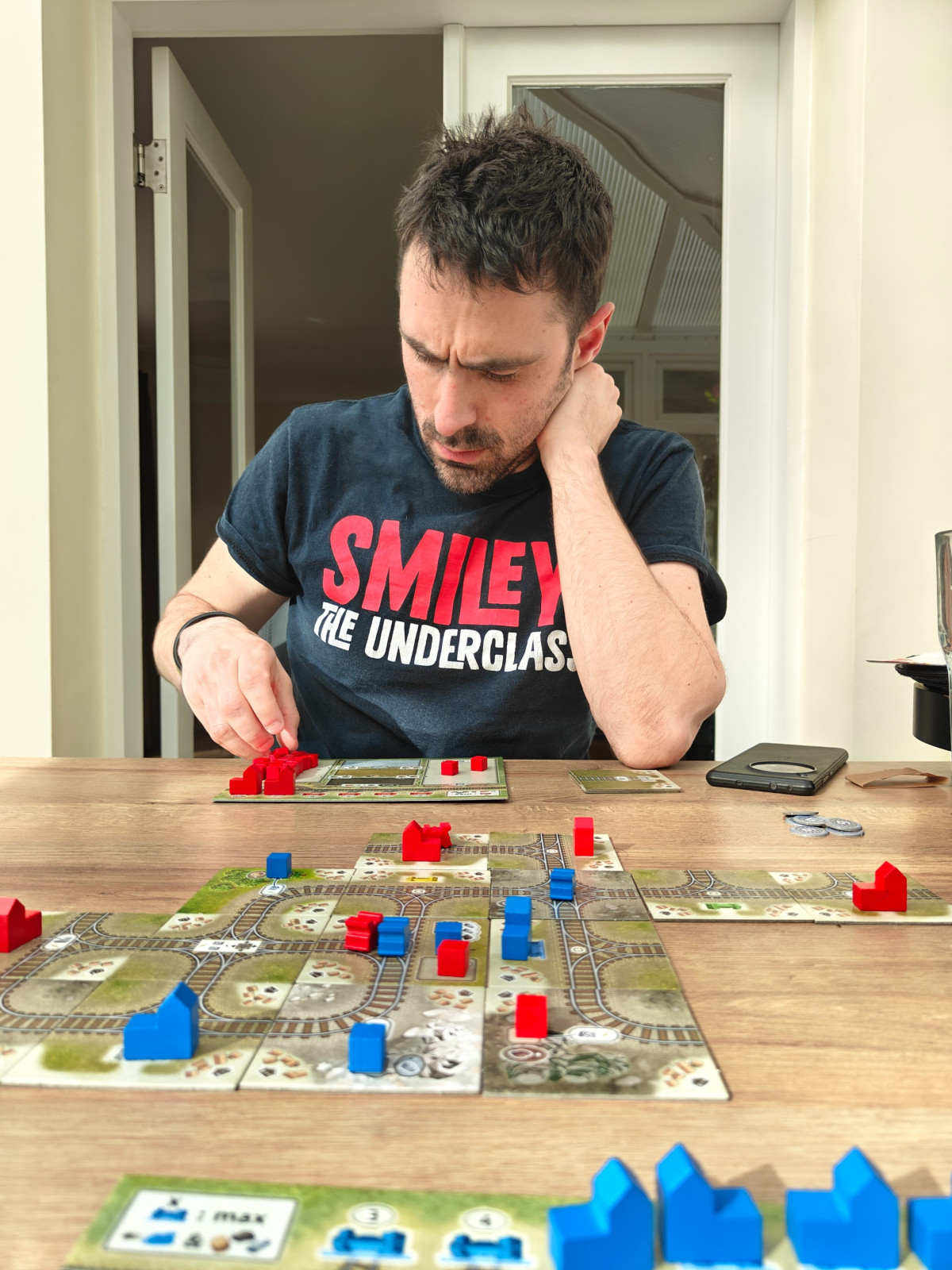
Friendly competition is a lot of fun; it can transform an experience from tedious apathy into highly engaged experience for all. The pitfall, however, is caring too much. I once played with someone who was angry with us all, in real life, for an entire week after they lost. Admittedly, it was an eighteen hour game of Twilight Imperium, but still: Games are not worth real life upset!

How to be the right amount of competitive:

  1. Understand the purpose of the session. You are not here to win at all costs; you are here to have fun. If you lose, be a good loser, not a bitter one; you got to play a game with your friends, so you’re still a winner really!
  2. Read the room. A bit of friendly trash-talk can be entertaining; aggressively calling people out, less so.
  3. Explain your intentions. Especially for neurodivergent people, guessing the motivations of others can be difficult. Start the evening by saying “I’m going to be pretending to really care about the winner tonight, but actually I’m just here to have fun. Let me know if I’m sounding too competitive and I’ll tone it down”.

“I’ll take this card… so you can’t have it”

Even with the above taken into account, there are some games that are built for competition, and there are some that can be played competitively regardless. The level of this is will be down to your game group.

One game of Risk I played was so filled with broken promises, lies and betrayals that we all became unable to trust anything that anybody said—and we loved it! Yet, on a different occasion, one of my friends was deeply hurt by another attacking them after they had promised not to. The answer to this isn’t a one-size-fits-all approach; the solution is communication.

Before you start, simply ask this “How competitive are people feeling? Are we trying to win on pure strategy, or should we be going to be going out of our way to block other people’s points to boost our own score”. The room will make it clear how aggressive they want to go, and if there isn’t agreement, now’s the time to find it; before the dice begin to roll!

“These are my crisps, no one else can have them”
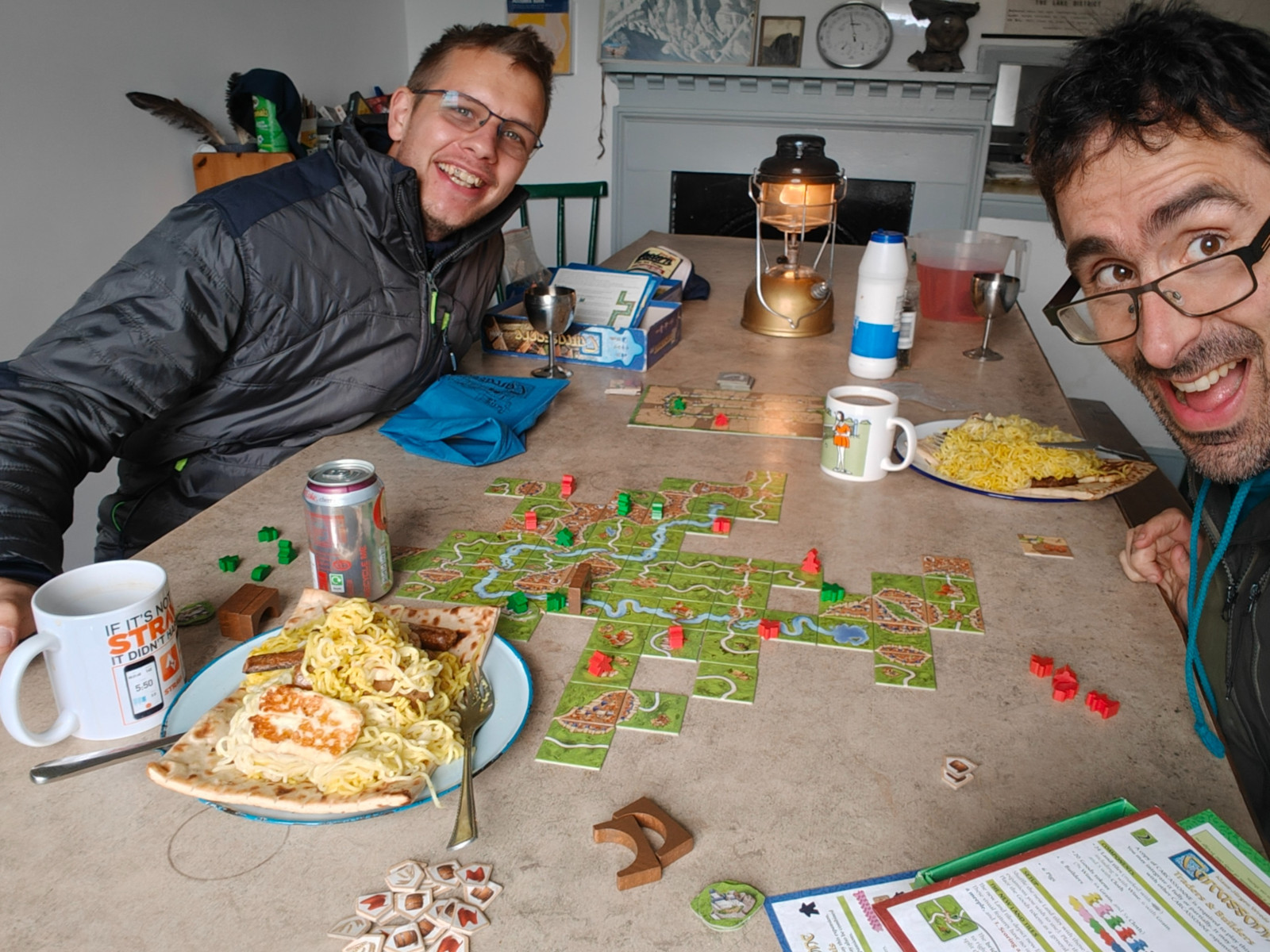
My final point is less about games, more about social niceties; remember you are in someone’s home. My friend who spilled an entire pint of hot orange squash (like, who even drinks that?) over my out-of-print copy of Lords of Vegas is still a good friend of mine, but do I wish her drink had gone on a side table? Yes!

  1. Your host agreed to play a game, not feed the five thousand. Bring food to share, bring drinks, don’t hog all the popcorn.
  2. Ask about foodstuffs and fun. I personally don’t mind if you get the odd crumb on the table; my pal Josh would prefer you washed your sticky Doritos fingers before ruining his cards. Respect their preferences.
  3. Shower and deodorise before you turn up. You might not need that reminder, but remember that no one is going to be unhappy if you smell good!

That’s enough to give you a baseline for fun and success—now go out and lose some games, laugh at yourself and play again!

 

My new PC… again

Finally updating the computer I use a tenth as much as my phone

Almost exactly a decade ago, I bought a new PC and wrote a blog post about it. After much longer than I expected, the time has come for a new one.

Here’s some thoughts on the process and what has changed in a decade…

A Note on Positive Pressure

CPU fan grill
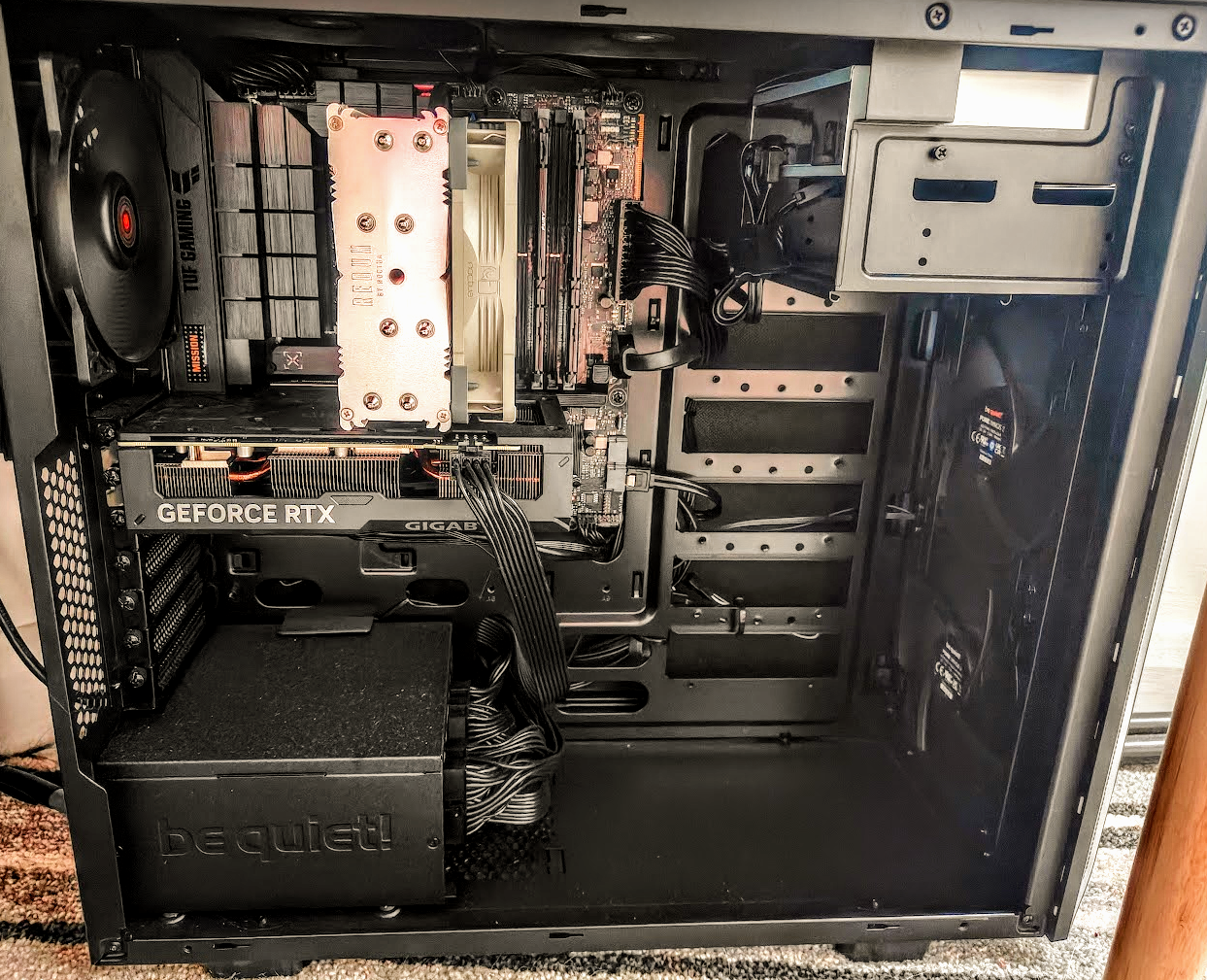
Inside of case (note where I wiped a finger)

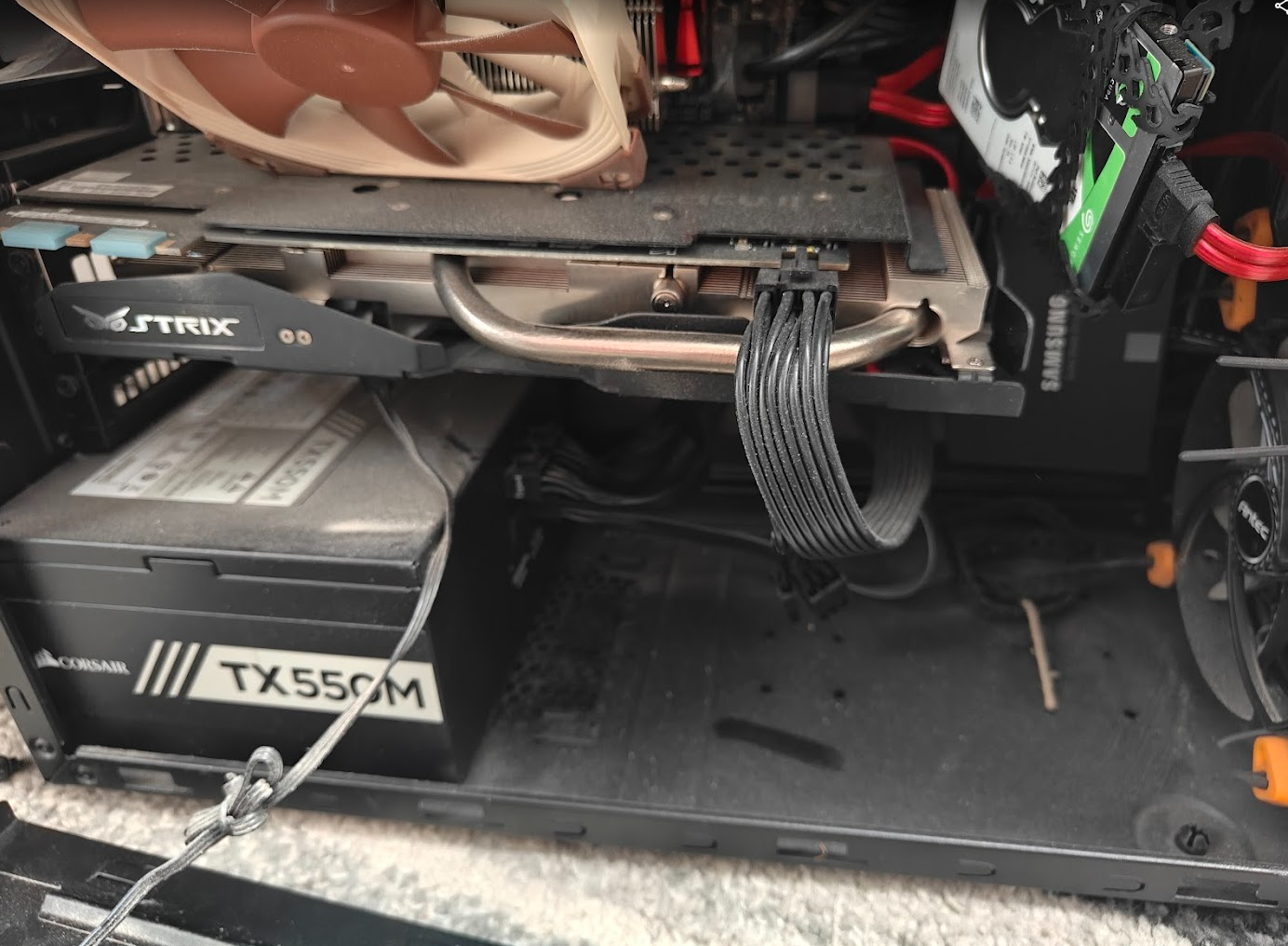
One of the things I enjoyed about my last PC was setting it up with positive pressure (ie. more air going in fans than exhausted through fans). What this does is significantly reduces dust (all air going into the case goes through a filter), possibly at a small cost to cooling efficiency.

The thing is, dust has a HUGE impact on cooling efficiency, and the PC lasted TEN YEARS as my main powerhouse for video, music and graphic editing! There’s no easy way to know that it was the result of positive pressure, but the sheer lack of dust inside the case demonstrates something. I did have to replace the CPU, but aside from that maintenance has been minimal.

The photos here are of the CPU heatsink and the case interior. They’ve not been cleaned in a decade. Not bad, eh?


What’s changed?

You literally can’t get cases with side fans these days. There was significant evidence that they can help quite drastically with cooling, firing a jet of air directly onto the GPU and CPU, but everyone seems to have gone with massive sheets of glass in the side of their case instead (at a huge increase in cost!).

Nearly all the cool nerd sites have died. I spent months reading Anandtech and SilentPCReview for their incredibly detailed, evidence-based reviews of components. Without them, I don’t think my last PC would have been planned with anywhere near the expertise it was. Both have stopped regular updates, with SPCR apparently sold to someone to make an affiliates site. It’s a shame, and leaves a genuine hole for education and information in this area. As a nerd and a journalist, support the sites you love, or they won’t be there anywhere. I’m a proud subscriber to Rascal News...

GPUs have gone crazy expensive, and not come down. My GTX970 was £240 in 2015. A -70 series CPU would be £520+ now  – that’s a 115% increase. My i5 CPU was around £120 and the equivalent would be around £160 now, a 33% rise. The overall cost for my PC went from £1050 to £1710, a 63% rise.

What did I buy?

Area Component Notes
CPU Intel Core i7 14700 Jump from i5 to i7
Motherboard ASUS TUF Gaming B760M-PLUS WiFi II B760M as I’m never going to overclock
Memory Kingston FURY Beast 64GB (2x 32GB) 5600MT/s DDR5 Enough to never think about it
Storage 2TB Samsung 990 PRO M.2-2280 NVMe SSD I’ll be adding more
GPU Gigabyte GeForce RTX 4060 Ti WINDFORCE V2 8GB OC 4060 TI vs 970 is a slight comparitive drop of grades, but the change in power over a decade makes this meaningless.
PSU 750W Be Quiet! Power Zone 2 Modular The i7 and the 4060 Ti are hungrier than my previous 650W
Optical BluRay RW Drive Shh… I still use optical.
Case Be Quiet! Pure Base 600 Gaming Case – Silver
(includes 2x120mm fans)
Note the CPU fan is lined up to blowing straight out the exhaust fan on the back, fed almost directly by the two beefy front fans
CPU Cooler Noctua NH-U12S redux Efficient and quiet. Although, without SPCR reviews it’s much harder to be confident of this!
Fans 3 x Be Quiet Pure Wings 3 PWM 140mm Chassis Two front, One rear Exhaust, Two top. Long term plan is to drill the side and take one top exhaust and make it a side, filtered intake

What do the numbers show?

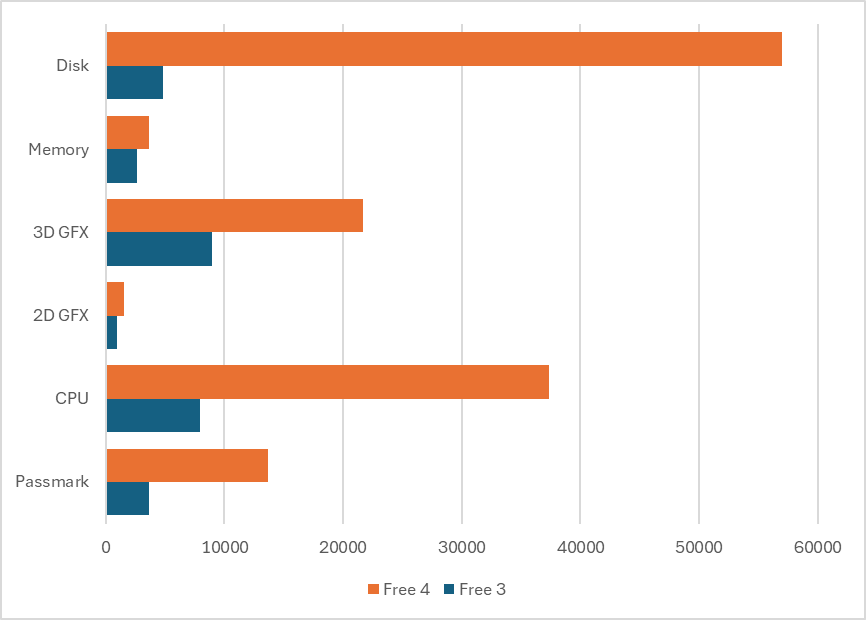
I used PerformanceTest’s PassMark to compare the two. This is the score of the Old PC when brand new. I’m sure it’s much worse now. (If you go on the decade old post you can even see PassMark for my two previous PCs too!)

Benchmark Old PC New PC Increase?
CPU 7948 37362 470%
Passmark 3623 13650 377%
2D GFX 937 1527 163%
3D GFX 8929 21711 243%
Memory 2623 3629 138%
Disk 4871 56978 1170%

Is it better?

Ultimately yes, because the old one had started to hang and crash occasionally. Key points:

  • My new CPU is anywhere from 80-500% faster on various benchmarks and has a TDP of 65W instead of 84W (23% lower).
  • My new GPU is around 150-250% faster, and only uses 8% more power.

That’s all folks. Not a wildly interesting update, but for the nerds amongst you there’s a few nuggets… Feel free to comment below if you think I did anything wildly wrong!

Games to Get To Know People

Using the tabletop as a tool to bridge the gaps between us.

I am a huge extrovert. Ridiculously so; there’s almost nothing I enjoy more than throwing myself into social situations and getting to know people. I’m aware that this is not the experience of, well, pretty much every other human in the world. I even recently went to London and tried to talk to a stranger on the Tube. I know, right?

Games, thankfully, are a great way to bridge the awkward gap. In my normal life I am a doctor, youth leader and church pastor; in every one of these spheres I’ve found games to be a helpful papering-over-the-gaps of social awkwardness.

The Ease of the Familiar

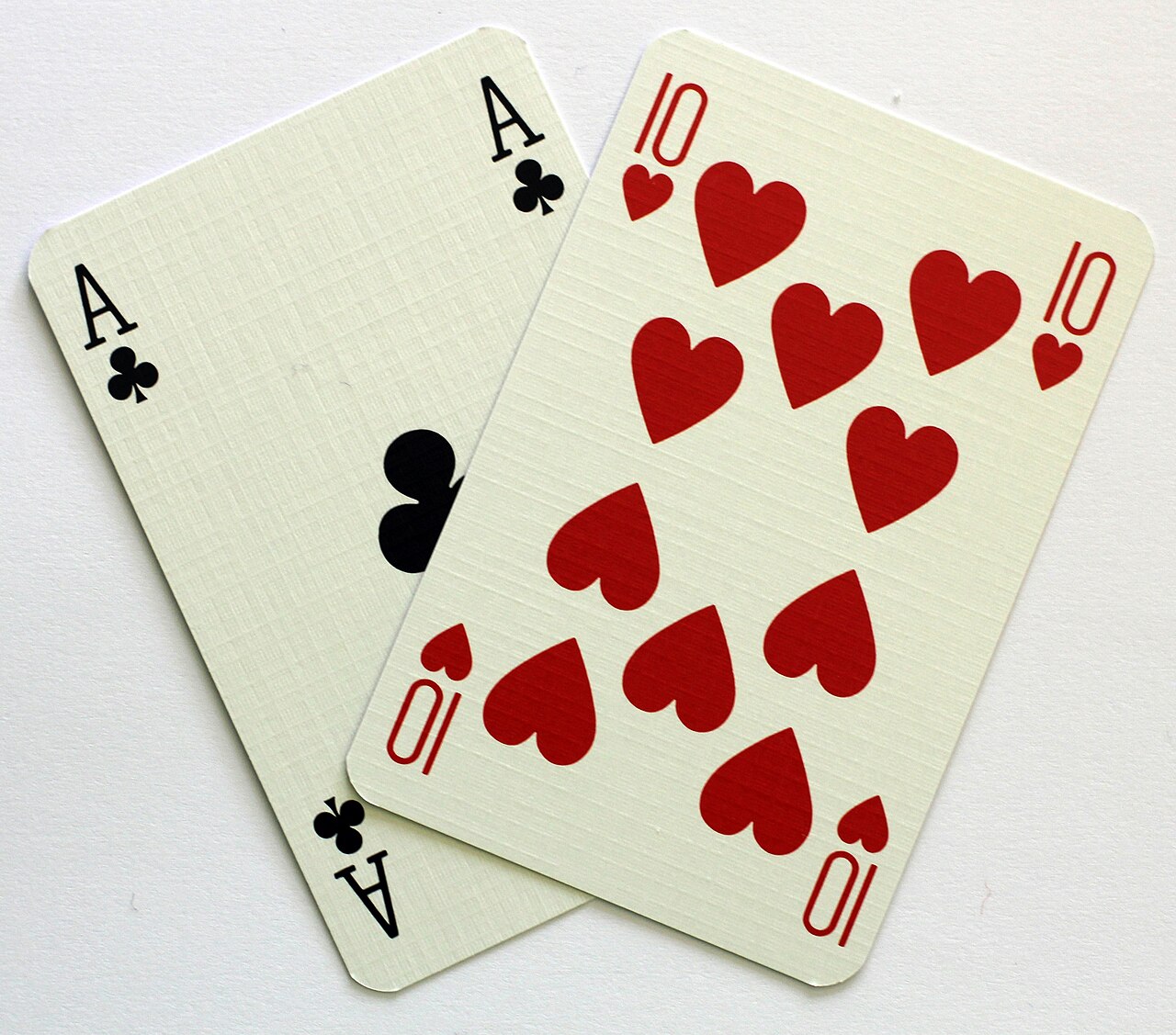
The first step to get to know people over the tabletop—and much as I hate to admit this—are games that everyone already knows. There’s a reason that so many people play Monopoly, and that’s because it avoids the mental speed bump of needing to learn how to play. I’m not going to hoist that particular monstrosity on you, but I would encourage you to consider the simplicity of a few rounds of 21 or Pontoon with a normal deck of cards; pulling out a box of dominos—or even a round of the dreaded Uno. I’m not a huge fan of Chess, but I can confirm that it’s a game that most people know without considering themselves “gamers”.

My use of these games is usually as an ice-breaker, relaxed moments around a table where the game is just an excuse to think for a moment about what to say next. It also subtly re-positions non-gamers mindsets; from normal people into considering themselves as “people who play games”.

Cut to the Quick

The next step is something simple, fast and fun; again, the purpose is something non-threatening on the table that allows for instant easy conversation—”oh no, I wanted to go there!” or “I see your strategy here…!”.

Three games are great for this stage: the first being Colt Super Express. In this tiny little boxed game, each player has a little cowboy and four actions cards. Everyone pre-selects three actions in order and then take turns revealing those actions. The pre-programming means you have to guess whether your opponents will shoot, move or climb inside the train. With high player numbers it’s impossible to guess, leading to slapstick moments of players getting shot, standing up and getting shot again. It’s fast, silly, and gets more strategic as players are knocked out; the final showdown is usually climactic and a point of laughter and celebration together. Getting knocked out of the game is easily done and relatively painless; it encourages downtime for chatting and predicting other players actions is just as much fun as playing yourself.

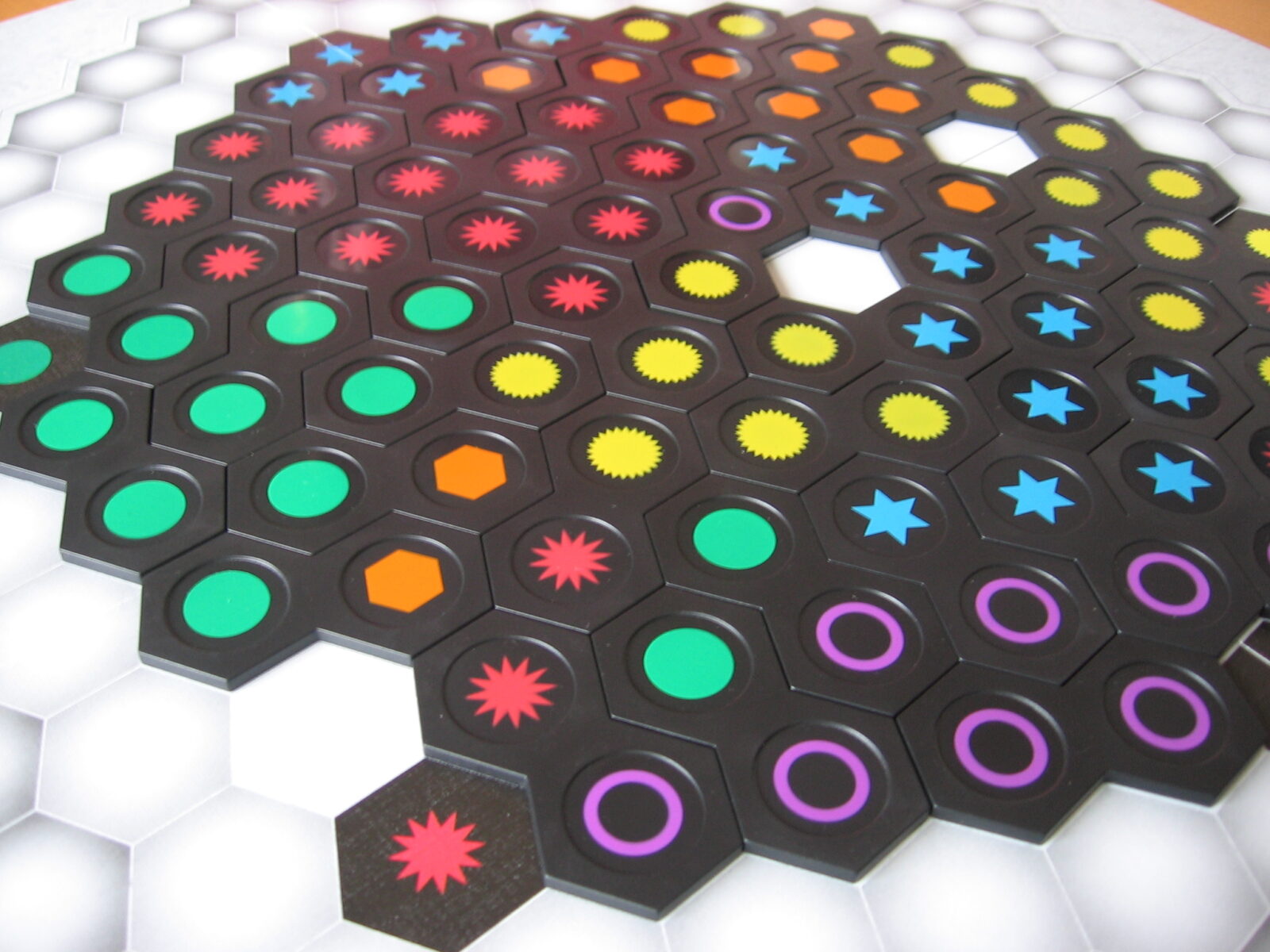
Next up I’d choose Ingenious, a Reiner Knizia game of matching coloured tiles to create lines of matched colour, scoring points and trying not to score lowest in any particular colour. It’s super fun, quick to pick up and language independent. You also have to shout “Ingenious!” when you max out a colour—a lovely way to torture introverts.

Finally I’d use Coup, a social deduction game. Also worth consideration is Love Letter, or, for a slightly longer experience, Citadels. Each of this games involves players taking a hidden role, and bluffing your way through to defeat the others. The former are better for people confident in deceiving each other, the latter one is more straightforward and strategic.

“Oh, no, really?”

Now, you might be surprised by the next (optional) step, but there’s one getting-to-know-people experience that is unparallelled: learning bad games. Hold on, hold on, don’t throw me to the dogs yet; there’s method to my madness…

I once persuaded several friends to take a day off work so that we could play 1880: China. We played for six hours, and then—thanks to some absolutely impenetrable rules—had to abandon the game, since the stock market mechanics had completely fallen apart. A similar experience occurred when we took Posthuman: Saga out of a board game library at UKGE and spent three hours realising it was a terrible game.

The thing is, spending that time with those friends wasn’t a waste. We learnt about the games, we had a degree of fun; but we learnt more about each other, about our tolerances for failure, for bad rules, for when the world doesn’t go right. I’ve played hundreds of games with people, but those two times stand out, and we remember them with laughter, fondness for each other and a groan directed towards the publishers of those two offending titles!

Who are you anyway?

As a roleplay game publisher, it’s hardly surprising that I’d say that an RPG is an excellent way to get to know people better.

I’d start with a one shot, to let people realise they are capable of taking on such a weird concept. Goat Crashers is a one-page game about goats breaking into a party; I’ve played that at a wedding with people who had never played any kind of RPG. All Outta Bubblegum is an equally short and silly game perfect for breaking the ice on car journeys. I recently played R?NIN with a group of teenagers who ended up hiding in a hole in the village and attacking bears; we learnt a lot about each other’s capacity for idiocy and stubbornness during that afternoon. For the roleplay-fearful, I’d suggest Champions of the Wild; arguing about which animals are best at supermarket sweep. It’s not as acting dependent, whilst still giving you a narrative element to hold onto (and debate, viciously).

Going deep into a campaign is a superb reason to have an excuse to spend regular evenings with new friends. Whether screwing together a ramshackled ship to sail the rustling waves in The Wildsea, or exploring the ragged lands of Galgenbeck with your toothless comrades in MÖRK BORG, just meeting regularly, eating food and scheduling together is a great dive into lifelong friendships.

Again and again

My final recommendation is simple: any game, played repeatedly. Whether its Unmatched, Risk or Ticket to Ride, repeat plays with the same group or the same person are the perfect opportunity to grow in your knowledge of a person. Obviously the depth of tactics and richness of the history of your previous games is enjoyable, but there’s more than that.

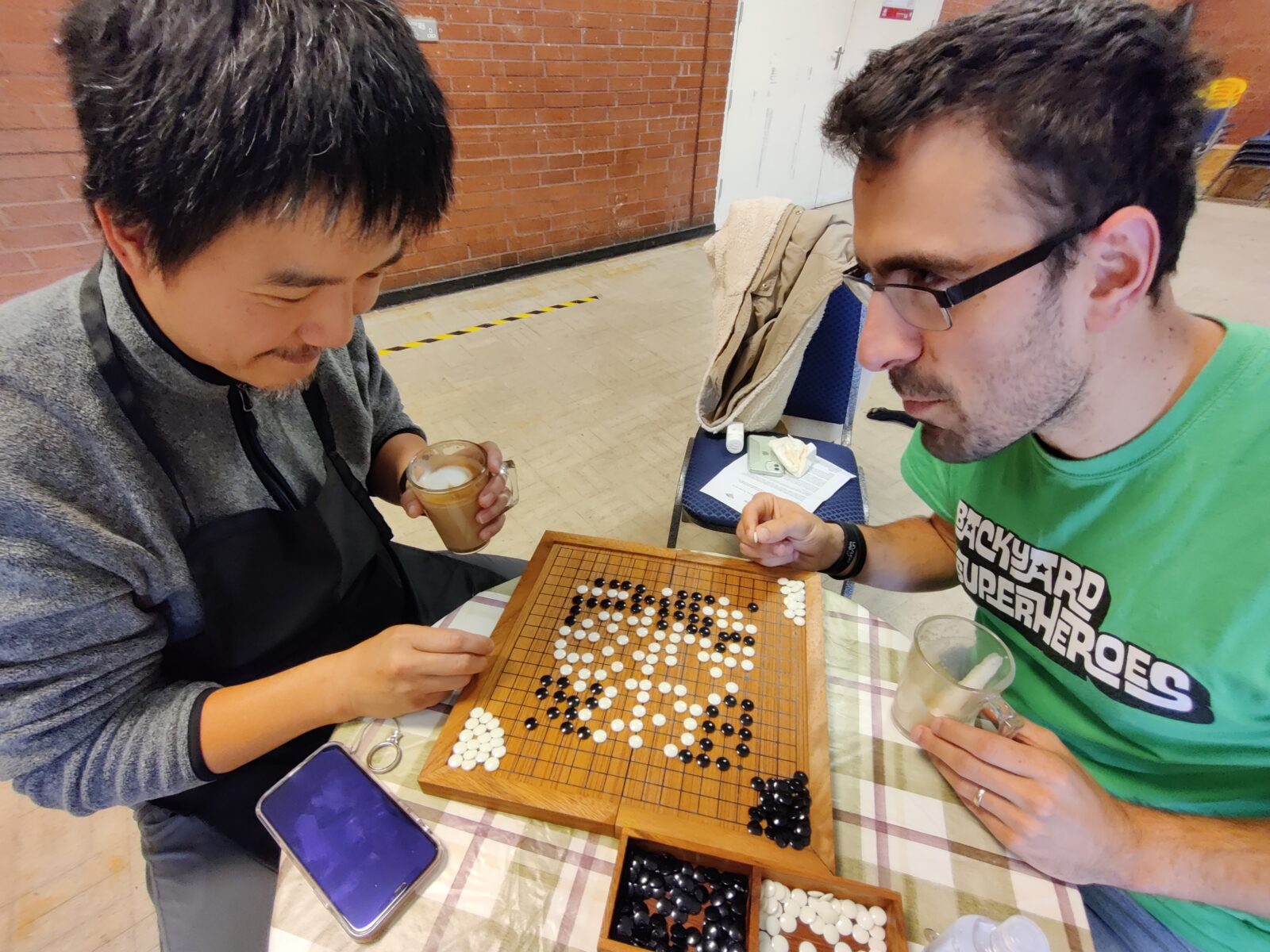
I’ve been playing Go with my friend Vincent for five years now. The game is fun, don’t get me wrong, but it’s the coffee, the chat, and the excuse to make space for life that the game gives us that I really value.

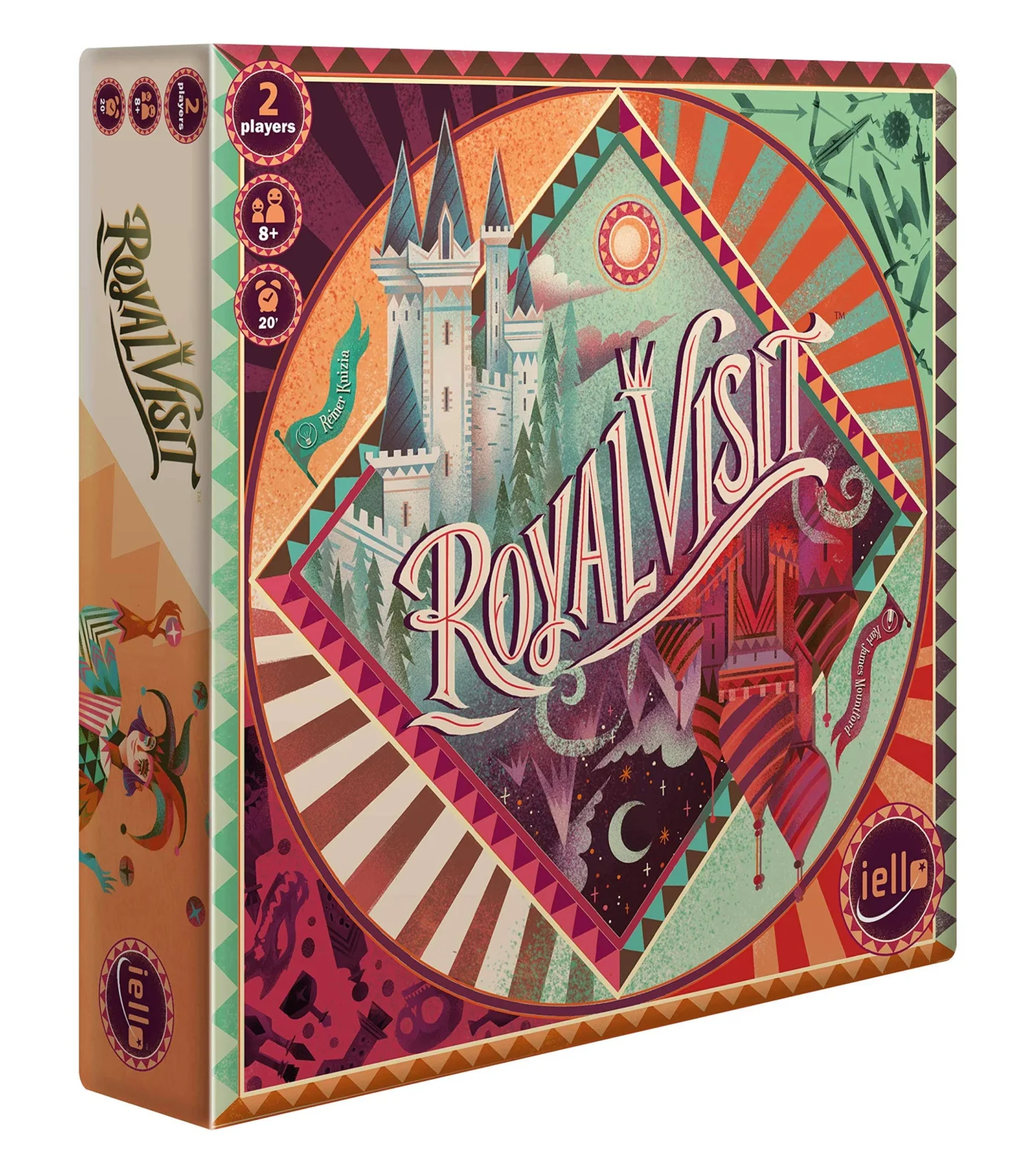
You should do it too! Why not pick up a copy of Royal Visit, and ask someone if they’d like to play with you once a month. You’ll get to play a great game, and make a new friend on the way.

MUST PLAY TTG100

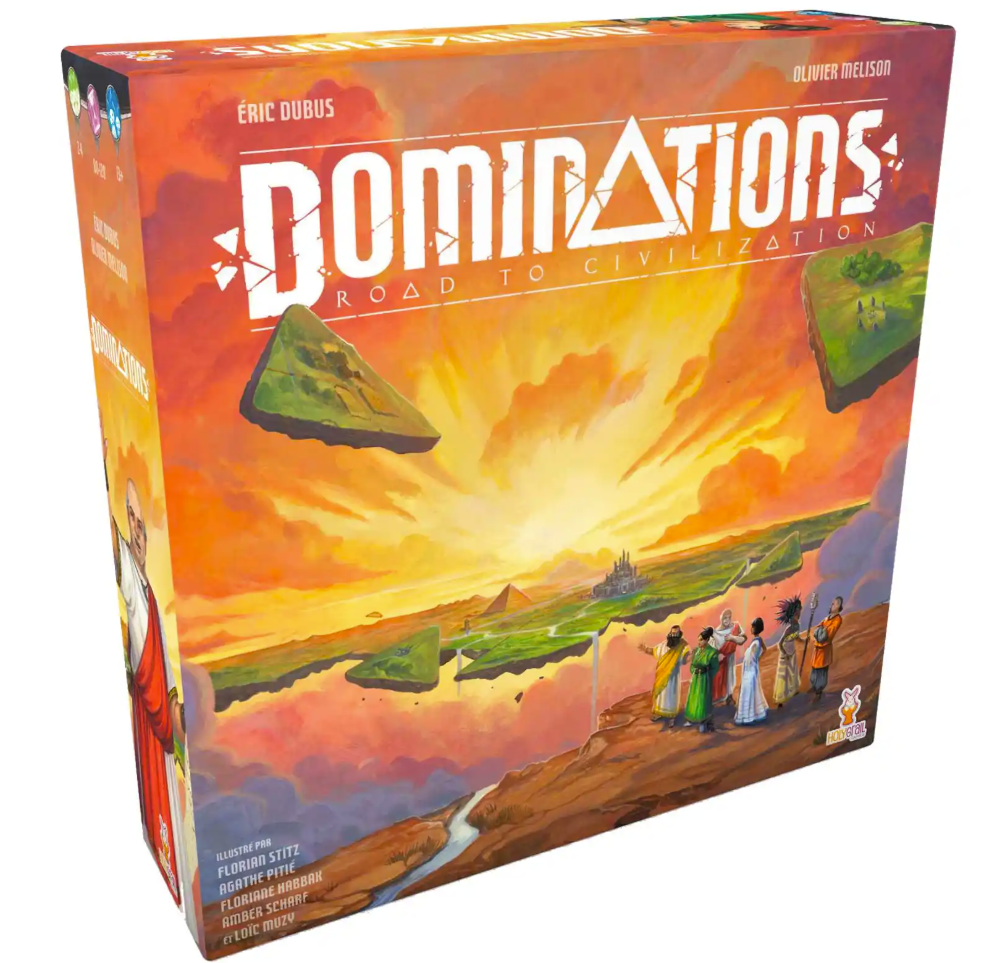
Dominations: Road to Civilisation

Dominations was one of the first games I reviewed for TTG that was truly breath-taking; and also the first where I developed an enjoyable friendship with the publishing studio behind it. Holy Grail Games were sadly killed by the Covid-19 shipping crisis, but the people behind it had a real heart for creativity and innovative play. Every time I pull out Dominations I’m filled with fond memories, and a slight sadness about the unforgiving reality of capitalism.

The game itself is a reliably crunchy empire builder with a focus on developing a card-based technology tree. It feels a little like a good Uwe Rosenberg game, in that there’s always too much to do and not even nearly enough actions in which to achieve it. The expansions also add some welcome optional depth to the experience, even if the Kickstarter exclusive add-ons were uniformly terrible.


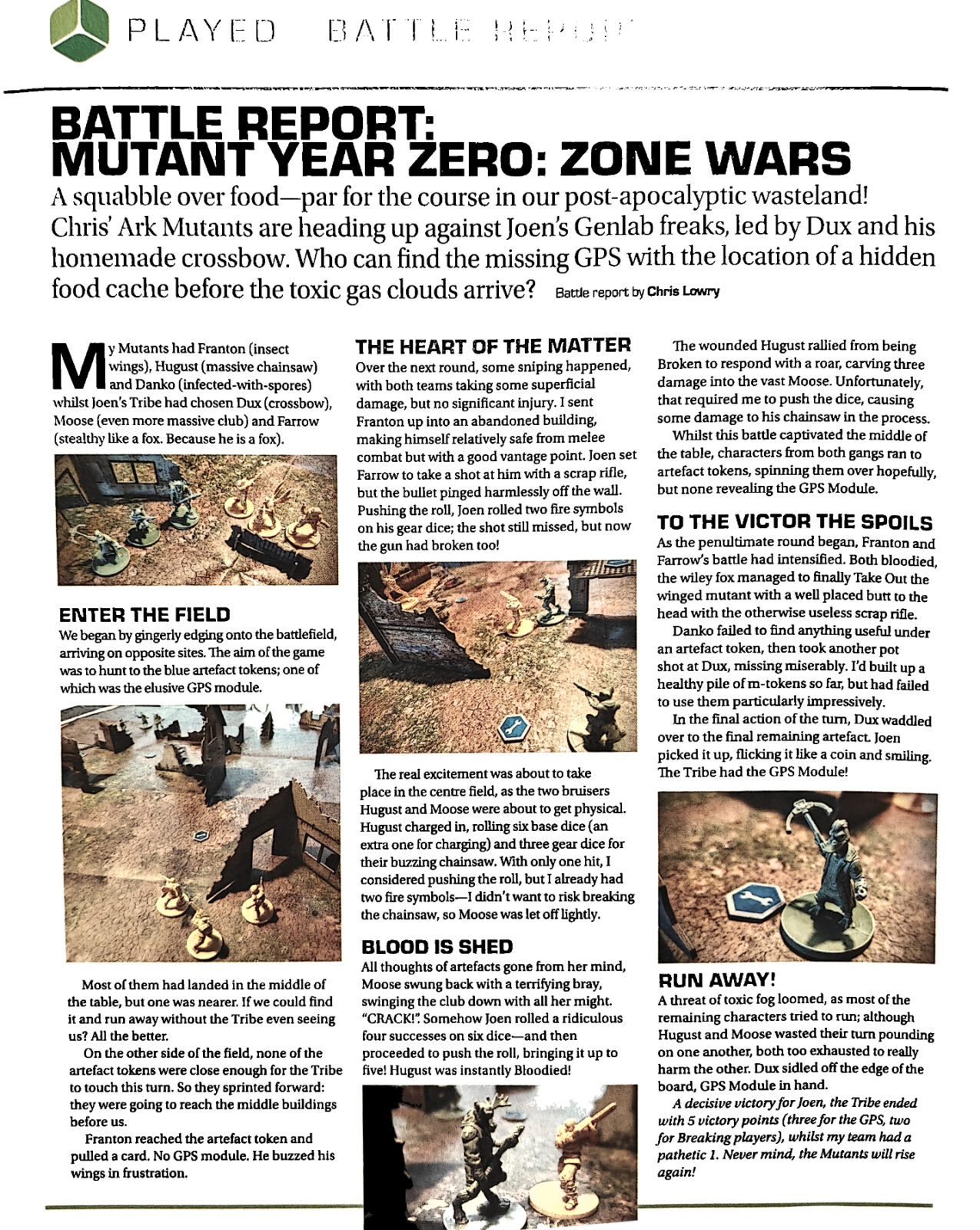
Mutant Year Zero: Zone Wars Battle Report

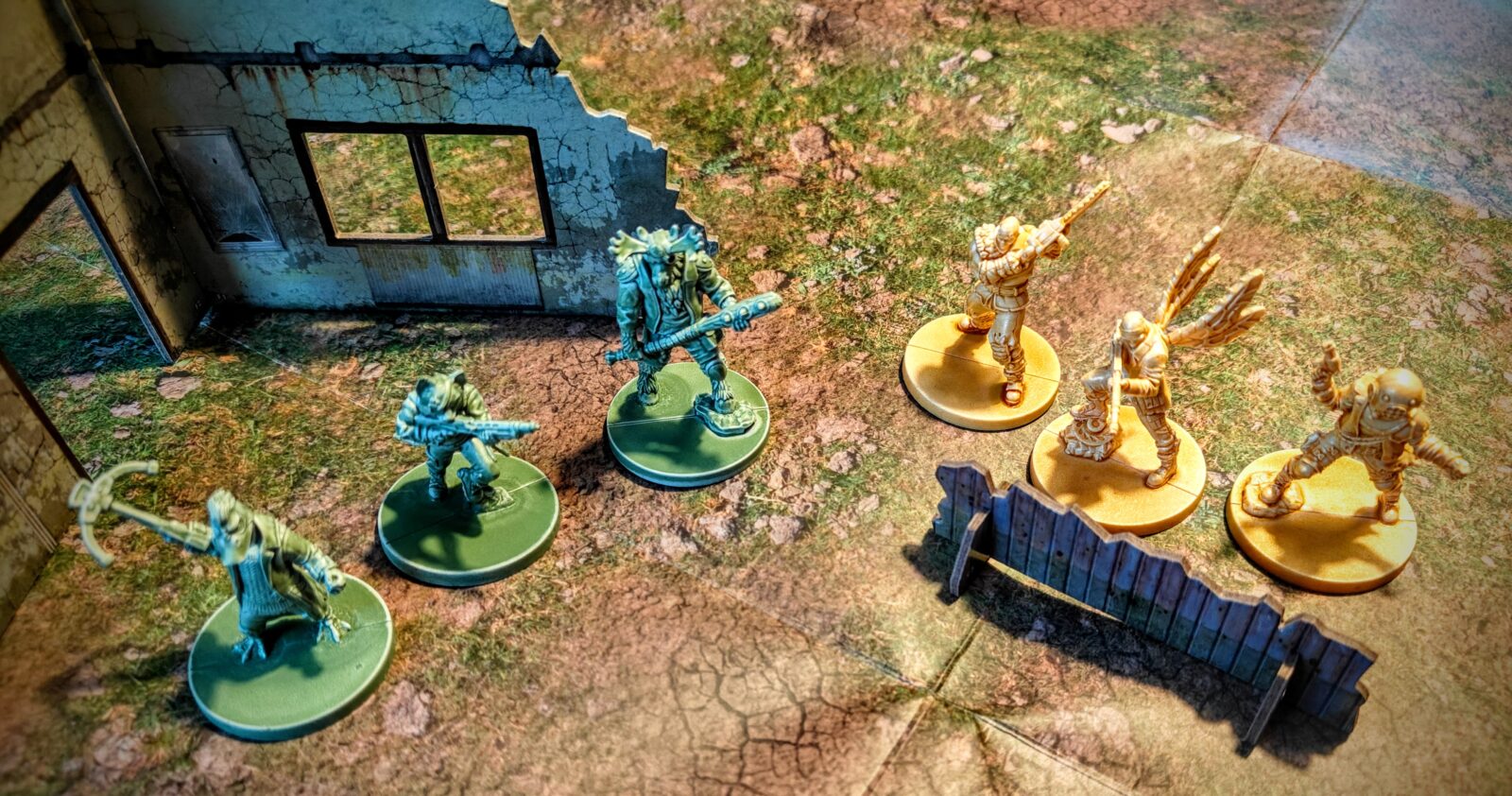
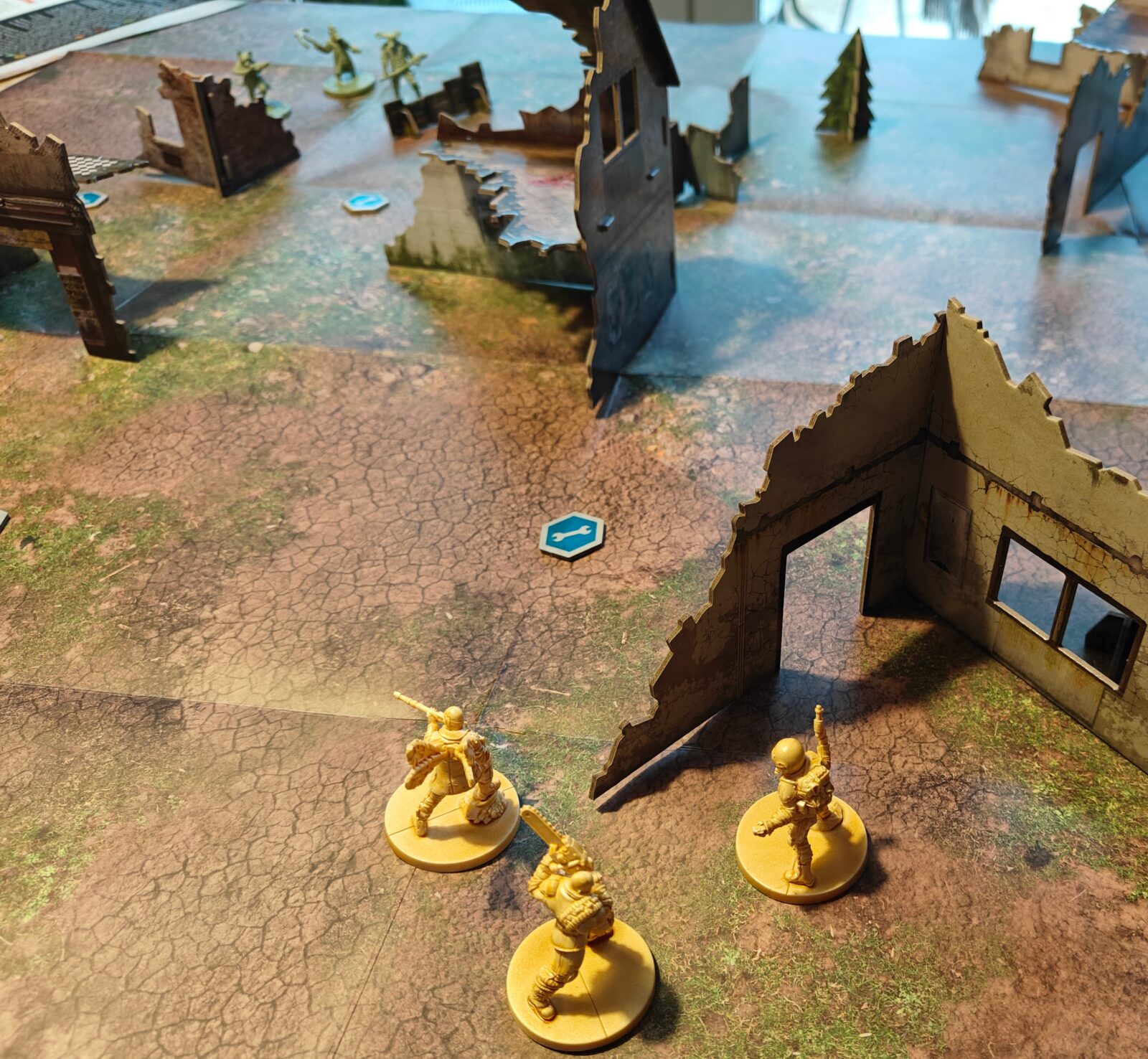
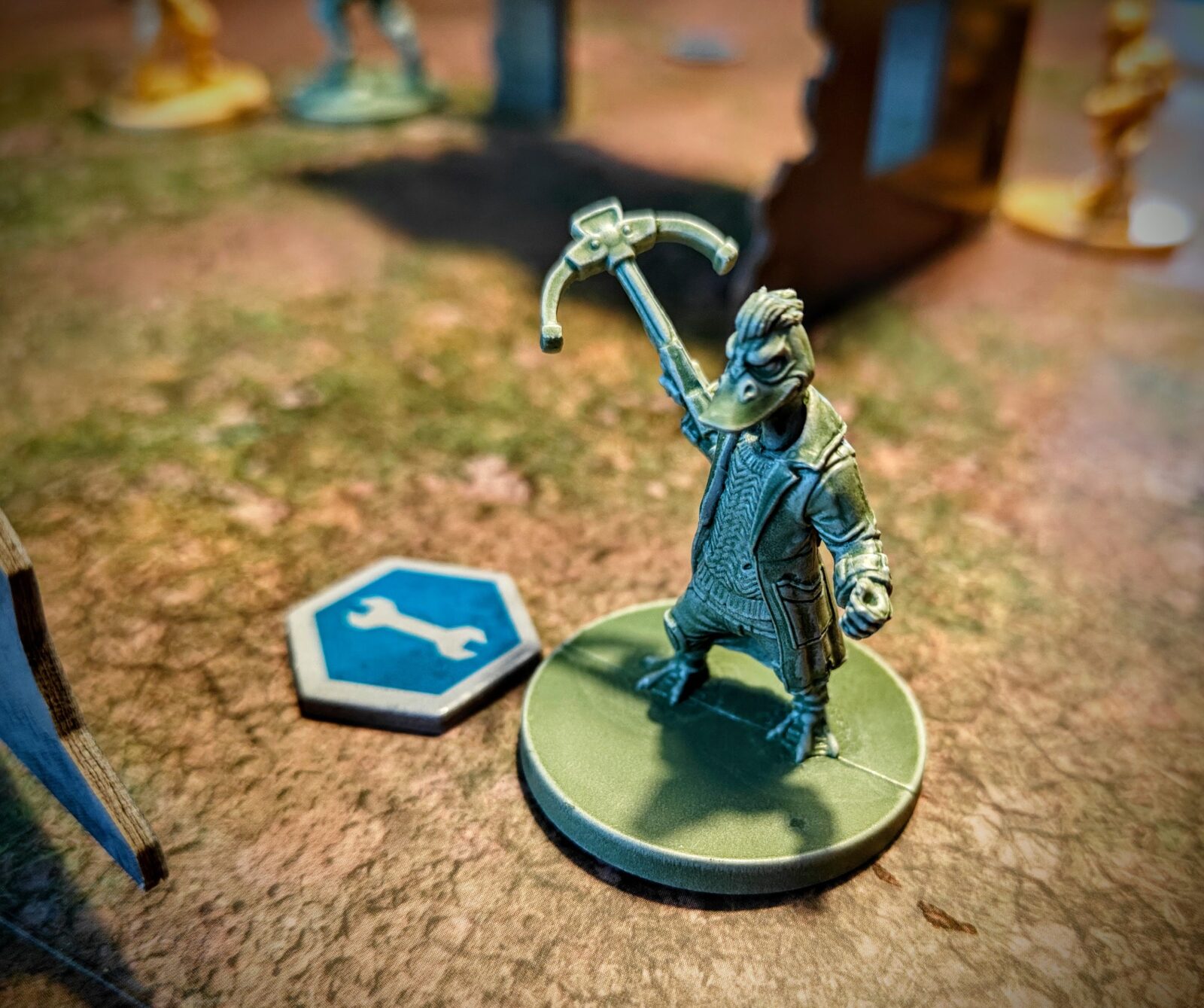
A squabble over food—par for the course in our post-apocalyptic wasteland! Chris’ Ark Mutants are heading up against Joen’s Genlab freaks, led by Dux and his homemade crossbow. Who can find the missing GPS with the location of a hidden food cache before the toxic gas clouds arrive?

oplus_262144

Battle Report

My Mutants had Franton (insect wings), Hugust (massive chainsaw) and Danko (infected-with-spores) whilst Joen’s Tribe had chosen Dux (crossbow), Moose (even more massive club) and Farrow (stealthy like a fox. Because he is a fox).

Enter the Field

oplus_262144

We began by gingerly edging onto the battlefield, arriving on opposite sites. The aim of the game was to hunt to the blue artefact tokens; one of which was the elusive GPS module. Most of them had landed in the middle of the table, but one was nearer. If we could find it and run away without the Tribe even seeing us? All the better.

On the other side of the field, none of the artefact tokens were close enough for the Tribe to touch this turn. So they sprinted forwards: they were going to reach the middle buildings before us.

Franton reached the artefact token and pulled a card. No GPS module. He buzzed his wings in frustration.

oplus_262144

The Heart Of The Matter

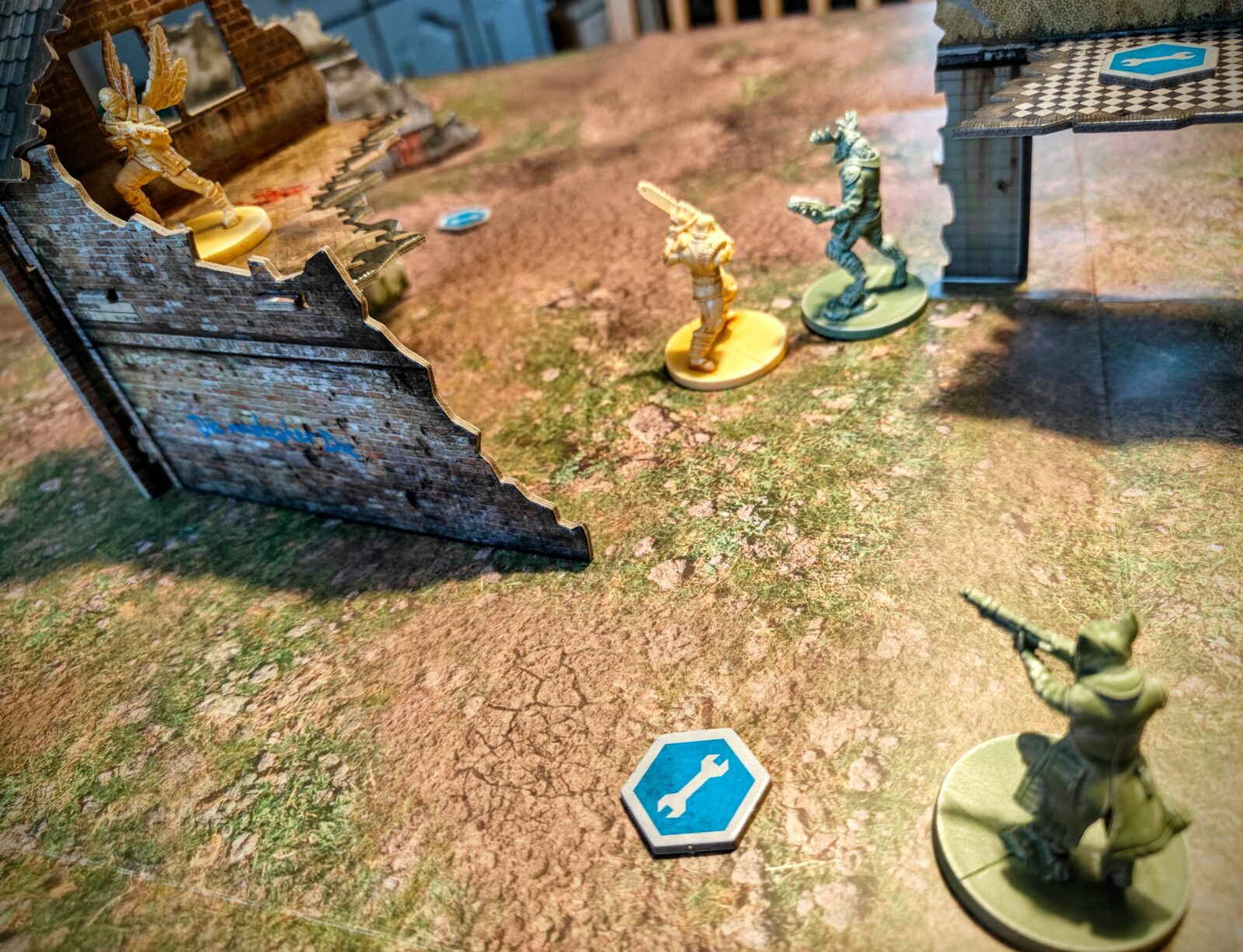
Over the next round some sniping happened, with both teams taking some superficial damage, but no significant injury. I sent Franton up into an abandoned building, making himself relatively safe from melee combat but with a good vantage point. Joen set Farrow to take a shot at him with a scrap rifle, but the bullet pinged harmlessly off the wall. Pushing the roll, Joen rolled two fire symbols on his gear dice; the shot still missed, but now the gun had broken too!

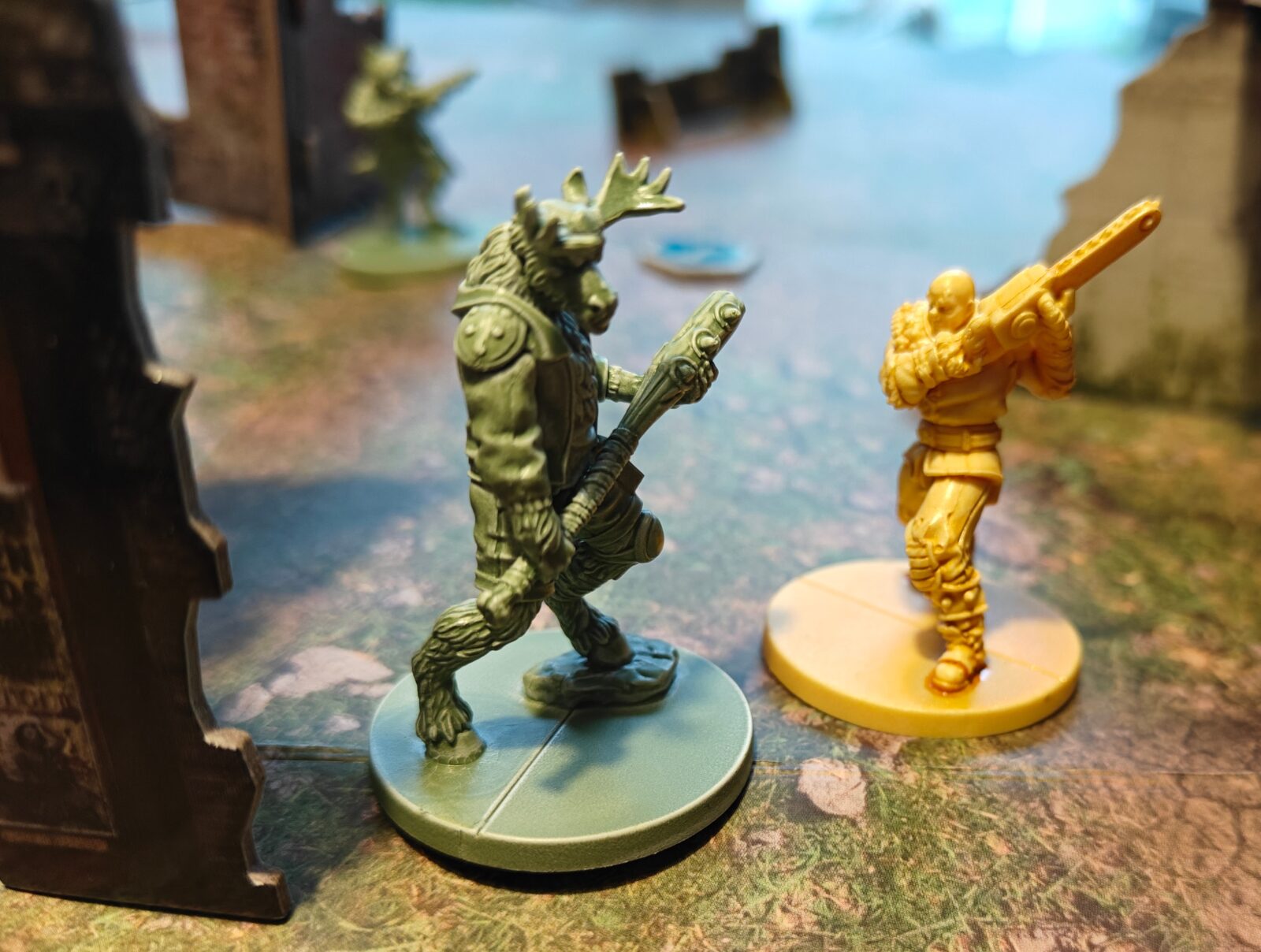
The real excitement was about to take place in centre field, as the two bruisers Hugust and Moose were about to get physical. Hugust charged in, rolling six base dice (an extra one for charging) and three gear dice for their buzzing chainsaw. With only one hit, I considered pushing the roll, but I already had two fire symbols—I didn’t want to risk breaking the chainsaw, so Moose was let off lightly.

oplus_262144

Blood Is Shed

All thoughts of artefacts gone from her mind, Moose swung back with a terrifying bray, swinging the club down with all her might. “CRACK!”. Somehow Joen rolled a ridiculous four successes on six dice—and then proceeded to push the roll, bringing it up to five! Hugust was instantly Bloodied!

The wounded Hugust rallied from being Broken to respond with a roar, carving three damage into the vast Moose. Unfortunately that had required me to push the dice, causing some damage to his chainsaw in the process.

Whilst this battle captivated the middle of the table, characters from both gangs ran to artifact tokens, spinning them over hopefully, but none revealing the GPS Module.

oplus_262144

To The Victor The Spoils

As the penultimate round began, Franton and Farrow’s battle had intensified. Both bloodied, the wiley fox managed to finally Take Out the winged mutant with a well placed butt to the head with the otherwise useless scrap rifle.

Danko failed to find anything useful under an artefact token, then took another pot shot at Dux, missing miserably. I’d built up a healthy pile of m-token so far, but had failed to use them particularly impressively.

In the final action of the turn, Dux waddled over to the final remaining artefact. Joen picked it up, flicking it like a coin and smiling. The Tribe had the GPS Module!


Run Away!

A threat of toxic fog loomed, as most of the remaining characters tried to run; although Hugust and Moose wasted their turn pounding on one another, both too exhausted to really harm the other. Dux sidled off the edge of the board, GPS Module in hand.

A decisive victory for Joen, the Tribe ended with 5 victory points (three for the GPS, two for Breaking players), whilst the my team had a pathetic 1. Never mind, the Mutants will rise again!

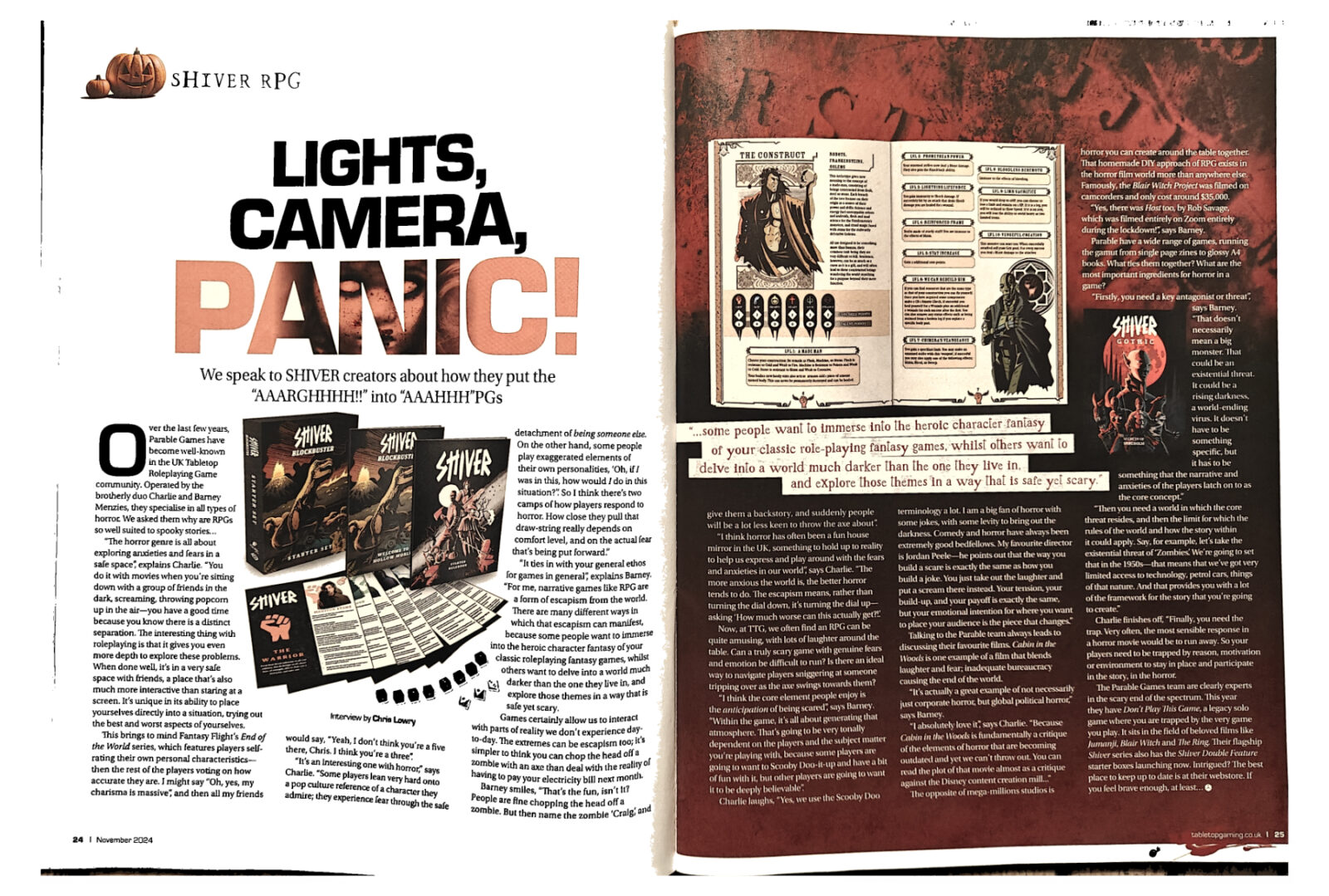
Parable Interview

We speak to SHIVER creators about how they put the “AAARGHHHH!!” into “AAAHHH”PGs

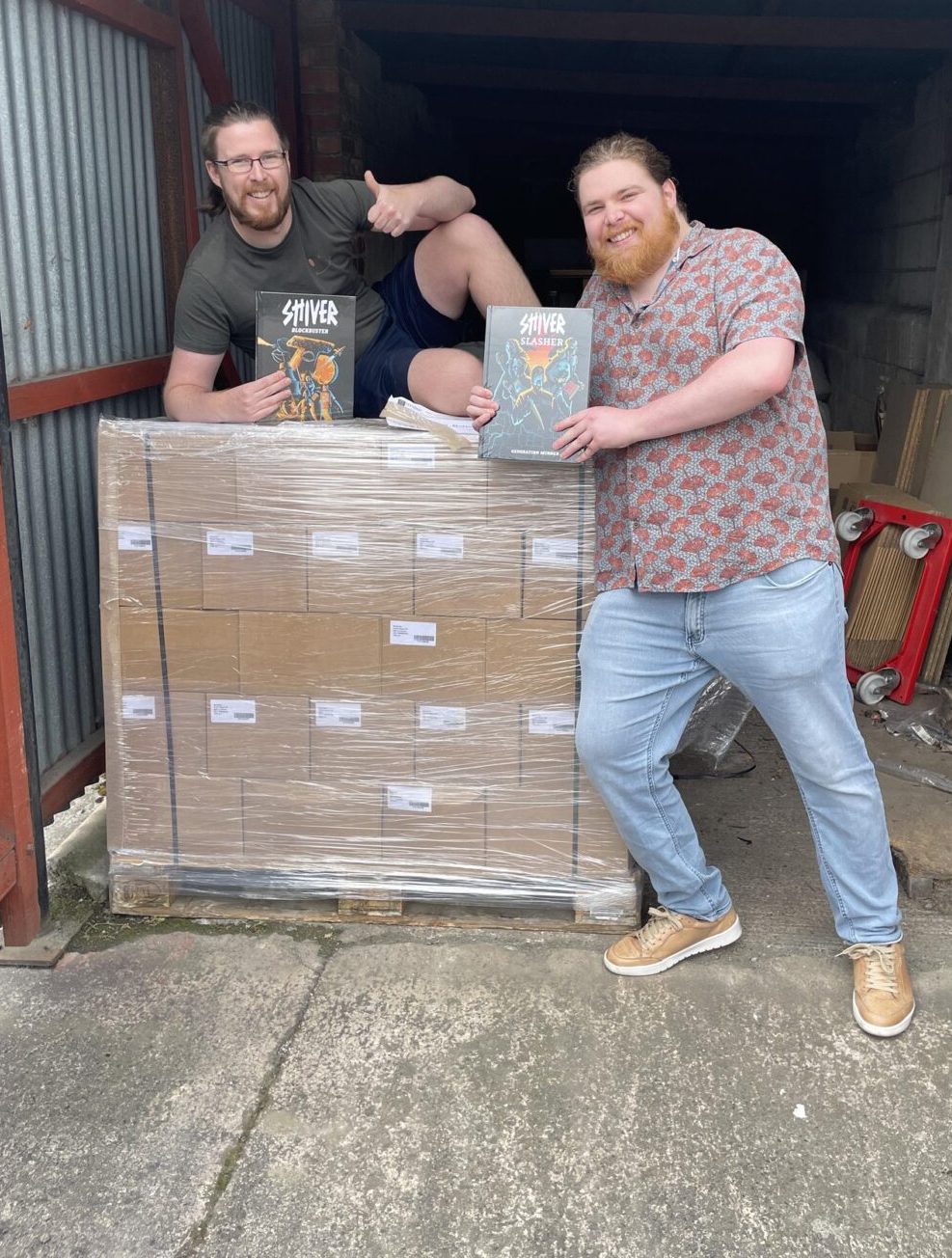
Over the last few years, Parable Games have become well known in the UK Tabletop Roleplay Game community. Operated by brotherly duo Charlie and Barney Menzies, they specialise in all types of horror. We asked them why are RPGs are so well suited to spooky stories…

“The horror genre is all about exploring anxieties and fears in a safe space”, explains Charlie. “You do it with movies when you’re sitting down with a group of friends in the dark, screaming, throwing popcorn up in the air—you have a good time because you know there is a distinct separation. The interesting thing with roleplaying is that it gives you even more depth to explore these problems. When done well, it’s in a very safe space with friends, a place that’s also much more interactive than staring at a screen. It’s unique in its ability to place yourselves directly into a situation, trying out the best and worst aspects of yourselves.

This brings to mind Fantasy Flight’s End of the World series, which features players self rating their own personal characteristics—then the rest of the players voting on how accurate they are. I might say “Oh, yes, my charisma is massive”, and then all my friends would say, “Yeah, I don’t think you’re a five there, Chris. I think you’re a three”.

“It’s an interesting one with horror,” says Charlie. “Some players lean very hard onto a pop culture reference of a character they admire; they experience fear through the safe detachment of being someone else. On the other hand, some people play exaggerated elements of their own personalities, ‘Oh, if I was in this, how would I do in this situation?”. So I think there’s two camps of how players respond to horror. How close they pull that draw-string really depends on comfort level, and on the actual fear that’s being put forward.”

“It ties in with your general ethos for games in general”, explains Barney. “For me, narrative games like RPG are a form of escapism from the world. There are many different ways in which that escapism can manifest, because some people want to immerse into the heroic character fantasy of your classic role-playing fantasy games, whilst others want to delve into a world much darker than the one they live in, and explore those themes in a way that is safe yet scary.

Games certainly allow us to interact with parts of reality we don’t experience day-to-day. The extremes can be escapism too; it’s simpler to think you can chop the head off a zombie with an axe than deal with the reality of having to pay your electricity bill next month.

Barney smiles, “That’s the fun, isn’t it? People are fine chopping the head off a zombie. But then name the zombie ‘Craig’, and give them a backstory, and suddenly people will be a lot less keen to throw the axe about”.

“I think horror has often been a fun house mirror in the UK, something to hold up to reality to help us express and play around with the fears and anxieties in our world”, says Charlie. “The more anxious the world is, the better horror tends to do. The escapism means, rather than turning the dial down, it’s turning the dial up—asking ‘How much worse can this actually get?!’.

Now, at TTG, we often find RPG is quite amusing, with lots of laughter around the table. Can a truly scary game with genuine fears and emotion be difficult to run? Is there an ideal way to navigate players sniggering at someone tripping over as the axe swings towards them?

“I think the core element people enjoy is the anticipation of being scared”, says Barney. “Within the game, it’s thus all about generating that atmosphere. That’s going to be very tonally dependent on the players and the subject matter you’re playing with, because some players are going to want to Scooby Doo-it-up and have a bit of fun with it, but other players are going to want it to be deeply believable”.

Charlie laughs, “Yes, we use the Scooby Doo terminology a lot. I am a big fan of horror with some jokes, with some levity to bring out the darkness. Comedy and horror have always been extremely good bedfellows. My favourite director is Jordan Peele—he points out that the way you build a scare is exactly the same as how you build a joke. You just take out the laughter and put a scream there instead. Your tension, your build-up, and your payoff is exactly the same, but your emotional intention for where you want to place your audience is the piece that changes.”

Talking to the Parable team always leads to discussing their favourite films. Cabin in the Woods is one example of a film that blends laughter and fear; inadequate bureaucracy causing the end of the world.

“It’s actually a great example of not necessarily just corporate horror, but global political horror,” says Barney.

“I absolutely love it”, says Charlie. “Because Cabin in the Woods is fundamentally a critique of the elements of horror that are becoming outdated and yet we can’t throw out. You can read the plot of that movie almost as a critique against the Disney content creation mill…”

The opposite of mega-millions studios is horror you can create around the table together. That homemade DIY approach of RPG exists in the horror film world more than anywhere else. Famously, the Blair Witch Project was filmed on camcorders and only cost around $35,000.

“Yes, there was Host too, by Rob Savage, which was filmed entirely on Zoom entirely during the lockdown!”, says Barney.

Parable have a wide range of games, running the gamut from single page zines to glossy A4 books. What ties them together? What are the most important ingredients for horror in a game?

“Firstly, you need a key antagonist or threat”, says Barney. “That doesn’t necessarily mean a big monster. That could be an existential threat. It could be a rising darkness, a world-ending virus. It doesn’t have to be something specific, but it has to be something that the narrative and anxieties of the players latch on to as the core concept.”

“Then you need a world in which the core threat resides, and then the limit for which the rules of the world and how the story within it could apply. Say, for example, let’s take the existential threat of ‘Zombies’. We’re going to set that in the 1950s—that means that we’ve got very limited access to technology, petrol cars, things of that nature. And that provides you with a lot of the framework for the story that you’re going to create.”

Charlie finishes off, “Finally, you need the trap. Very often, the most sensible response in a horror movie would be to run away. So your players need to be trapped by reason, motivation or environment to stay in place and participate in the story, in the horror.

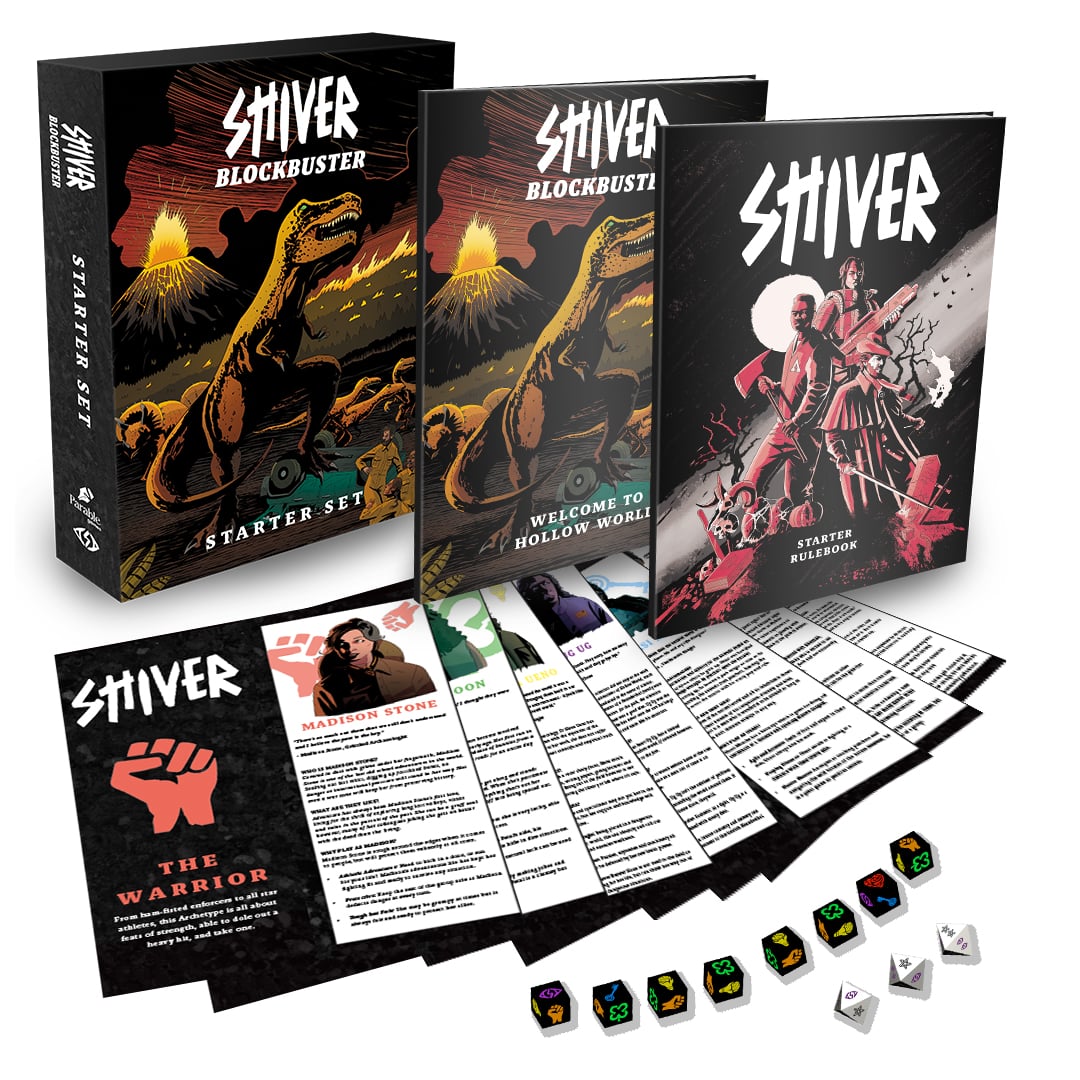
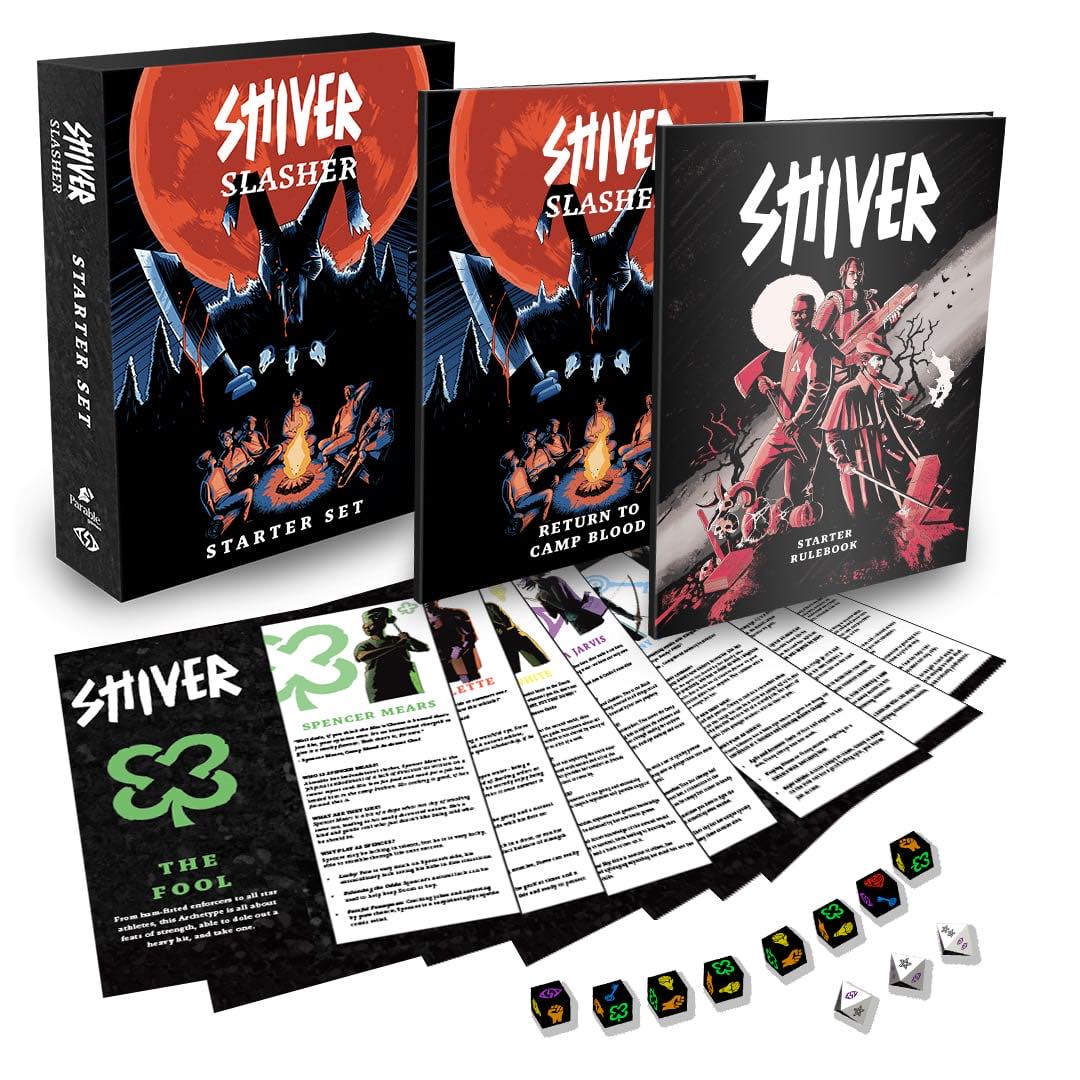
The Parable Games team are clearly experts in the scary end of the spectrum. This year they have Don’t Play This Game, a legacy solo game where you are trapped by the very game you play. It sits in the field of beloved films like Jumanji, Blair Witch and The Ring. Their flagship Shiver series also has the Shiver Double Feature starter boxes launching now. Intrigued? The best place to keep up to date is at their webstore over at ParableGames.co.uk. If you feel brave enough, at least…


Nature preview

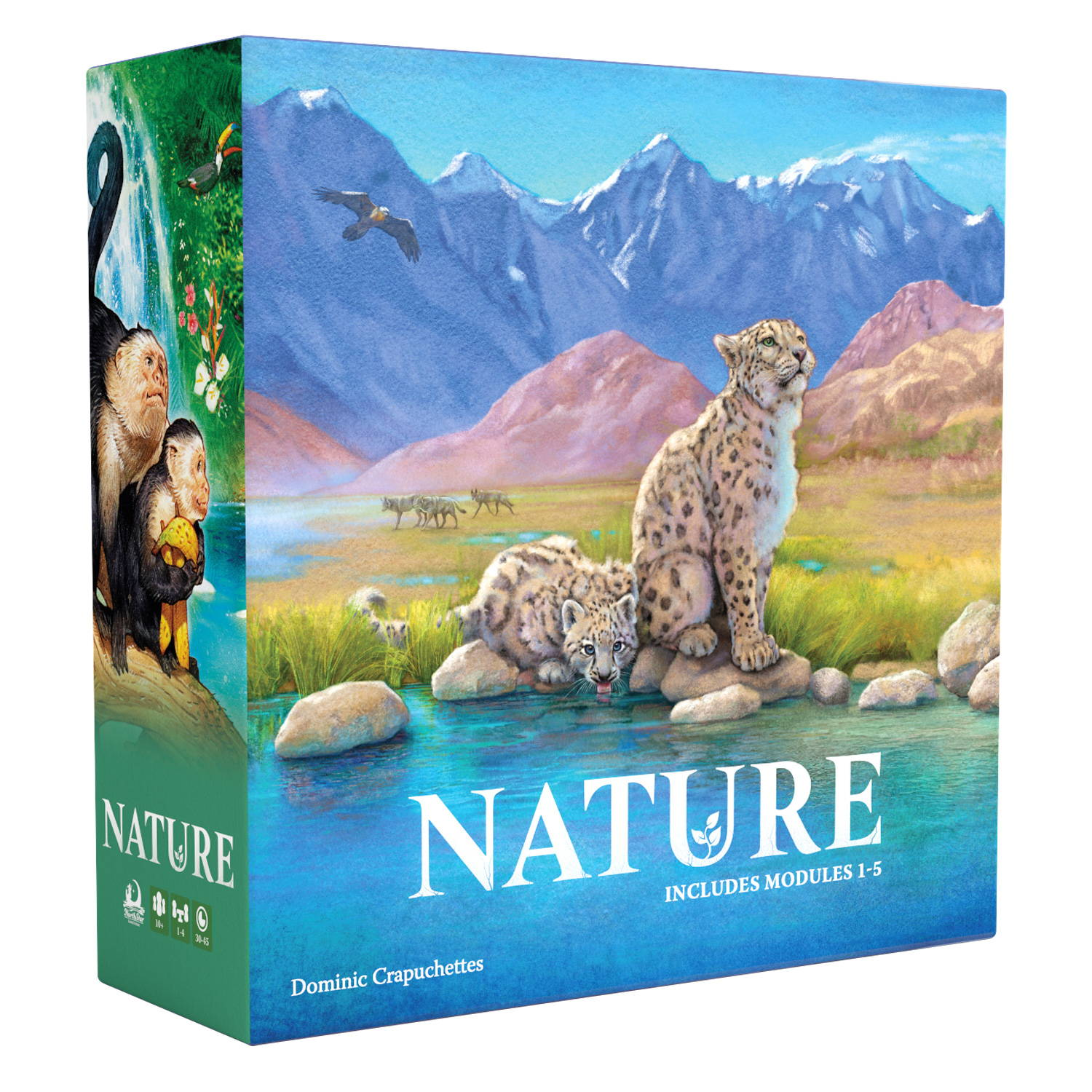
NorthStar Game Studio has been messing around with evolution for a decade now—no, they don’t have some kind of Frankensteinian laboratory somewhere, full of lightning and body parts—I’m referring to their award-winning Evolution series of games.

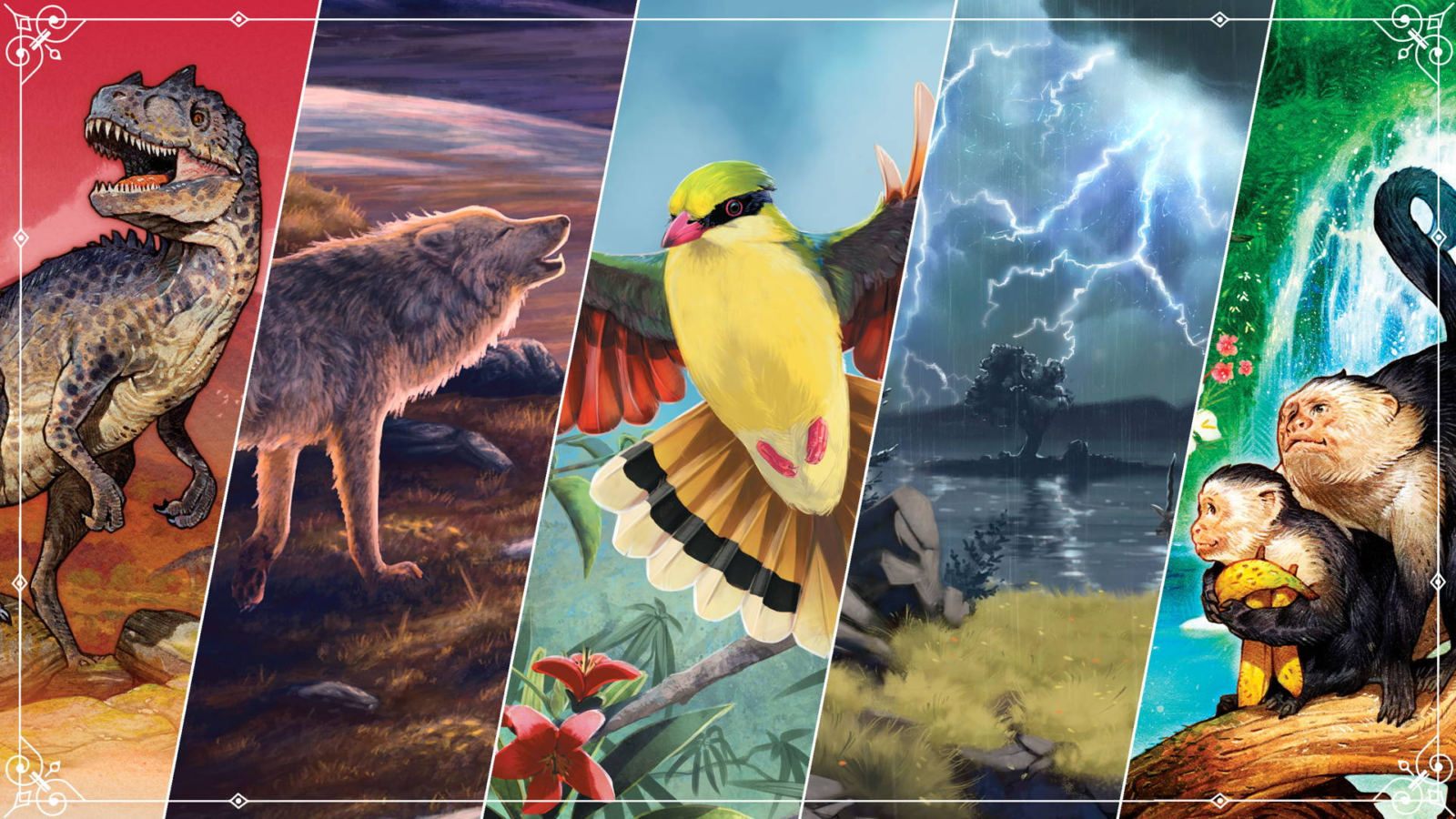
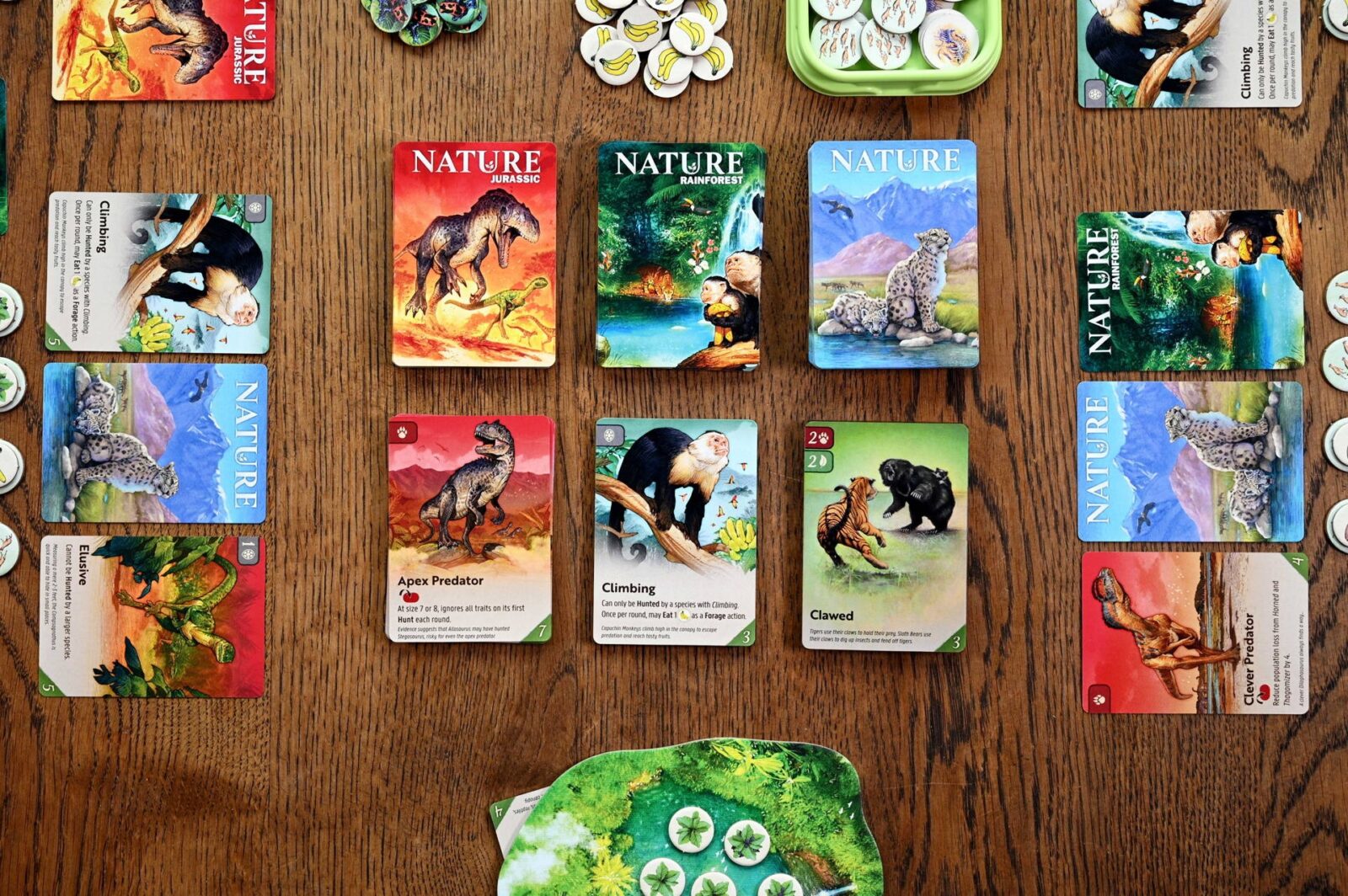
The entire series is based on a similar concept; players must adapt species to outcompete others for food. By adding various characteristics such as “Fast” or “Sharp claws”, a species might gain an advantage over others, gaining in population, eating more food, or, if they become carnivorous, eating other species.


It’s an enticing hook that has served them through four versions; Evolution in 2014, standalone Evolution:Climate in 2016, Oceans in 2020 and now Nature, currently on Kickstarter for a 2025 release.

Each game takes a different approach, with Evolution having the feel of a harsh card battler, Climate adding in an environment that acts a little like an additional enemy that everyone needs to face and Oceans having engine building and puzzle vibes. Nature, built on 12 years of designer Dominic Crapuchettes’ immersion in these themes and mechanics, is both the simplest in the series, and the one with the broadest plans for expansion.

“The core game is a simple and inviting gateway,” explains Dominic, “But the game system provides an explosion of content when you start mixing and matching the modules. Each new module provides an exponential number of combinations”.

The aim for NorthStar Game Studio is to make this a long term gaming ecosystem that they can build and invest in for years to come. “We will release 1 – 2 modules each year for the next decade. The Climate module and the Disease module will be released in 2026. Other modules in the pipeline include the Sahara Desert, Insects & Bugs, the Nocturnal World, Rivers & Lakes, and Fire Breathing Dragons.”

The various games have seen widespread acclaim, with copies of Evolution used in school and universities in order to teach evolutionary biology to students. Evolution is not the first game to have ended up with an educational approach; famously Monopoly was created as The Landlord’s Game to educate people about the unbalanced evils of capitalism. Dominic reveals “Part of the reason I couldn’t let go of Nature is that I wanted a game that was more appropriate for a classroom setting where most of the students would not be gamers”.

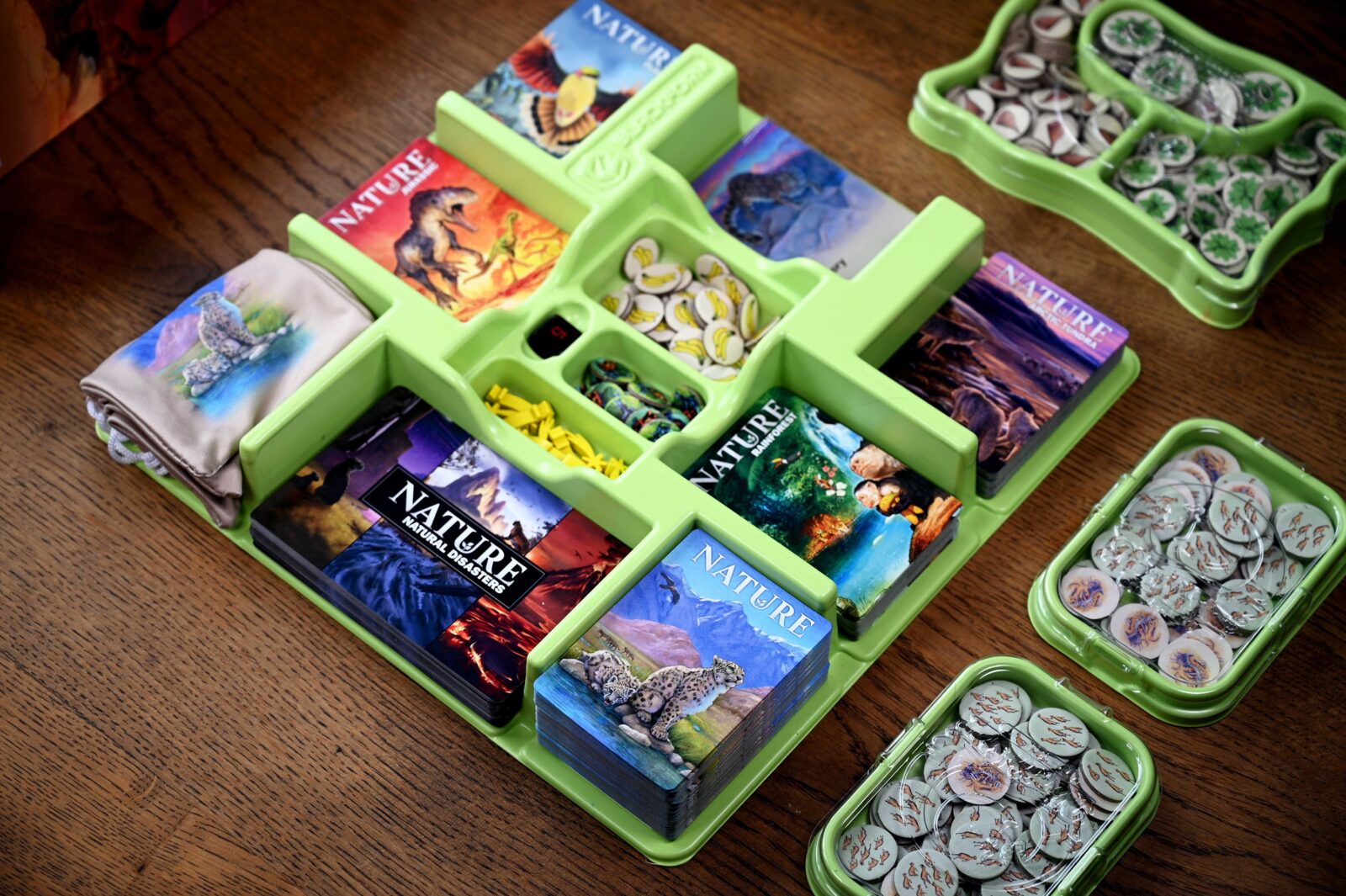
Another feature that will appeal to many is the attempt to produce a game with ecological credentials that respect that same natural world being simulated in-game. Nature features wooden tokens and cardboard pulp container trays for holding components; a first for the industry. The extremely modular design approach also means that players won’t need to buy a huge box full of gubbins; the slimmed down core game has everything needed for satisfying play, which the bigger boxes still exist for the completionists. Fulfillment will be completed from local hubs, further reducing the carbon impact.

Nature is live on Kickstarter as this issue goes to print, with the campaign finishing on the 25th October. The pricing is significantly reduced from the eventual retail cost, so if you’re considering dipping a toe into these primordial waters, what better time to take a look than now?