Beyond Cataclysm is a book shop and micro-publisher from the UK. They stock hundreds of cool indie RPGs and books. You can find them online at beyondcataclysm.co.uk, and in person at most gaming conventions in the UK; places like Dragonmeet, Tabletop Scotland and the UK Games Expo. They are recognised as one of the largest indie RPG stores around… and it all happened by mistake.
“It really wasn’t the plan”, explains Chris, also known as CM Lowry, head honcho at Beyond Cataclysm. “About five years ago, I finished writing my first novel and wanted to be an author. This whole industry is a bit opaque, so I decided to print a few things, just to get my name out there. I’m naturally into the punk scene and DIY, so I helped my friend Sarah print an anthology of punk tour stories called Papercuts”.
The link between punk rock and indie game design isn’t immediately apparent… “No, it’s really not! I’ve always loved games—writing for Tabletop Gaming has been a dream come true—but we discovered there’s just such a fascinating link between story and creative expression in roleplay games”.
The next Beyond Cataclysm project was a book of game-adjacent short fiction—The Die Decides, which used a d10 to generate the stories within—then they released their first adventure for D&D and MÖRK BORG, called Tyrannosaur Inside. “It’s an extremely silly idea; a giant T-Rex lands in the village, everything inside is more T-Rexes”, explains Chris. “Dinosaurs all the way down, basically”. It found a small but appreciative market on Kickstarter, driving Beyond Cataclysm in a direction they’d never expected, “You can’t help but see the other incredible work in this field without wanting to share it. So we started stocking other people’s games. We particularly love A5 zines, those folded, stapled booklets crammed with zany ideas and unbelievably beautiful layout and art”.
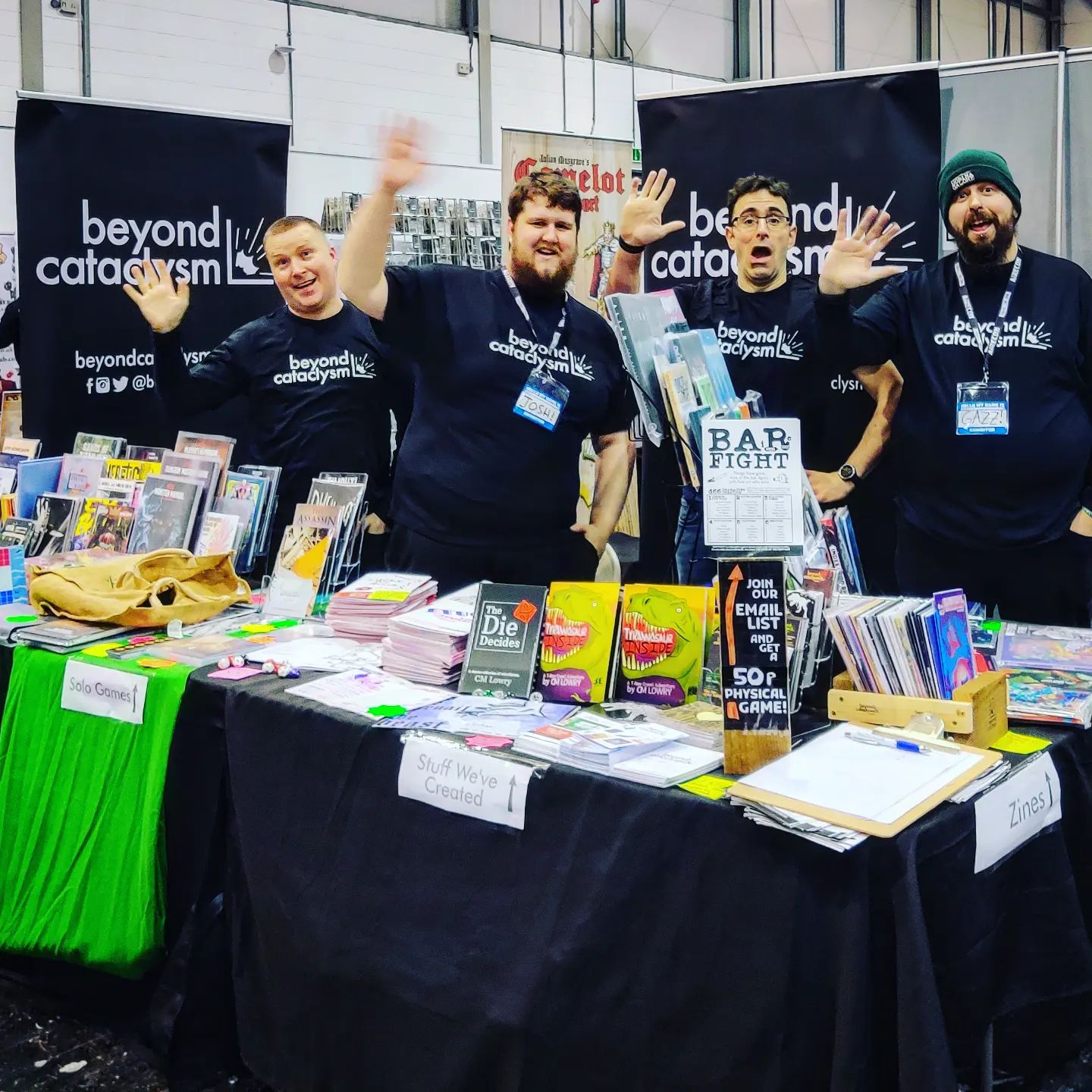
If you catch Beyond Cataclysm at a convention, their stall tends to stand out, “We look a little bit like a teenager’s bedroom, overfilled with funky books, everything covered with slightly too many fluorescent stars. I could pretend we’ve planned it to grab your attention, but it’s only half intentional—the other half is just creative chaos”.
Accidentally running a gaming company sounds a little surprising but fun. We ask what some of the most unexpected successes Beyond Cataclysm have seen; “Well, there really are too many creators out there to mention them all. Shout out to Pelle and Johan who blew everyone’s socks off with MÖRK BORG—and they are truly lovely people too”, says Chris. “One of the things that’s been a joyful bonus has been importing zines from places like the US, Australia and the Global South; there are innovators like Guilherme Gontijo and Cezar Capacle who should be household names in the scene. Helping people like this gain prominence is an honour. We finally made enough profit (read that as “any”) to start regularly supporting a foodbank this year, which was always a goal of ours”.
2024 is nearly half over, but Beyond Cataclysm have two more projects on the go, “We launch MÖRK ORG next month. Imagine blending the film Office Space with the Exorcist; we reimagine the most monotonous work environment possible, blending existential terror, possessed photocopiers and the true horror that is the soul-drain of capitalist tedium”.
They also have a follow up to their very successful Lucky For None d13 journalling game planned, “Yes, it’s going to be Lucky for None… In Space! It uses the same comedy spiral and a thirteen sided dice mechanic, but it turns there’s loads more interesting ways to die outside the earth’s atmosphere!”
If you’d like to investigate the world of indie games—especially if the idea of a thirteen sided dice appeals—then visit BeyondCataclysm.co.uk (or find them on on socials as @beyondcataclysm), and search “MORK ORG” anywhere to follow their next campaign.
Something I love to do on holiday is visit coffee shops. I like sitting in new places, drinking a hot drink and watching the world go by.
On a previous trip I attempted to nail down the best coffee in Edinburgh, but this week we are in Walton-on-the-Naze, and I’m using the same, incredibly exacting, methodology to compile my list of coffee shops:
Vaguely looking on Google Maps
Wandering around
Drinking coffee
I’m rating them out of 5 on three key stats: Facilities, Flavour and Funds.
Enjoy this post? Check out my latest book: ISBN COFFEE!
ISBN COFFEE is a celebration of our love and relationship with coffee.
Filled with illustrations, stories, poetry and games, it’s designed to be enjoyed whilst drinking your favourite cuppa. We even sell coffee beans to match! Buy a copy at beyondcataclysm.co.uk…
Coffee shop reviews
We were here for a week, and Walton is a pretty small place, so I tried a decent chunk of the places that you’d think of for coffee:
Read the in depth reviews and scores below (Click the names above to jump down to them).
This was my first stop, in our journey around the picturesque Walton. Good Taste Cafe is in an interesting corner building with loads of seating inside and out. It’s cheerful and interesting inside, not particular fancy or elegant; just a good solid cafe. Lots of daylight as well, I felt happier just walking in! Free WiFi also; I’d give it a 4.5/5 for Facilities.
The coffee I had was tasty and hot. No fancy foam art, but satisfying and good flavour. I had a mocha, probably should have had a latte too. My son had a milkshake and then chips and seemed extremely satisfied. Flavour gets a 4.5/5.
A milkshake with cream, Mocha from proper espresso machine, Diet Coke and a portion of chips came to exactly £10. Hard to argue with that, especially when they gave us a free extra can because the chips were slightly slow: it’s a 4.5/5 for Funds
A rather drizzly-yet-warm day led me into Jo-Jo’s, which has a real flurry of colour to it. Tastes may vary—my wife would call this horribly busy—but I think it’s cute and cosy. There’s mini-stall all round the interior selling local honey/art/jewellery from different creators, and a seating area outside which would have been much nicer on a sunny day. Inside had decent tables but no WiFi. I’m giving it a 3/5 for Facilities.
My coffee came from a bean-to-cup machine, but was admittedly very good. I didn’t have any of the food, but there was a decent range on some nice handwritten menus – hot chocolates with candy floss?! Yes please! Flavour gets a 4/5.
This place is exactly what you want for your family. Sandwiches for £3.50? Add on crisps for 50p. My cappuccino was £2.50, which was nearly the cheapest I had in Walton. Funds gets a perfect score of 5/5.
This isn’t your standard cafe experience; Revved Up has no interest in being Costa. This place is open until evening, with occasional free live music and a welcome-to-your-local vibe of tattooed locals ready to hang out and play pool. Honestly, I’ve never been anywhere like it. Motorbikes inside, neon bar lights and t-shirts for sale. Plus, from the outside seating you can literally look out straight onto the sea. Absolutely unique Facilities 4/5.
Admittedly the coffee was instant, and came from a hot water urn, but that almost didn’t matter. You don’t come here for a pretentious latte, you come here to hang out. I also got a Kit Kat chunky and dipped it in my coffee whilst I listened to the waves. Decent! The food, otherwise, is pretty much entirely bacon rolls—vegetarians beware! Flavour is a 2/5 I’m afraid.
I got a Kitkat and a coffee for £2.50. They did take card too, with some friendly banter about charging me £2,500 – and then accidentally nearly charged me 25p! This was the most wallet-friendly of the places I visited in town, so a Fund score of 5/5 is well earned!
Bianca’s is a friendly and stylish cafe with high quality coffee and a nice attention to detail. They have a little seating outside, and a comfortable interior with a sofa and comfy chairs round tables. There are various items for sale around the edges but not intrusively so. I enjoyed sitting here for an hour or so; the free WiFi helped. My only criticism was the lack of a toilet—the free loos at the other end of the High Street are fine, but a little bit far. Facilities 4.5/5
My coffee was great. Layered microfoam on the mocha, stylish chocolate dusting, decent size, good temperature. Best coffee I had in Walton: Flavour is a perfect 5/5
Pricing was on the higher end for Walton-on-the-Naze, but still enough to make Bristol, Manchester or Shoreditch look ridiculous. Two large coffees set me back £6.50, and it was well worth the money. Funds are 3.5/5
Right at one end of Walton-on-the-Naze is a narrow eight storey tower with a stunning view over the ocean and sand dunes around Walton. There are actually two cafes here, one at the visitor centre in a shiny plastic building with plastic wrapped premade sandwiches that looks clinical and miserable. I didn’t really consider this one, because there’s also a cheerful coffee van, plus a kitchen inside the 17th century tower! Not sure why anyone would visit the tower and then not choose the cafe that lets you sit in the actual thing you’ve visited but people are weird. The tower is unique, beautiful, stuffed with cool art and lets you climb until your legs ache with views for tens of miles in every direction. This one is a 6/5 for Facilities, even though there’s no WiFi, and even worse you can see Clacton from the top.
My coffee was tasty, even if it was served in a disposable cup. They’ve got a proper machine in the coffee van; we also had jacket potatoes, sandwiches and cake. The food was adequate, if unremarkable; they score a 3.5/5 for Flavour.
The price is hard to be clear on. Yes, the coffee was slightly pricey, and the food was absolutely overpriced, but for buying anything at all we got access to the first two floors of the tower for free, set in the grounds of an idyllic and utterly unique location. Plus, it was still cheaper than food and entrance to a standard National Trust rip-off would have been, so… Funds gets a 3/5.
This is the most high-end of all the cafes we visited in Walton-on-the-Naze. You could call it fancy, pretentious or classy depending on your mood at the time. It certainly felt like walking into a high end wine bar, and we were taken to a table where we were able to peruse separate food and drink menus, whilst chilled muzak played in the background. Seating is available outside, and there is free WiFi—hard to find anything to fault here: Facilities are a 5/5.
I had a coconut matcha latte; again, something that’s hard to find anywhere else, with a delicious slice of cheesecake. My daughter enjoyed her fruit-and-cream-garnished milkshake, althought her slice of blondie was a little sophisticated for her taste. Flavour scored 4.5/5
It fell down a bit on value, as the most expensive place we ate. A hot drink, two cakes and a milkshake came to £19.90, pretty much double what we paid for a similar amount of food at Good Taste Cafe. £12 for a sandwich is a bit rich for my blood: Value is a 2.5/5.
I love bookshops, and I love places that encourage you to sit, read and relax. My experience in The Nose ticked all of those boxes. Yes, it’s one of those places that’s got strange opening times, and there was a hint of damp that tickled the nose, but it’s also chock-full of books I want to read—and a typewriter I wrote a haiku on (I like haikus)! There’s free WiFi too, which you get the code for from a handwritten postcard they hand out. It’s aimed to be an all-purpose creative space for the community—we played a roleplay game here for a couple of hours and they were very supportive. Authentically idiosyncratic Facilities score a 4/5.
oplus_262144
My iced coffee was very nice, and exactly what I needed on a day this hot. My son’s cold chocolate was a little grainy; he didn’t complain, but wasn’t exactly wowed either. No food on the menu, but thought given to vegans and vegetarians with milk options; Flavour scores a 3.5/5.
This was one of the cheapest places we tried, and most drinks clocked in at £2.50 or lower. Given the vibe here is “please come and spend as long as you want in our comfy chairs and read books”, I’d say the value for money was top notch: Funds 5/5.
I think this is the most traditional “greasy spoon” cafe in Walton. Open early, closes mid-afternoon, hand written specials menu and classic range of fry up breakfasts; I was surprised there was no one already inside wearing hi-vis on their way to a construction site somewhere—I don’t mean that as an insult; builders know a good caff when they find one. (During the course of my review a group of builders wearing hi-vis walked in, proving me right!). Accessing the toilet through the kitchen was fun too, if a bit weird. My only issue, as a vegetarian, is that the place absolutely reeked of frying bacon the entire time I was there. A plus for some, not for me though! Facilities get a 3/5
Coffee came from a Rijo machine and was nice enough, but unfortunately my brother had oat milk for his coffee and it came in a little jug, already separated. Possibly a little gone off? Not ideal. Flavour, sadly, only hits 3/5
Pricing was good, both on meals and drinks. My coffees were £2.60, nearly the cheapest I paid for a real coffee anywhere in Walton, and the cooked meals were just about cheaper than anywhere else we visited. Funds score here is a 5/5!
Final score: 3.8
Conclusion
I loved my time in Walton, and I’d happily visit any of these places again. We’ve got a podium finish for this one!
In 1st place, for overall experience, value and food, our winner is Good Taste Cafe!
Coming up 2nd, but providing the absolute best coffee for the money, I’d recommend Bianca’s.
Finally, joint 3rd goes to thebreathtaking views and wonderfully unique building, The Naze Tower Cafe and the unique and enticing creative project of The Nose!
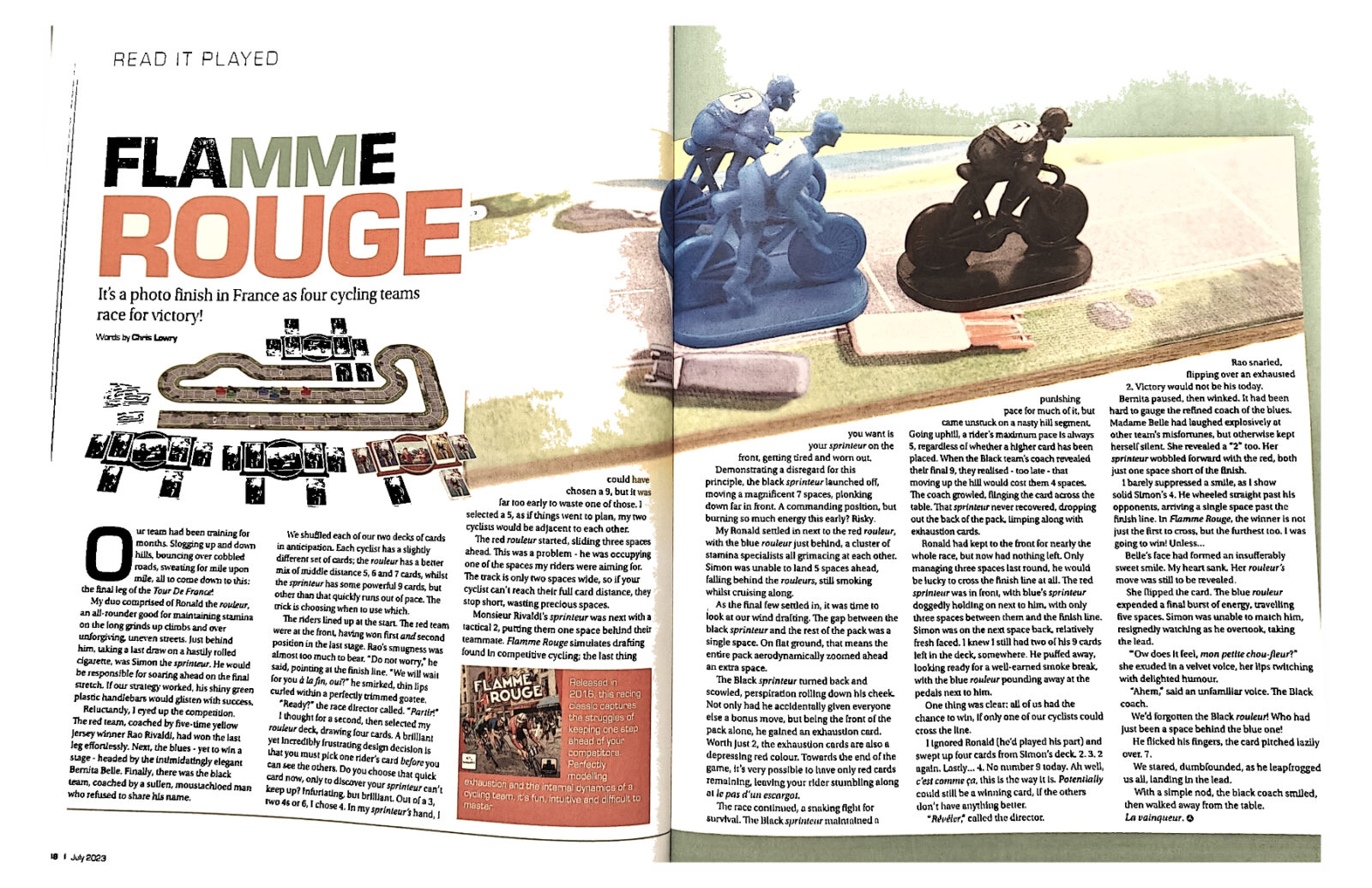
Our team had been training for months. Slogging up and down hills, bouncing over cobbled roads, sweating for mile upon mile, all to come down to this, the final leg of the Tour De France!
My crew, whittled down to two key players, readied themselves on the start line. There was Ronald, our ‘rouleur’, an all-rounder good for maintaining stamina on the long grinds up climbs and over unforgiving uneven streets. His bulbous calves and rigid posture demonstrated a grim determination to get the job done. Just behind him, taking a last draw on a hastily rolled cigarette, was Simon, the team’s ‘sprinteur’”. He would be responsible for the final push, hopefully. If our strategy worked, his shiny Green plastic handlebars would glisten with perspiration – and success.
Reluctantly I eyed up the competition. The Red team, coached by five-time yellow jersey winner Rao Rivaldi, had won the last leg effortlessly. Next, the Blues – yet to win a stage – headed by the intimidatingly elegant Bernita Belle; and finally, the Black team, coached by a sullen, moustachioed man who refused to share his name.
Each coach grasped their two decks of cards in anticipation. Each type of cyclist has a slightly different set of cards; the rouleur has a better mix of middle distance 5, 6 and 7 cards, the sprinteur has some powerful 9 cards, but after that quickly runs out of pace. The trick is choosing when to use which.
The right riders stood in position, ready to proceed. The Red team were at the front, with the rest of us scattered behind. Reds had managed first and second position in the last stage; Rao’s smugness was almost to much to bear. “Do not worry”, he said, pointing at the finish line, “We will wait for you, à la fin, oui?”. He smirked, thin lips curled within a perfectly trimmed goatee.
“Ready?”, the race director called. “Partir!”
I thought for a second, then select my rouleur deck, and drew four cards. In Flamme Rouge you pick one rider’s deck and make your card selection before you can see the other. It’s a brilliant and incredibly annoying design decision. Do you choose that good card now, only to find out your sprinter doesn’t get the option of something strong enough to keep up? Infuriating, but brilliant. Out of “3”, “4”, “4” and “6”, I chose “4”. In my sprinteur’s hand, I even had the opportunity of a “9” – but it was far too early to waste one of those. I selected a “5”, meaning, if things went to plan, my two cyclists would be adjacent to each other.
All the coaches made their choices; a card for each cyclist. “Révéler,” called the director. We revealed our cards.
Each rider moves the number of spaces written on their card, with the order dictated by their current position. The Red rouleur played a “3”, hopping three spaces ahead. This was a problem – he was occupying one of the spaces my riders were heading for. The track is only two spaces wide, so if your cyclist can’t reach their full card distance, they stop short, wasting the vital extra distance.
Monsieur Rivaldi’s sprinteur was next, with a tactical “2” played. This would put the rider 1 space behind the current leaders. Flamme Rouge simulates the wind drafting physics of real competitive cycling – being in the middle of a pack is much easier. The last thing you want is your sprinteur on the front, getting tired and worn out.
Demonstrating a disregard for this principle, the Black sprinteur launched off, moving a magnificent 7 spaces, plonking down far in front of the Red rouleur. A commanding position, but burning so much energy at this point in the race? Risky.
My rouleur Ronald settled in next to the Red rouleur 4 spaces ahead, with the Blue rouleur just behind; a cluster of stamina specialists all grimacing at each other. Simon was unable to land 5 spaces ahead and so fell back to 4, behind the rouleurs. If he was annoyed by this was unclear; he was somehow managing to continue to smoke whilst cruising at nearly 30mph!
The remaining Blue and Black riders clumped in behind, and it was time to look at our wind drafting. The gap between the lead of the Black sprinteur and the rest of the pack was a single space. On flat ground, that means the entire pack benefits from the aerodynamics of the first rider; everyone moved up one space to fill the gap.
The Black sprinteur turned back and scowled, perspiration rolling down his cheek. Not only had he accidentally given everyone else a bonus turn of movement, but he was also the sole person at the front of a pack, so gained an exhaustion card to be added to his deck. Worth just “2” the exhaustion cards are also a depressing red colour. Towards the end of the game it’s very possible to have only red cards remaining, leaving your rider stumbling along at a snail’s pace. Or, indeed, le pas d’un escargot.
The race continued, a snaking fight for survival, with the Black sprinteur maintaining a punishing pace for much of it. He eventually came unstuck on a nasty hill segment. Going uphill, a rider’s maximum pace is always 5, regardless of whether a higher card has been placed. When the Black team’s coach revealed their final “9”, they realised – too late – that their rider would move onto the hill and lose 4 of their movement spaces. The coach growled, flinging the card onto the table. That sprinteur never recovered, soon dropping out the back of the pack and limping along with exhaustion cards 2 spaces at a time.
Eventually, it came down to a gritty end. Ronald, my rouleur, had kept to the front for nearly the whole game, but he had nothing left. He’d only managed 3 spaces last round, and would be lucky to cross the finish line for several more turns. He’d been neck and neck with Rivaldi’s Reds for the entire race, but was further back now.
The Red sprinteur was at the front, with Belle’s Blue sprinteur doggedly holding on next to him; just 3 spaces between them and the finish line. My sprinteur Simon was on the next space back, and relatively fresh faced – I knew I still had two of his “9” cards left in the deck… somewhere. He puffed away, looking ready for a well-earned smoke break, with the Blue rouleur pounding away at the pedals next to him.
It was hard to gauge the refined coach of the Blues. Bernita had laughed explosively at other team’s misfortunes, but otherwise kept herself silent, and her team had taken a mixed strategy of leading, then following; I wasn’t sure which cards she had managed to keep back. One thing was clear; all four of the front riders had the chance to win the race, if only they could cross the line.
We looked at our cards. I ignored Ronald – he’d played his part – and swept up four cards from Simon’s deck. “2”. “3”. “2”, again. And… “4”. No “9” today. Ah well – c’est comme ça; this is the way it is. Potentially could still be a winning card, if the others don’t have anything better.
I glanced, apprehensively at my opponents. They had selected their cards and stared back at me too. Unreadable.
“Révéler,” called the director.
First up, Rivaldi snarled, and flipped over a red, exhausted “2”. His Red sprinteur limped a feeble two spaces forward. Victory would not be his today.
Belle paused, then winked carelessly. She revealed a “2”. Her Blue sprinteur wobbled forward with the Red, both just one space short of the finish.
I barely suppressed a smile, as I showed solid Simon’s “4”. He wheeled straight past the Red and Blue sprinteurs, arriving a single space past the finish line. In Flamme Rouge, the winner is not just the first to cross, but the furthest too. Simon was in poll position. I was going to win, unless…
Belle’s face had formed an insufferably sweet smile. My heart sank. Her rouleur’s move was still to be revealed.
She flipped the card. The Blue rouleur expended a final burst of energy, travelling 5 spaces. Simon was unable to match him, resignedly watching as he overtook, taking the lead. And victory.
In a velvet voice, she exuded, “’Ow does it feel, mon petite chou-fleur?”. Her lips twitched with delighted humour.
“Ahem”, said an unfamiliar voice. The Black coach.
We’d forgotten the Black rouleur! Just a space behind the Blue rouleur!
He flicked his fingers; the card pitched lazily over. “7”.
Dumbfounded, we stared, as the Black rider leapfrogged Red, Green, Blue, and landed. At the front.
With a simple nod, the Black Coach smiled, and walked away from the table. The victor. La vainqueur.
Flamme Rouge is possible the most thematic game I own. Perfectly modelling exhaustion and the internal dynamics of a cycling team, it’s fun, intuitive and difficult to master.
I’m extremely thankful for the direction my career has taken in recent years. Both in time spent working – less time, that is – and in terms of where I do it.
Now, part of that balance has been a wonderful pivot towards church and community leadership; and to writing and publishing – but the specific type of work isn’t the focus of this thought. That said, much of it has occured in my “real” job, which happens to be medicine.
Working, whilst apparently upside down in a hammock
In the last five years, I’ve held several medical jobs that have involved “on calls” on the phone, or training in distant locations.
As a result, I often don’t have to attend a normal physical location for my work. I do need to be available on the phone, but I’m freed of a specific geographic workplace. This gives me a flexibility I’ve been under-appreciating, and an opportunity I hadn’t realised I’ve been utilising – until now.
Outside
I began this post a few nights ago, whilst on call. I was laying in a hammock, in our back garden. The hour was around midnight, and above me I had a tarpaulin (a rather sturdy Eno ProFly, since you ask). I was listening to the pitter-patter of rain falling all around me. The sound of precipitation on canvas is such a there-but-for-the-grace-of-god-go-I feeling for me. The knowledge that a thin sheet is all that protects me from utter misery is somehow exhilarating, comforting and semi-miraculous.
For me, the experience is pure heaven.
The thing is, I wasn’t just doing this despite actively also working. I was sleeping in the garden because I was on call. I have to sleep in a different room from my wife due to the regular telephone calls; so I thought, might as well sleep in the garden. Without me fully realising it, my job has been creating excuses for me to sleep wild.
More than you might think
Nor was last night the first time! During lockdown, whilst working for GP Out Of Hours, I regularly got picked up by a driver to visit care homes in the middle of the night. So I’d set up a tarp shelter, with a little wood burning stove, of course, and kip in the front garden there. I remember – on more than one occasion – a very surprised driver as I suddenly stood up when they arrived, without the front door even opening.
Another new job involved an induction at a location in Barrow-in-Furness in the Lake District. More than a little out-of-the-way, the induction involved my attendance on two separate days. I wasn’t keen to travel three hours home, and a hotel was a pricey option that didn’t appeal. So I cycled five minutes out of town and spent a pleasant night under a tarp shelter, next to a footpath.
I volunteered for a week of assistant editor at Tabletop Gaming Magazine this winter, and had a snow-laden, star-strewn 30 minute cycle to my AirBnb each night. I jogged each dawn on crisp rural roads through uneven terrain and surprise pockets of trees. Cold? Yep. Bracing? Yep. Joyful? Oh yes.
On yet another night, on a job I thankfully no longer have, I was summoned to Barrow at 11pm. I drove into the night, and finished reviewing my patient at 2am. Wandering out onto the footpath, I paused, and looked out at the sea and the hills – and took the penultimate photo below.
[rl_gallery id=”5654″]
Where am I going with this? Well, three things, really.
Firstly, I’m aware of my privilege – but don’t write things off for yourself.
Many people don’t have the opportunity for flexible work, and I accept that. If that’s you, I’m sorry, that sucks. But also; have you asked? Have you said “I’d like to do this”, lots of times?
Look, my sleeping-in-a-bush jobs have come from a) being spurred to change – after crying one night in a car park on realising how much I disliked my job, b) talking to an absolute stranger on a train who I overheard talking about hiring people, c) giving out samples of my writing to a magazine editor I’d never met. Yes, I have had significant advantages in life, but a), b) and c) didn’t depend on those, and I wouldn’t have seen change without them.
Secondly, you are valuable. Value yourself.
Ascribe worth to the things you care about. I hate commuting, and have consistently asked for the opportunity to take the train – where I can read, write and enjoy myself – and been given permission to do so. Or just avoided distant jobs – I’ve been offered changes to roles in that direction, and said “No”.
There’ve been several times that I’ve recognised when my work has been worth more and asked for more – and recieved it! In GP Out Of Hours, I realised I wasn’t recieving holiday pay, and asked for it, and eventually had a bulk payment of the contractual 12.5% that no-one had recieved in 6 years. In another role, I was performing work from a higher pay grade and not being paid for it, so I asked for it. It took six months of persistent, escalating emails, but it worked.
The system is built on stepping on people and assuming people are too afraid to ask – the company Zoom has recently begun to enforce that its workers don’t work-from-home. Zoom?! The go to brand for making software that let’s you, you know, work-from-home! If you want change, if you want to work-from-home, or part-time, or run a project, or whatever – you’ll need to actually ask. Consistently. Over months and years, sometimes. And sometimes you’ll need to change jobs a few times, like I have. Either way, it’s worth it.
Finally, appreciate what you have.
I’m typing this at midnight, in a field in Cheshire. I can – just about – touch grass without taking my hands off the keyboard. You might not be able to do that. You might be sensible, and not want to do that. But there are undoubtably things about your employment that you appreciate – even if its purely and simply the money. Even if the money doesn’t seem like enough – at least it’s there at all. I wrote this because I’ve not really been pausing to intentionally appreciate the good stuff; so easy to moan about the bad night shift and forget the good one.
I’m deeply thankful for the positives, thankful to my life experiences and to my education and to God’s interventions that have opened doors I never thought would open. It’s good to be able to see the good, and I hope you feel encouraged to call it out in your own life.
Let’s call out the positives of where we are.
Postscript: If you read this whole post and your job totally sucks and/or you’re broke; I’m sorry. That sucks. Hope things improve, and sorry if reading this was just the worst.
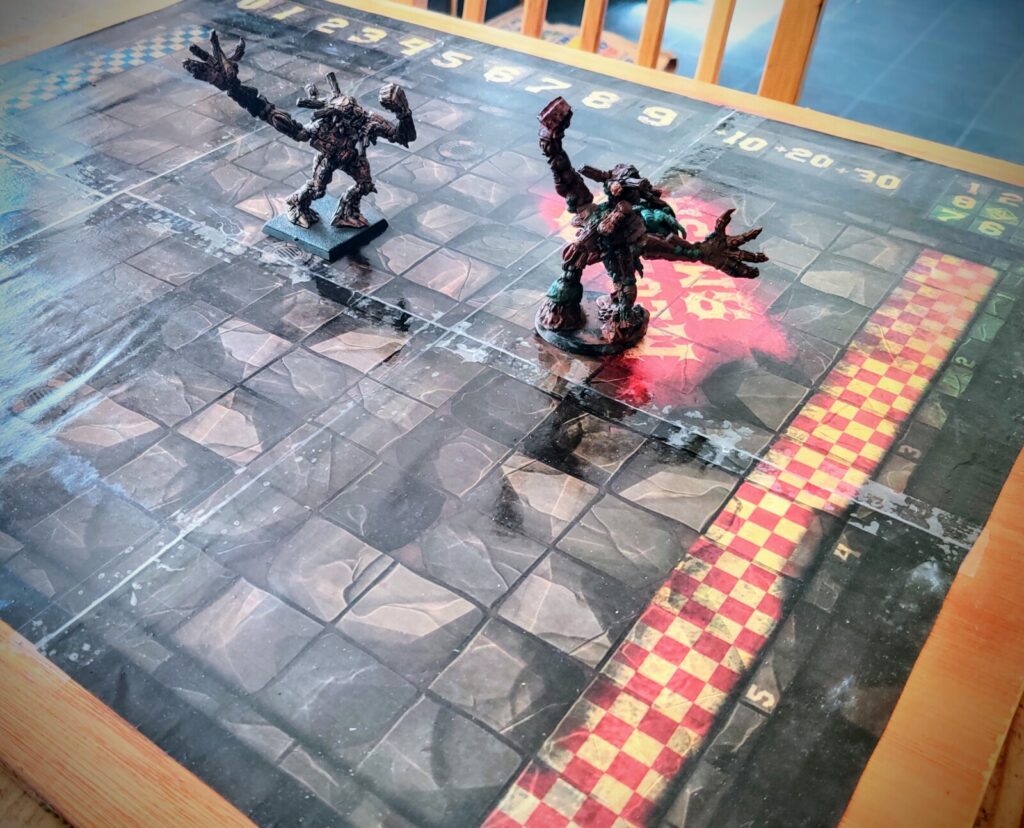
Feel free to download and print yourself. At some point I’ll add a print ready PDF and layered PNG, if that would be useful…
It’s designed to print on 6 A4 sheets with a little overlap and be the right size for models.
In real life
Updated this post in 2023 with some extras. Here’s a photo of it in the flesh, printed out and varnished!
And here it is with some ancient Treemen models for size. Both have huge bases, but with 32mm it all fits a dream and even with these it’s perfectly playable.
Let me know how you get on, this post has had a fair amount of interest over the last 3 years, so I’m intrigued to know if anyone made their own…
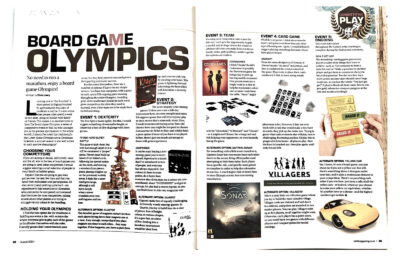
Looming up on us now is “the Summer”, a short period in England marked by approximately four days of moderate sunshine. It’s also a time when people often spend a week or two away, going on holiday with family or friends. This makes it an excellent time to host The Board Game Olympics: a series of competitive events to find out who amongst you is the greatest sportsperson in the whole world! (It should be noted that traditionally, the Lowry Home Olympics are at Christmas; however, a summer season is also well suited to such sportive shenanigans)
Choosing your Competitors
If you are aiming to decide, definitively , once-and-for-all, who is the best at board games; you are going to need some competitors. I would suggest selecting a smallish selection of people in your family or holiday group.
Explain that you are going to play four games over the next few days, and that you need their enthusiasm and participation. I’d also recommend pushing quite hard – my experience is that sometimes it’s Grandma who claimed to be completely uninterested that becomes the most competitive, talking smack about other players and trying to smuggle victory tokens in her handbag.
Holding Your Olympics
I find the best option for timeframe is holding one event a day, with an intro day where everyone gets to play each of the games to familiarise themselves with the rules. Friendly games don’t count towards your score, but they help prevent the seasoned gamers from gaining an automatic success.
For the events themselves, there are any number of options; I’ll give you my simple version. You have four categories, with a game in each, and a fifth ongoing game running throughout the entire Olympics. Awarding gold, silver and bronze medals in each events gives competitors the drive they need to succeed, even if they turn out to be made from tin foil and string.
Event 1: Dexterity
The first fight is based on finger agility. For this, I would suggest something of reasonable length, or otherwise a best-of-five challenge with short games.
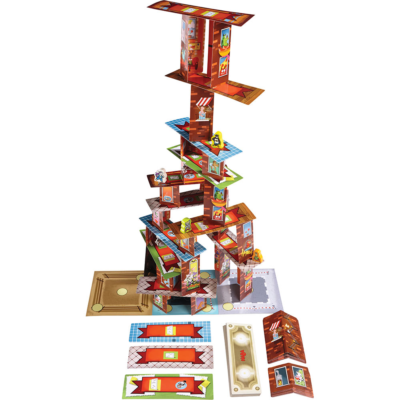
Rhino Hero Super Battle
This game is fairly short, but with just enough depth to it to still be considered a “proper” game. Players must build up towers from folded cards, following the special action on the cards, and moving a wooden rhino piece at point, placing it higher up on the preciously wobbly tower. It feels like a more intelligent Jenga, although it still hurts deeply when a tower crumbles away into nothingness and you lose.
Alternate Option: Klask
This feindish game of magnetic torture involves each player laying down their magnets one at a time. Easy enough, except that if you place magnets too close to each other… they snap together, with a “klask!” sort of noise. If that happens, you have to pick them up. This game is lightning fast and infuriating; the best of five will determine a dexterity winner.
Event 2: Strategy
The next category is “Strategy”. Unless you want a full day tournament here, or some complicated points-per-placing rules, I’d suggest a game that will let everyone play at once, or one that’s extremely short. Now, I would recommend staying away from old classics here: you might be tempted to choose Carcassonne or Ticket to Ride; and whilst that’s a great option if none of you have ever played before, there’s just too much advantage to those with prior experience.
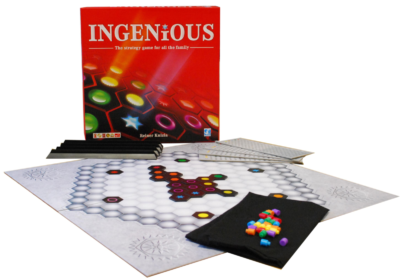
Ingenious
It can be scary buying a new strategy game you’ve never played: Ingenious is a classic that I’ve introduced to tens of people, and everyone has always enjoyed it. Get colours in lines to score points, do it faster than everyone else; if you max out a colour on your scoreboard, shout “INGENIOUS!!” and get an extra go.
Alternate Option: Quarto
Gigamic make lots of equally challenging, deliciously woody strategy games. In Quarto, you try to build four-in-a-row of pieces; four of height, colour, or various shapes. It’s super-fast, so a best of five, feeding into a knockout tournament would be ideal here.
Event 3: Team
Forming your competitors into teams for this one, each gets the opportunity to gain a medal, and to forge victory for whatever arbitrary division you make between them; family name, girls and boys, nerds vs geeks; the options are endless.
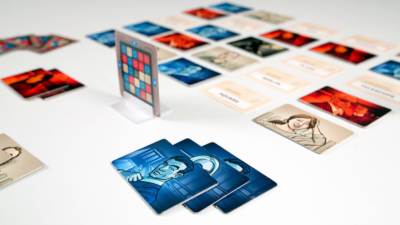
Codenames
I think Vlaada Chvátil’s Codenames is possibly the finest team game for being easy to pick up, but impossible to master. One person must use a single word as a clue to help his teammates select one or more cards from the table. “Snow” might refer to “Mountain”, “St Bernard” and “Clouds” – or it might not! Choose the wrong card and risk helping your opponents, or even instantly losing the game.
Alternate Option: Captain Sonar
For something with a little more crunch to it, Captain Sonar lets your teams hunt each other down in the ocean, firing off torpedoes and attempting to hide from radar. Each player has a specific role, and specific mini-games to complete in order to help the submarine to success. A much higher risk of death than in most Olympic events, but entertaining nonetheless.
Event 4: Card Game
Of all the categories, I think there must be more card games out there than any other type of board game. Again, I would definitely suggest playing something that none of you have played before.
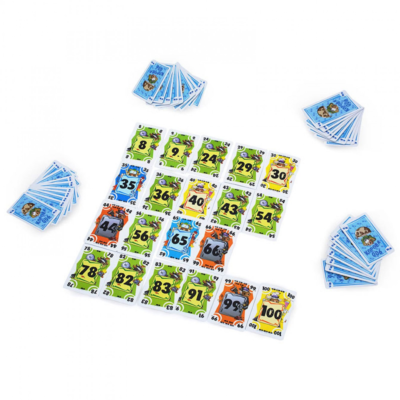
6nimmt!
From the same designer as El Grande, 6 nimmt! means “six takes!” in German, and thus is explained the central conceit of the game. Players try to place their cards, numbered 1-104, in rows, using simple placement rules. However, if they are ever stuck with a card that would make a row have six cards, they pick up the entire row. Trying to guess what cards everyone else will play next is challenging, frustrating and fun. I’d play this in progressive knockouts – all players play, then the loser is knocked out: then play again, until only two are left.
Alternate Option: Villagers
This is a tasty little set collection game where you try to build the most valuable village. Villager cards are claimed and laid down in a tableau, and points awarded in two market phases. You can play Villagers with upto five players, so all together might work. Otherwise, each player has a point score, so you could have two games with different players and compare points for medal rankings.
Event 5: Ongoing
This event takes place throughout The Games, only counting as complete during the final award ceremony.
Don’t Get Got
This friendship-ruining game gives every player a wallet of six things they have to achieve, such as “Get someone to hum a tune for you”, or “Make a promise to another player and get them to comment when you break that promise”. For the next few days, every action anyone takes should cause huge suspicion, as you fear the word “You just got got!”. If players finish all their cards, first to win gets gold, otherwise compare progress at the end and award accordingly.
Alternate Option: Yellow Car
Yes, I know, it’s not a board game; you just shout out if you see a yellow car. But still, there’s something about it that gets under your skin, and it adds a continuous element to your competition. There’s no punching each other if you win here, just keep a tally of all the yellow cars, and the highest numbers get medals.
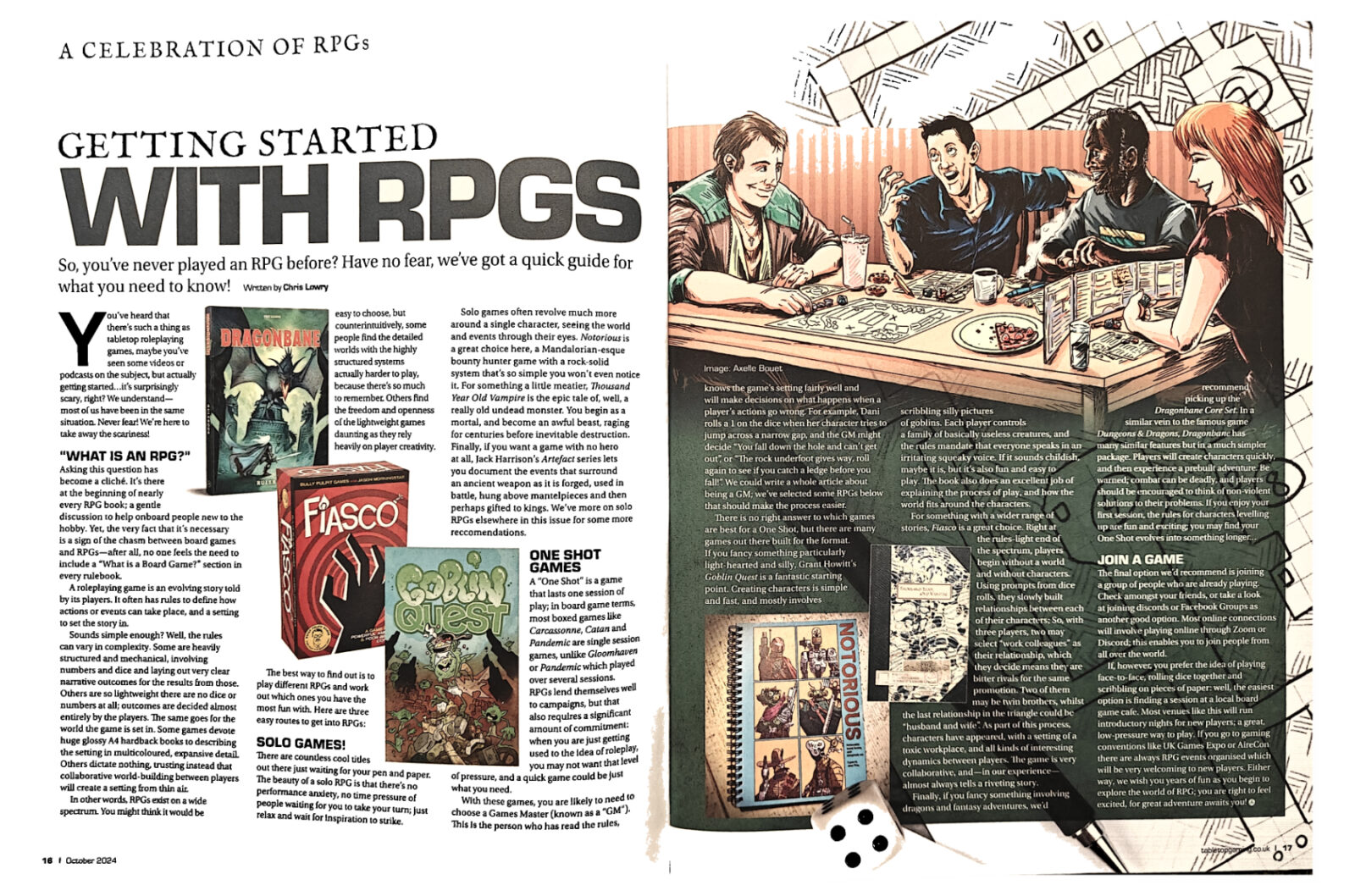
You’ve heard that there’s such a thing as tabletop roleplaying games, maybe you’ve seen some videos or podcasts on the subject, but actually getting started…
…it’s surprisingly scary, right? We understand—most of us have been in the same situation. Never fear! Tabletop Gaming is here to take away the scariness!
“What is an RPG?”
Asking this question has become a cliché. It’s there at the beginning of nearly every RPG book; a gentle discussion to help onboard people new to the hobby. Yet, the very fact that it’s necessary is a sign of the chasm between board games and RPG—after all, no one feels the need to include a “What is a Board Game?” section in every rulebook.
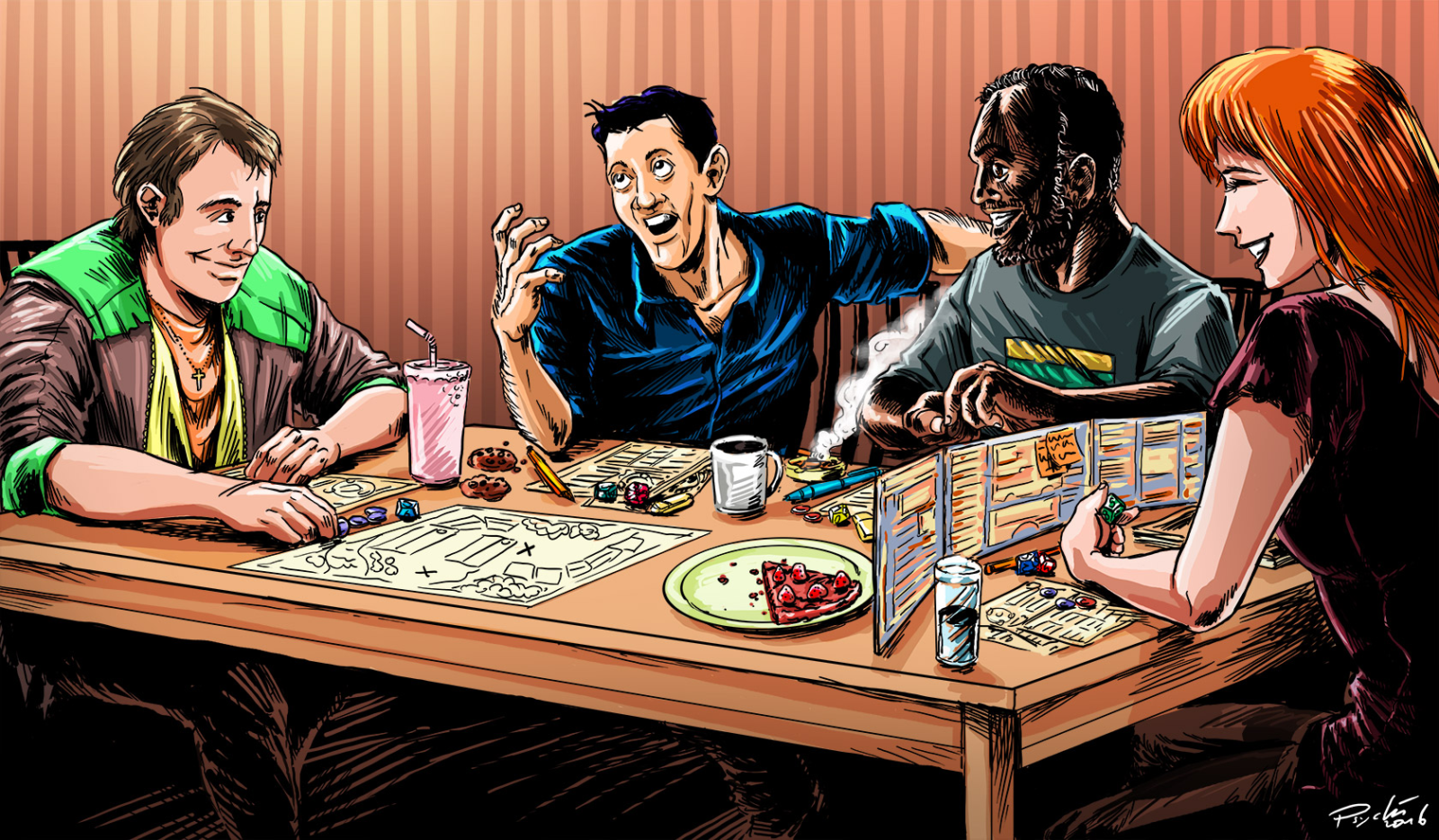
A role play game is an evolving story told by its players. It often has rules to define how actions or events can take place, and a setting to set the story in.
Sounds simple enough? Well, the rules can vary in complexity. Some are heavily structured and mechanical, involving numbers and dice and laying out very clear narrative outcomes for the results from those. Others are so lightweight there are no dice or numbers at all; outcomes are decided almost entirely by the players. The same goes for the world the game is set in. Some games devote huge glossy A4 hardback books to describing the setting in multicoloured, expansive detail. Others dictate literally nothing, trusting instead that collaborative world-building between players will create a setting from thin air.
In other words, RPGs exist on a wide spectrum. You might think it would be easy to choose, but counterintuitively, some people find the detailed worlds with the highly structured systems actually harder to play, because there’s so much to remember. Others find the freedom and openness of the lightweight games daunting as they rely heavily on player creativity.
by Axelle Bouet released under CC BY-SA 4.0 licence (can
The best way to find out is to play different RPGs, and work out which ones you have the most fun with. Here are three easy routes to get into RPG:
Solo Games!
Yes, that’s right, Solo RPG! There are countless cool titles out there just waiting for your pen and paper. The beauty of solo RPG is that there’s no performance anxiety, no time pressure of people waiting for you to take your turn; just relax and wait for inspiration to strike. They are an excellent way to
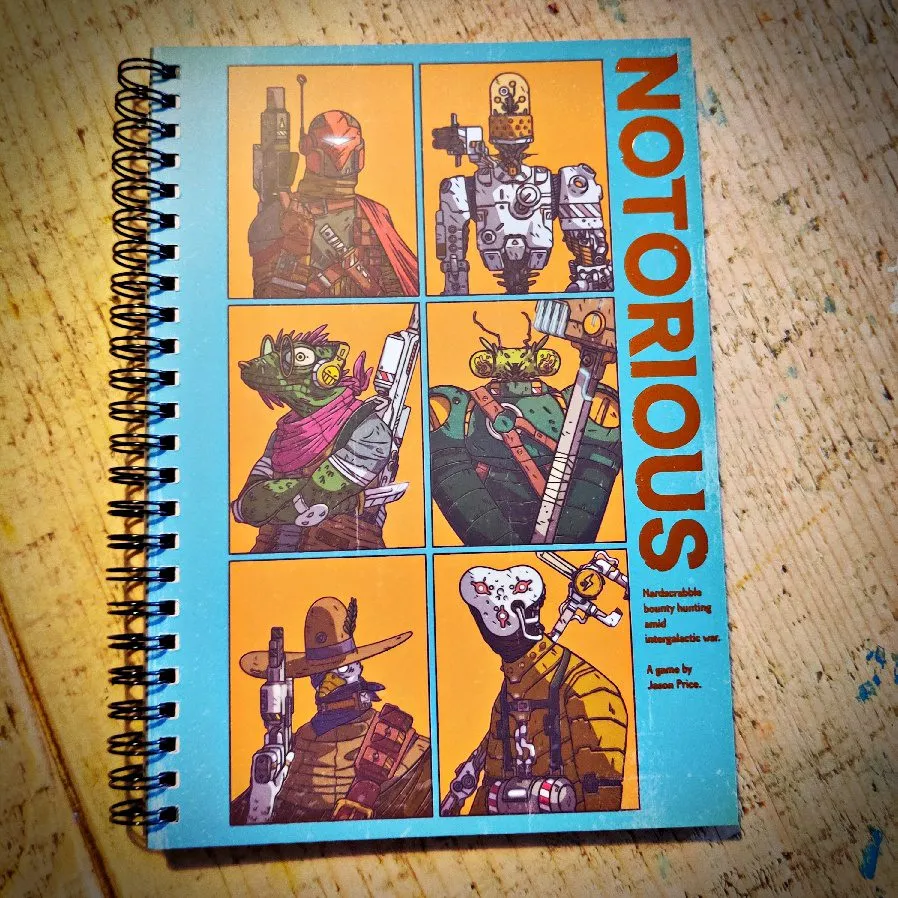
Solo games often revolve much more around a single character, seeing the world and events through their eyes. Notorious is a great choice here, a Mandalorian-esque bounty hunter game with a rock solid system that’s so simple you won’t even notice it. For something a little more meaty, Thousand Year Old Vampire is the epic tale of, well, a really old undead monster. You begin as a mortal, and become an awful beast, raging for centuries before inevitable destruction. Finally, if you want a game with no hero at all, Jack Harrison’s Artefact series let’s you document the events that surround an ancient weapon as it is forged, used in battle, hung above mantelpieces and then perhaps gifted to kings.
One Shot Games
A “One Shot” is a game that lasts one session of play; in board game terms, most boxed games like Carcassonne, Catan & Pandemic are single session games, unlike Gloomhaven or Pandemic which are Legacy/Campaign games. RPG lends itself well to Campaigns, but that also requires a significant amount of commitment: when you are just getting used to the idea of roleplay, you may not want that level of pressure.
With these games, you are likely to need to choose a Games Master (known as a “GM”). This is the person who has read the rules, knows the game’s setting fairly well and will make decisions on what happens when players actions go wrong. For example, Dani rolls a 1 on the dice when her character tries to jump across a narrow gap, and the GM might decide “You fall down the hole and can’t get out”, or “the rock underfoot gives way, roll again to see if you catch a ledge before you fall!”. We could write a whole article about being a GM; we’ve selected some RPGs below that should make the process easier.
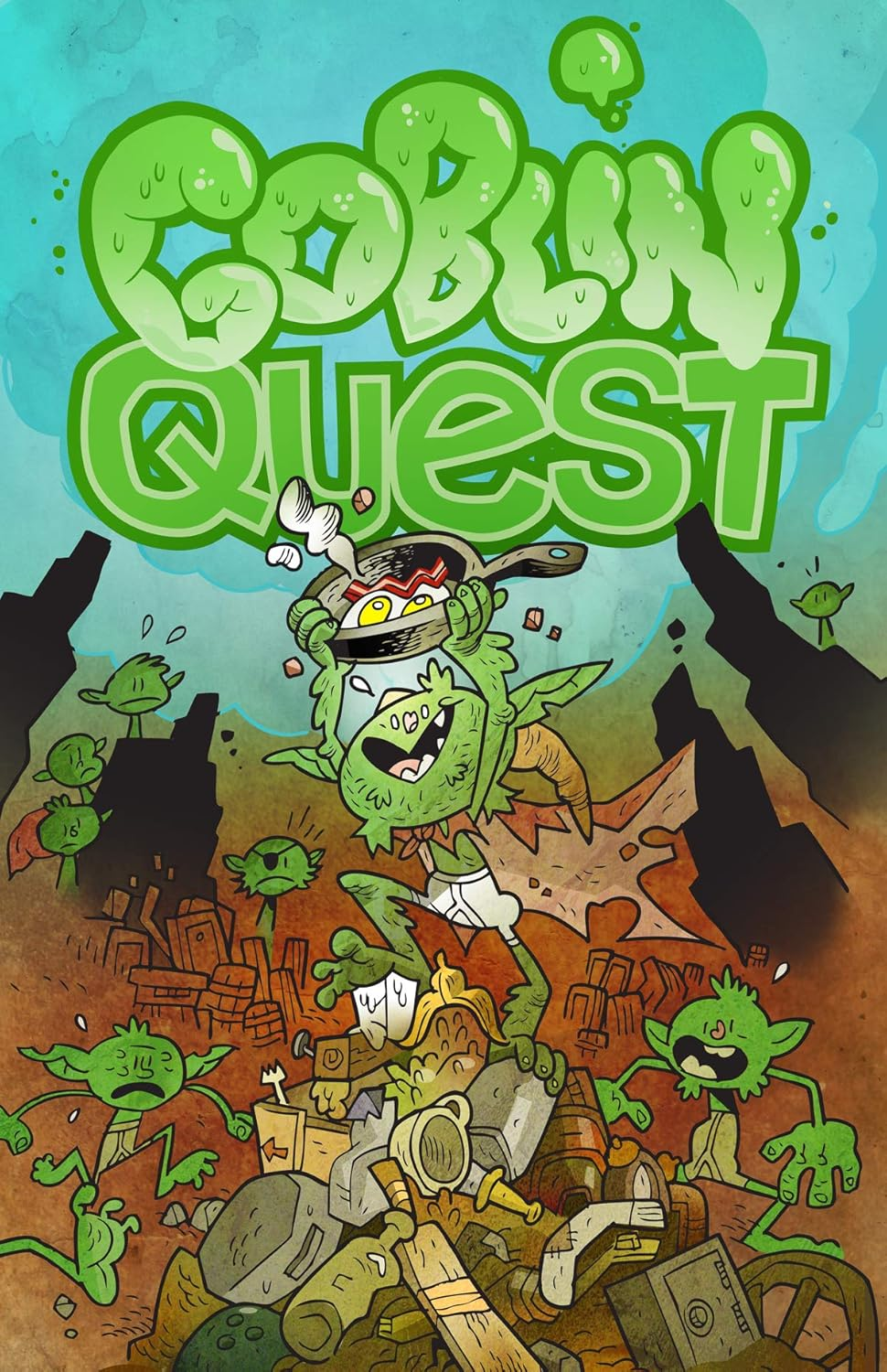
There is no right answer to which games are best for a One Shop, but there are many games out there built for the format. If you fancy something particularly light-hearted and silly, Grant Howitt’s Goblin Quest is a fantastic starting point. Creating characters is simple and fast, and mostly involves scribbling silly pictures of goblins. Each player controls a family of basically useless creatures, and the rules mandate that everyone speaks in an irritating squeaky voice. If it sounds childish, maybe it is, but it’s also fun and easy to play. The book also does an excellent job at explaining the process of play, and how the world fits around the characters.
For something with a wider range of stories, Fiasco is a great choice. Right at the rules-light end of the spectrum, players begin without a world and without characters. Using prompts from dice rolls, they slowly built relationships between each of their characters; So, with three players, two may select “work colleagues” as their relationship, which they decide means they are bitter rivals for the same promotion. Two of them may be twin brothers, whilst the last relationship in the triangle could be “husband and wife”. As part of this process, characters have appeared, with a setting of a toxic workplace, and all kinds of interesting dynamics between players. The game is very collaborative, and—in our experience—almost always tells a riveting story.
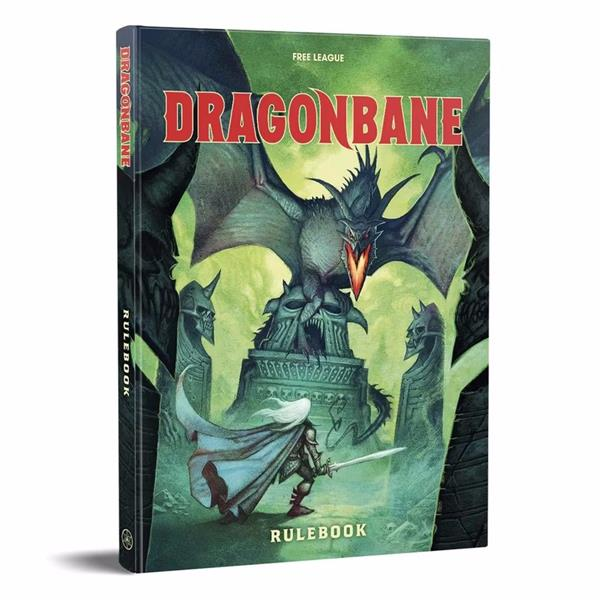
Finally, if you fancy something involving dragons and fantasy adventures, we’d recommend picking up the Dragonbane Core Set. In a similar vein to the famous game Dungeons & Dragons, Dragonbane has many similar features but in a much simpler package. Players will create characters quickly, and then experience a prebuilt adventure. Be warned; combat can be deadly, and players should be encouraged to think of non-violent solutions to their problems. If you enjoy your first session, the rules for characters levelling up are fun and exciting; you may find your One Shot evolves into something longer…
Join a game
The final option we’d recommend is joining a group of people who are already playing. Jump on Twitter/X, tag @TabletopMag and ask for games to join; we will retweet you and you’ll get a hundred offers straight away. Joining discords or Facebook Groups are another good option. Most online connections will involve playing online through Zoom or Discord; this enables you to join people from all over the world.
If, however, you prefer the idea of playing face-to-face, rolling dice together and scribbling on pieces of paper: well, the easiest option is finding a session at a local board game cafe. Most venues like this will run introductory nights for new players; a great, low pressure way to play. If you go to gaming conventions like UK Games Expo or AireCon there are always RPG events organised which will be very welcoming to new players. Either way, we wish you years of fun as you begin to explore the world of RPG; you are right to feel excited, for great adventure awaits you!

 Beyond Cataclysm is a book shop and micro-publisher from the UK. They stock hundreds of cool indie RPGs and books. You can find them online at beyondcataclysm.co.uk, and in person at most gaming conventions in the UK; places like Dragonmeet, Tabletop Scotland and the UK Games Expo. They are recognised as one of the largest indie RPG stores around… and it all happened by mistake.
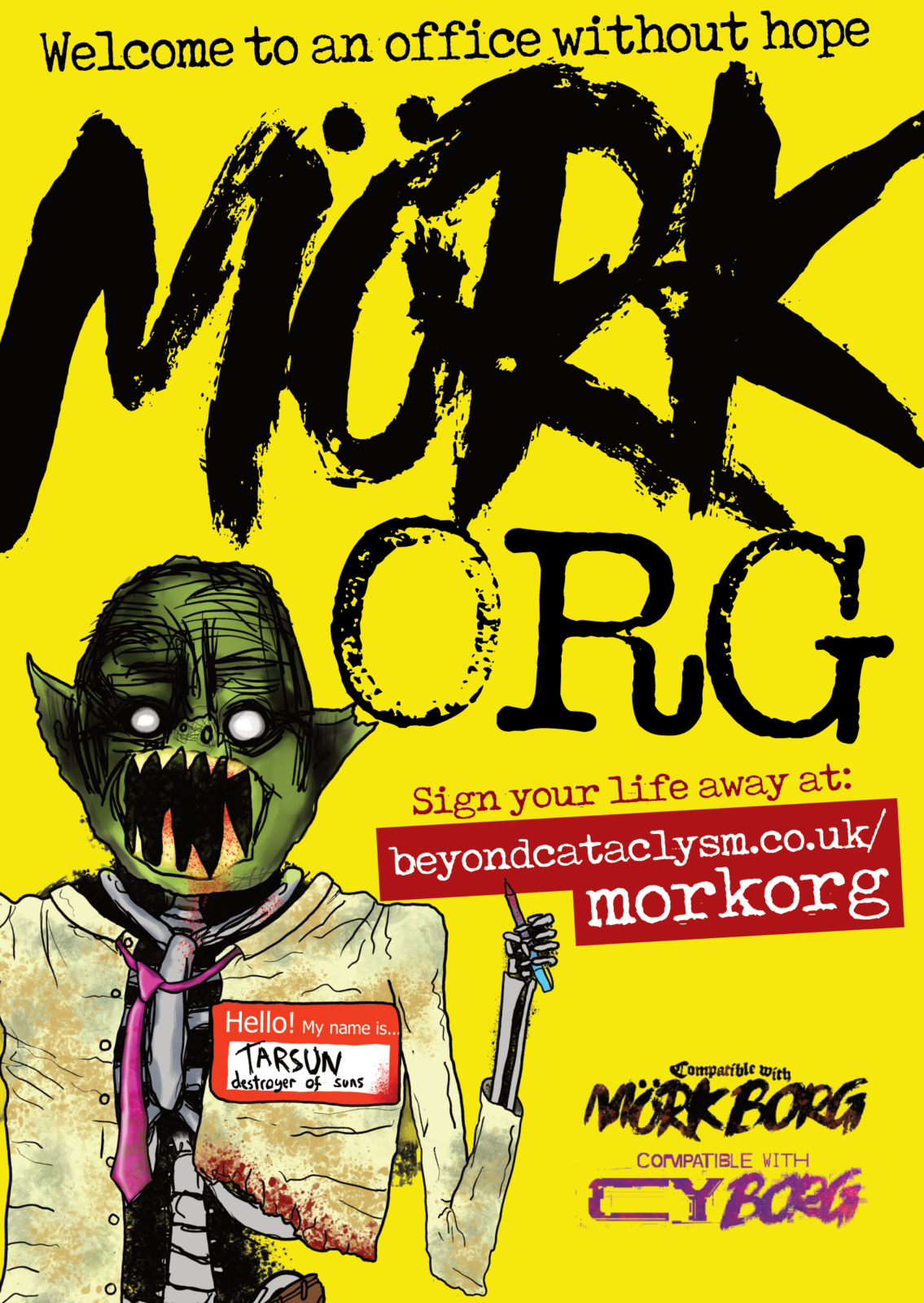 2024 is nearly half over, but Beyond Cataclysm have two more projects on the go, “We launch MÖRK ORG next month. Imagine blending the film Office Space with the Exorcist; we reimagine the most monotonous work environment possible, blending existential terror, possessed photocopiers and the true horror that is the soul-drain of capitalist tedium”.
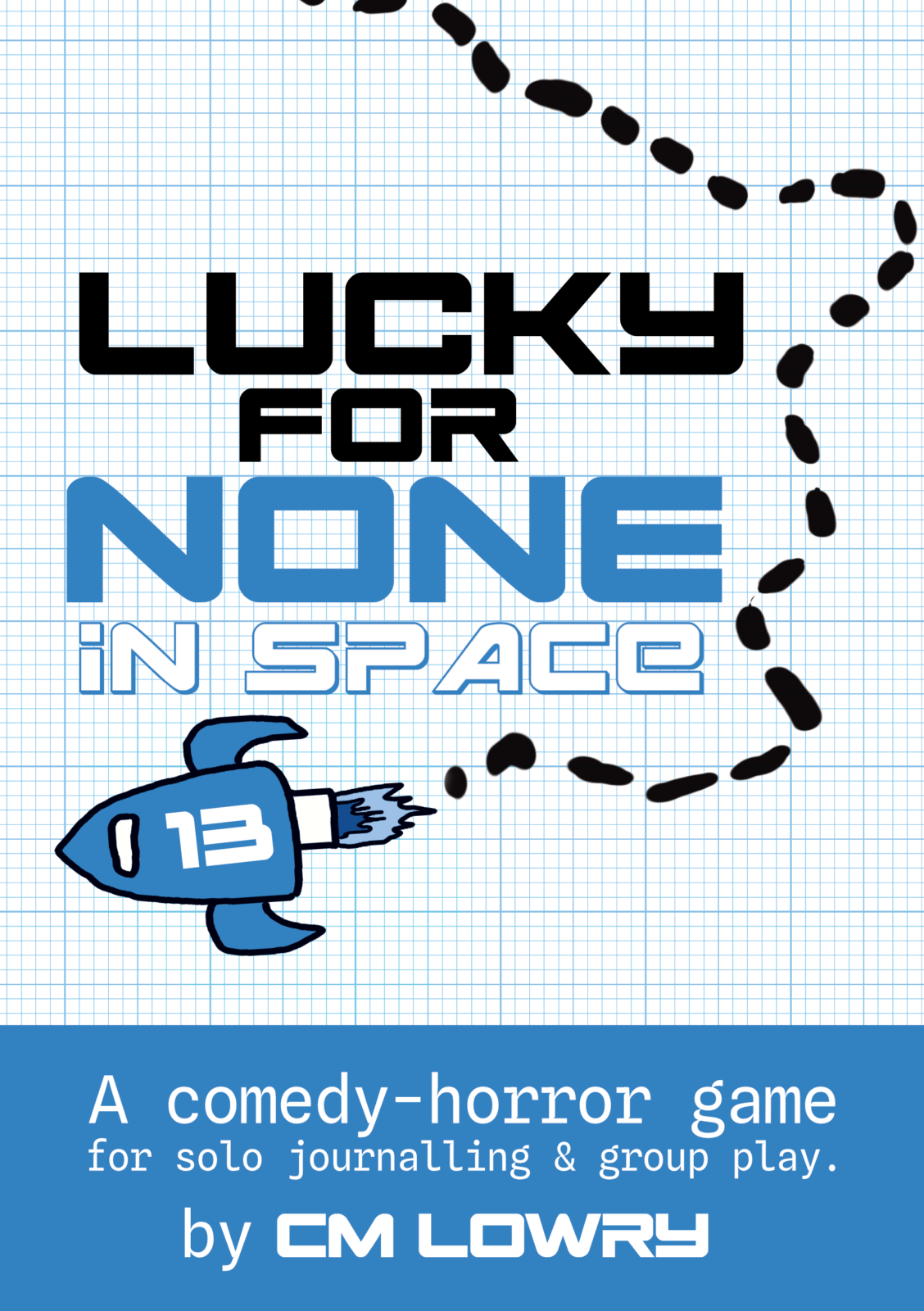 They also have a follow up to their very successful Lucky For None d13 journalling game planned, “Yes, it’s going to be Lucky for None… In Space! It uses the same comedy spiral and a thirteen sided dice mechanic, but it turns there’s loads more interesting ways to die outside the earth’s atmosphere!”



 I’m an avid player of the small-team Blood Bowl variant


 Ingenious
 Codenames
 6nimmt!
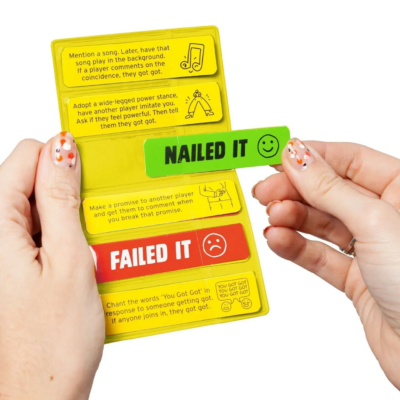 Don’t Get Got