Blog

CMF Conference: Day Two

The following is part of a series of posts about the CMF Junior Doctors Conference. Read Day One and Day Three.

After a night spent weeing the remnants of my chocomilk binge last night, I got up in time for the 8am prayer meeting in the chapel. Still bleary eyed, I followed this with a painfully substantial breakfast, which, although lacking in vegetarian sausages, made up for it in sheer volume.

We also got to meet the CMF Junior Doctors Committee, and had Vicky Lavy nagging us once again to grab a wheelbarrow, and buy as many books as physically possible from the CMF bookstall.

Bible Teaching – Genuine Faith

Steve Burmester, about to preach

Nourishment over, we settled down to listen to Steve Burmester teaching on “Genuine Faith“. We was introduced with a question, due to his background in pharmaceuticals: “What is your favourite drug name?” The answer? “Raloxifene”. Doesn’t it roll off your tongue beautifully?

95 year olds were asked what 3 things they would change if they could live again. They said: 1. they would slow down and reflect on things more, 2. they would risk more, and, 3. they would do more that would live on after they died.

In James 4, he talks about the brief nature of life: “What is your life? For you are a mist that appears for a little time and then vanishes“. The passage makes it clear that we shouldn’t boast and be proud of our own achievements: its pointless. If we feel that we can plan everything of our lives, we will be disappointed – look at the recession. As James says: “Why, you do not even know what will happen tomorrow“.

Just as the old people said in point 2: Risk. As one person said faith is spelt “R.I.S.K.”. It is the perseverence and steadfastness of going through trials that helps us to build our faith, that helps us to put our hope in God, rather than our own plans. As James 1 shows us, its not that we can’t plan, but we shouldn’t put all our hope and security in a future that we can’t predict. We shouldn’t think we can forsee and prevent all difficult times, but instead trust that the God who loves us will see us through the hard times.

How we deal with success and wealth is just as important as how we deal with hardships. Indeed, in the West, we need to learn this lesson more, since we have so much wealth, so many gifts: so many opportunities to bless others, or temptations to feel that “I have worked hard, I have earned this, this is all mine!”

Albert Einstein is travelling across America on a train. The ticket inspector comes, and asks for tickets. Einstein can’t find it anywhere, he is looking in all his pockets, in his coat, but simply cannot find it anywhere.

The ticket inspector says “It’s fine, Mr Einstein: you are a very famous person, I’m sure you bought a ticket!” She walked on, but on looking back, saw Einstein on his hands and knees looking under his chair for the ticket.

She returns, and says, “Mr Einstein, its fine, we know who you are, you don’t need to worry.

Einstein looked at her, and said “I thank you, but I too know who I am. But what I don’t know, is where I’m going…”

Our identity is important, and it is valuable to know who we are. But we shouldn’t be distracted by that into thinking we are in control of every tiny aspect of our lives.

Seminar – Miracles of healing: happening in Britain today?

Hard Questions about Health and HealingOur first seminar of the weekend, with Andrew Fergusson – is on whether we see healing in the UK. He is the author of “Hard Questions about Health and Healing“, and a former GP. He mentioned the excellent price that we can pick up the book for about 8 times – I suspect Vicky Lavy had a hand in this…

We went round the group of 20 of us, and it appears that almost every church has some form of regular prayer for healing in church each week, with many having organised healing ministries.

Andrew pointed out that this has changed. 20 years ago, far less churches practiced prayers and ministries for healing.

Margaret had a serious cancer, causing terrible pain in her leg. Medication wasn’t happening. A pastor laid hands on her and prayer, she felt something like “a jolt of electricity” in her leg, and then from that moment until she died a year later, she had no more pain in her leg ever again.

What is that? Is it a miracle? It didn’t cure her cancer, but at the same time, her severe pain stopped permanently.

The dictionary defines a miracle as these below. Is it 1, 2 or 3?

  1. An event contrary to the laws of nature and attributed to a supernatural causel
  2. Any amazing or wonderful event;
  3. A marvellous example of something “a miracle of engineering”.

We can look at some examples of healing, for example Luke 5:12-14; there are a number of apparent likenesses between most biblical miracles:

  • Obvious examples of gross physical disease.
  • At that time incurable and most remain so today
  • Physical means almost never used
  • Cures immediate
  • REstoration complete and therefore obvious
  • No recorded relapses
  • Regularly elicited faith
  • Verification without publicity.

There is an important element here: as doctors, and as Christians: truth matters. We should not leave our scientific, analytical minds at the door when we look at healing. Evidence matters.

Andrew feels he has never seen reliable evidence of a person having an amputee regrowing a limb, the blind seeing, the dead being raised to life. As he says, “By the dictionary definition, we haven’t seen valid evidence of a level one miracle“. He has seen many, many stories of difficult to explain solutions, and release of pain, or wonderful improvement in health.

As a last, very deep point: If we are going to have a theology of healing, we need a theology of suffering.

Bible Teaching – Faith at work in our actions

ParaglidingAfter an unendingly vast lunch, and a 2 hour walk, it was time to move on with the afternoon, and our next session with Steve Burmester, on the topic of faith at work. After only about 5 hours of sleep last night, and a fair amount of exercise, I was barely awake – a feeling familiar to me from the Developing Health course.

Many people, on deciding to go paragliding, get right to the edge of the cliff, before deciding they don’t want to go ahead.

James is looking for this doublemindedness in people. The desire to do something good, against the desire to behave badly.

In James 2:1-4, he says “For if a man wearing a gold ring and fine clothing comes into your assembly, and a poor man in shabby clothing also comes in, and if you pay attention to the one who wears the fine clothing and say, “You sit here in a good place,” while you say to the poor man, “You stand over there,” or, “Sit down at my feet,” have you not then made distinctions among yourselves and become judges with evil thoughts?”

 A church invited a guest preacher. The day for the service arrived, and the congregation filed in. There was a tramp, sat at the back of the church, smelling of whiskey, and they sat far from him, leaving him two empty pews to himself.

It came to the point where they were looking around, wondering where the guest preacher was, when the tramp got up, walked to the front, and put on a dog collar, and preached from James 2.

If we treat people wrongly, we treat God wrongly: James 3:9 – “With [our tongue] we bless our Lord and Father, and with it we curse people who are made in the likeness of God“. Another passage talking about our double minded behaviour.

Every human life is a reflection of divinity, and every act of injustice mars and defaces the image of God in man.
Martin Luther King, Jr

Just treating someone with inequality, is that it is sin. And thus no better than any other sin.

Lance Armstrong was struck off recently for taking drugs, but the excuse that many cyclists used is that “everyone else was doing it”. Unfortunately “everyone else does it” is no excuse.

Speak and act as those who are going to be judged by the law that gives freedom, because judgment without mercy will be shown to anyone who has not been merciful. Mercy triumphs over judgment.
James 2:12-13

  1. We all need mercy.
  2. We need to show mercy to others.
  3. This triumph is available to us all.

CMF Update

Pete Saunders started talking next to update us on the work of the Christian Medical Fellowship. We started with a video about CMF. Well, we would have done, but there was a technical glitch, so here it is below:

There are currently 4000 CMF doctors, and 800 CMF medical students. It is not a London office, but a national fellowship. They link with churches, hospitals and individuals.

STAT is “Short Term, Able to Travel” – who are people open to Teaching, Specialist service, Locum support, Emergency help in International work.

Conferences

CMF are involved in about 100 conferences, including:

  • CMF Student conference
  • CMF Graduate conference
  • International Christian Medical Dental Association World Congress
  • Christian Nurses and Midwifes Student conference
  • Where is my Neighbour? conference.

Find out more at the CMF events page.

Advocacy

CMF works to protect those who lose their jobs for protecting moral values, those of concerns about Euthanasia, Abortion, and Faith at work.

Seminar – Time Management, Jesus Style

Richard Vincent was leading the seminar, my final study session of the day.

What are pressures on your time?

  • Family
  • Work
  • Commuting
  • Church
  • Socialising
How do we choose what to do?
  • No choice – things I need to do
  • Things I should do
  • Things I want to do
  • Prioritising between them is a varied process
  • How they make you feel

What can we learn from Jesus?

“Early in the morning, while it was still dark, Jesus got up, left the house and went off to a solitary place, where he prayed. Simon and his companions went to look for him, and when they found him, they exclaimed: “Everyone is looking for you!”
Mark 1:35-37 

He guarded his quiet time. We all shared our experiences of the difficulties of setting aside time each day, but once interesting fact: we all really enjoy doing it, yet still find it really difficult to set down to it. It is a battle.

“At daybreak, Jesus went out to a solitary place. The people were looking for him, and when they came to where he was, they tried to keep him from leaving them. But he said, “I must proclaim the good news of the kingdom of God to the other towns also, because that is why I was sent.”
Luke 4:42-43

He established priorities. We live unhelpfully busy lives. We also don’t find solitude enough, especially with the intrusion of smart phones and the internet.

“Just then his disciples returned and were surprised to find him talking with a woman. But no one asked, “What do you want?” or “Why are you talking with her?”.”
John 4:27 

He made time for individuals. It can be harder to take the initiative, rather than just see friends that opportunities naturally present each other.

“For we do not have a high priest who is unable to empathize with our weaknesses, but we have one who has been tempted in every way, just as we are – yet he did not sin. Let us then approach God’s throne of grace with confidence, so that we may receive mercy and find grace to help us in our time of need.”
Hebrews 4:15-16

He did not sin. Hopefully our understanding of grace is that that we can show it to others equally well.

“Then Jesus said to them, “The Son of Man is Lord of the Sabbath.”
Luke 6:5 

He rested. We need to plan time off, and have a Sabbath attitude in each day, even when that isn’t possible.


After this, we spent the evening chatting, playing Cranium and “Table slap”, making awful medical and Christian jokes, and I finally went to bed at 2:30am, after a long discussion about how to improve the Malaysian health care system.

This is part of a series of posts about the CMF Junior Doctors Conference. Read Day One and Day Three.

CMF Conference: Day One

As you may remember, this summer I went to the 2 week Christian Medical Fellowship’s Developing Health course, and blogged fairly extensively about it (read all 11 posts here…)

I had so much fun that I thought I would attend the CMF Junior Doctors conference. Entitled “Faith at Work”, there are a range of seminars covering a wide range of topics, and some central teaching looking at the book of James. Plus hanging out with lots of similar minded junior doctors, and eating too much tasty food.

Yesterday was the first evening. After nearly 5 hours on the train, and 3 different connections (Boston is annoyingly out in the sticks!), we arrived at the delightful Hothorpe Hall near Market Harborough.

There wasn’t a huge amount of action on the first evening. Lots of chatting, some fantastic dinner, and a great introductory talk from Steve Burmester, our speaker for the weekend, on the Book of James.

He mainly focused on the disease of having a divided heart. Breaking it down medically, he showed us the symptoms of a divided heart: anger, a loose tongue, etc. The treatment is not to try harder, to continually berate ourselves, but to allow more of God’s grace to flourish in us.

The evening was rounded off with myself and my friend Beth had a drinking competition. Of Chocomilk. After 6.75 cups each (don’t ask about the arguments that led to that exact measurement) and a tie-breaking run round the entire building at half past midnight, it was time to go to bed.

See you all tomorrow!

This is part of a series of posts about the CMF Junior Doctors Conference. Read Day Two and Day Three.

Staying Put

As many of you will be aware, the iPhone 5 launched last month. Alongside the many awesome Android phones recently released, there is a rather tempting feast of new technology available.

Coupled with this, my phone contract was up for renewal at the end of September. For a few extra pounds a month, I can join the world of up-to-date shiny new devices.

It would seem that my path forward is simple – but I’m hesitating. You see, I don’t want to be the person that buys something *because* its new and shiny. I don’t want to join the cult of new. I’ve got an 8 year old car, a house that needs doing up, and one of my dogs is starting to show a few hints of arthritis; I love old stuff!

I also love efficiency. I see technology as tools, tools for me to get stuff done. For the first time since becoming a doctor, I got my own room this month; and I’ve loved setting it up just right, so that I know where urine specimen bottles are, so I can maintain eye contact with patients whilst typing, so my every motion can be as effective as possible, giving me time to do the important stuff.

Generally, I like my technology new, because new tends to be faster, tends to be more efficient, allows me more time to get stuff done. But my current phone browses the web, checks emails and takes decent photos. It turns on quickly, it loads information fast: I don’t believe that my workflow will be sped up by a new phone.

I’ve been distracted by newness. As Robert Murray McCheyne said:

“Sit loose to this world’s joy, time is short”


Inspired a little by my friend Jon, who recently downgraded from an iPhone 4 to an old, non smart Nokia, I’m going to skip this upgrade, and be content with the incredible phone I already have, and maybe try to rely on it a little less.

One month in Boston

Last month, we took a big step as a family. We moved from our familiar, friendly home in Yorkshire over to the barren flatlands of Eastern Lincolnshire. In doing so, we said goodbye to 8 years of friends, and hello to convenient beaches, widespread obesity, and owning another house that needs every single room done up before we will be able to relax!

I’ll take you through some of our key moments with some photos:

This is our new home: Orchard Cottage, on Woodthorpe Avenue. It’s on the slightly nicer side of town, but needs quite a lot of work! The garden hasn’t been touched for about 2 years, so we are having rather a lot of pruning done at the end of the month, and some building work after that…

Joen has settled into things well, and both he and the dogs are loving the big new garden. As you can see, there are cat flaps everywhere, coupled with awful red carpet in the kitchen, and mammoth spiders in every room. Katherine hates all 3 of these things, especially the eight legged monsters.

One of the key aspects of our corner of Lincolnshire is that it is as flat as a pancake (In fact, if you read this study, its likely that its considerably flatter, since it would appear that pancakes are not terribly flat). The downside: its a bit boring. The plus side: we can cycle everywhere. Joen has decided to live on the edge though, since he has now worked out how to remove a cycle helmet, rendering it useless.

Alongside the uninteresting terrain, there is considerably more sky visible, so sunsets and dawns are rather beautiful to behold. Sadly, the road I take to work each morning is almost due East for large sections, meaning I can barely see beyond the brain melting glow of the sun. The unending flatness means that a 44 mile round trip is just about doable on bike, although I’m not achieving it every day.

I have begun my GP training, which involves hundreds of hours spent reflecting, signing sick notes and prescribing amoxicillin. Here you can see my office, with a photo of the family, and a coffee mug, recently filled on my most extravagant new purchase, a DeLonghi EC 152 Coffee Machine.

As mentioned above, we have several fantastic beaches, 20 miles or so down the road; and we have made the most of them already. Here you can see Joen swimming, playing and eating the sand on the beach at Chapel St Leonards.

Finally, the most important photo is that of our new child, around 50% ready now. Probably a she (the ultrasonagrapher wasn’t completely sure), we look forward to her arrival in January!

Thanks to everyone for your prayers, support and hot meals over the last month, especially Eagle, Sadie, Daniel, Tammie, Hannah, Helen, Micky & Rachel, and thanks for the unpaid manual labour of Nick & Jon!

Day Eleven: Final Bits

The following is part of a series of posts about the Developing Health Course 2012 run by CMF.

Our last day of the course, and the morning prayers were tinged with sadness. It’s been a fantastic two weeks, and I’ve made lots of genuine friends. I’m really going to miss going back to real life…

Dermatology

TineaClaire Fuller gave us our final topic session of the week, based on many years of experience in both the UK and East Africa.

The WHO is working with the Gates Foundation to run a Global Burden of Disease statistics measuring. 600 million cases of scabies worldwide. In the developing world, skin disease is the second commonest reason for attending primary care – but people are still far less likely to attend if they have a rash compared to other types of pathology.

As in many other areas, traditional healers cause many problems – their treatment for lymphoedema is to puncture the legs multiple times to let the fluid out. Sadly, this leaves the door wide open for infection.

Dermatological Examination

Important features to have.

  • Suitable location for skin examination
  • Satisfactory light
  • Examine patient all over – check mouth, nails, scalp, feet, genitalia.
  • Distribution of lesions.

The problem is, because don’t want to strip off because the clinic is full of people and no privacy, but then you take them down to the cupboard, and its too dark to see.

Bacterial skin disease

Very commonly this will be impetigo – yellow crust to blisters, generally around nose and mouth.

  1. They need to wash the skin – with clean waters and disinfectants. Remove crusts, debris and necrotic tissues.
  2. Apply antimicrobial preparation – herbal, honey, hydrogen perocide, chlorhexidine, topical antibiotic.
  3. Oral antibiotics – flucloxacillin, erythromycin.

Eczema

Eczema is very common in the developing world. Can be especially aggressive in African skin. Rather than simply affecting the flexures, it can affect the whole trunk, and can cause very high levels of inflammation, which leaves hypopigmentation after resolution.

Often needs emollients and dermovate.

Tinea

Scaly round rashes on arms or trunk related to ring worm. Can be treated with topical antifungals. However, tinea capitis – affecting the scalp – will need systemic antifungals. (See image above on right)

Pyoderma, scabies and renal damage

There is an established association between scabies and pyoderma. In those with scabies + pyoderma, 5-10% will have visible haematuria: so it should be treated.

80% of dermatology consists of 8-10 common diseases. If it smells like pyoderma, it probably is.

Medical implications of skin-lightening products

These can cause local damage, with inflammation and awful stretch marks. In Malawi, around 5-10% of people attending our clinic had problems related to these creams.

Patients will deny using the products, so you have to say “I’ve heard that people who use these creams get these problems”, letting them save face.

HIV/AIDS

Having a skin disease is a risk factor for having HIV, from evidence in Tanzania. Multiple dermatoses is quite specific for low CD4 count. In one study, 88% of adolescents with HIV had a skin disease.

The best way to treat the HIV associated dermatopathology such as Kaposi’s Sarcoma is to treat the HIV.

Ulcers

  1. Treat underlying cause.
  2. Keep clean without dirsupting healing (antiseptic soaks, water fit for drinking is fit for wound case)
  3. Treat secondary infection
  4. Greasy covering prevents adhesion and good for pain relief.
  5. Compression is very helpful.

Removing suspicious lesions

[iframe width=”600″ height=”450″ src=”http://www.youtube.com/embed/7CzDEok8Wmo”]

Podoconiosis

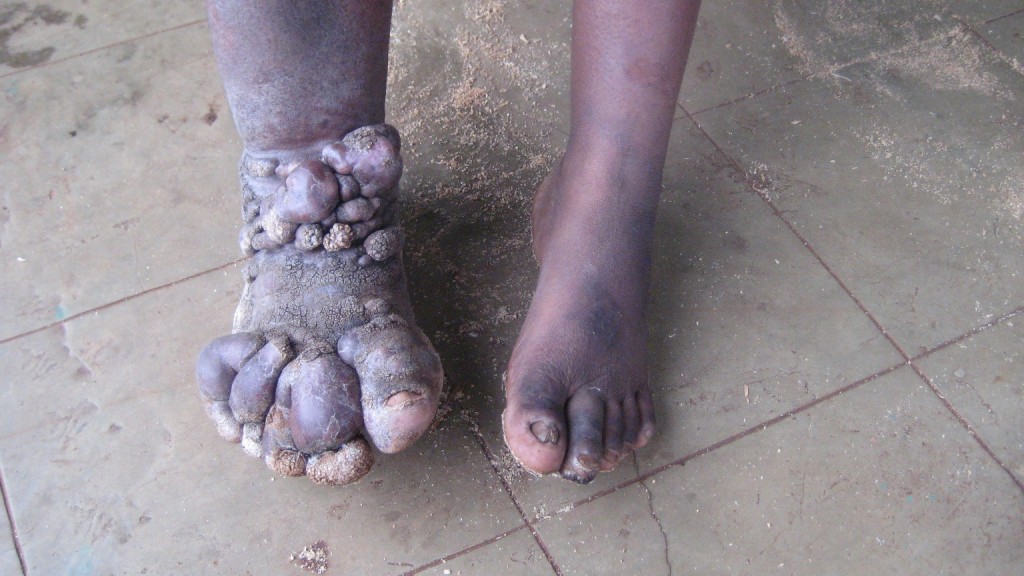
PodofeetKnown as “Podo” – one of the forms of elephantisis. Seen in the highlands of tropical countries with lots of bare feet in muddy professions.

Skin swells and becomes woody and hard. Smells insanely awful. Basically an end stage lymphoedema.

Usually can be dramatically improved with frequent washing and antiseptic. Get children to wear shoes, prevents the condition occuring.

Our scheme in Ethiopia has led to all who are treated being invited to join the team to teach others. 30,000 have now been treated in the scheme!

Teaching… a workshop

Our closing session was from Vicky Lavy, talking us through the wonderful art of teaching, a key tool for all of us, especially in the developing world.

Many of us have done a fair amount of teaching. As a group we came up with lots of words beginning with E, about the important things that teaching needs to achieve:

  • Jesus teaching all the disciplesEnable
  • Enthuse
  • Educate
  • Empower
  • Entertain
  • Encourage
  • Exchange
  • Effect (on patient care)
  • Everlasting (sustainability)

What makes a good teacher?

  • Clear + interesting
  • Acting
  • Inventive
  • Honesty
  • Inventive
  • Relevance
  • Love for the subject
  • Audience
  • Approachable
  • Knowledge + Preparation
  • Experiment

Teaching tools

There are millions of different teaching styles: Participation, Lectures, Scenarios, Practicals, Groups, Role play, Mentoring, Informal, Teach others, Drama & Song, Quiz, Stories, Bed side, Shared consultations, Video, Books, Online, Visual stuff, Thought exercise, Buzz groups.

One week after a lecture, evidence shows that people often only remember around 20% of the information.

Some of these are very effective in developing settings, others not so well. Generally, developing world cultures are used to very didactic of teaching, which means they can learn by rote, but are not well versed in problem solving.

However, once they get used to small groups, which can take some time, they find them useful also. Good to tell people they can use their own language in the groups.

“I was doing some teaching in china, and trying to ask questions, and just getting blank faces. However, over the 3 days, the group slowly opened up, talking about patient cases. By the end, I found they were very engaged.”

  • Dealing with wrong answers – Important to a) not embarrass people, but also b) correct dangerous treatment ideas.
  • Breaking up teaching sessions is valuable – to keep people awake. Having a buzz group session between talks is helpful. A buzz group is where someone turns to their neighbour and briefly discusses an issue
  • Visual aids – showing pictures, to tell stories. One teacher on this course has showed us the manacles used to hold psychiatric patients to the wall. That kept us awake!

Case example: Teaching student nurses in Uganda about immunisation within 1 hour

We broke into lots of pairs and tried to come up with teaching sessions. Then fed back to the group. Huge variation in styles and approaches. Some groups taught basic practical skills, some came up with dramas, some had very ambitious plans to teach a much more holistic community engagement approach.

Closing

Ian’s closing remarks: God did not make us to cope with burdens on our own. Jesus sent people out two by two, not individually. We need to share our burdens together.

We then all held hands and closed in prayer together.

And that’s all folks. Sad to feel we are at an end, but I’ve definitely never enjoyed a medical course, or generally teaching so much. I’d like to give some huge thanks to Vicky and Ian, and the whole of the CMF team. Bless you all!

Day Ten: More Women’s Health

The following is part of a series of posts about the Developing Health Course 2012 run by CMF.

I had a massive lie in today, and then discovered that the traffic at 8:15 around London is rather horrendous. Happily, arrived only 5 minutes late, in time for…

Towards culturally competent care

African cultureMary Hopper talked to us again, this time looking at the impact of not understanding culture on care…

There has been lots of awareness throughout the course about the impact of culture. Most of the speakers through the last two weeks have mentioned the shocks and surprises of moving between the developed and developing world.

We all contributed things we’ve experienced in different cultures we were not expecting:

  • Less personal space: people just turning up at our house.
  • Less confidentiality.
  • Personal questions: asking things polite British society doesn’t accept.
  • Different expectations.
  • Facial expressions.
  • Time.
  • Hierarchy of generations/roles.
  • Fatalism.
  • Family values.

To many people, not complying with their culture is not an option.

I’ve had people who have come to me, and decided they want to accept Jesus. They’ve become Christians, and then said to me “Now I can’t go home”. Breaking cultural norms can lead to beatings, ostracising, deaths…

Culture has 3 layers

  1. Outer layer – artefacts and products.
  2. Middle layer – norms and values.
  3. Inner layer – laws, generational beliefs.

“It was not the women’s ignorance but their intelligence that led to their refusal to adapt or abandon certain habits. They sought to understand the reason for such changes in terms that made sense to them. Not all those put forward by the health care worker did.”
Currer 1986 

The impact of culture on healthcare can be huge. Pre natal sex selection, communication styles, work force issues, birth marriage and death rituals, issues of consent, organ donation.

Ask yourself the question: Who are you? Where do you get your identity, beliefs, values, skills from? Ethnocentricity is the feeling of “I’m right, you’re wrong”. The feeling that your idea of culture is correct and needs to be taught to others.

We need to challenge ourselves; sometimes the correct thing to do is the culture that has been there for years, not our shiny Western ideas.

Women: Key Issues

  • Stewardship of natural resources – women may be in charge of securing food, water, fuel and overseeing family health and diet.
  • Reproductive health – issues re-morbitity, expectations of role and childbearing. Could be seen as coercion/force. Infertility is a hugely ostracising problem in some cultures, as is having a female baby.
  • Economic empowerment – more women than men live in poverty. potential for economic disparity, less access to food, essential resource for living, property ownership.
  • Education empowerment – women do not have access to education: linked to child mortality.

Sociocentricity and Egocentricity is the contrast of being society centred or self centred. The former is often modelled in developing world cultures, with tribes and villages central, rather than the Western individualism. It can be argued that the Socio model is more modelled in Biblical theology and morality: the concern is that there also a huge potential for individuals to be disadvantaged within it.

If used well, Sociocentricity, can be empowering for individuals and communities: its another situation where cultural sensitivity can help us to improve current systems, rather than trying to implant our own.

“We had condom education in our village, and the men came, and demonstrated placing a condom onto a stick. Rather than seeing the example in the spirit it was intended, many people in the village started placing condoms onto sticks.”

Wherever we go, we need to consider: how culturally sensitive are we being, and how can we help by providing culturally appropriate care.

Workshops

The rest of the day involved workshops of Contraception, Gynaecology case studies  & Gynaecology Emergencies. It was great, and very interactive, but sadly not terribly conducive to note taking.

They also told us about Swinfen Charitable Trust, who provide an international medical advice service for professionals – very useful in the field!

Day Nine: Women’s Health

The following is part of a series of posts about the Developing Health Course 2012 run by CMF.

After a late night gig in London, I had a rather late night, followed by getting up at 6am to prepare for speaking at the early morning prayer meeting. With some friends, we also washed everyone’s feet, which was a real honour for us. The upshot of all this was that I didn’t do my preparatory homework for today’s sessions, so apologies if it seems a bit sparse.

Women’s Health in the Developing World.

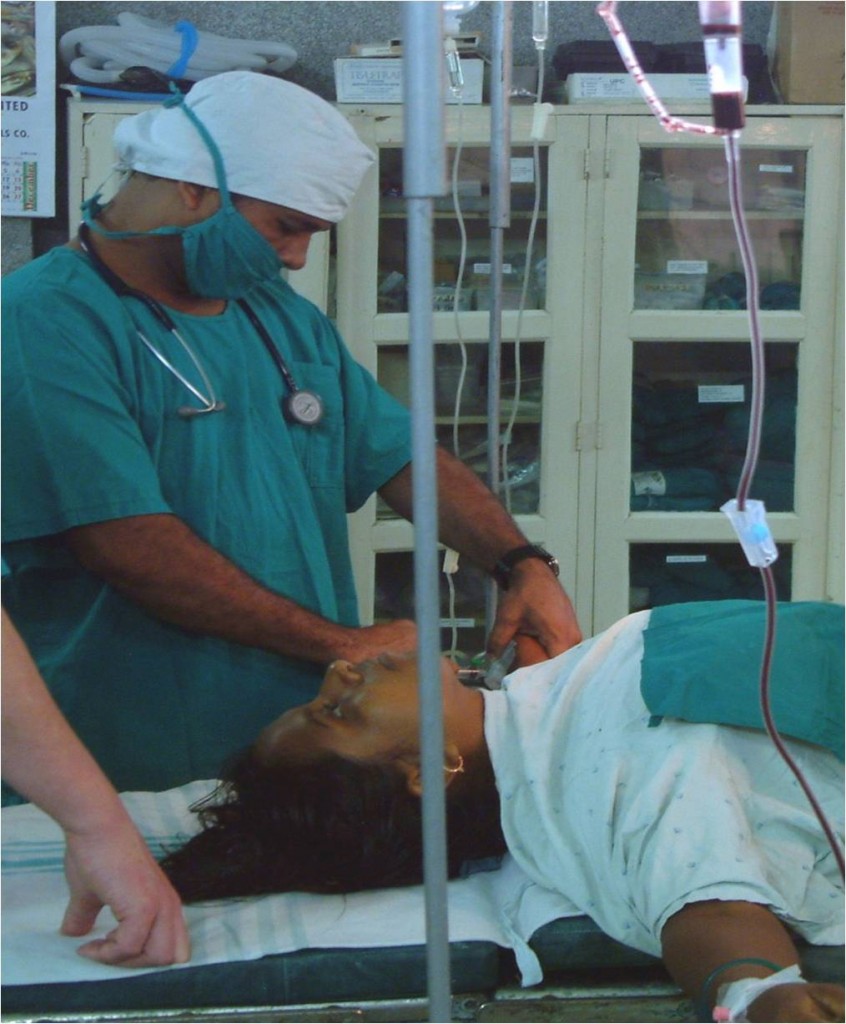
Pregnant patient in theeatreThe first talk of the day came from Christine Edwards, with a talk based on many years of experience in fistula surgery in Bangladesh. 

  • There are 360,000 women dying because of childbirth each year.
  • There are 2 million newborns dying within the first 24 hours per year.
  • There are 2.6 million avoidable stillbirths per year.
  • 2 million unplanned pregnancies per year.
  • 70,000 deaths due to abortion per year.

Birth complications means many women end up with fistulas that leak urine and faeces continuously. Women are socially ostracised – we watched the story of a lady called Mastula, and her experience of her life being turned upside down by a fistula.

Lifetime risk of dying from childbirth and pregnancy. In the west it is 1 in 4300. In Afghanistan, it is 1 in 11.

In the UK in 1930, maternal mortality rates were similar to the developing now. The UK changed due to 4 changes in services & skills:

  1. Midwifery care
  2. Blood transfusion
  3. Caesarean section
  4. Antibiotics

3 delays

It is felt that there are three areas of delay that cause many of these deaths: delay in deciding to seek care (due to socio-cultural constraints, values put on women, beliefs related to pregnancy, traditions, non medical attributed causes), delay in reaching facility (financial constraints, poor transportation, no local facility) & delay in recieving care(Lack of staff (24/7), training, equipment, drugs and money).

92% of Bangladesh births are at home, with 89% totally unattended by health care providers. We worked at the only hospital in Bangladesh (population 160 million) that had an obstetric service available 24/7.

What is needed?

  1. Increase in the value put on women by society/ community
  2. Increase in community awareness of danger signs and preparedness
  3. Increase in the community’s  confidence in EOC (Essential obstetric care) facilities
  4. increase in comprehensive and in basic EOC facilities
  5. Increase in skilled personnel in an integrated system

LAMB approach

The LAMB hospital is a mission hospital in Bangladesh. Find out more at LHCF.org.uk. LAMB pregnancy hospital

Bible studies for all staff on created in His image, and violence against women. Teaching on how New Testament teaching on how a husband should treat his wife – “husband ought to love his wife as he loves his own body“.

We’ve seen a drastic effect: people working through the verses together: Christians, Muslims, Hindu, all reading the Bible together, and together coming to an understanding of how things should be.

We work with traditional healthcare attendants, giving them some simple points of when they need to refer to the hospital – the WHO feels this is not an effective policy worldwide, but we find it has been helpful in our area. We also train our own community skilled birth attendants, who receive 6 months training, then return to their villages..

Involvement of mother-in-laws and husbands, as decision makers, is very important; mothers will often agree with all our plans, but do not have the authority to make it happen.

That makes this the third day on this course where mother-in-laws have been recognised as an international threat to health. The hospital uses the community to pay for itself. Subsidies are provided for those who cannot afford. Households donate 1 tk per month (less than 1p), with further donations at religious festivals. We have advanced trained midwifes and advanced anaesthetic assistants – an area of contention at the moment. However, having audited our anaesthetic assistants, we have had no deaths directly due to anaesthesia in 5 years.Appropriate review definitely improves our service quality:

  • “No blame”, confidential meetings
  • Facilitates interdepartmental communication & teamwork
  • Addresses areas for improvement
  • Regular review of protocols
  • Saving Newborn Lives initiative – pilot project in PNDA
  • ‘Verbal autopsy’ of all maternal and child deaths in the community

Birth basics

Cord prolapseI joined the “Basics” rather than “Advanced” Obstetrics workshop, which was being taught by Mary Hopper, who spoke on Saturday.

Some useful bits and pieces

  • Grandmultigravida – more than 5 births.
“In Zimbabwe, we had one lady who was having her 23rd baby. In the next bed, we had her daughter, who was also having a granddaughter for our original patient!”
  • Due date can be calculated: add 5 days and 9 months to the beginning of the last period.
  • Foetal heart rate should around 130-140 – in the absence of other tools, using a loo roll over where you think the shoulder of the foetus is.
  • Amniotic fluid should be around a litre, and should be strawberry coloured. Polyhydramnios (too much) is often seen in twins, pre-eclampsia, and seems to be more common in congenital abnormalities. Oligohydramnios (too bad), if bad, can lead to baby being held in uterus by adhesions.

Stages of Labour:

Onset of labour: from start of contractions until the cervix is completely dilated. Make a peace sign with your index and middle fingers: the distance between fingertips is around 10cm. The cervix generally progresses at around 1 cm an hour.

Our nurses in Zimbabwe couldn’t say ‘dilated’, so they would run and find me and say ‘The patient is fully delighted!’.

Second stage of labour: from full dilation to delivery of the baby. Once the woman feels she is ready to push, check the cervix.

Third stage of labour: from delivery of baby to delivery of placenta. Breastfeeding releases oxytocin, which will speed this up. Usually takes up to an hour.

Presentation, Lie & Position

  1. Presentation – what is near the cervix: cephalic presentation, shoulder presentation, breach presentation.
  2. Lie – Longitudinal or transverse.
  3. Position – Commonest is OA – occipito-anterior. This means the back of the baby’s head is at the front of the mother. OP is the reverse of this, the occipital region of the baby’s head faces backwards. Often, OA you will easily be able to palpate the back of the baby in the abdomen, and mum will say the kicking is mostly to the sides. OP, you won’t easily palpate the back, and mum will say that kicking is all over the place.

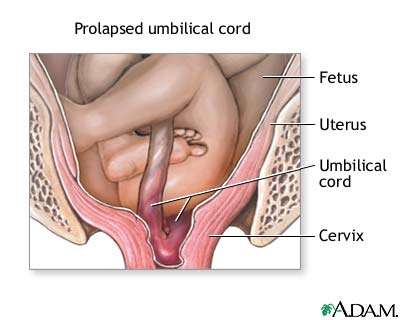
Cord Prolapse

If a cord is visible before the baby, it often means the cord has come out, which means it can get stuck, with the baby squashing it, giving the baby hypoxia. Push the baby back in vaginally with your fingers, and get mum on hands and knees with head down.

Is the cord still vibrating? If not, baby is dead. Very occasionally, the cord can start vibrating again once you apply pressure. If the baby is dead, you need to deliver it, but there is no time pressure beyond keeping mum well.

Shoulder distocia

Baby gets it shoulder stuck in the pelvis vertically. You need HELPERRS!

Help – call for help.
Episiotomy.
Lift the legs.
Suprapubic Pressure.
Enter vagina – to try to turn the baby.
Remove posterior arm – try to deliver arm through the vagina.
Rotate the mother onto all fours.
Symphesiotomy if not resolved – pop in a solid catheter, so you can move the urethra out of the midline, then cut through the synthesis pubis and pull out the baby.

Sepsis

Our first afternoon session was with Jacqui Hill, who has been in Afghanistan for the last 3 years, working in Obs & Gynae…

Sepsis is a huge killer in maternal deaths – even in the UK, there were 43 maternal deaths in the last 3 years from sepsis, 13 from Group A Streptoccus/

  • Sepsis is a systemic infection.
  • Severe sepsis is sepsis with organ dysfunction. (40% mortality in pregnancy)
  • Septic shock is sepsis with hypotension. (60% mortality in pregnancy)

Sepsis is dangerous in pregnancy, because the woman is under a lot of physical duress, so has more susceptibility, and pathology presents abnormally, so is picked up late.

The evidence shows that the most important treatment is to get antibiotics into the patient.

Chorioamnionitis

A pregnancy specific sepsis can be chorioamnionitis. This occurs from rupture of membranes early, leading to infection in the amniotic fluids.

With cases of chorioamnionitis, delivering the baby is going to be better for both the child and the mother. Non delivered foetal survival rates are almost non existent.

Inducing a birth is usually done with medication or pessaries in the UK. One thing you can do in the developing world. Putting a catheter into the cervical os: you inflate the balloon to start stimulating the cervix. Also give an oxytocin IV infusion.

We also had session on haemorrhage and eclampsia. I failed to get many notes, but they were awesome! Then I went for a curry and finally got Peshwari chips for the first time!