
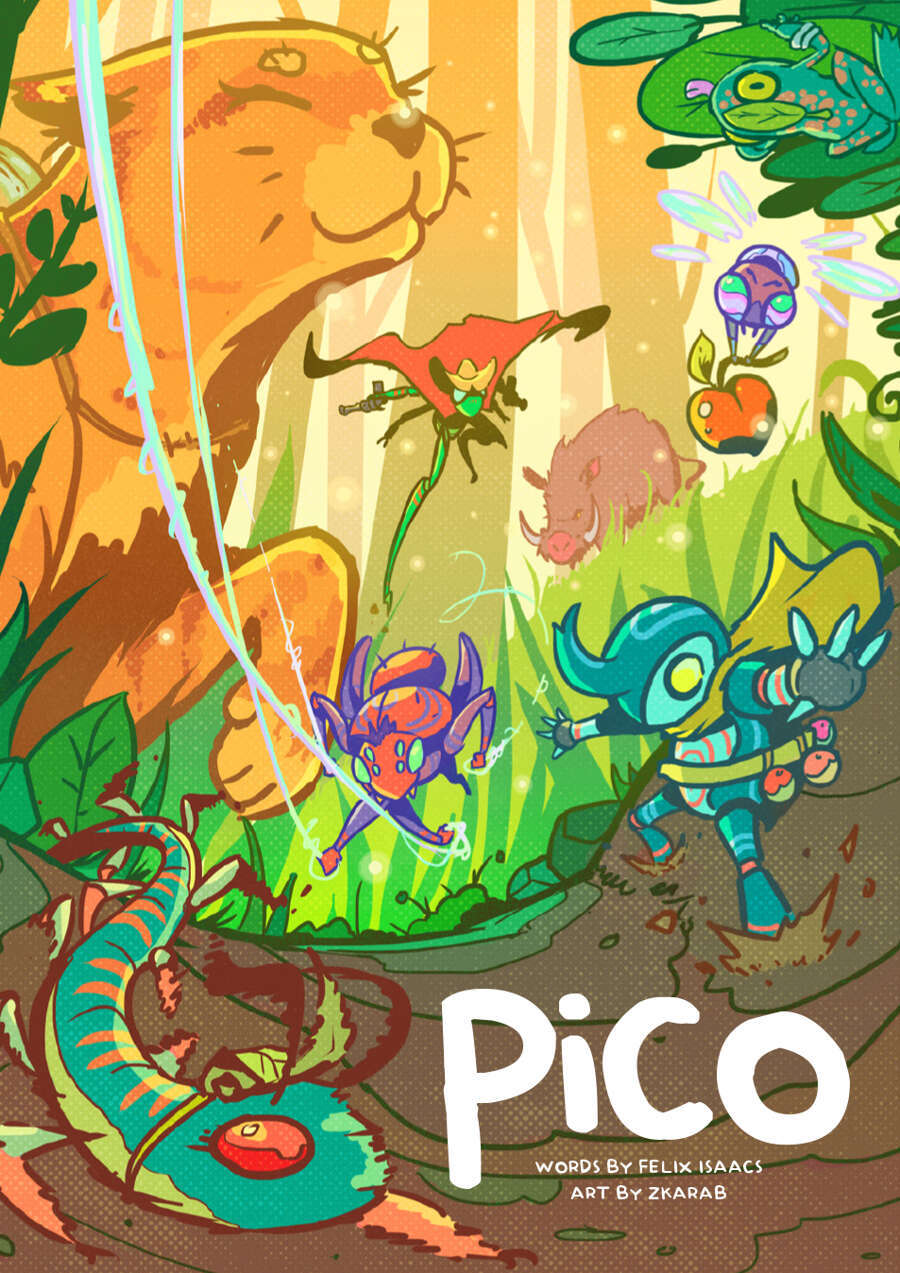
 Pico is a tabletop roleplaying game where the players become teenie-tiny bugs. It’s always refreshing to pick up something that’s not the tired old elves-dwarves-dragon stuff, and Felix Isaacs can always be relied on to break the mould in new and interesting ways. Pico is built on the same system as the incredible The Wildsea, so I was intrigued to see ways the system has been tweaked.
All characters in Pico are bugs in a huge world, and there are no humans left. It’s post-apocalyptic (although we don’t actually know why or what happened to the world, and almost all other creatures are dangerous, although bug-characters will be riding around on specially trained “picotitans”—dogs, cats, moles, etc, kitted out with harnesses and structures for the bugs to ride on.
Players build characters around the traits their bugs have; one might play a critter with Suckers, Egg tubes and Silent Wings, whilst another has Compound Eyes, a Spiky Shell and an Aerotail. It’s very possible to construct real world insects from these aspects, and the book has a guide for this, but the real fun comes from creating entirely new creepy-crawlies to inhabit.
Once you have your bugs, sessions consist of scenes, montages and journeys. The latter two are abstract constructs to get rid of some of the more “boring” bits of traditional RPG—no counting rations and arriving on yet another marshland hex here. Instead, much of Pico relies on tracks, where the Weaver checks off boxes as something occurs in the narrative to progress the journey. Nearly the entire last half of this substantial is dedicated to give the Weaver resources for this, giving countless places to go, things to see, monsters to face and threads for players to pull on.
Taking actions uses a d6 dice pool, using relevant Skills, Aspect and Advantages. So, when Zog tries to batter the angry beetle out of the way, he’ll roll 2d6 for his level 2 “Bash” skill, and another 1d6 for his Spiky Shell: a total of three dice. The top rolled number is the result, with a 6 being a “triumph”, 4 or 5 a “conflict” and 1 to 3 being a “disaster”. Rolling doubles is a “twist”, an unexpected happening suggested by the other players.
Now, on the one hand, this is simple enough, but in-play it sometimes presents narrative pauses that can sabotage the momentum. If Zog rolled a 3, 3 and a 5? That’s a conflict with a twist. What does a mixed success actually look like in that moment, and what’s the unexpected thing that happens? Let’s wait for the table to suggest some interesting ideas and discuss… Undoubtedly this gives Pico more interesting results than a simple pass/fail, but its also significantly more mentally taxing for the humans involved in the game. Difficulty in The Wildsea was represented with “cuts”, removing the highest, or two highest results; in PICO there are five types of cuts, Tough cuts, Armour cuts, Speed cuts… and, in my opinion, an added complexity that increases mental overhead with little appreciable benefit.
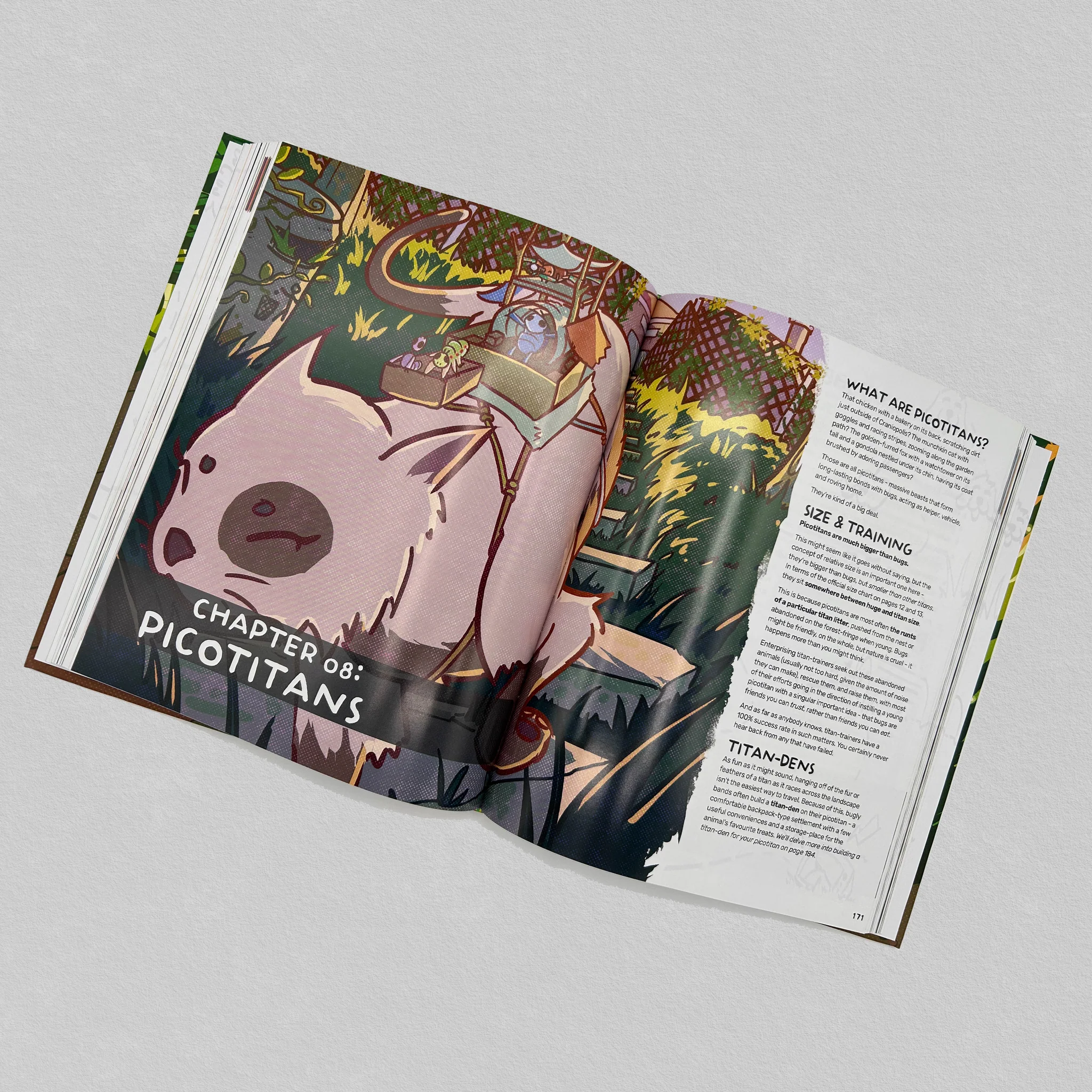
There’s no doubt that Pico is a beautiful, evocative RPG, and the ability to craft exactly the mini-beasts you’d like to play is pulled off superbly. There’s so much here, perhaps it’s too much? My reservation is that I suspect a group wanting to play cute little things in a scary big world would probably enjoy Mausritter’s minimalism more. Certainly the Wild Words engine is a great vehicle for telling intricate and interesting stories, but that comes at a cost of complexity and requiring a group that’s ready to participate fully in collaborative world-building.
PLAY IT? MAYBE
If you loved the Wildsea, and want to tell entirely new stories in a totally different setting, PICO is definitely for you. Groups comfortable with advanced narrative play will have fun here too, but I’d be wary of recommending this one for beginners.
 TRY THIS IF YOU liked Mouse Guard…
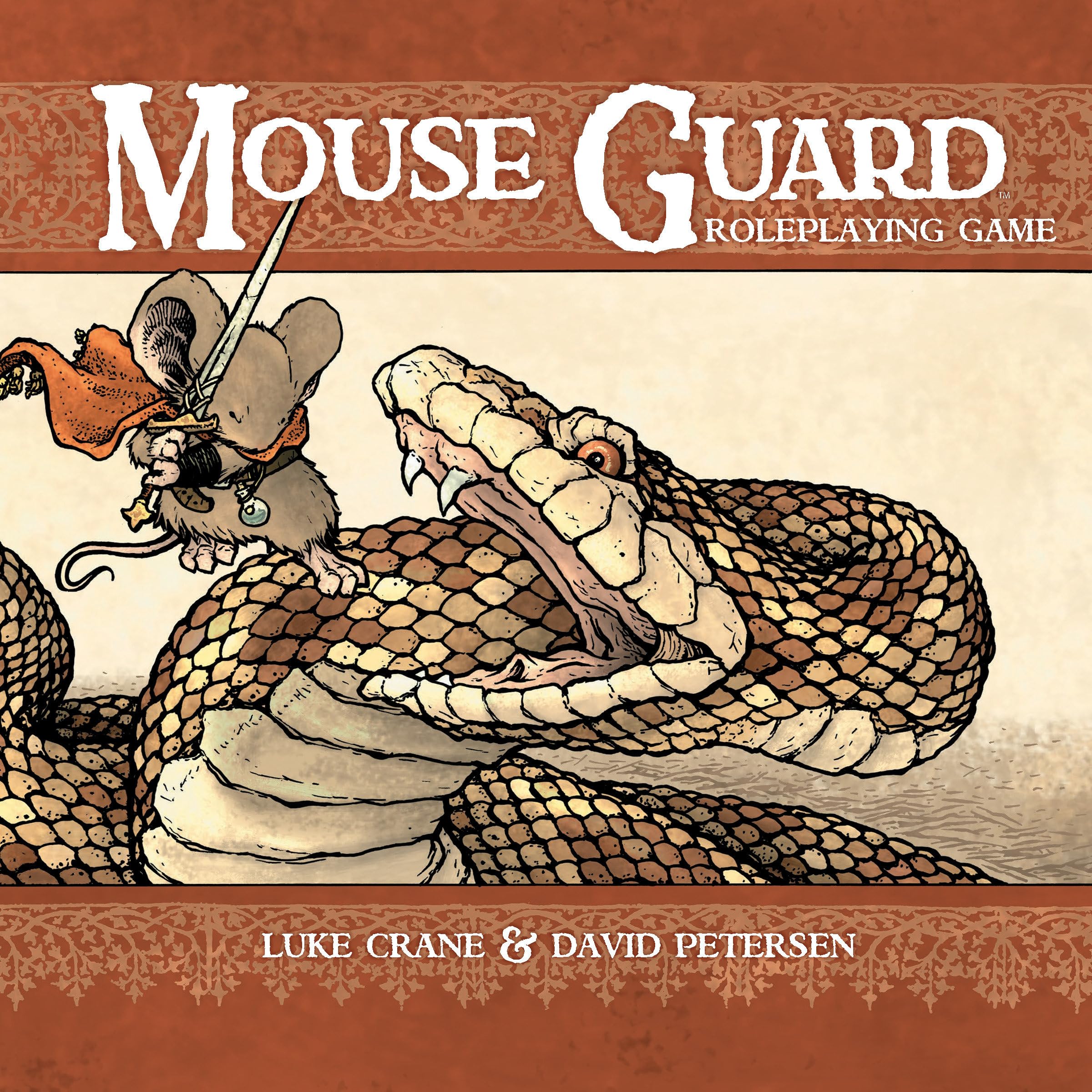
…as a slightly crunchier big sibling to Mausritter, Mouse Guard uses a d6 dice pool system similar to Pico’s. Mouse Guard applies conditions instead of damage to aspects, but players of each will find much that feels familiar.
| About Pico | |
|---|---|
| Designer | Felix Isaacs |
| Publisher | Mythworks |
| Playcount | 3-6 |
| Age | 12+ |
| Price | £45 |
| Contents | 355 pages hardback |
| Rating | Maybe |
A review written for Tabletop Gaming Magazine. Magazine page copyright to TTG Magazine 2026.