
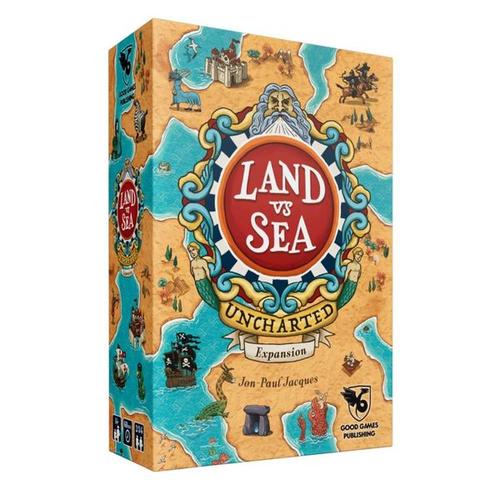
 Land vs Sea is one of my favourite ever two-player games. It’s a fast and free-form alternative to two player Carcassonne, and achieves exactly what it claims to on the tin. Whilst the in-box expansions to the core game add a little complexity, each sits pretty firmly in the camp of “carefully arrange more symbols in the most optimal way”. What Uncharted brings are several new mechanics with a pretty impressive range of new mini expansions, with something for casual players all the way up to the extremely competitive.
The basic concept of Land vs Sea is that one player is Land, the other Sea (hence the name), and they take it in turns to place hexagonal tiles to complete islands and lakes, respectively. Some tiles additionally have cross-shaped bonus points that are scored when completing an area. Areas of mountain or coral on piece edges can connect and chain up to score points each time they are placed, whilst trade route groups of adjacent caravans and boats offer an additional tussle during play.
Land vs Sea: Uncharted adds a larger 4 hex starting tile, as opposed to the base game’s single symmetrical tile. This opens up the playing field from the very first play, much like The River in Carcassonne. There are also more fully Land/fully Sea tiles. The base game has just one, which makes it a race to collect. I liked being able to choose which one to place, and the option to collect multiple ones is exciting.
The most impressive addition is the Cities: Cities double the value of bonus points in areas they touch, and to trading routes they are adjacent to. It’s the s the most game-changing element in the box, since it makes completing other faction’s areas actually competitive. In the base game, if the Land player completes an area of Sea, they score any cross-shaped bonus points themselves, but gift the actual tile points to the other player. It’s rare the bonus points make this worthwhile, so the only real tactic is to focus on your own game. With Cities though, the bonus points are doubled; it’s now sometimes more valuable to a player to complete an area even when it belongs to the other faction. This transforms a sometimes inward-focused game into one of constantly monitoring the other player and considering usurping them at every point.
Also of note are the Menhirs. These connect virtual leylines across the map, scoring any bonus points on tiles in between them. They add a moment to stop, step back and purvey the entire current map, bringing a different view. Usually the geographic location of bonus points is irrelevant ones a lake or island is completed; but now they add an extra consideration to how you build.
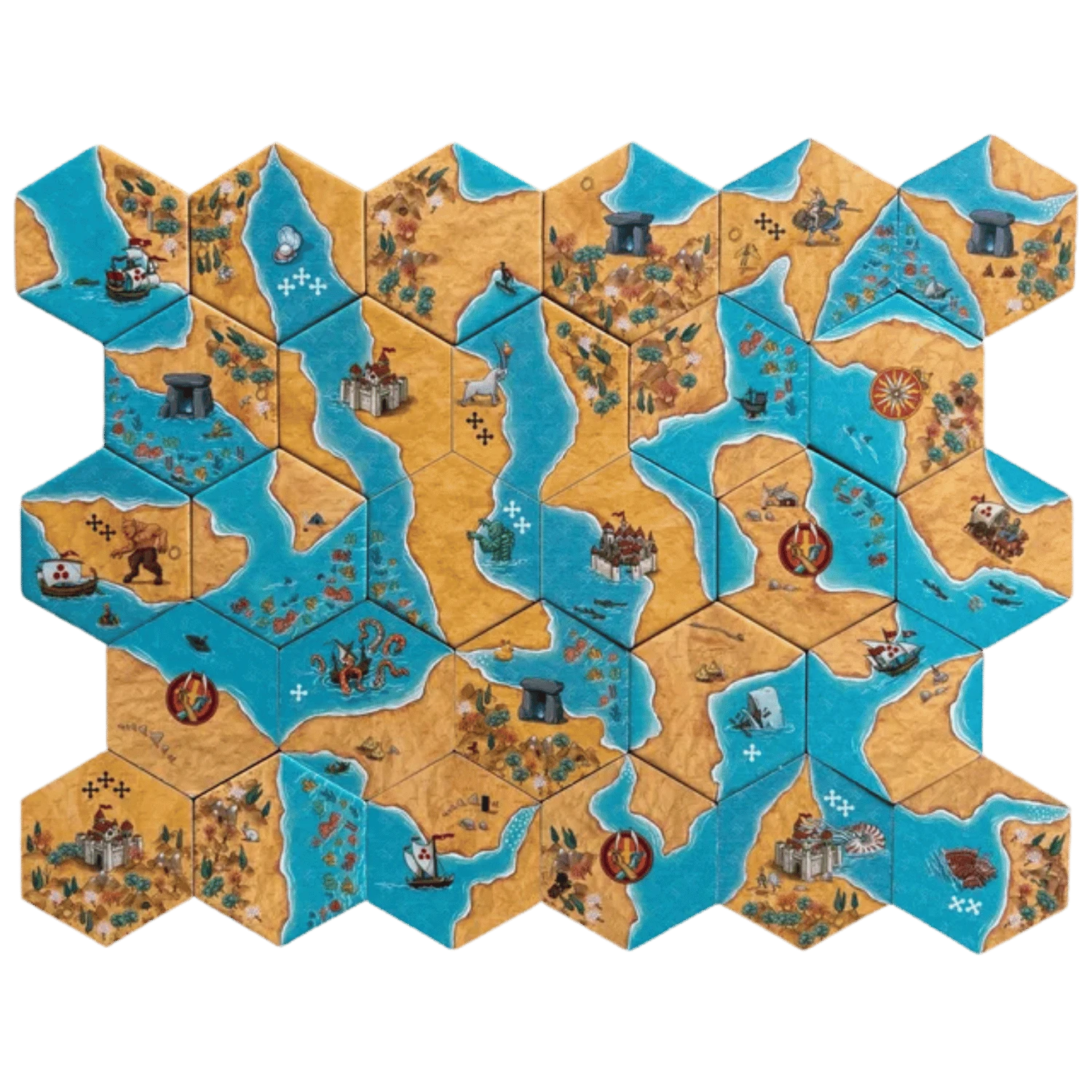
Finally, Uncharted adds Bandits & Pirates, which, like Cities, has a balancing effect. You can place a Pirate to gain points from a large trading route currently being dominated by Sea… even if you are the Land player, and vice versa. Once more, it expands a player’s perspective to include the other’s actions, and allows point-scoring from advantageous play for the other side.
What I like most about Land vs Sea is that it really doesn’t succumb to analysis paralysis in the way that similar games can do. There are so many placement options for tiles that you are usually given three or four reasonable places to plop stuff down; it’s always fun rather than frustrating.
PLAY IT? MUST-PLAY
Good expansions are those which you cannot imagine playing the base game without. I think Land vs Sea stands on its own two feet exceptionally well, but it turns out you can improve on near perfection; everyone should play this great game, and everyone should augment it with the brilliant Uncharted expansion.
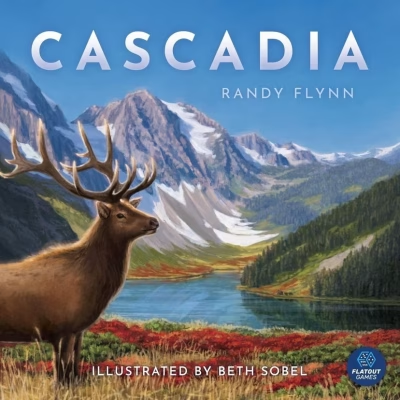 TRY THIS IF YOU liked Cascadia…
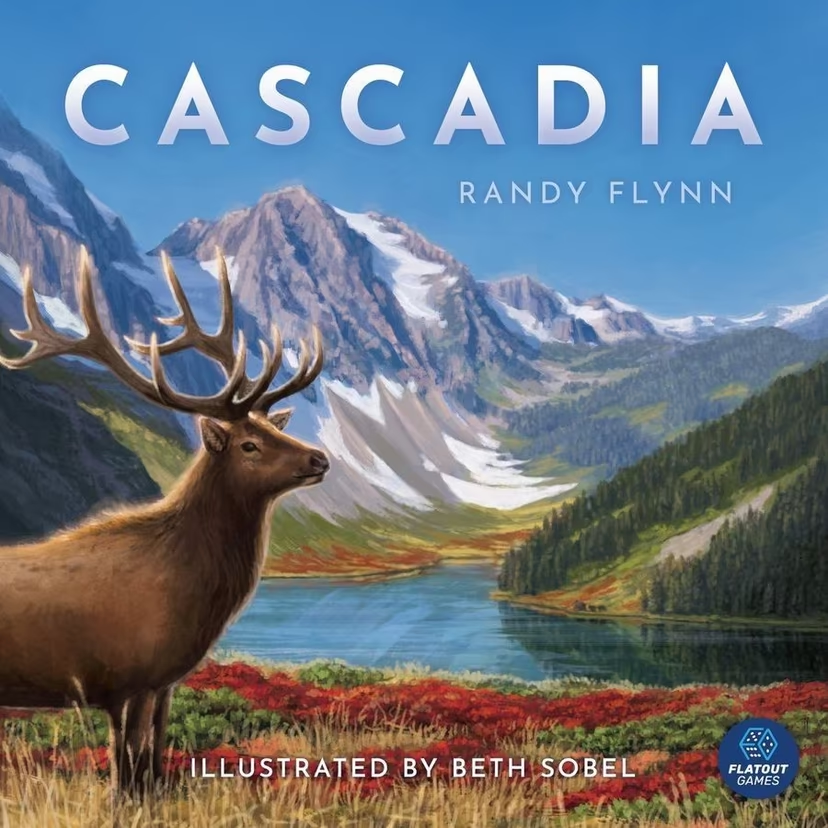
…I found Cascadia a little unrewarding, and a little too “solo solitaire” for me. It’s got plenty of fans though, and if you enjoyed it, you’ll love many similar elements in Land vs Sea, especially in the realm of pretty hexes and points-for-patterns.
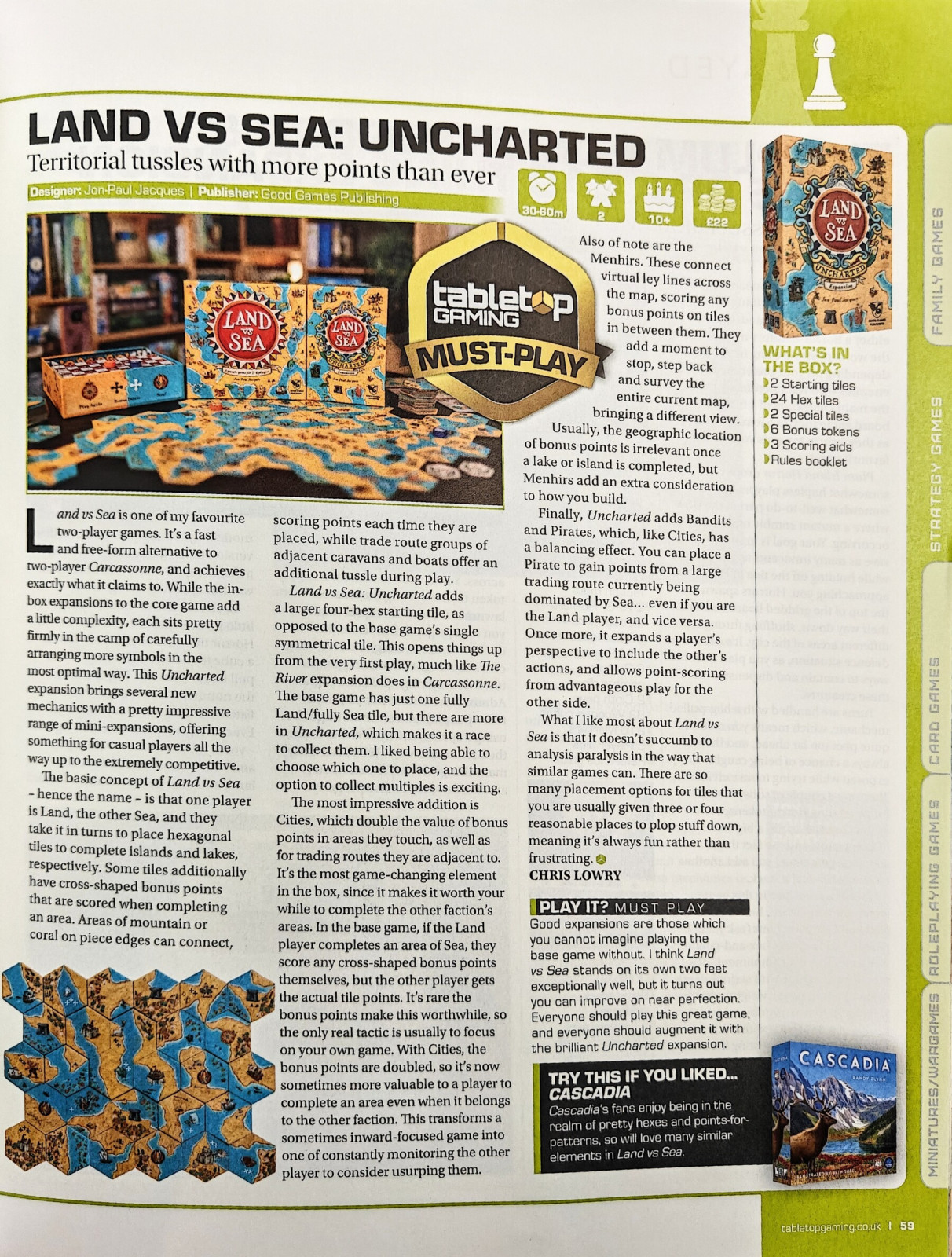
| About Land vs Sea: Uncharted | |
|---|---|
| Designer | Jon-Paul Jacques |
| Publisher | Good Games Publishing |
| Playcount | 2 |
| Age | 10+ |
| Price | £22 |
| Contents |
|
A review written for Tabletop Gaming Magazine. Magazine page copyright to TTG Magazine 2026.