
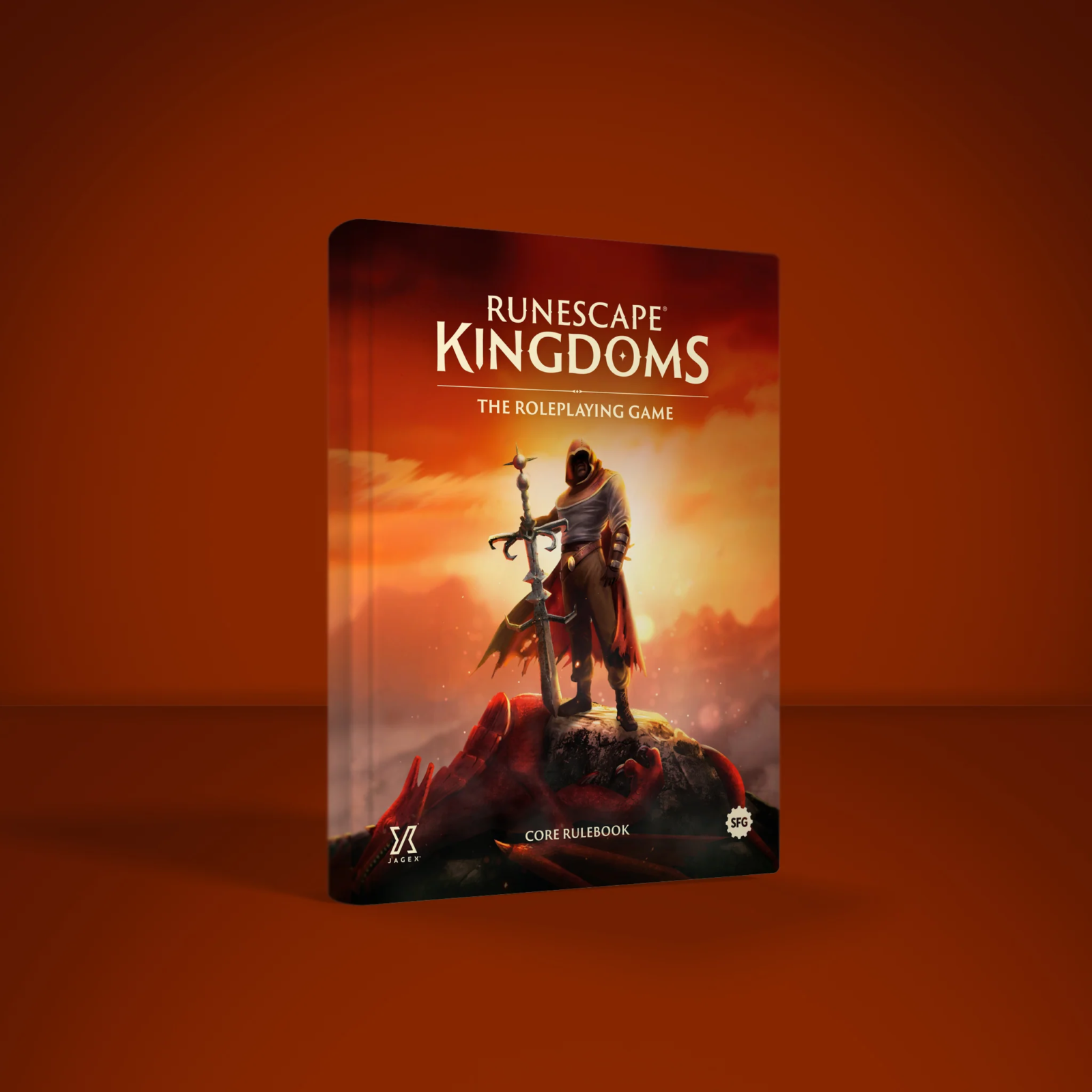
RuneScape Kingdoms is a tabletop roleplaying game based on the legendary MMO computer game RuneScape. As such, it has a number of challenges, the most obvious being: how will Steamforged Games translate a game that some people have played for literal decades into such a different form?
Out of the gate, the book is very aware of this problem, and opens with a section laying out some of the key differences between a TTRPG and the online analogues. I didn’t love the written example of play on the first spread here, which relied on the reader already understanding the 3d6-roll-under-test-mechanic before the book had actually explained what it was, but at least this introduction is aware of the challenges of the transition.
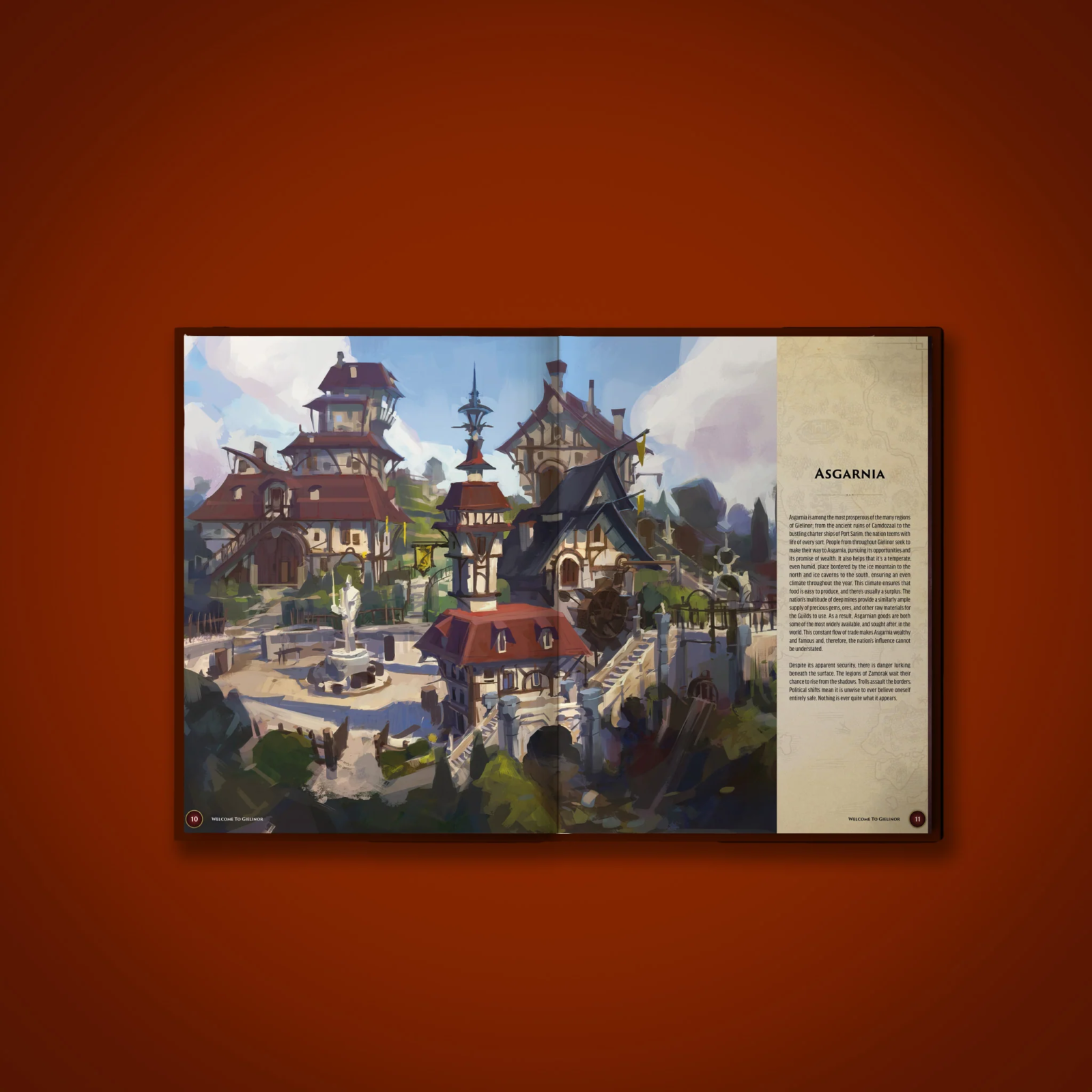
The book is set in the same Gielenor world as the digital game, with the first chapter providing a near encyclopedic overview of the key kingdoms, cities and peoples. The whole section desperately needs a map—and it turns out there’s a fabulous one on the last page of the book, although nothing tells you its there to find. The section begins with Misthalen and the city of Varrock; familiar enough to digital players as this matches the general starting area for new games. Overall its a helpful introduction to the setting, although a slightly a broader overview of the world would have been a helpful starting block.
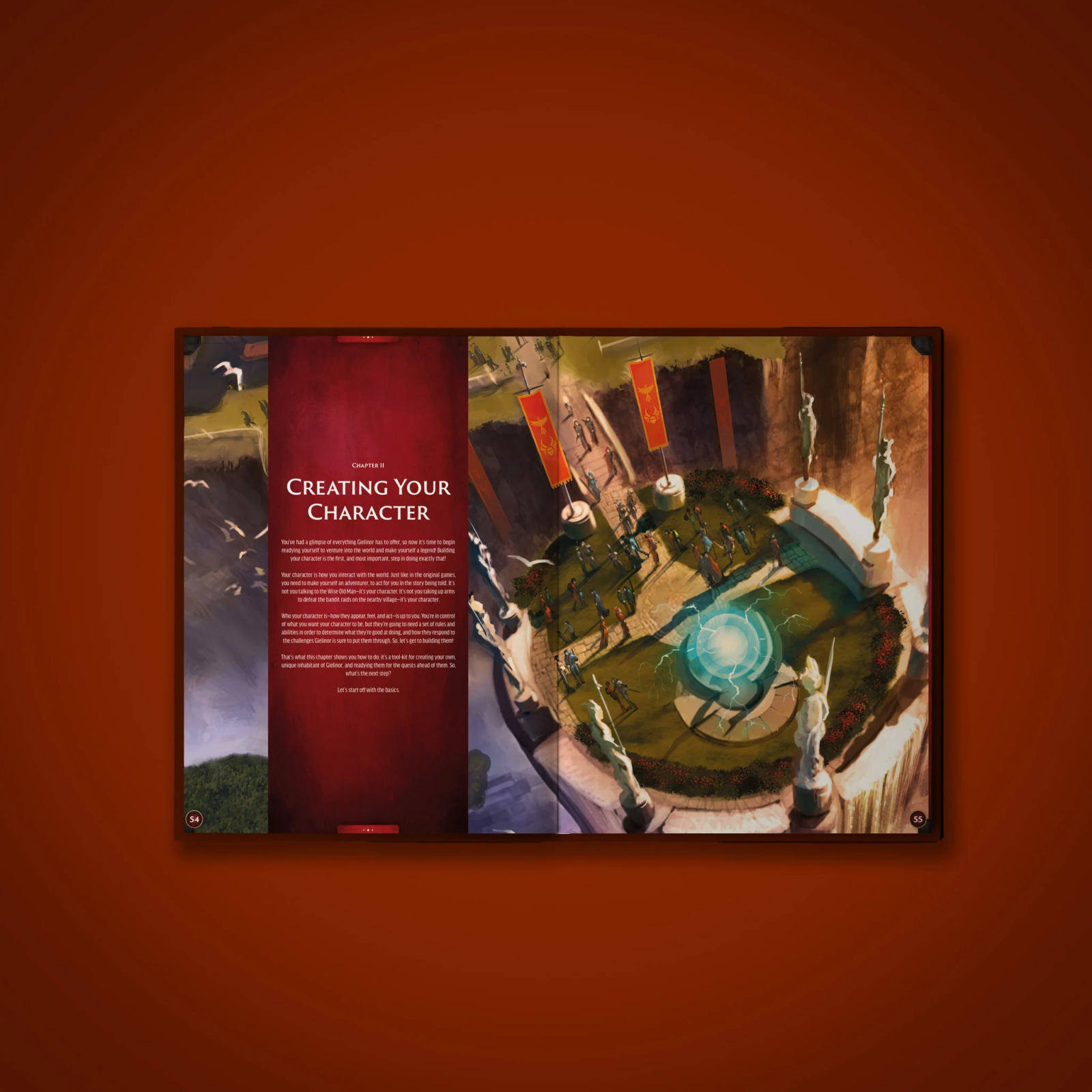
Character creation reminds me a little of a super-simplified version on Runequest – and not just because of the similarities in name. I was concerned that RuneScape Kingdoms might be painfully crunchy, but it actually relies on three attributes—“Strength”, “Agility” and “Intellect”—Players distribute 8 points between these—then they get 21 skills that will be very familiar to RuneScape veterans. Players start with level 1 skill in everything, and 10 extra points to deposit as they wish. A huge part of the digital game is about slowly gaining character levels (known as grinding), maxing them all, eventually. The RPG drops the max level from 99 down to 10, making this a little more manageable—I’m not sure anyone wants to play the session where everyone is trying to get their Fishing skill from 96 to 97. Players upgrade a skill by one point every session; choosing between the skills used in that session. Thus maxing all 21 skills would “only” take 179 sessions!
That roll-under-mechanic I mentioned? I mostly like the simplicity with which tests are implemented here. You roll 3d6, aiming to roll equal or lower than the relevant Ability and Skill added together. This goes for combat too, using Strength + Melee skill, for example; although it also allows for the argument, as your character somersaults off a balcony waving their sword, that you want to use Agility + Melee instead. I like that the core attributes also tie thematically to the three core types of combat; Magic uses Intellect. My nitpick would have to be that high skills and abilities lead to guaranteed successes; a maxed combo is 18, the same maximum it’s possible to roll with 3d6. Even at medium to high levels failure will start to become uncommon. This system would absolutely fall apart under any kind of min-maxing; a weird choice for a game with a heritage of… maxing?
Quests here are simple and malleable, and there’s a ton of brilliant ideas of how to construct them, with a chunky Bestiary (that reminded me of Dragonbane in more ways than one) to populate your adventures with things to fight. People play RuneScape for the majestic meeting the mundane; that’s celebrated here, as is the art of crafting and equipment. If you run a group that finds tracking inventory fun, if they see the art of keenly developing their armoury and characters over long campaigns a joy, then RuneScape has a lot to offer all of you.
PLAY IT? MAYBE
This is an usual game; some elements are pretty rules-lite, paired with the most detailed crafting system I’ve ever seen in a TTRPG. As with many licensed games, RuneScape Kingdoms is clearly written for the fans, but I think Steamforged have mostly managed to adapt the right bits and left the rest behind. The combat and test system is definitely a little bit wonky though…
 TRY THIS IF YOU liked RuneScape 3…
…There are two main versions of RuneScape; the modern branch is Runescape 3 (often just referred to as Runescape), and has a more narrative-heavy focus, whereas Old School Runescape (OSRS) sticks with the classic grind-it-till-you-make-it gameplay. Kingdoms is probably closer in tone to the modern than the old, although I’m confident just saying so will make someone on Reddit very upset…
| About Runescape Kingdoms | |
|---|---|
| Designer | Richard August |
| Publisher | Steamforged Games |
| Playcount | 2-5 Players |
| Age | Age 14+ |
| Price | £40 |
| Contents |
|
| Rating | Maybe |
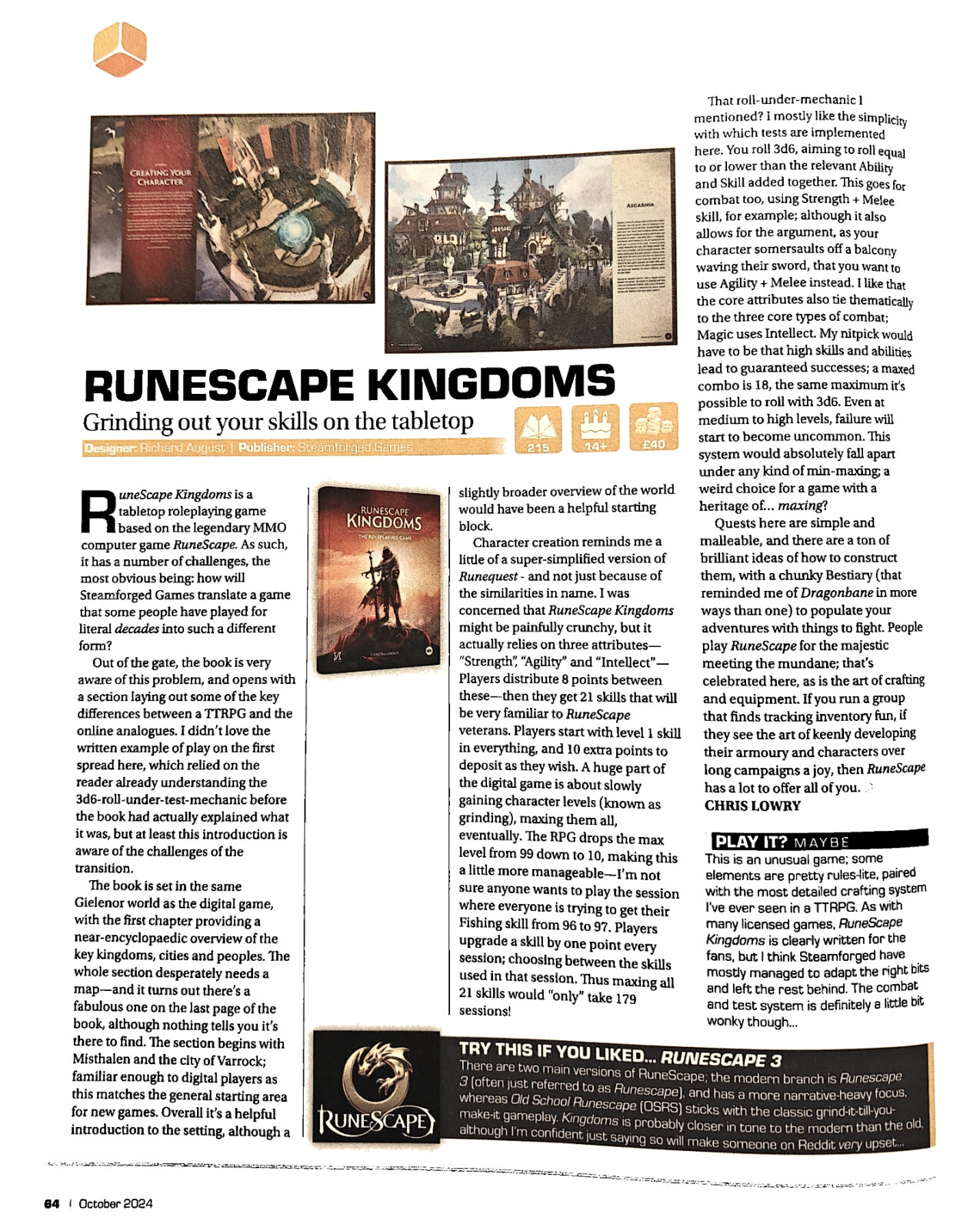
A review written for Tabletop Gaming Magazine. Magazine page copyright to TTG Magazine 2024.