
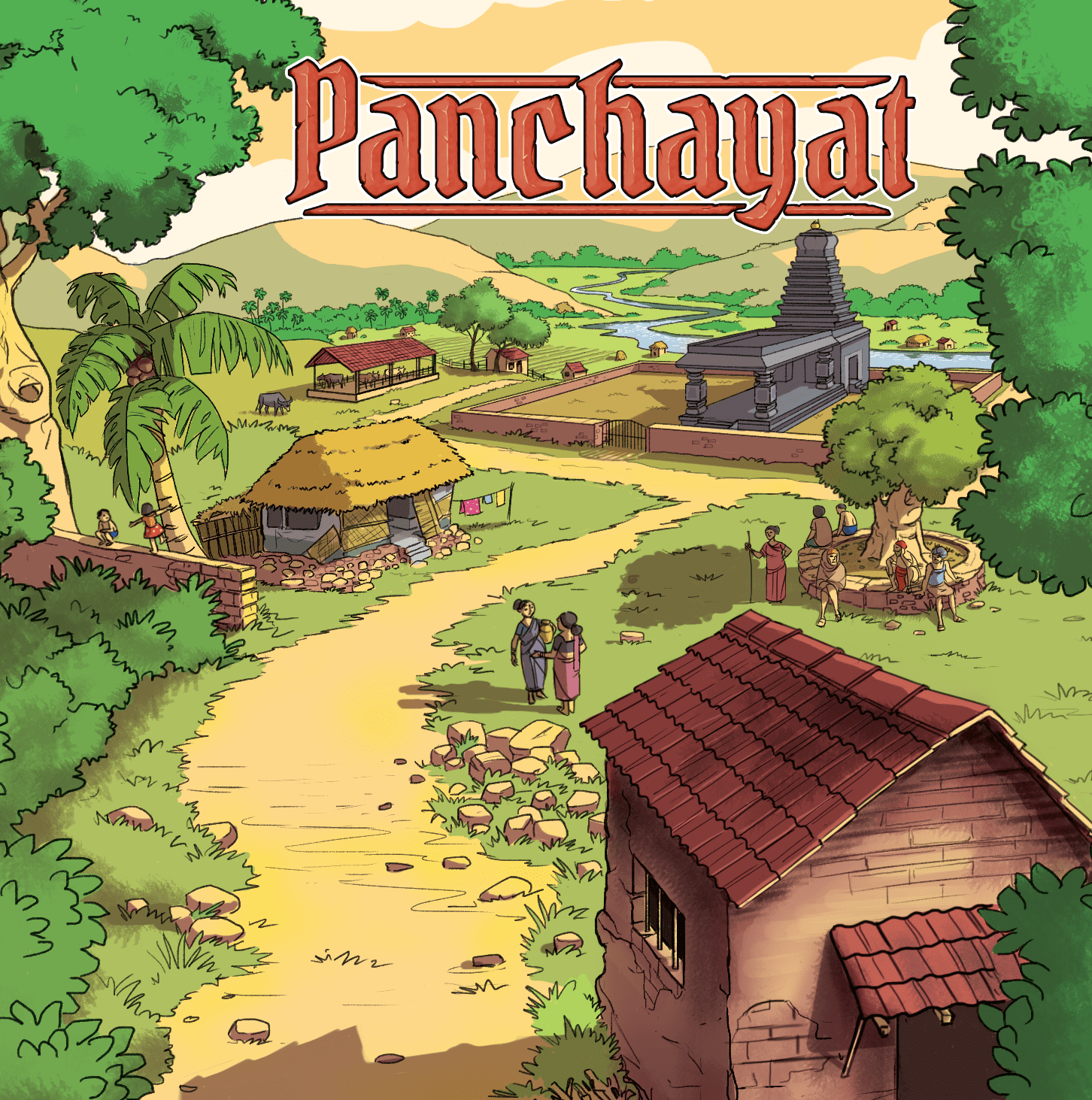
 The vast majority of games we review in the hallowed pages of Tabletop Gaming have been designed in the West and mass produced in China. I’m not saying that’s evil or wrong, but it does mean that there’s a glut of well-known designers from the global North, with little localisations of design and production to elsewhere on our beautiful Earth. Some manufucturers are taking steps to reduce the environmental impacts—the sustainably produced Earthborne Rangers is a great example—but still the voices of designers worldwide are mostly absent. Kheo Games are a refreshing alternative voice in this space, since they design and print their games in the home region of Goa, India.
Panchayat is a tile-laying celebration of village life in India. Historically, settlements were governed by five elders, the Panch (”five”, in Sanskrit), and so Panchayat means “the rule of the five”. Players in the game are competing to turn a patch of empty space into a vibrant village.
Core gameplay is based around your personal village board. 16 squares can be filled with building tiles, with bonuses for some for being next to the river, to the farm, or in the centre of the village. There are three rows of previous building tiles on the table; on their turn players take it in turn to draw three new tiles, then choose two to keep from all available tiles. Unpicked tiles are placed into the previous tile section, covering over older options. This means your choice each turn is about choosing two tiles to get you the most points, but also, if you can’t keep them, what tiles can you hide to hurt your opponents?
Added to the challenge are some player-specific bonus tiles, which reward you for placing particular tiles on or near them, and universal end game bonuses, which give a reward to the player who best fulfills them. These involve collection challenges; who has the most Statues and Temples? There are also cowsheds, worth zero points on their own, but ten to the player with the most at the end. The finish comes after eight rounds, scoring the end game bonuses and adding points rewarding the largest groups of each coloured tile type (Residential, Commercial, etc), similar to scoring in Sprawlopolis.
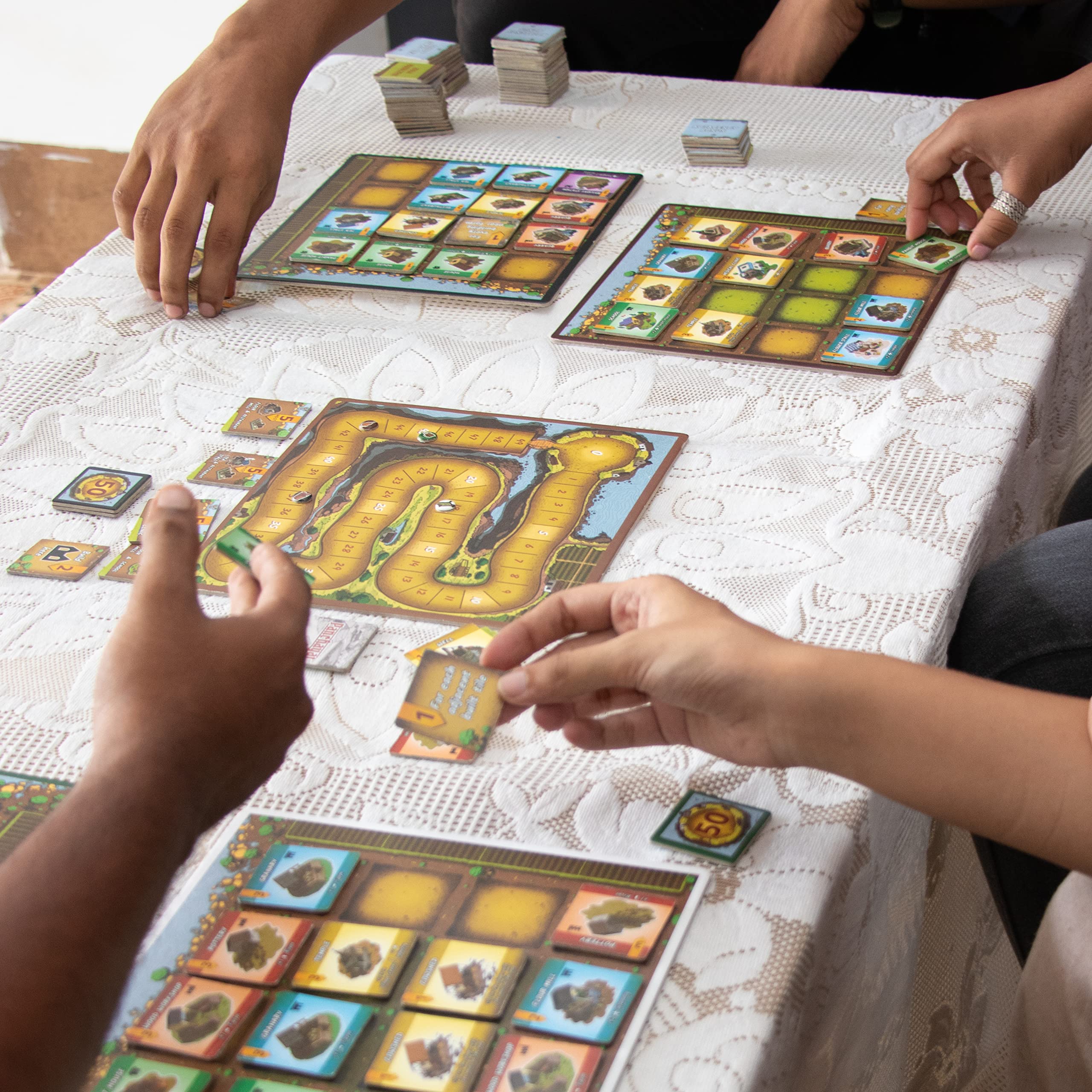 One aspect I found unusual was that you score each tile as you place it down. Often tableaued point-salad games involve scoring rounds, but here the points are mostly instantaneous, and prevents some of the detailed forward planning that can bog games down. You might want to leave a space for a School tile, but if a House tile comes up first, its probably better to just use it now, and miss out on the +1 bonus. There’s still strategy, but it’s about responding to the flow of tiles in the game rather than analysis paralysis perfection.
Panchayat is an enjoyable lightweight tile-layer. It has just enough bite to merit replaying, with an additional layer of strategy in the Utility buildings that let you move or replace tiles, as well as steal them from the discard deck. It also works equally well at all player counts, with a decent solo mode and some functional—if slightly unclear—setup rules for two-players. My only gameplay criticism is that the cowsheds represent a big swing in that two player game; I won because I got lucky with two tiles in a single turn, and gained twenty extra points over my opponent, more than my winning margin. We home-ruled it to increase the number of starting cowshed tiles, but it’s always best not to need to tweak anything.
Still, I love how authentically Indian Panchayat feels; all the player tokens are obviously representative of people with an Indian subcontinent heritage, and there are building types that wouldn’t fit in a European village.
PLAY IT? YES
Kudos to Kheo Games; Panchayat is well designed family game, and one I’d recommend to introduce anyone to the tile-laying genre.
 TRY THIS IF YOU liked Suburbia…

…There are no hexagons here, but otherwise the concept is very similar: placing tiles to expand your urban area, gaining or losing points based on adjacency to other tiles. Suburbia is the deeper and more challenging game, but it also takes 90 minutes rather than 20…
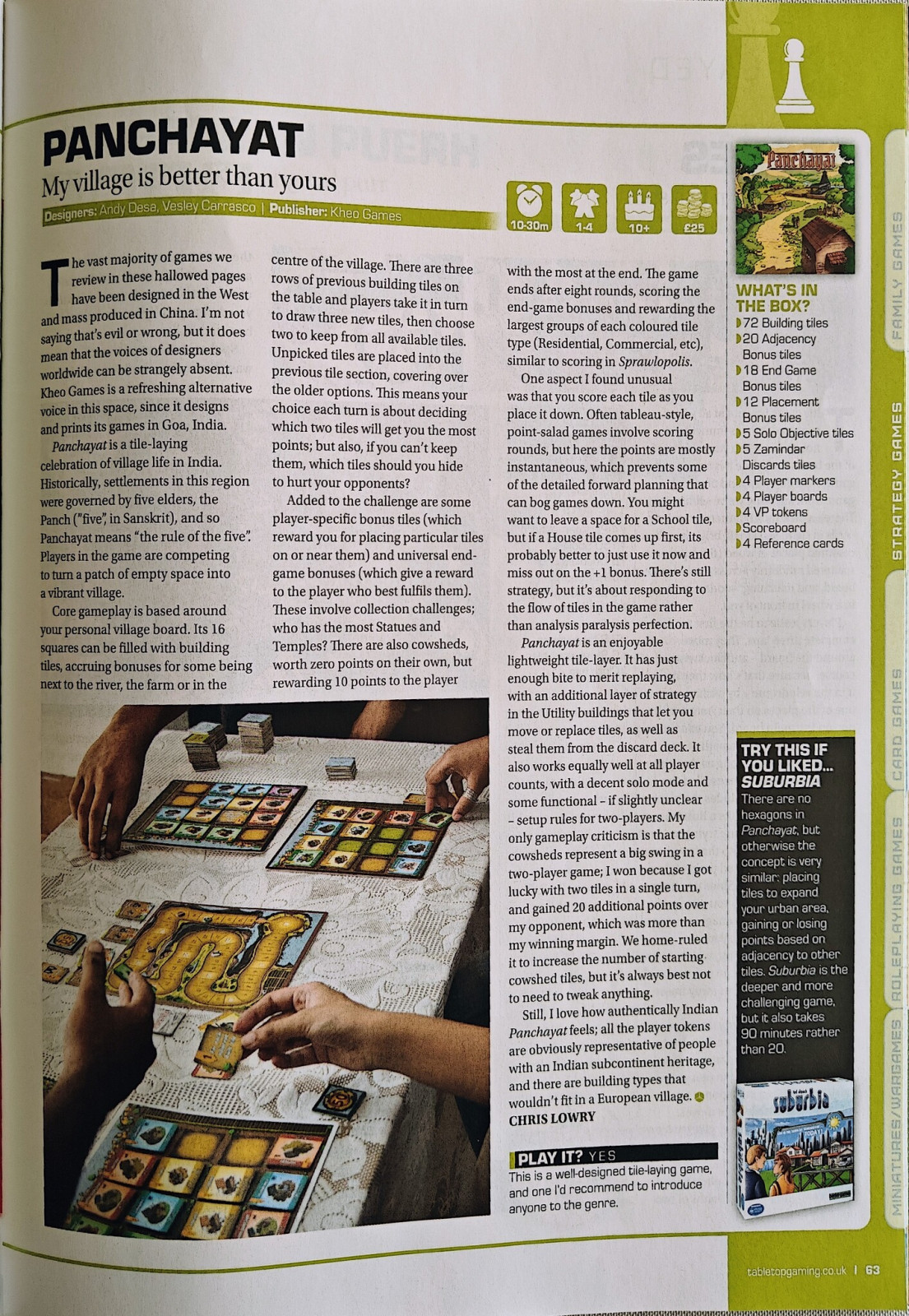
| About Panchayat | |
|---|---|
| Designer | Andy Desa & Vesley Carrasco |
| Publisher | Kheo Games |
| Playcount | 1-4 Players |
| Age | 10+ |
| Price | £25 |
| Contents | - 72 Building Tiles - 20 Adjacency Bonus Tiles - 18 End Game Bonus Tiles - 12 Placement Bonus Tiles - 5 Solo Objective Tiles - 5 Zamindar Discards Tiles - 4 Player Boards - 4 Reference Cards - 4 VP Tokens - 4 Player Markers - 1 Scoreboard |
| Rating | Yes |
A review written for Tabletop Gaming Magazine. Magazine page copyright to TTG Magazine 2025.