
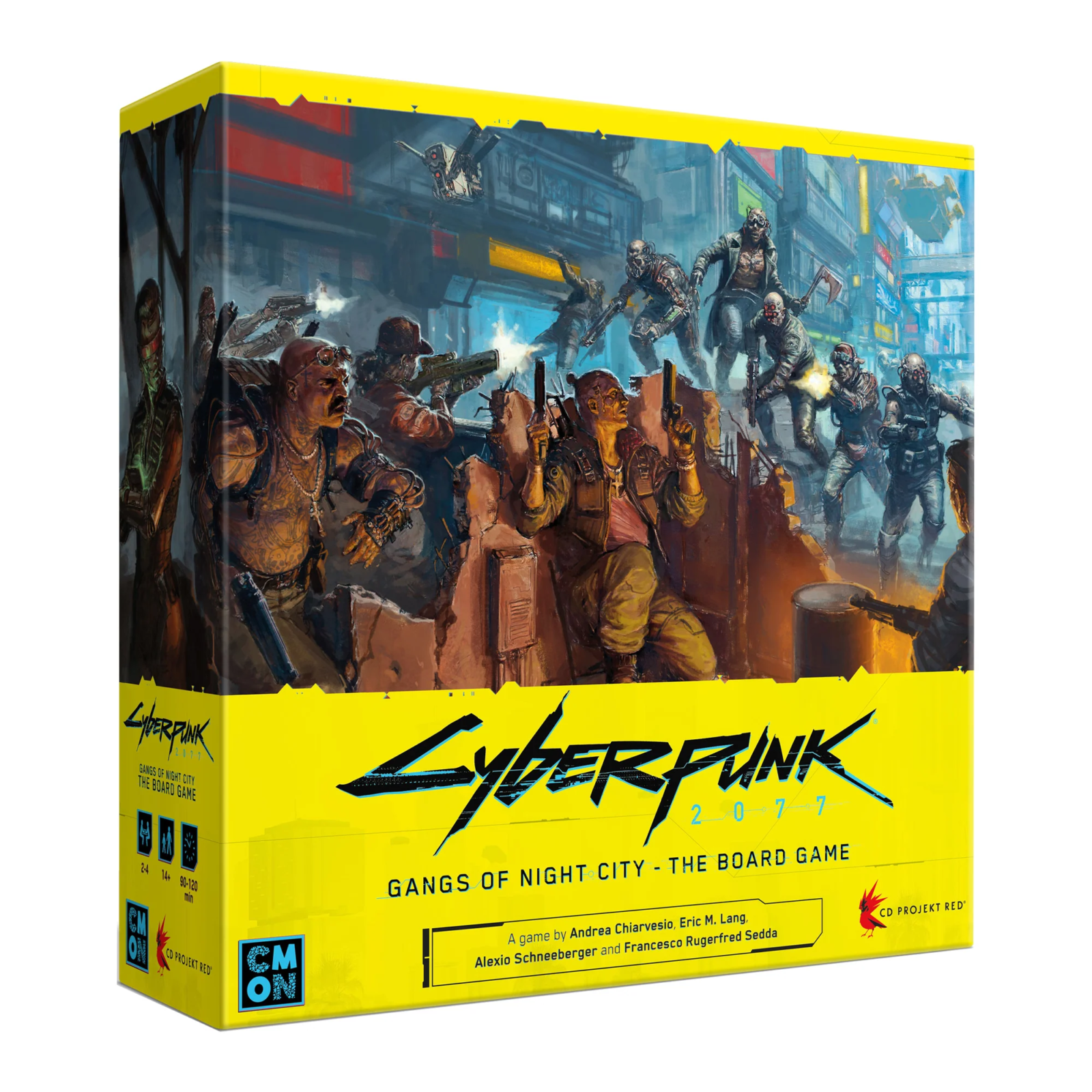
Cyberpunk 2077: Gangs of Night City is a board game based on the hit videogame of the same name. Players compete to gain the most Street Cred, through building a presence in various gang territories across the board.
First things first, the board takes up a ridiculous amount of space. It wouldn’t fit on some tables,, especially once players have made space for their units and gang boards. It’s does look fantastic though, if futuristic sci-fi is your thing. CMON have been known for a decade for high quality miniatures, and they’ve brought their A-Game to the entire visual feast here.
The game itself involves an interlocking set of mechanics. Players have a gang, with three roles; Solos, Netrunners and Techies. Different roles can perform different actions; firefights, hiring freelance “Edgerunners”, taking on business opportunities, or hacking into The Net. These units are represented with pentagonal, octagonal and square bases; reminding me of the mostly forgotten CMON title Kaosball; although that game used such consistent iconography that it was always clear. Annoyingly, in multiple games of Cyberpunk, I never got to actually know what shape a Solo or a Techie was – I had to look it up every time; it would be helpful if the shapes were present in every mention of a role on cards or in the rulebook.
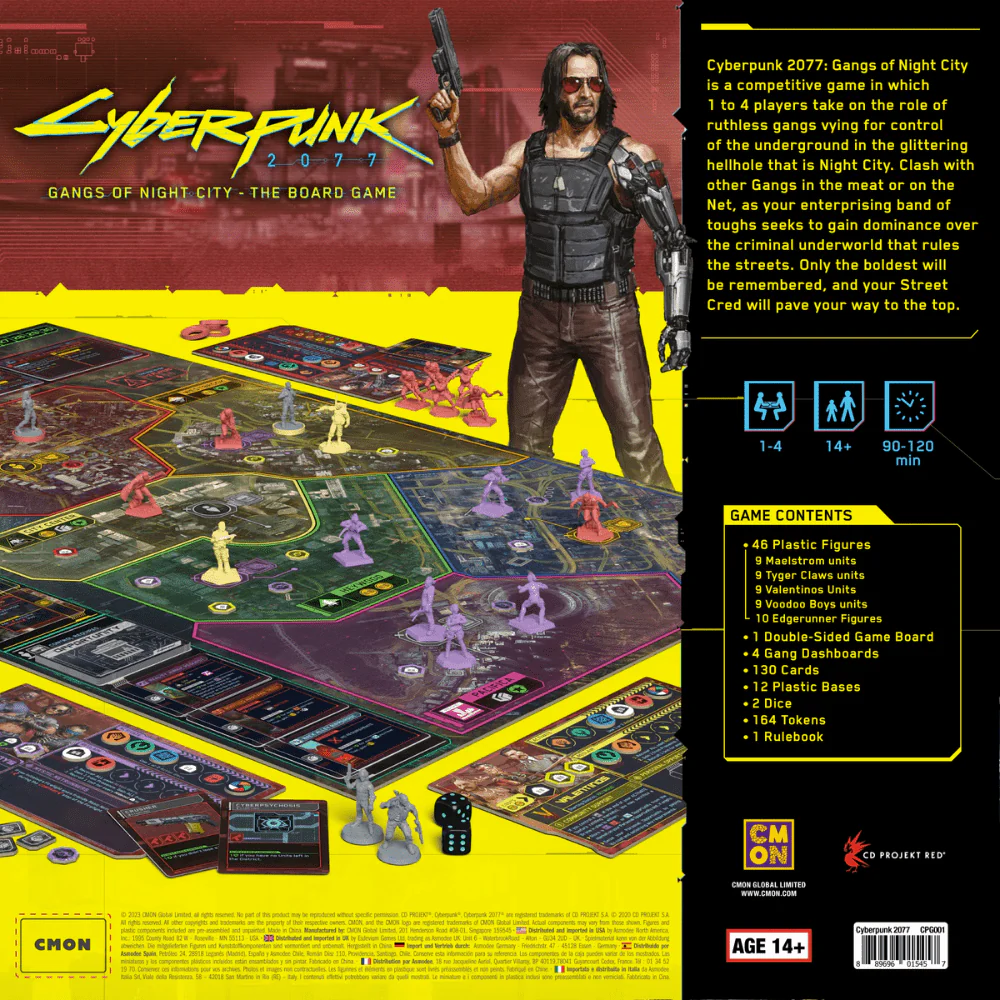 Play is split into two turn types; Activate, where players can perform activations; and Reclaim, where activation tokens are reset, and gangs can earn resources and send out new units. During Activate, alongside moving and using units, Players can also build new hideouts and upgrade their combat cards. The overall aim is is to gain the most Street Cred victory points by building a gang empire. A little like Inis, dominating areas of the map gains you Cred, resources and extra units, all of which can be used incrementally to build towards more points; it’s a eurogame with a flashy neon paintjob, and an unpredictable route to victory.
Adding to the incalculability are the Story cards; these add some stages of alternate goals and win conditions. Cyberpunk 2077: Gangs of Night City comes with five Stories, and each branch and limit play in different ways throughout each game; such as giving Street Cred for initiating firefights, or preventing certain activation types from occurring. Having multiple stages means that the optimal actions will evolve several times each game. Imagine hacking Carcassonne, so that for a third of the game roads can’t be built, and then players are encouraged to build cities cooperatively, before finally monasteries triple points in a field. It’s a fresh idea, although it does elongate game length significantly.
There are several aspects of the game that surprised. During firefights, players use one card from their combat deck – which has only four cards. After use, the card is discarded, leaving just three cards, or eventually just one! The individual cards can be upgraded, but never increase in number. It’s an incredibly tight deck-building experience, and means that having even one “bad” card leaves you exposed. Netrunning is a long term activity too, each run advancing a hack by one stage. This took some mental juggling for me – having played Android: Netrunner for years – adjusting the concept of a run to be something that takes place in stages over multiple turns.
Cyberpunk 2077: Gangs of Night City plays well at all player counts, although increases in duration significantly at four players. The solo game uses an deck controlled gang and an overpowered Edgerunner as opponents. Both start much more powerful than the player, but don’t progress, whilst the player steadily builds their engine and capabilities. When I played, at the halfway point all three factions were one point apart, but eventually I won by 29 points to 15; what started as a scary challenge ended slightly disappointingly easy. I may have been particularly lucky, but given that the solo mode doesn’t use the variability of Story cards either, I’m not sure it’ll reward repeat plays.
Niggles aside, Cyberpunk 2077: Gangs of Night City is a tight, competitive game with some very new ideas. Fans of the videogame will not find the same exploration sandbox here, but many elements will feel very familiar, and the aesthetic experience is spot on.
PLAY IT? YES
So many eurogames are set in parochial Germany that finding one set in a flourescent, urban jungle is rather refreshing. Cyberpunk 2077: Gangs of Night City is a combative tussle, with a puzzle at its heart that twists each time you play it.
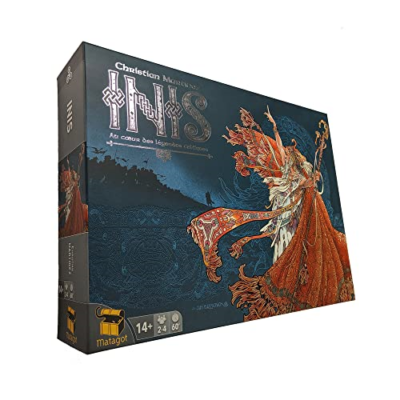 TRY THIS IF YOU liked Inis…
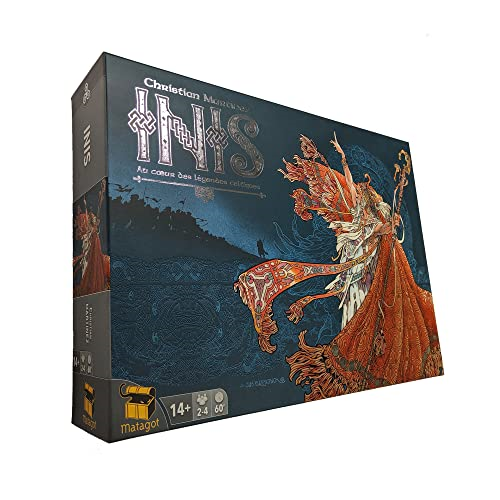
…Both games revolve around area control of a map, and both can see the lie of the land completely change simply by moving units from one territory to another. Inis is much cleaner; Cyberpunk has lots of moving parts tacked on, but both provide an evening of entertainment.
| About Cyberpunk 2077: Gangs of Night City | |
|---|---|
| Designer | Eric Lang et al. |
| Publisher | CMON & CD PROJEKT RED |
| Playcount | 1-4 Players |
| Age | Age 12+ |
| Price | £90 |
| Contents |
|
| Rating | Yes |

A review written for Tabletop Gaming Magazine. Magazine page copyright to TTG Magazine 2023.