
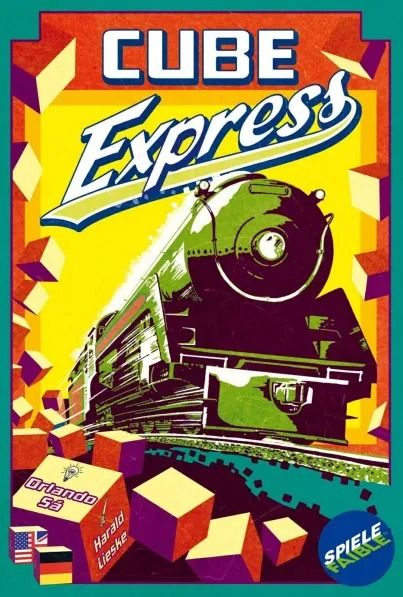
 I’ve been playing board games for a very long time now, long enough that I remember when most games were sectioned into two genres; “Euros” and “Ameritrash”. The former were very beige, quite abstract, and often used simple rules and tokens to build quite complicated systems; the latter were detailed, thematic and often more simulationist than strategic. The hobby has moved on and become more nuanced since then, but Cube Express took me back around fifteen years; I’m not sure I’ve ever held a more “Euro-ey” game than this.
That might seem like criticism, but its not: let me explain. Cube Express involves 2-4 players building a small train network, trying to collect points in a variety of ways. The unique selling point is the adaptable and highly-abstract way that wooden cubes are used for very nearly everything. They represent ownership, money, passengers, coal, cargo; the only other wooden pieces are the stations and two trains each player has.
This fluid cube-concept centres on the player boards, which have a number of divided sections. Your dividend cubes go on one side, whilst iron, wood and coal are in adjacent sections and your potential future “reserve” cubes sit on the right. At any point, players can convert cubes of most types to others, often losing some back into the reserve, or in byproducts. So converting 2 wood into coal also gains you 1 dividend, whilst the reverse loses one to the reserve.
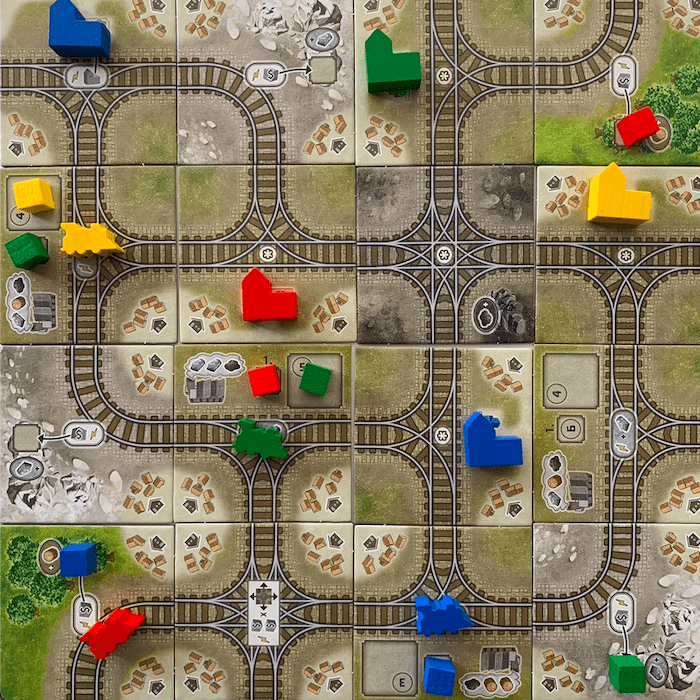
Each turn you place a tile, move your train(s) then pick up a new tile. Placing a tile might let you build a train station, a raw materials production site or a factory. Many of these come with additional bonuses, and each station you build increases your train’s movement. Trains can collect raw materials, drop passengers and visit factories all in the course of a single move, so there’s a great feeling of ramping up here; moving one train two spaces at the beginning is a world away from two trains nine spaces by the end.
The rulebook could be a little clearer in points, and a summary card would be really helpful—we initially missed the fact that delivering to a factory increases your stock value. Still, setup is fast, and once you understand the core systems the game flies along.
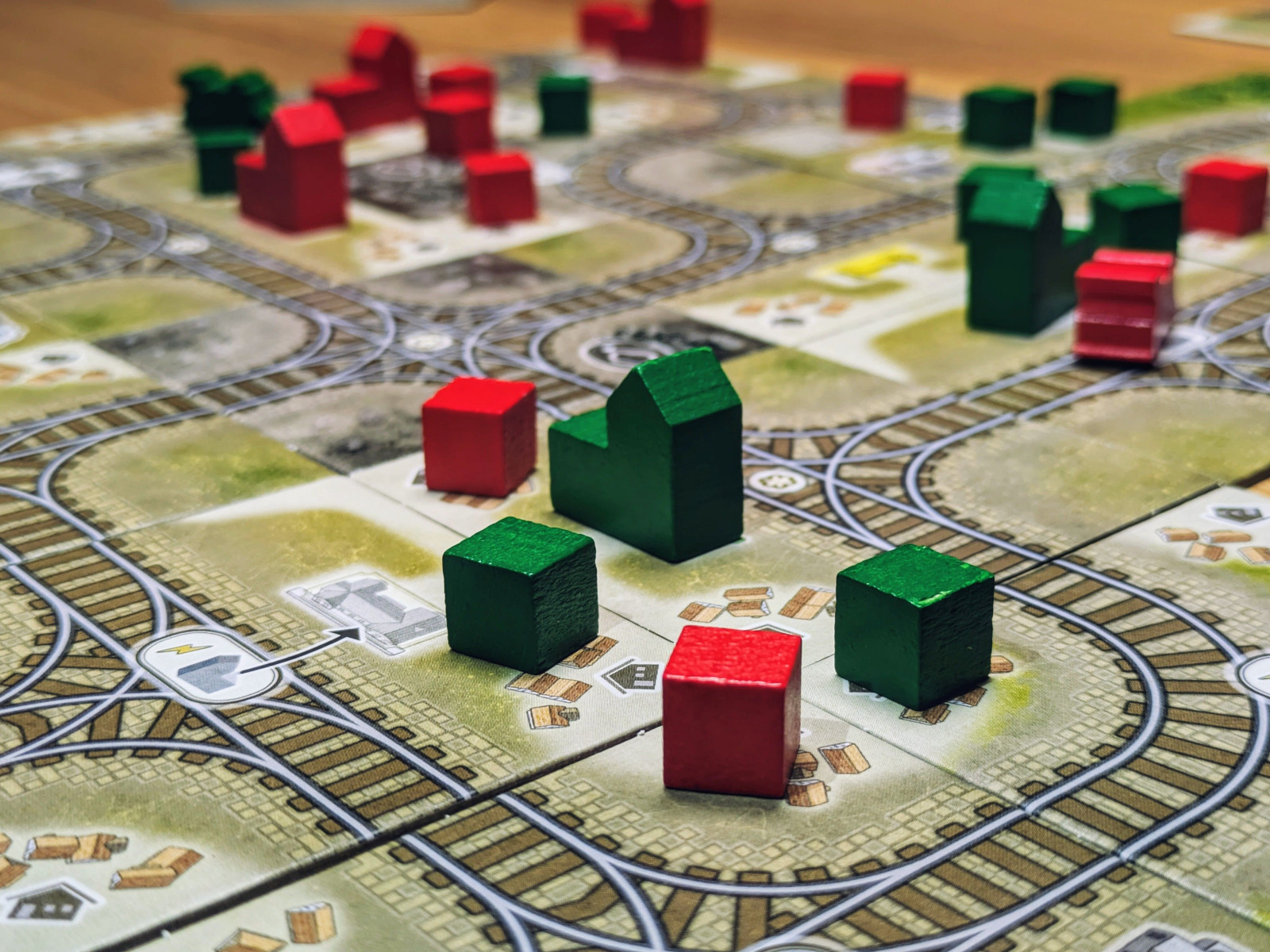
There is one big problem with Cube Express, and it’s based on how interdependent players need to be. Building a production site benefits you only when other players use it and having your passengers at other people’s stations gains you money. This simulates an interconnected economy and causes everything to grow together, it’s one of the aspects of the game I love.
However, since many of the mechanics provide a benefit to other players, the natural incentive is to build your own cosy rail kingdom far from the other players so that you don’t accidentally help them. Of course—why would you help your opponents? Unfortunately, if you do this, your economy and engine building will immediately stall, and the entire game limps along like a malnourished snail with a broken shell. This isn’t actually a difficult issue to resolve; start the game warning players “You NEED other people to use your systems or you won’t earn any money EVER”, and everything runs like lightning. But the rule book doesn’t give this advice, and it led to one of the most tedious ninety minutes I think I’ve ever had.
That gripe aside, Cube Express is great. It reminded me of how satisfying a stereotypically stuffy German Euro can be, and it manages it in a comparatively short play time. I would thoroughly recommend it to anyone who likes train. Or cubes. Or both!
PLAY IT? YES
This gave me shivers; a reminder of how it first felt to play a game that wasn’t roll-and-move-tedium. Cube Express is inventive and fresh, even if the packaging feels thirty years old.
 TRY THIS IF YOU liked Hansa Teutonica…
…Seemingly simple, but a near endless strategic depth, Hansa Teutonica is an immersive experience and a classic example of a cube-scattered Eurogame. Cube Express is simpler, but still rewarding and frustrating in equal measure.
| About Cube Express | |
|---|---|
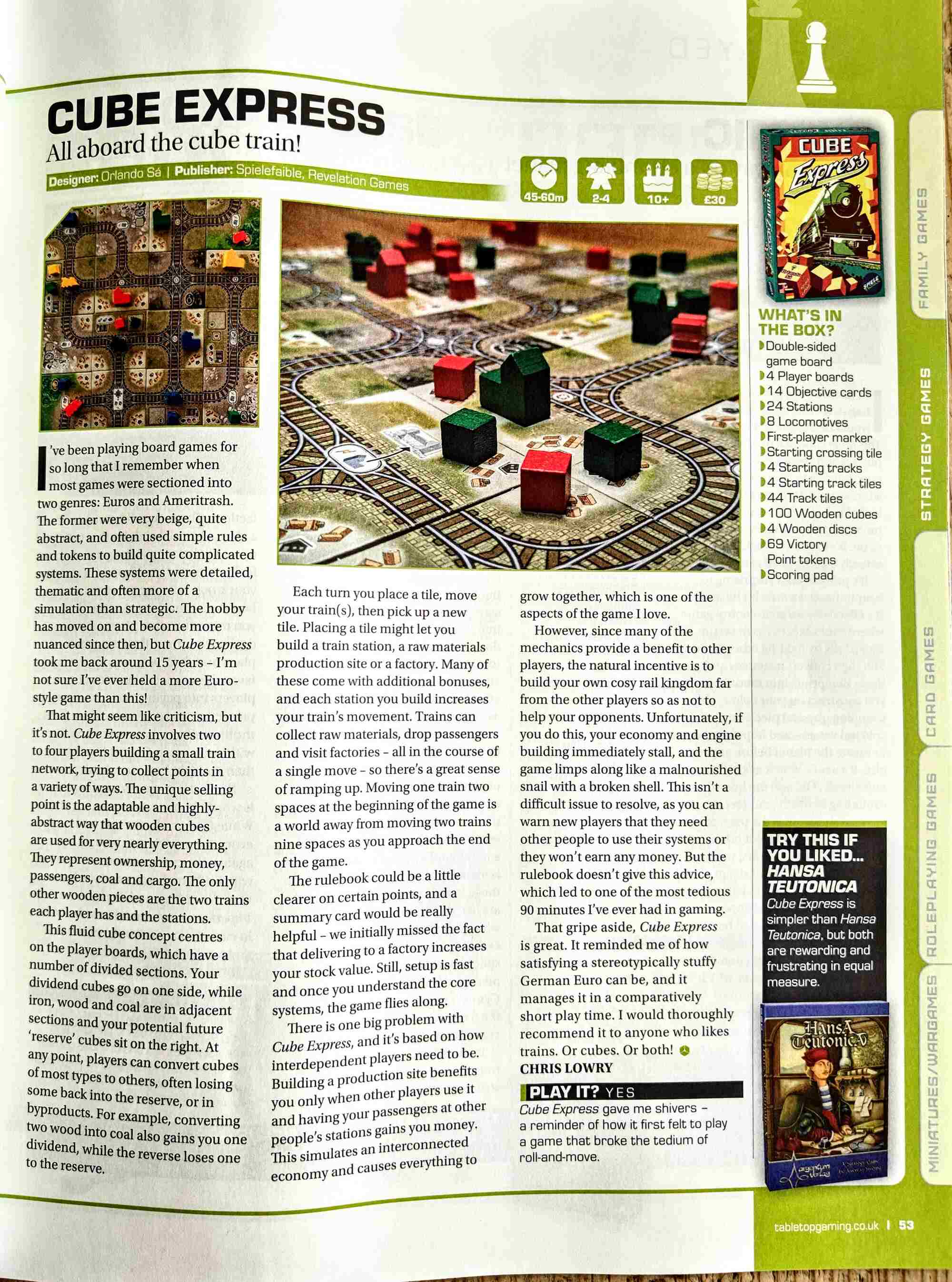
| Designer | Orlando Sá |
| Publisher | Spielefaible and Revelation Games |
| Playcount | 2-4 |
| Age | 10+ |
| Price | £30 |
| Contents |
|
| Rating | Yes |
A review written for Tabletop Gaming Magazine. Magazine page copyright to TTG Magazine 2026.