
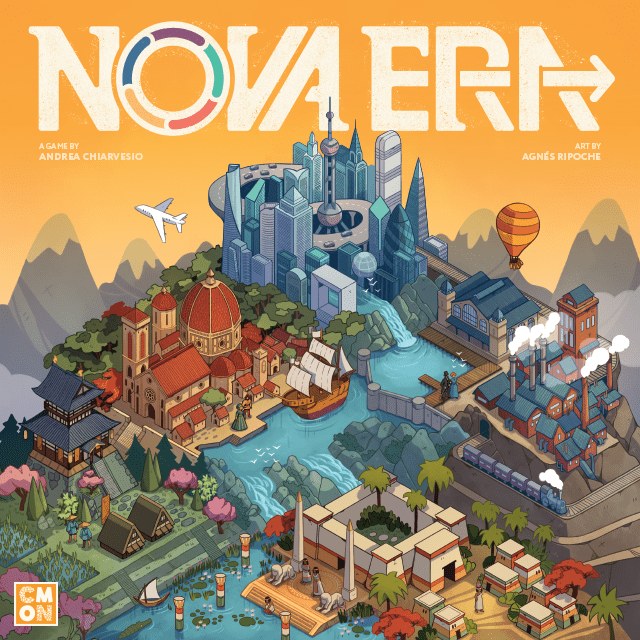
 NOVA ERA is a game of competitive dice drafting and tech-tree tableau building. If that seemed like jargonised nonsense to you, what I mean is that you’ll be choosing between sets of dice to get the ones with the best colours and numbers for your needs. You’ll use them to “develop” cards, some of which will stack on others you already have, or outright replace them. The aim is to build the most advanced civilisation across a number of scoring conditions.
NOVA ERA is built on a fine tradition of games like Castles of Burgundy, where you spend your dice to perform a very limited number of actions. Unlike some games with tight action economies—I’m looking at you, Agricola—this limitation never seems oppressively tight, although you’ll certainly be choosing between multiple things here that you’d like to do—but can’t!
The game uses an interesting order of play; the first player chooses from the dice pools first, with next selections going clockwise; then actions with cards begin with the player to the right of the first, and proceed anti-clockwise. This keeps things feeling unusually balanced and fair—and an excellent double-sided first player token made all those alternations very easy to follow.
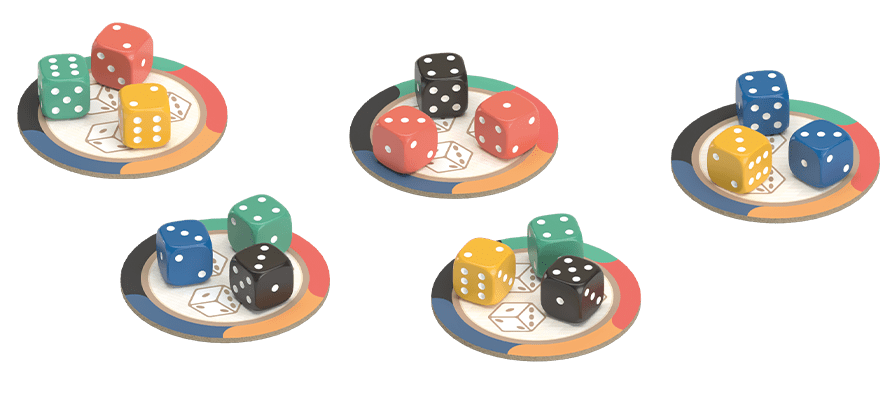 Cards and dice are coloured, each pertaining to a different area of civilisation growth. So red is Military, yellow Economic, and so on. Dice can be used for many actions, but are more effective when developing cards of a matching colour. The black dice are used for enlisting Personality cards, and can also reduce your civilisation’s Unrest tracker.
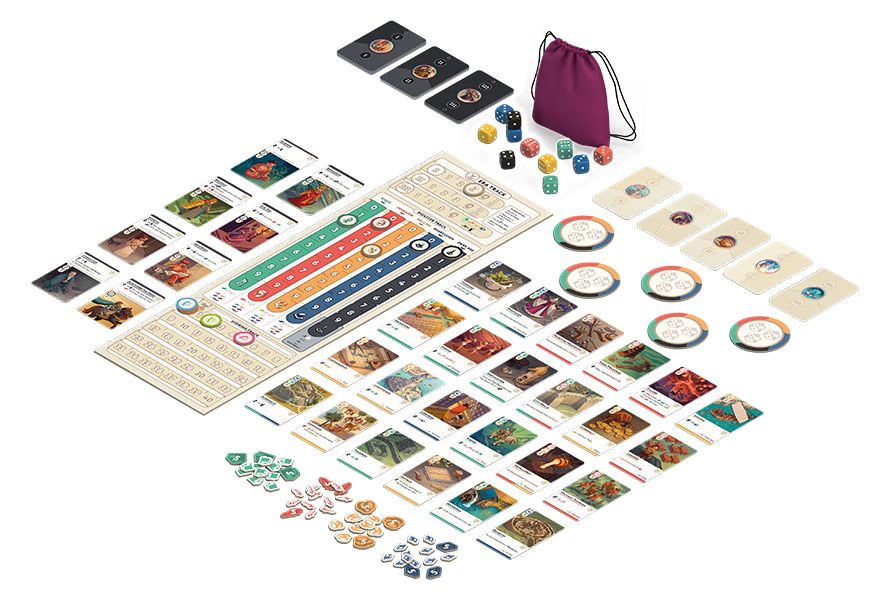 If any of the coloured game tracks—or your own Unrest track—ever hit their last space, they cause a disaster that will damage or destroy cards, or even hobble everyone’s actions for the rest of that Era. Tracks advance based on the dice set not chosen by anyone, often leaving the last player with the power to choose between non-optimal dice they may not really want or an inevitable disaster that impacts everyone.
We really enjoyed the visual impact of NOVA ERA on the tabletop, and its dual layered player boards were simple to read and clumsy-proof. For a game that needs a large amount of tablespace, setup and pack down is fast and elegant.
Unfortunately, we had some balance issues with the gameplay itself. The last Era is a smorgasmorg of victory point grabbing, but there were some rather over-powered cards that dominated our games; whilst others were far too expensive to develop with little pay-off. Two of our matches were won by a player who nabbed the air force card before anyone else got a chance. We didn’t find the tech tree growth across Eras particularly satisfying either, with new technologies disrupting old cards without a satisfying engine being built first.
Sadly, the game also risks stagnation when played with two players. In some ways it’s better than three and four—analysis paralysis can really slow down four player games—but we found that the lack of additional players developing cards meant that the table state got “stuck” during one Era; neither of us could afford to buy a card, so no cards were developed and no alternate cards became available; we found ourselves in the same situation in following rounds too. More players reduces the risk of this occurring as the turnover of cards is much faster.
There’s lots to love about NOVA ERA, and yet the whole is somehow less than the parts. I had fun, and I’d play it again, but really I’d rather take on something else, where the tech-tree ramps up in a way that feels more powerful and progressive.
PLAY IT? MAYBE
A very pretty introduction to empire development, and with a time-to-setup of less than five minutes, NOVA ERA might scratch the itch for you. Be warned that some of the cards are much better than others!
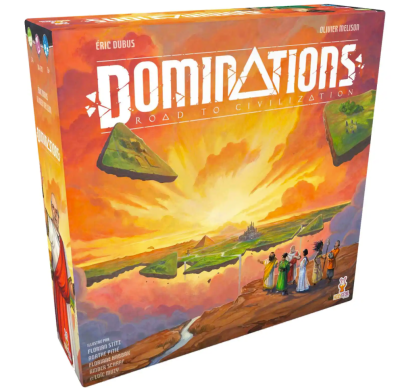 TRY THIS IF YOU liked Dominations: Road to Civilisation…
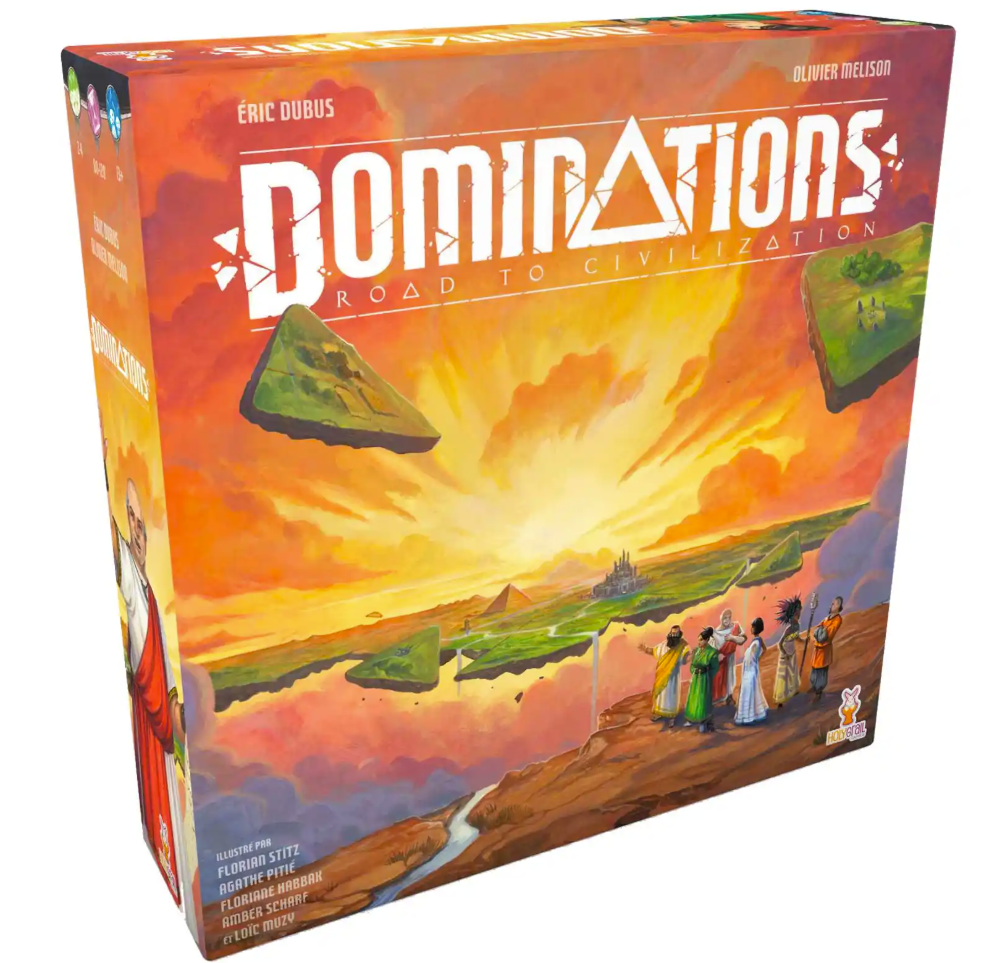
…Dominations has incredibly tight choices, three Ages and one of the best tech trees in our hobby, building your power and reach step-by-step. It’s also a big, full fat, three hour game; NOVA ERA gives you some of the same fun in a third of the time.
| About NOVA ERA | |
|---|---|
| Designer | Andrea Chiarvesio |
| Publisher | CMON |
| Playcount | 2-4 Players |
| Age | Age 12+ |
| Price | £35 |
| Contents |
|
| Rating | Maybe |

A review written for Tabletop Gaming Magazine. Magazine page copyright to TTG Magazine 2025.