
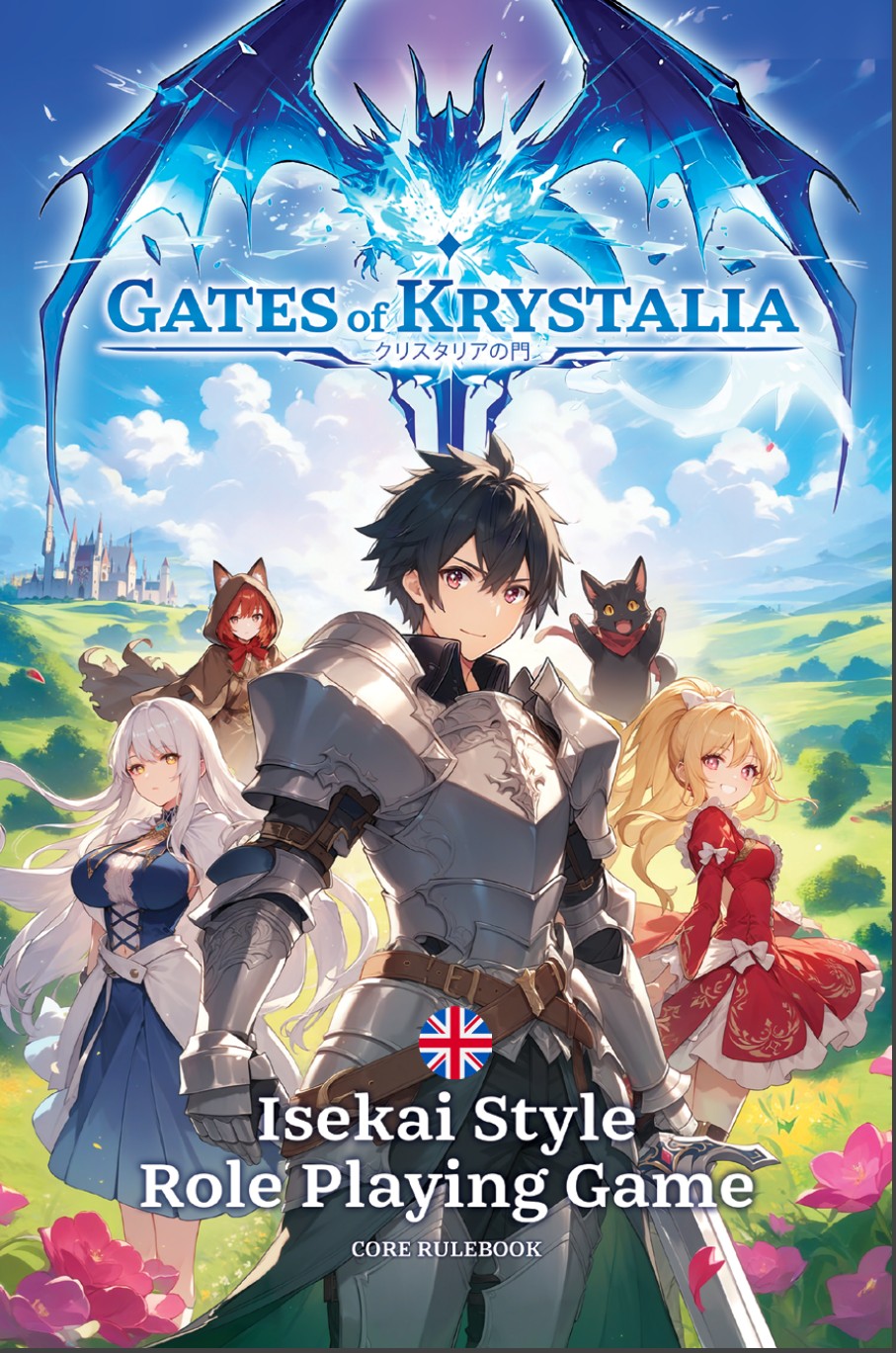
 I was intrigued when Matt asked me to review Gates of Krystalia—it’s not often I have heard about a game for its negative backlash rather than the game itself! Earlier this year UK Games Expo allowed some advertising from Gates of Krystalia; many people raised concerns about the project’s widespread use of AI, and the creators responded fairly vociferously on social media, attacking creators and spuriously claiming that “there’s no one in the industry” that avoids AI use. Before I respond to that, let’s look a little more at the game itself.
Gates of Krystalia claims to blend “the excitement of fantasy adventure with the unique elements of isekai anime”. If you’ve not encountered isekai (or anime itself), it’s a genre of Japanese comics and video usually involving normal people magically moved into fantastic other worlds—the name “isekai” 異世界 literally translates as “other world”. Common elements include power fantasy, as characters gain magical or technological powers, as well as elements of actions and romance. If you’re familiar with the field, you’ve probably come across titles like Sword Art Online and The Familiar of Zero; Gates of Krystalia swims in similar waters.
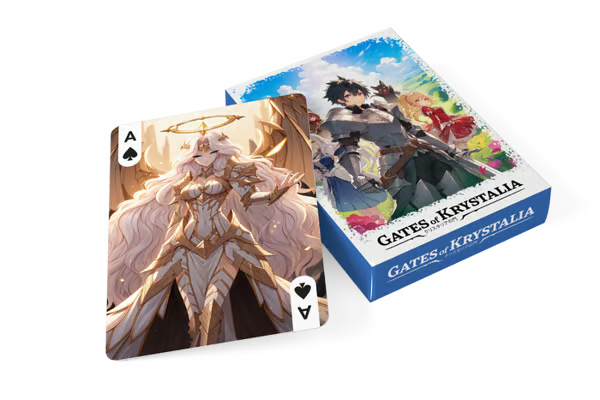
Each game begins players creating characters, choosing a race and a class; you can, for example, become a Dwarven Assassin, or an Orc Ninja. Each of these come with a range of abilities and specialisations, which are added to the character sheet. Many of these are used to help with manipulating or using cards from their standard deck of playing cards, called the Vital Energy (VE) deck. You draw from this for general actions, trying to beat a target number and for combat, and can play multiples or runs to perform “Combos”, adding a bonus to the strength of your attack, at the cost of burning through more of your cards. Also, if the suit of the card matches the action or attack type, it’s numerical value is doubled.
Now, Gates of Krystalia is not the first TTRPG to use a deck of cards for combat; Tokyo NOVA used them for cyberpunk anime back in 1993, whilst Unbound by Rowan, Rook and Decard uses an action fighting approach that even involves writing new stats or actions on your cards, improving your deck through play. They’re also are now a familiar prompt generator for many solo RPGs such as Apothecaria and The Wretched. However, using your entire deck of cards as a health bar is not something I’ve encountered before, and adds an interesting balance between burning through the deck with attacks and preserving then for safety. Players choose from a hand of cards, picking between them, as do high level enemies, whilst lower-level enemies simply draw a card from the top of a deck.
 Generally, I found the setting and writing in Gates of Krystalia to be somewhat lacking in flavour, but reasonable enough, but I found many of the combat techniques to be fiddly, or unclear, requiring us to look up keywords in the non-existent index; performing an “Impetuous Barrage” leaves a target “Weakened” whilst a “Devastating Impact” leaves them “Stunned”, neither of which is explained on page, or referenced. Higher tier characters with lots of abilities need clarity and discussion; I found it bogged down combat rather than making it feel high adrenaline and instant, especially compared to the lightning fast combat in Dead Beats by Richard Kelly, where when dodging you draw a card, then decide whether to stand or fold, gambling based on how good your card is.
Part of the appeal of isekai are the wide horizons of new worlds to create and explore. Gates of Krystalia embraces this in the The Deux (GM) expansion with a range of diverse places, from the corrupted spirit alternate-version-Tokyo of Spiralia to the tech-heavily Mech-Genesis. There’s a card-based world generator, one that initially reminded me of Microscope, but instead is constrained by rather specific numerical rules that lie counter to the free-wheeling creative experience I think works best for creating a setting. I also found the material provided for the pre-built worlds didn’t give me enough foundational details to actually understand them; rather than a list of specific details, each world simply has a two page chunk of in-world short story. I like narrative flavour, but I generally want to understand what the key features of a setting are before diving in. The lack of a starter adventure in either of these first two hardbacks is also a significant oversight.
Throughout, the rules feel as if they’ve not been play-tested enough. In addition, I suspect the designers haven’t had much experience of rules light games; it reminds me of the bogged down mechanical play of Dungeons & Dragons; “Well, actually, I’ve got this skill here that can do this specific thing, but hang on, let me work out the maths…” rather than the more narrative style of “I do a thing, it’ll be cool!”, “Sure, draw a card to see if it works!”. For a genre known for it’s power-imbalanced cool vibes, I don’t think the level of fiddliness of Gates of Krystalia matches the feel isekai fans will be looking for.
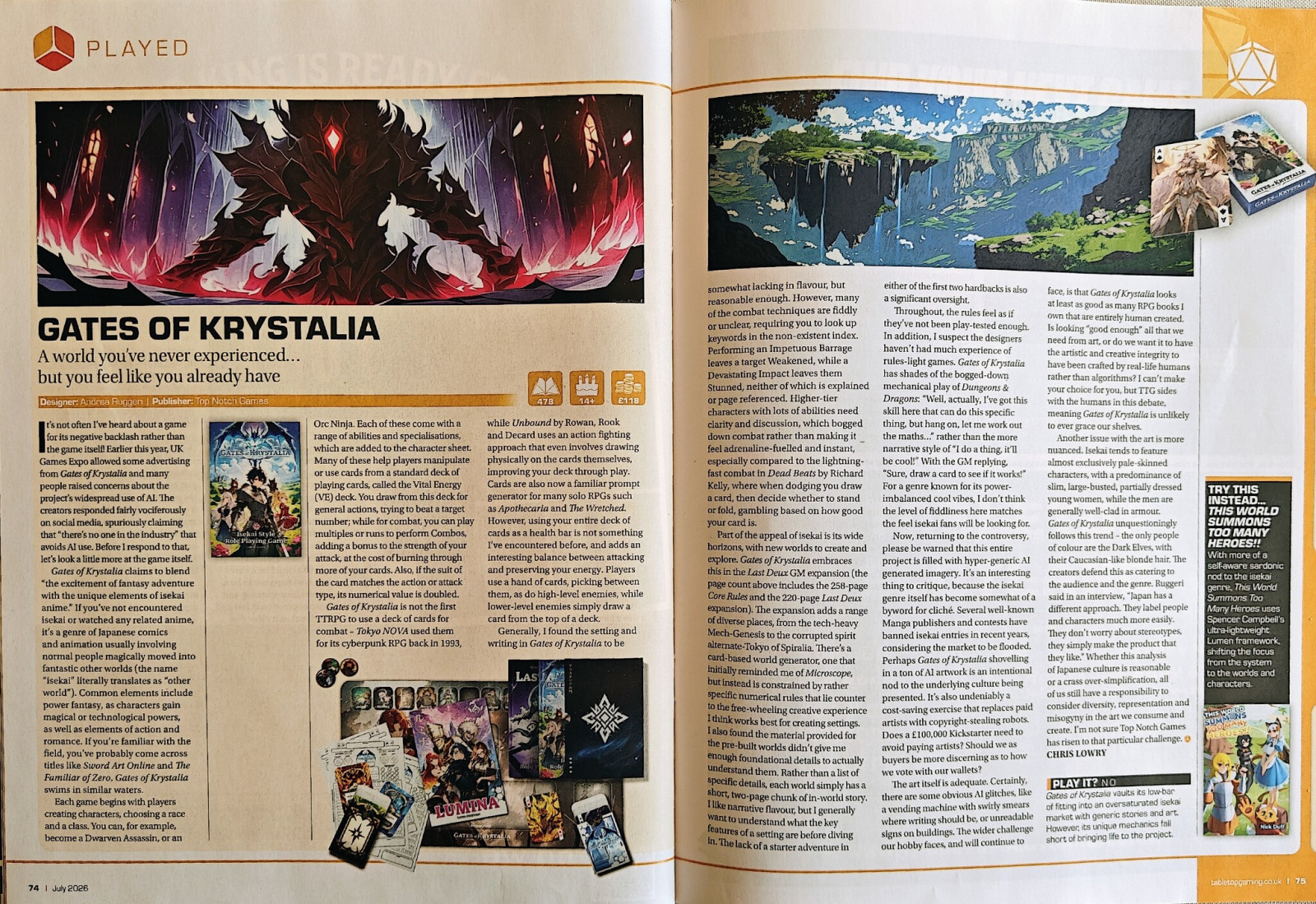
Now, returning to the controversy, please be warned that this entire project is filled with hyper-generic AI generated imagery. It’s an interesting thing to critique, because the isekai genre itself has become somewhat of a byword for cliché. Several well-known Manga publishers and contests have literally banned isekai entries in recent years, considering the market to be flooded. Perhaps Gates of Krystalia shovelling in a ton of AI artwork is an intentional nod to the underlying culture being presented; it’s also undeniably a cost-saving exercise that replaces paid artists with copyright-stealing robots. Does a £100,000 Kickstarter really need to avoid paying artists? Should we as buyers be more discerning as to how we vote with our wallets?
The art itself is adequate; certainly there are some obvious AI glitches; like a vending machine with swirly smears where writing should be, or unreadable signs on buildings. The wider challenge our hobby faces, and will continue to face, is that Gates of Krystalia looks at least as good as many RPG books I own that have been entirely human created. Is looking “good enough” all that we need from art, or do we want it to have the artistic and creative integrity to have been crafted by real-life humans rather than algorithms? I can’t make your choice for you, but TTG’s official policy continues to be that we are entirely against use of AI for art and writing; for this reason alone, Gates of Krystalia is not something I would choose to own.
Another issue with the art here is a more nuanced one; isekai tends to feature almost exclusively pale skinned characters, with an predominance of slim, large-busted, partially dressed young women, whilst the men are generally well-clad in armour. Gates of Krystalia unquestioningly follows this trend—even the only people of colour, the Dark Elves, still have Caucasian appearing blonde hair. The creators defend this as catering to the audience and the genre. Ruggeri said in an interview, “Japan has a different approach. They label people and characters much more easily. They don’t worry about stereotypes, they simply make the product that they like”. Whether this analysis of Japanese culture is reasonable or a crass over-simplification, all of us still have a responsibility to consider diversity, representation and misogyny in the art we consume and create: I’m not sure Top Notch have risen to that particular challenge.
PLAY IT? NO
Gates of Krystalia achieves its goal of fitting into an isekai market oversaturated with generic stories and art. It couples that with some unique mechanics that fall short of bringing life to the project.
 TRY THIS INSTEAD: This World Summons Too Many Heroes…
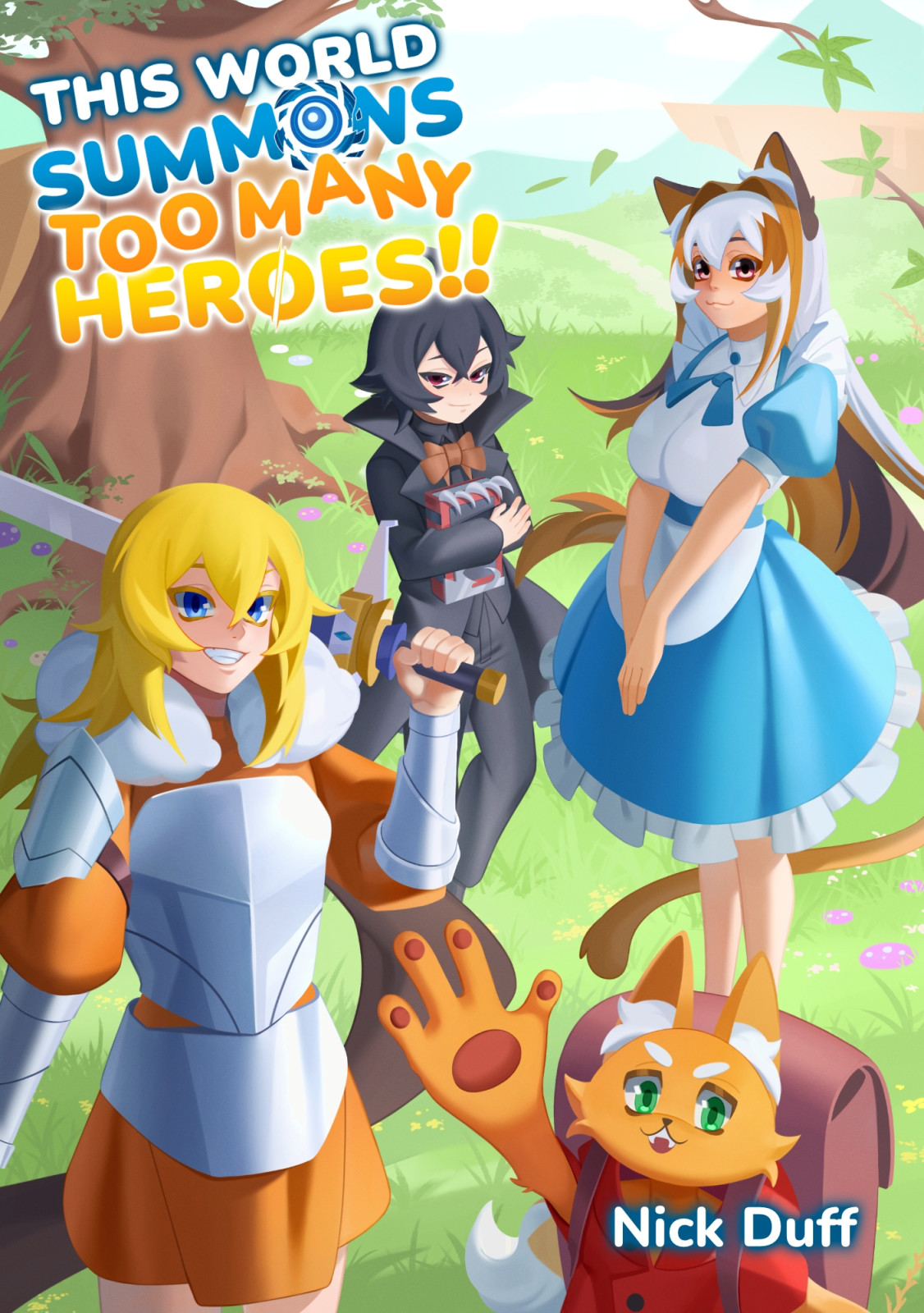
…with more of a self-aware sardonic nod to towards the isekai genre, This World Summons Too Many Heroes uses Spencer Campbell’s ultra lightweight Lumen framework, taking the focus off the system and onto the worlds and characters created around the table.
| About Gates of Krystalia | |
|---|---|
| Designer | Andrea Ruggeri |
| Publisher | Top Notch Games |
| Playcount | 2-5 |
| Age | 14+ |
| Price | £118 |
| Contents | - Gates of Krystalia - Core Rulebook - The Last Deux - GM Guide - VE Card Deck - Core + Deux Combat Deck |
| Rating | No |
A review written for Tabletop Gaming Magazine. Magazine page copyright to TTG Magazine 2026.