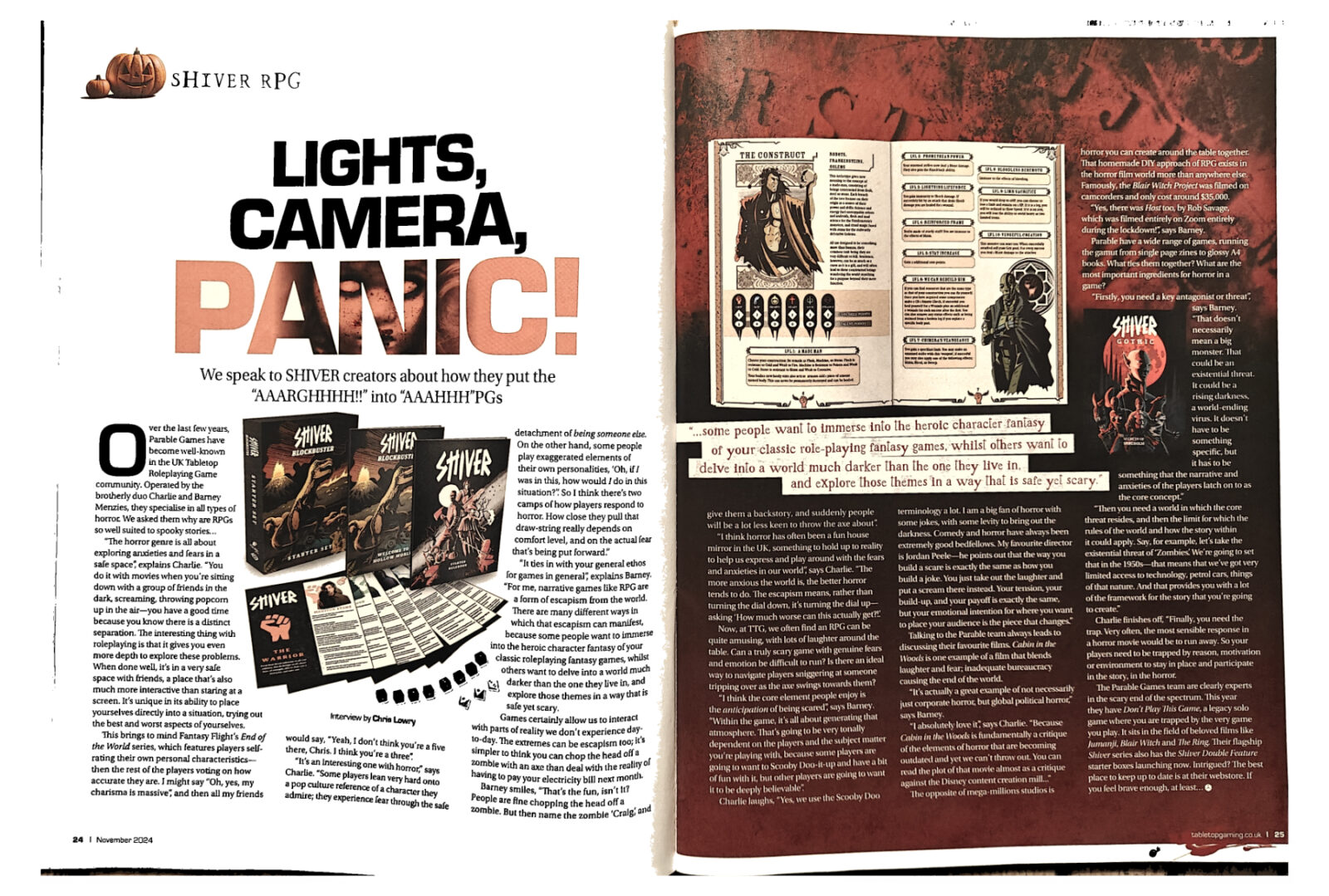
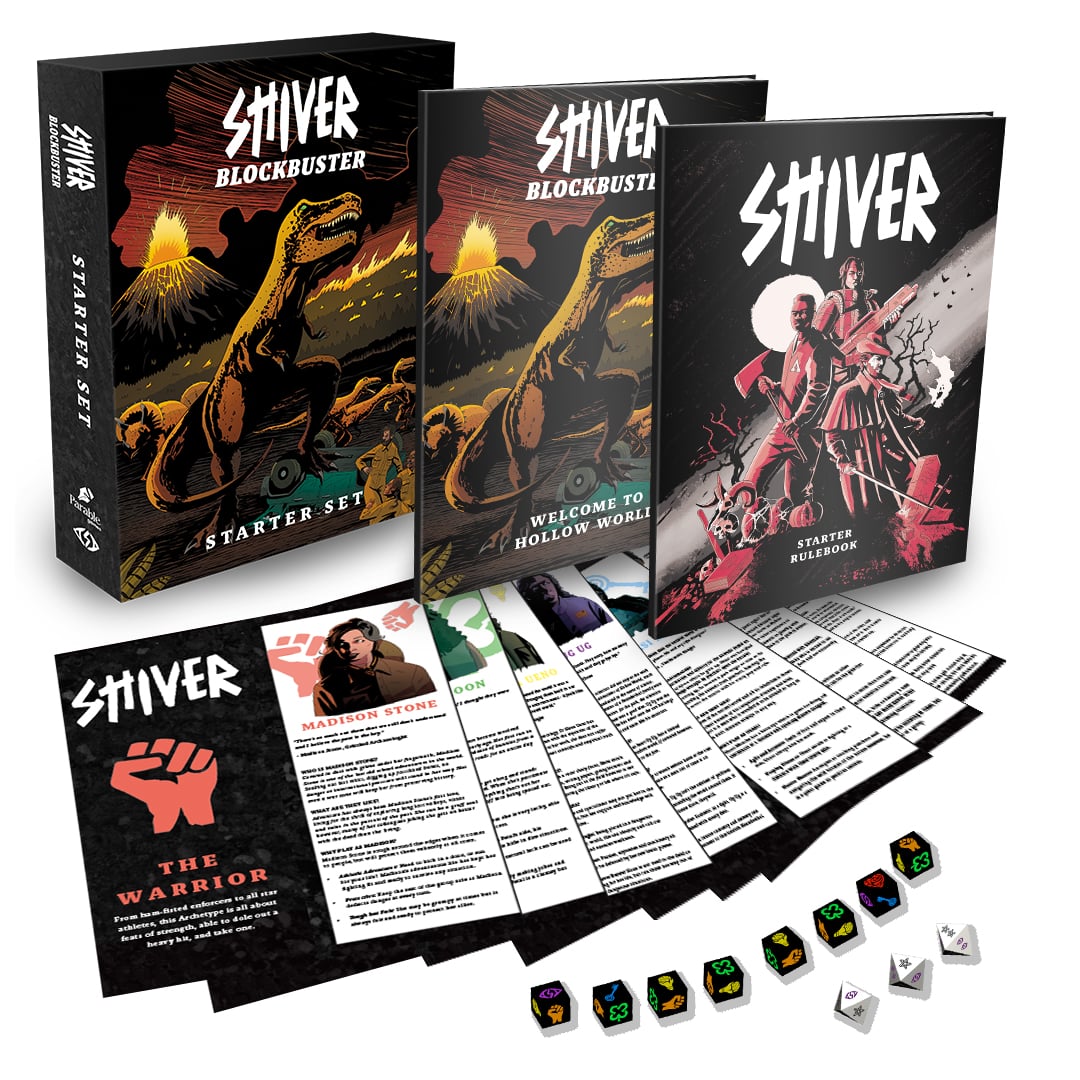
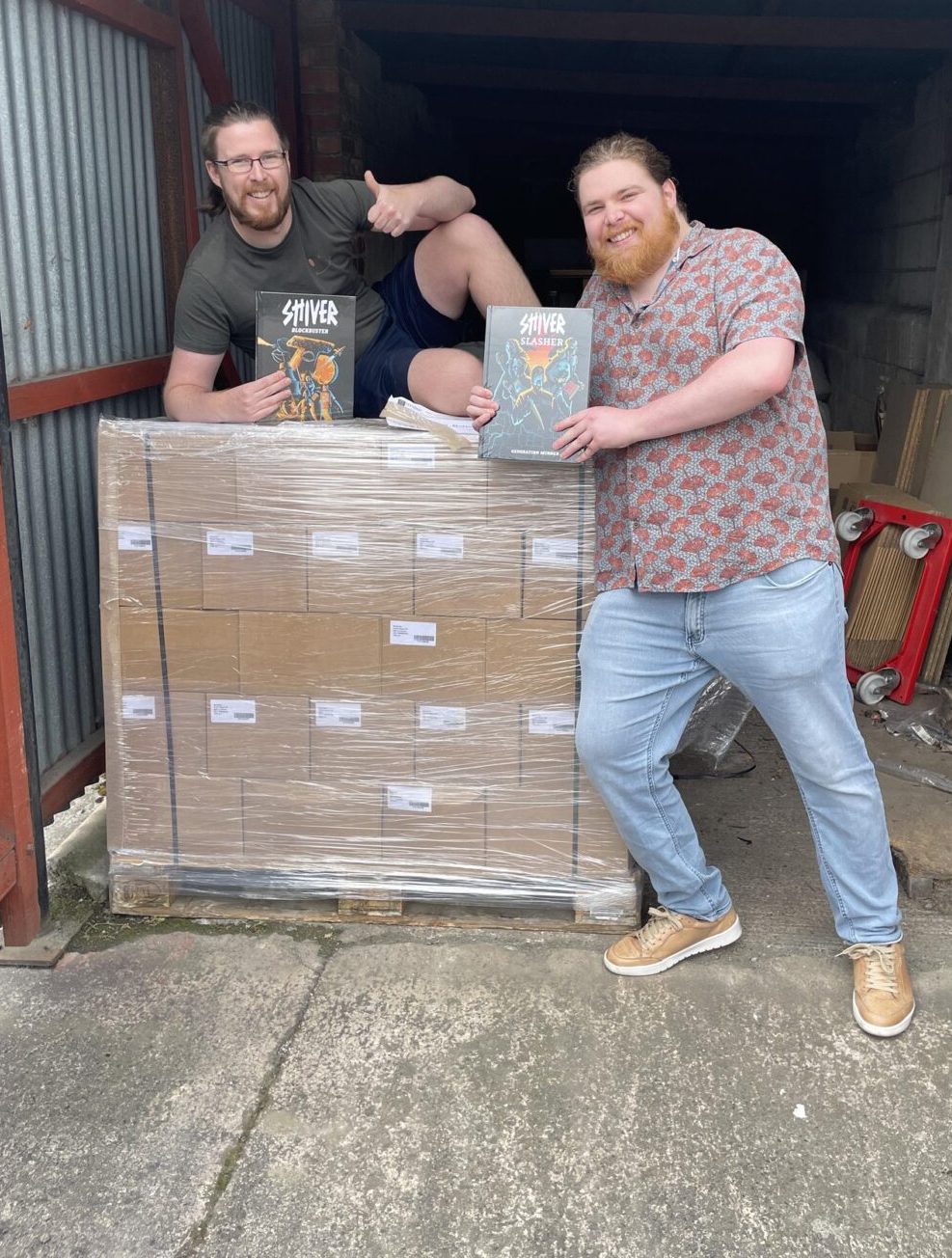
 Over the last few years, Parable Games have become well known in the UK Tabletop Roleplay Game community. Operated by brotherly duo Charlie and Barney Menzies, they specialise in all types of horror. We asked them why are RPGs are so well suited to spooky stories…
“The horror genre is all about exploring anxieties and fears in a safe space”, explains Charlie. “You do it with movies when you’re sitting down with a group of friends in the dark, screaming, throwing popcorn up in the air—you have a good time because you know there is a distinct separation. The interesting thing with roleplaying is that it gives you even more depth to explore these problems. When done well, it’s in a very safe space with friends, a place that’s also much more interactive than staring at a screen. It’s unique in its ability to place yourselves directly into a situation, trying out the best and worst aspects of yourselves.
This brings to mind Fantasy Flight’s End of the World series, which features players self rating their own personal characteristics—then the rest of the players voting on how accurate they are. I might say “Oh, yes, my charisma is massive”, and then all my friends would say, “Yeah, I don’t think you’re a five there, Chris. I think you’re a three”.
“It’s an interesting one with horror,” says Charlie. “Some players lean very hard onto a pop culture reference of a character they admire; they experience fear through the safe detachment of being someone else. On the other hand, some people play exaggerated elements of their own personalities, ‘Oh, if I was in this, how would I do in this situation?”. So I think there’s two camps of how players respond to horror. How close they pull that draw-string really depends on comfort level, and on the actual fear that’s being put forward.”
“It ties in with your general ethos for games in general”, explains Barney. “For me, narrative games like RPG are a form of escapism from the world. There are many different ways in which that escapism can manifest, because some people want to immerse into the heroic character fantasy of your classic role-playing fantasy games, whilst others want to delve into a world much darker than the one they live in, and explore those themes in a way that is safe yet scary.
Games certainly allow us to interact with parts of reality we don’t experience day-to-day. The extremes can be escapism too; it’s simpler to think you can chop the head off a zombie with an axe than deal with the reality of having to pay your electricity bill next month.
Barney smiles, “That’s the fun, isn’t it? People are fine chopping the head off a zombie. But then name the zombie ‘Craig’, and give them a backstory, and suddenly people will be a lot less keen to throw the axe about”.
“I think horror has often been a fun house mirror in the UK, something to hold up to reality to help us express and play around with the fears and anxieties in our world”, says Charlie. “The more anxious the world is, the better horror tends to do. The escapism means, rather than turning the dial down, it’s turning the dial up—asking ‘How much worse can this actually get?!’.
Now, at TTG, we often find RPG is quite amusing, with lots of laughter around the table. Can a truly scary game with genuine fears and emotion be difficult to run? Is there an ideal way to navigate players sniggering at someone tripping over as the axe swings towards them?
“I think the core element people enjoy is the anticipation of being scared”, says Barney. “Within the game, it’s thus all about generating that atmosphere. That’s going to be very tonally dependent on the players and the subject matter you’re playing with, because some players are going to want to Scooby Doo-it-up and have a bit of fun with it, but other players are going to want it to be deeply believable”.
Charlie laughs, “Yes, we use the Scooby Doo terminology a lot. I am a big fan of horror with some jokes, with some levity to bring out the darkness. Comedy and horror have always been extremely good bedfellows. My favourite director is Jordan Peele—he points out that the way you build a scare is exactly the same as how you build a joke. You just take out the laughter and put a scream there instead. Your tension, your build-up, and your payoff is exactly the same, but your emotional intention for where you want to place your audience is the piece that changes.”
Talking to the Parable team always leads to discussing their favourite films. Cabin in the Woods is one example of a film that blends laughter and fear; inadequate bureaucracy causing the end of the world.
“It’s actually a great example of not necessarily just corporate horror, but global political horror,” says Barney.
“I absolutely love it”, says Charlie. “Because Cabin in the Woods is fundamentally a critique of the elements of horror that are becoming outdated and yet we can’t throw out. You can read the plot of that movie almost as a critique against the Disney content creation mill…”
The opposite of mega-millions studios is horror you can create around the table together. That homemade DIY approach of RPG exists in the horror film world more than anywhere else. Famously, the Blair Witch Project was filmed on camcorders and only cost around $35,000.
“Yes, there was Host too, by Rob Savage, which was filmed entirely on Zoom entirely during the lockdown!”, says Barney.
Parable have a wide range of games, running the gamut from single page zines to glossy A4 books. What ties them together? What are the most important ingredients for horror in a game?
“Firstly, you need a key antagonist or threat”, says Barney. “That doesn’t necessarily mean a big monster. That could be an existential threat. It could be a rising darkness, a world-ending virus. It doesn’t have to be something specific, but it has to be something that the narrative and anxieties of the players latch on to as the core concept.”
“Then you need a world in which the core threat resides, and then the limit for which the rules of the world and how the story within it could apply. Say, for example, let’s take the existential threat of ‘Zombies’. We’re going to set that in the 1950s—that means that we’ve got very limited access to technology, petrol cars, things of that nature. And that provides you with a lot of the framework for the story that you’re going to create.”
Charlie finishes off, “Finally, you need the trap. Very often, the most sensible response in a horror movie would be to run away. So your players need to be trapped by reason, motivation or environment to stay in place and participate in the story, in the horror.
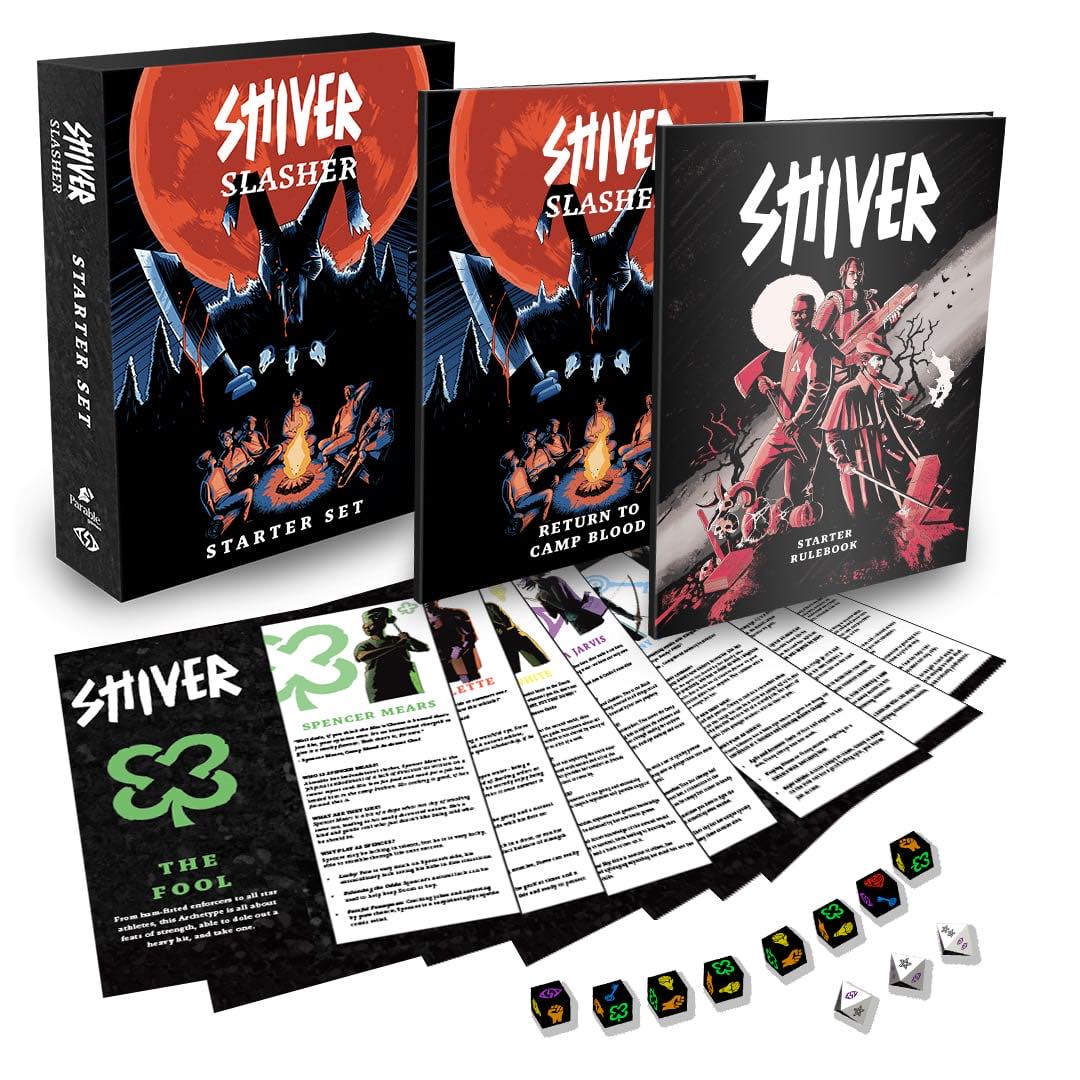
The Parable Games team are clearly experts in the scary end of the spectrum. This year they have Don’t Play This Game, a legacy solo game where you are trapped by the very game you play. It sits in the field of beloved films like Jumanji, Blair Witch and The Ring. Their flagship Shiver series also has the Shiver Double Feature starter boxes launching now. Intrigued? The best place to keep up to date is at their webstore over at ParableGames.co.uk. If you feel brave enough, at least…