
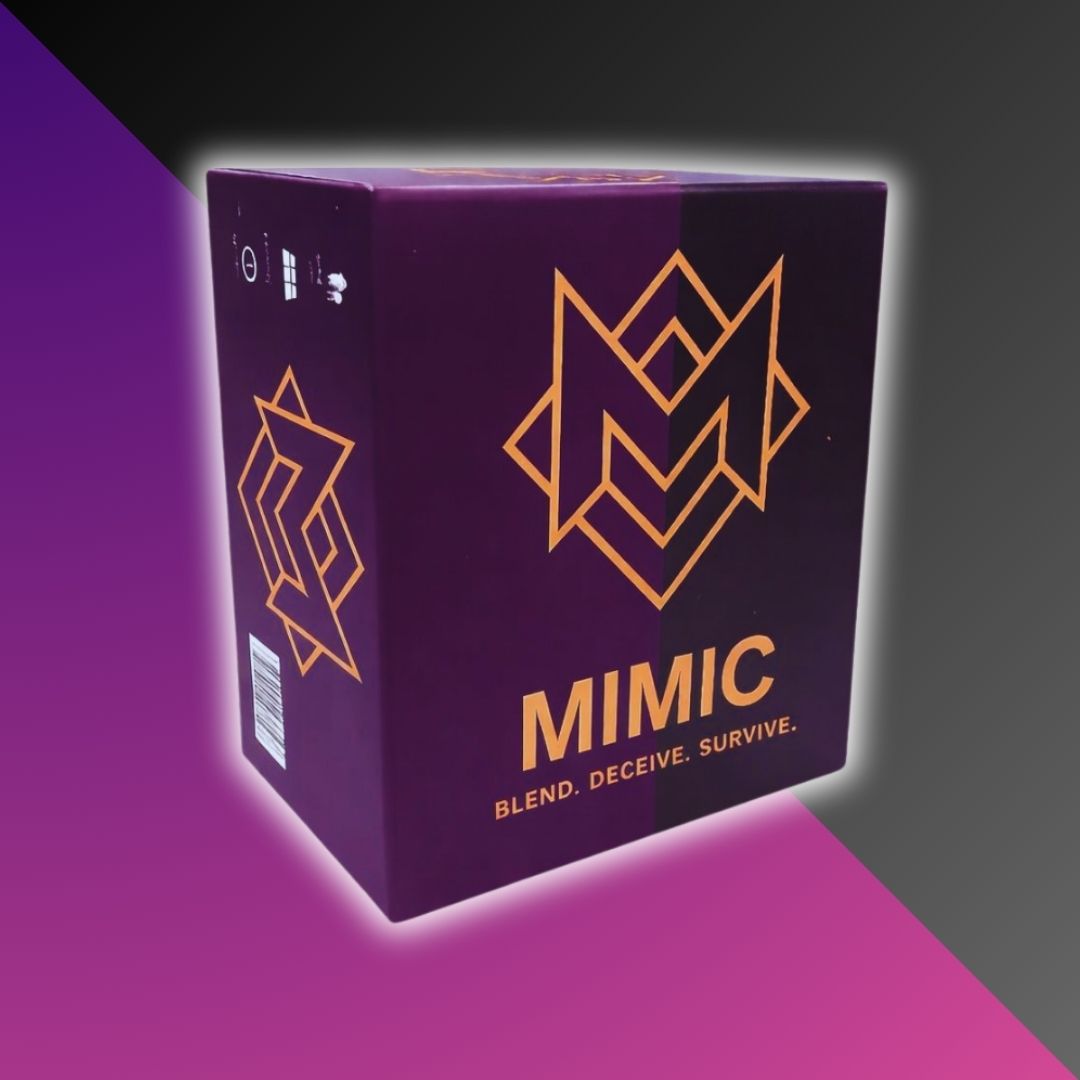
 Mimic is a social deduction game about locations and hidden identity. One player is a Mimic, trying to hide in an unknown place, pretending to be there whilst the other players try to hunt them down.
To start with, every player is given a location card. The locations are places like “Mountain” or “Circus”, and every player except one will receive the same one. That one player, randomly and secretly, gets a card that simply says “Mimic”; thus they alone don’t actually know where the group is currently located.
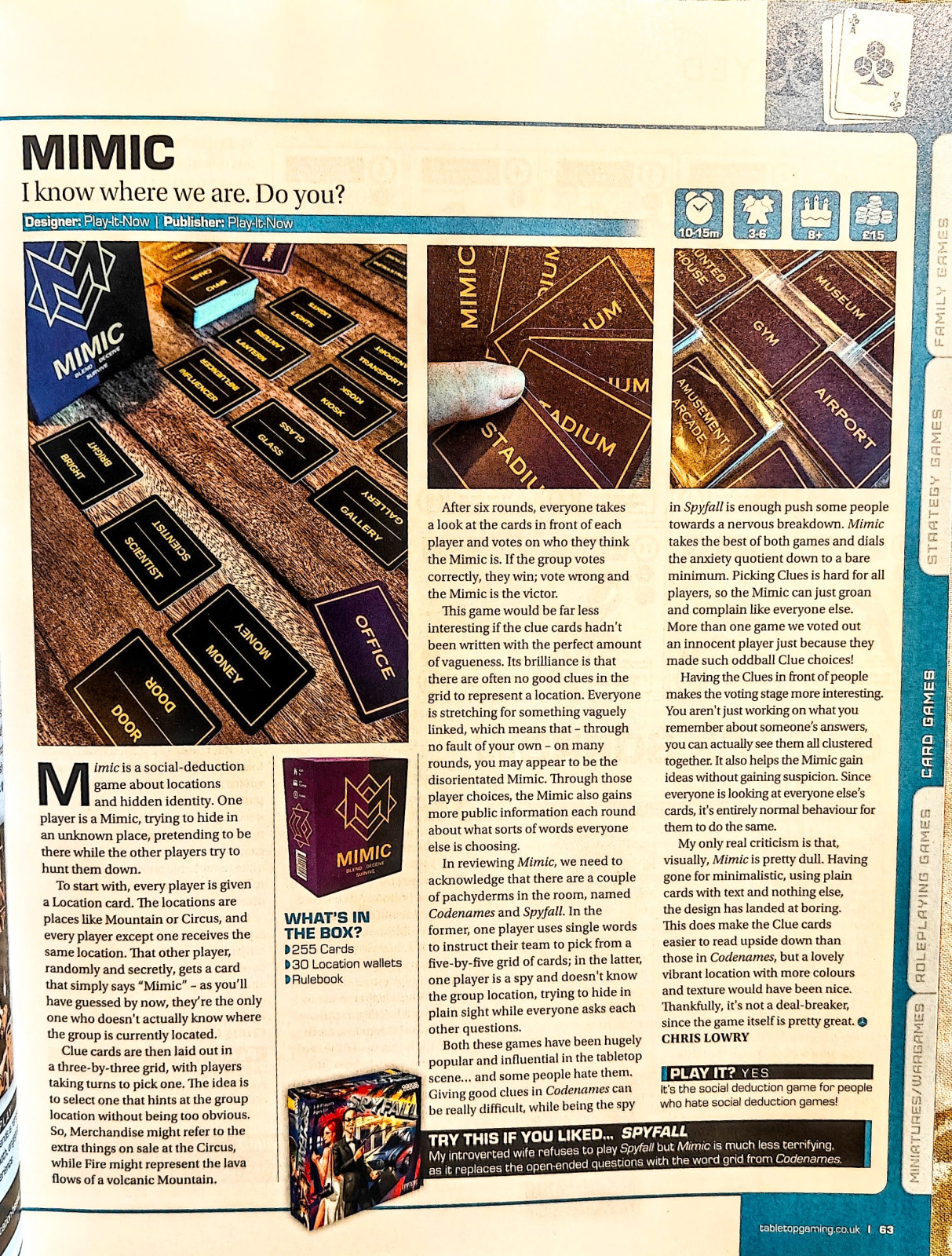
Clue cards are then laid out in a three-by-three grid, with players taking turns to pick one. The idea is to select one that hints at the group location without being too obvious. Thus “Merchandise” might refer to the extra things on sale at the Circus, or “Fire” might represent the lava flows of a volcanic Mountain.
After six rounds, everyone takes a look at the cards in front of each player and votes on who they think the Mimic is. If the group votes correctly they win, vote wrong and the Mimic is the victor.
Now, this game would be far less good if they clue cards hadn’t been written with the perfect amount of vagueness. The brilliance is that there’s often literally no good clues in the grid to represent a location. Everyone is stretching for something vaguely linked, which means that—through no fault of your own—on many rounds you may appear to be the disorientated Mimic. The Mimic also gains more public information each round about what sorts of words everyone else is choosing.
Now, in reviewing Mimic, we need to acknowledge that there’s an elephant in the room; in fact there’s two pachyderms, named Codenames and Spyfall. In the former, one player is using single words to instruct their team to pick from a five-by-five grid of cards; in the latter, one player is a spy and doesn’t know the group location, trying to hide in plain sight whilst everyone asks each other questions.
Both these games have been hugely popular and influential in the tabletop scene… and some people hate them. Giving good clues in Codenames is really difficult work, whilst being the spy in Spyfall could be enough to cause a nervous breakdown for some people.
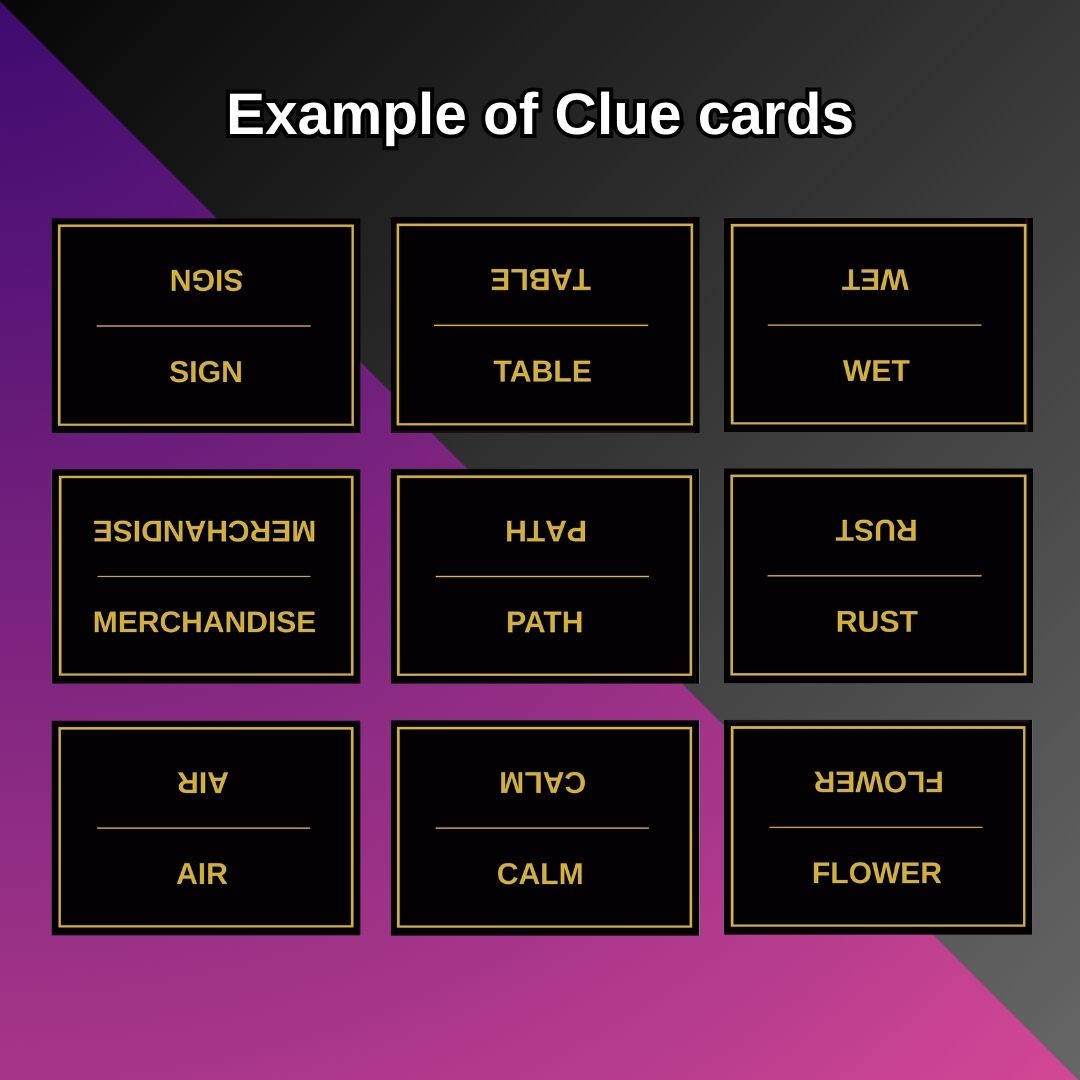 Mimic takes the best of both games and dials the anxiety quotient down to a bare minimum. Picking clues is hard for all players, so the Mimic can just groan and complain like everyone else. More than one game we’ve voted out an innocent player just because they’d made such oddball clue choices!
Having the clues down in front of people makes the voting stage more interesting; you aren’t just working on what you remember of answers but can see them all clustered together. It also helps the Mimic gain ideas without gaining suspicion; everyone is looking at everyone else’s cards, it’s entirely normal behaviour.
My only real criticism is that, visually, Mimic is pretty dull. They may have gone for “minimalistic”, but they landed in “boring”. Plain cards with text and nothing else. The clue cards are actually easier to read upside down than those in Codenames, but lovely vibrant location with more colours and texture would have been nice. It’s not a deal-breaker but it doesn’t make me excited to open up the box, even though the game itself is pretty great.
PLAY IT? YES
Is this the social deduction game for people who hate social deduction games? I think it may be.
 TRY THIS IF YOU liked Spyfall…
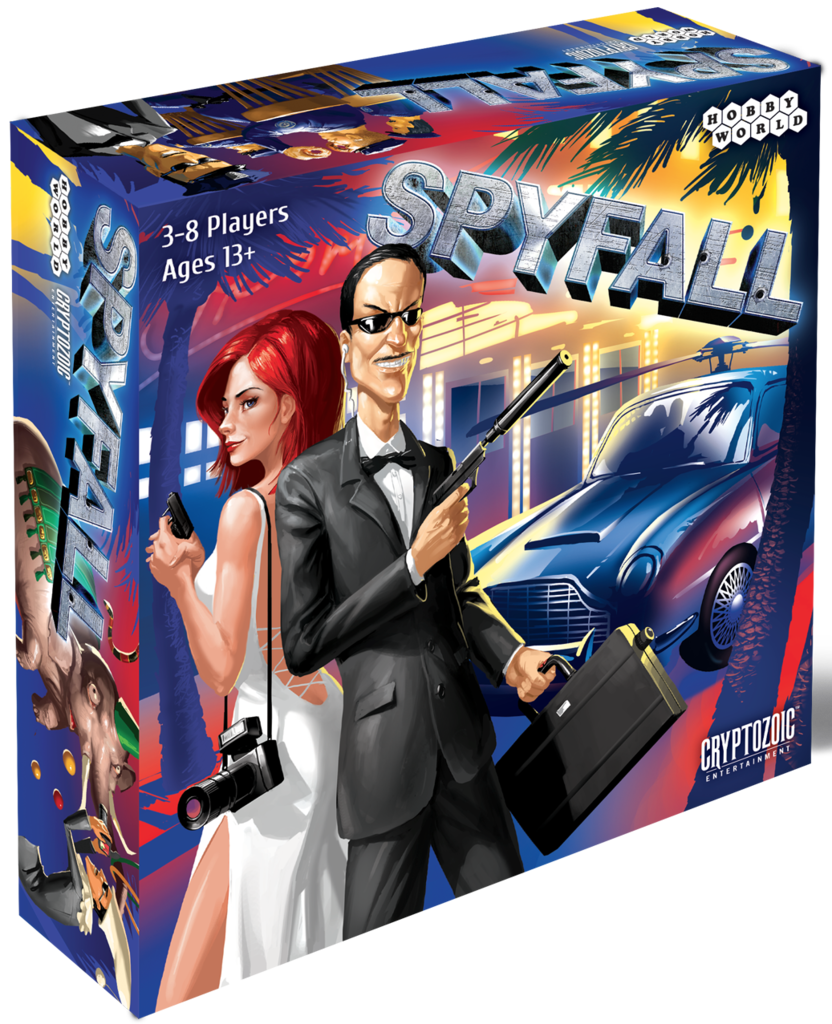
…Mimic replaces the open-ended questions of Spyfall with the word grid from Codenames. My introverted wife refuses to play Spyfall, but Mimic is much less terrifying!
| About Mimic | |
|---|---|
| Designer | Play-It-Now |
| Publisher | Play-It-Now |
| Playcount | 3-6 |
| Age | 8+ |
| Price | £15 |
| Contents | - 255 cards - 30 plastic location wallets - Rulebook |
| Rating | Yes |
A review written for Tabletop Gaming Magazine. Magazine page copyright to TTG Magazine 2026.