
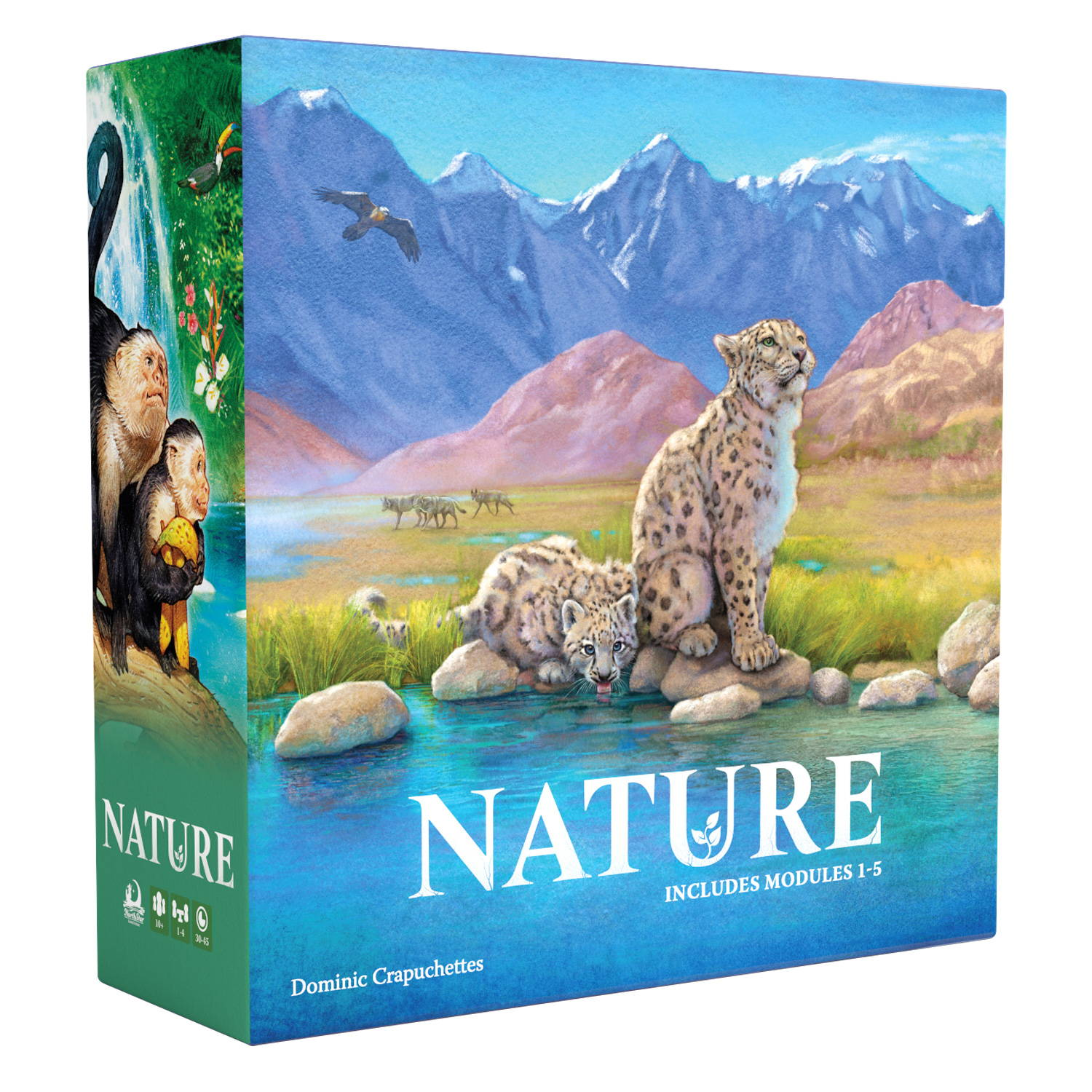
 NorthStar Game Studio has been messing around with evolution for a decade now—no, they don’t have some kind of Frankensteinian laboratory somewhere, full of lightning and body parts—I’m referring to their award-winning Evolution series of games.
The entire series is based on a similar concept; players must adapt species to outcompete others for food. By adding various characteristics such as “Fast” or “Sharp claws”, a species might gain an advantage over others, gaining in population, eating more food, or, if they become carnivorous, eating other species.
It’s an enticing hook that has served them through four versions; Evolution in 2014, standalone Evolution:Climate in 2016, Oceans in 2020 and now Nature, currently on Kickstarter for a 2025 release.
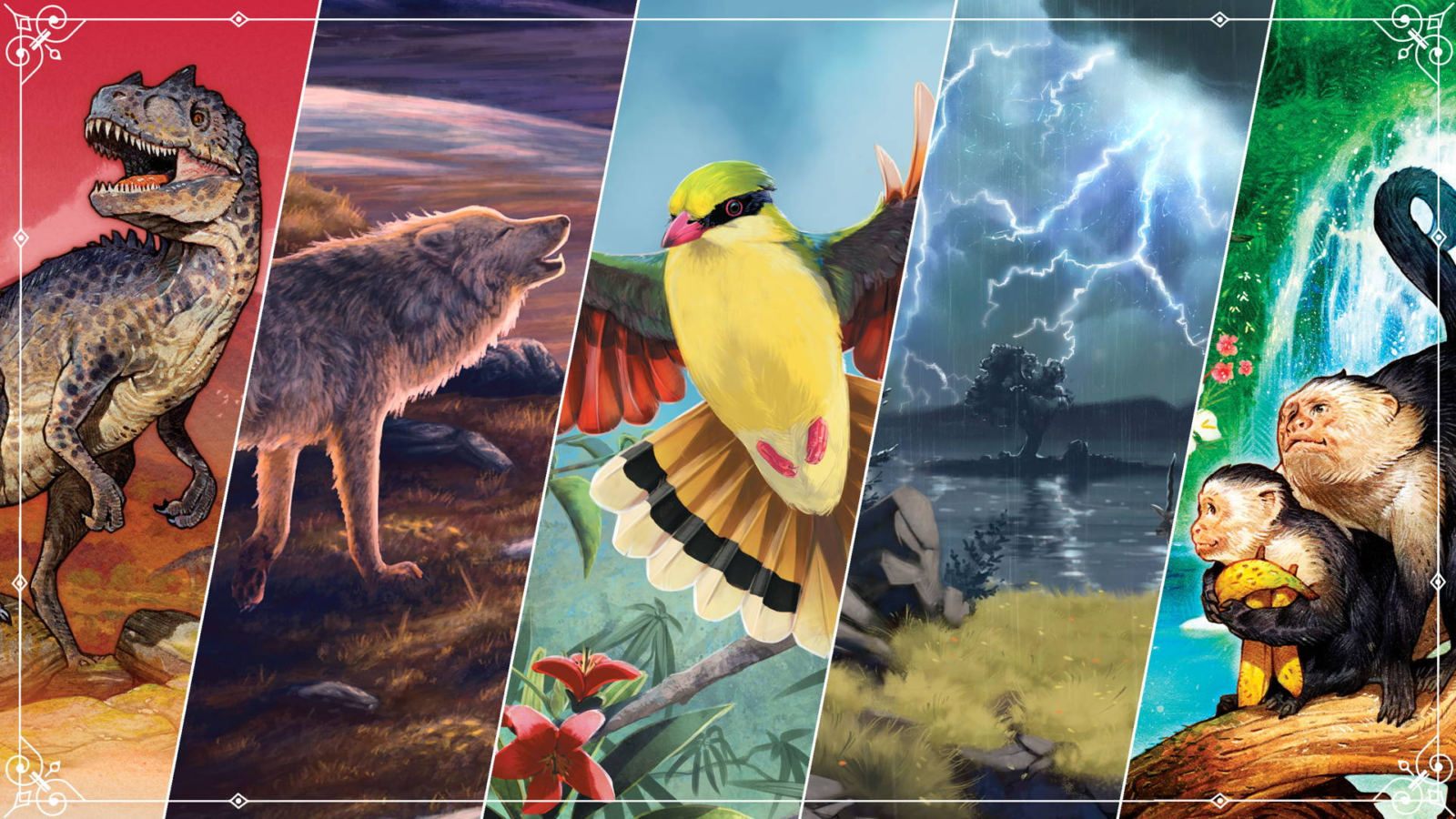
Each game takes a different approach, with Evolution having the feel of a harsh card battler, Climate adding in an environment that acts a little like an additional enemy that everyone needs to face and Oceans having engine building and puzzle vibes. Nature, built on 12 years of designer Dominic Crapuchettes’ immersion in these themes and mechanics, is both the simplest in the series, and the one with the broadest plans for expansion.
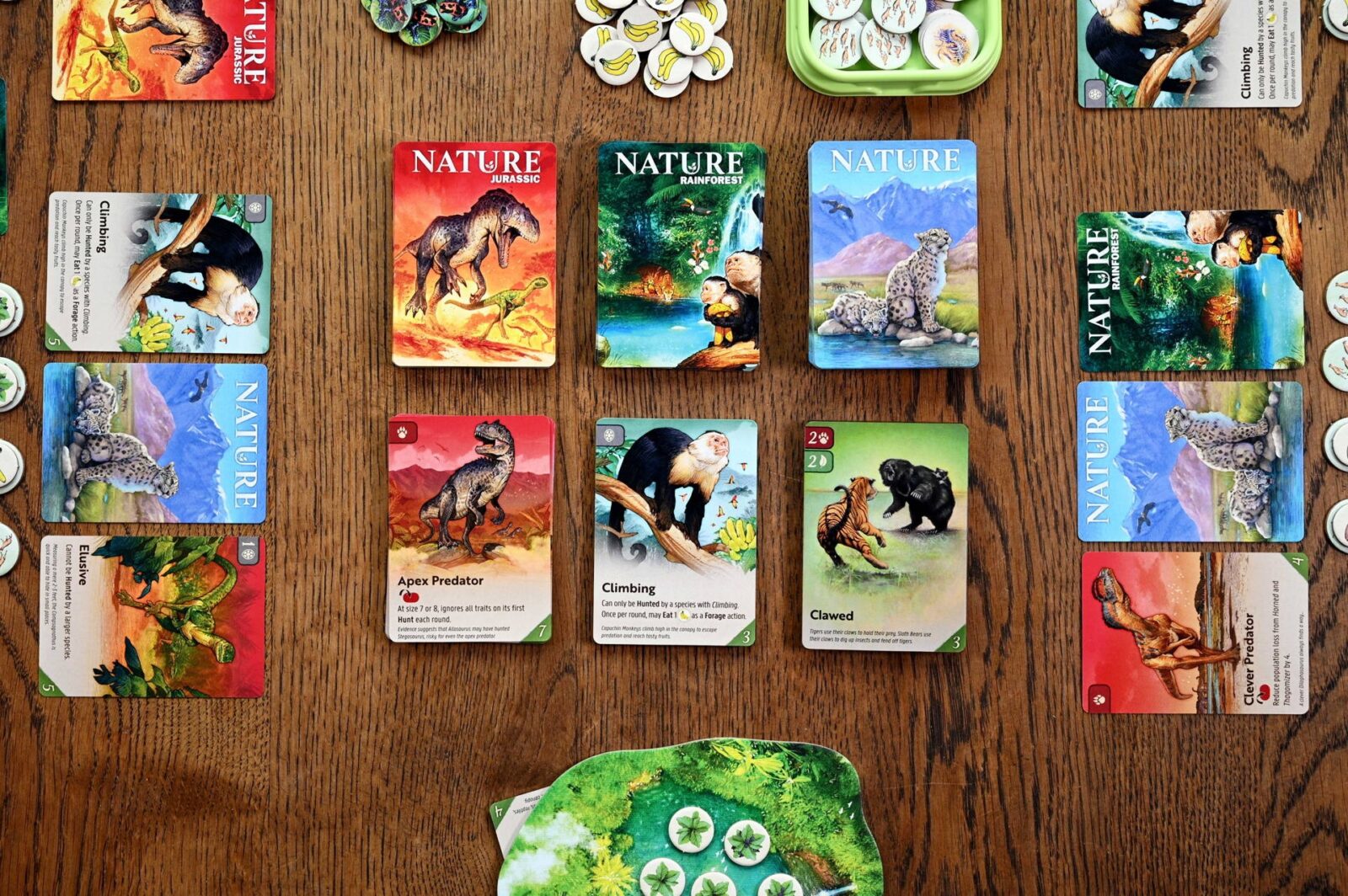 “The core game is a simple and inviting gateway,” explains Dominic, “But the game system provides an explosion of content when you start mixing and matching the modules. Each new module provides an exponential number of combinations”.
The aim for NorthStar Game Studio is to make this a long term gaming ecosystem that they can build and invest in for years to come. “We will release 1 – 2 modules each year for the next decade. The Climate module and the Disease module will be released in 2026. Other modules in the pipeline include the Sahara Desert, Insects & Bugs, the Nocturnal World, Rivers & Lakes, and Fire Breathing Dragons.”
The various games have seen widespread acclaim, with copies of Evolution used in school and universities in order to teach evolutionary biology to students. Evolution is not the first game to have ended up with an educational approach; famously Monopoly was created as The Landlord’s Game to educate people about the unbalanced evils of capitalism. Dominic reveals “Part of the reason I couldn’t let go of Nature is that I wanted a game that was more appropriate for a classroom setting where most of the students would not be gamers”.
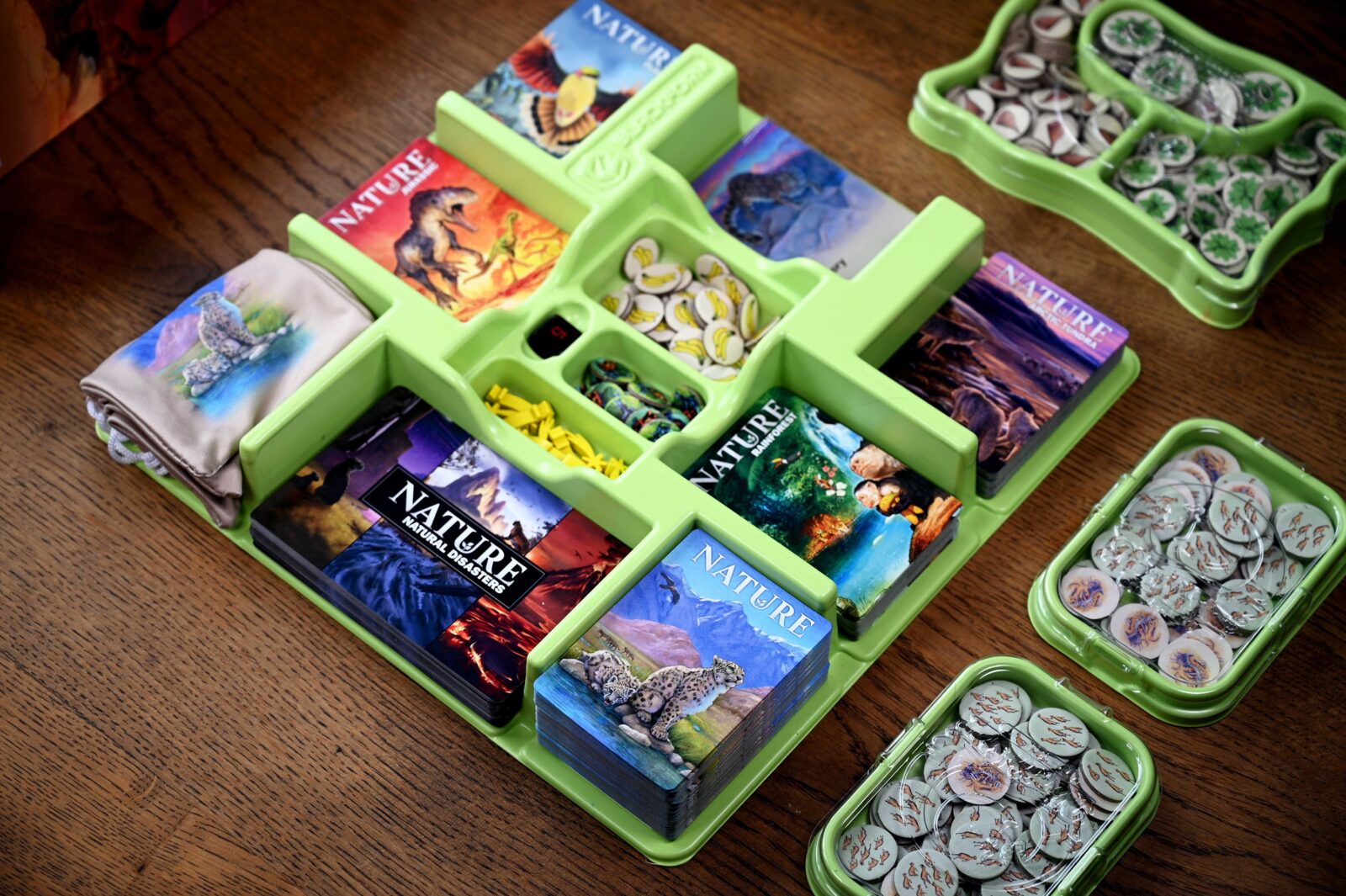 Another feature that will appeal to many is the attempt to produce a game with ecological credentials that respect that same natural world being simulated in-game. Nature features wooden tokens and cardboard pulp container trays for holding components; a first for the industry. The extremely modular design approach also means that players won’t need to buy a huge box full of gubbins; the slimmed down core game has everything needed for satisfying play, which the bigger boxes still exist for the completionists. Fulfillment will be completed from local hubs, further reducing the carbon impact.
Nature is live on Kickstarter as this issue goes to print, with the campaign finishing on the 25th October. The pricing is significantly reduced from the eventual retail cost, so if you’re considering dipping a toe into these primordial waters, what better time to take a look than now?