I am a huge extrovert. Ridiculously so; there’s almost nothing I enjoy more than throwing myself into social situations and getting to know people. I’m aware that this is not the experience of, well, pretty much every other human in the world. I even recently went to London and tried to talk to a stranger on the Tube. I know, right?
Games, thankfully, are a great way to bridge the awkward gap. In my normal life I am a doctor, youth leader and church pastor; in every one of these spheres I’ve found games to be a helpful papering-over-the-gaps of social awkwardness.
 The Ease of the Familiar
The first step to get to know people over the tabletop—and much as I hate to admit this—are games that everyone already knows. There’s a reason that so many people play Monopoly, and that’s because it avoids the mental speed bump of needing to learn how to play. I’m not going to hoist that particular monstrosity on you, but I would encourage you to consider the simplicity of a few rounds of 21 or Pontoon with a normal deck of cards; pulling out a box of dominos—or even a round of the dreaded Uno. I’m not a huge fan of Chess, but I can confirm that it’s a game that most people know without considering themselves “gamers”.
My use of these games is usually as an ice-breaker, relaxed moments around a table where the game is just an excuse to think for a moment about what to say next. It also subtly re-positions non-gamers mindsets; from normal people into considering themselves as “people who play games”.
Cut to the Quick
The next step is something simple, fast and fun; again, the purpose is something non-threatening on the table that allows for instant easy conversation—”oh no, I wanted to go there!” or “I see your strategy here…!”.
Three games are great for this stage: the first being Colt Super Express. In this tiny little boxed game, each player has a little cowboy and four actions cards. Everyone pre-selects three actions in order and then take turns revealing those actions. The pre-programming means you have to guess whether your opponents will shoot, move or climb inside the train. With high player numbers it’s impossible to guess, leading to slapstick moments of players getting shot, standing up and getting shot again. It’s fast, silly, and gets more strategic as players are knocked out; the final showdown is usually climactic and a point of laughter and celebration together. Getting knocked out of the game is easily done and relatively painless; it encourages downtime for chatting and predicting other players actions is just as much fun as playing yourself.
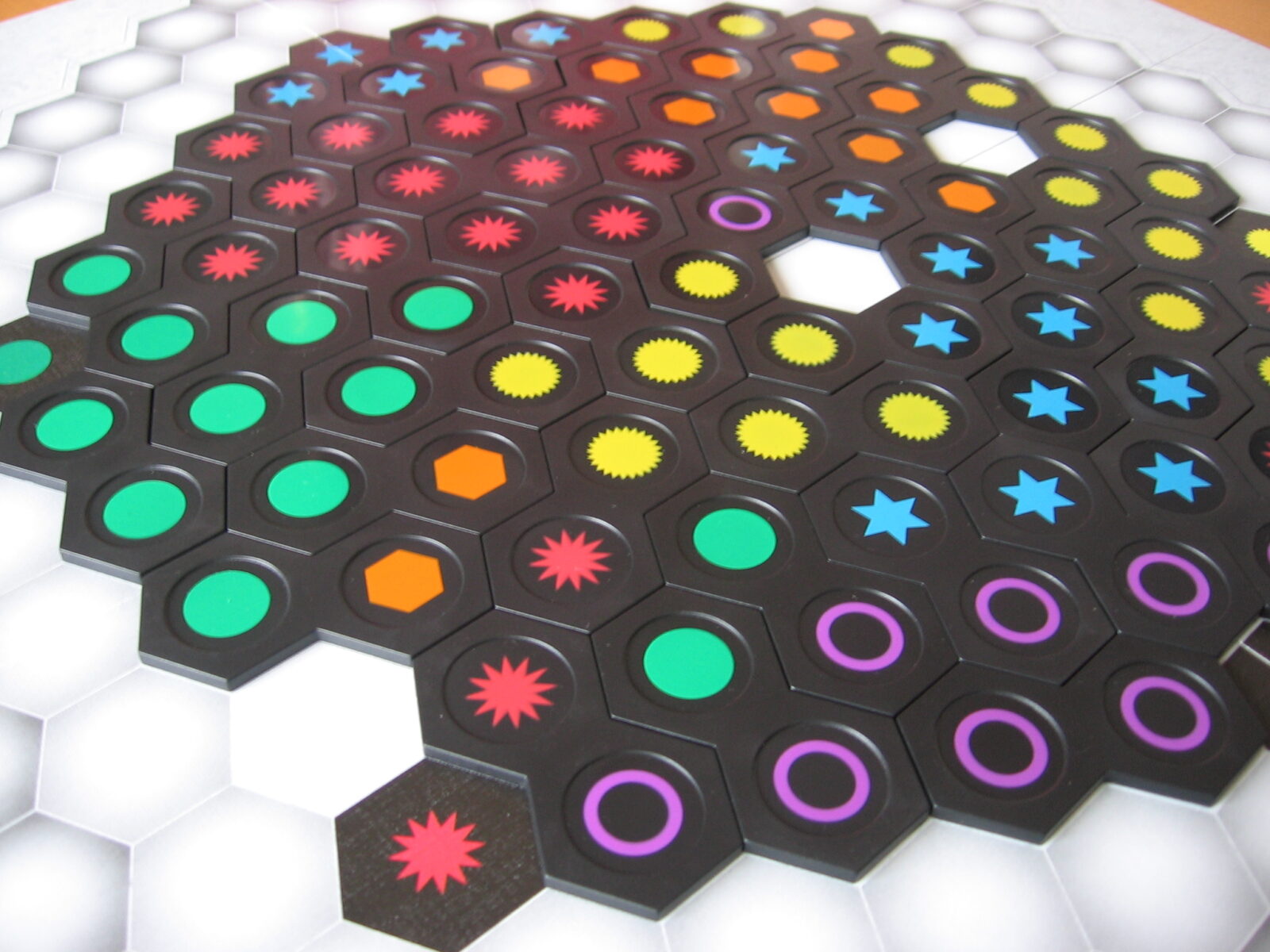
Next up I’d choose Ingenious, a Reiner Knizia game of matching coloured tiles to create lines of matched colour, scoring points and trying not to score lowest in any particular colour. It’s super fun, quick to pick up and language independent. You also have to shout “Ingenious!” when you max out a colour—a lovely way to torture introverts.

Finally I’d use Coup, a social deduction game. Also worth consideration is Love Letter, or, for a slightly longer experience, Citadels. Each of this games involves players taking a hidden role, and bluffing your way through to defeat the others. The former are better for people confident in deceiving each other, the latter one is more straightforward and strategic.
“Oh, no, really?”
Now, you might be surprised by the next (optional) step, but there’s one getting-to-know-people experience that is unparallelled: learning bad games. Hold on, hold on, don’t throw me to the dogs yet; there’s method to my madness…
I once persuaded several friends to take a day off work so that we could play 1880: China. We played for six hours, and then—thanks to some absolutely impenetrable rules—had to abandon the game, since the stock market mechanics had completely fallen apart. A similar experience occurred when we took Posthuman: Saga out of a board game library at UKGE and spent three hours realising it was a terrible game.
The thing is, spending that time with those friends wasn’t a waste. We learnt about the games, we had a degree of fun; but we learnt more about each other, about our tolerances for failure, for bad rules, for when the world doesn’t go right. I’ve played hundreds of games with people, but those two times stand out, and we remember them with laughter, fondness for each other and a groan directed towards the publishers of those two offending titles!
Who are you anyway?
As a roleplay game publisher, it’s hardly surprising that I’d say that an RPG is an excellent way to get to know people better.
I’d start with a one shot, to let people realise they are capable of taking on such a weird concept. Goat Crashers is a one-page game about goats breaking into a party; I’ve played that at a wedding with people who had never played any kind of RPG. All Outta Bubblegum is an equally short and silly game perfect for breaking the ice on car journeys. I recently played R?NIN with a group of teenagers who ended up hiding in a hole in the village and attacking bears; we learnt a lot about each other’s capacity for idiocy and stubbornness during that afternoon. For the roleplay-fearful, I’d suggest Champions of the Wild; arguing about which animals are best at supermarket sweep. It’s not as acting dependent, whilst still giving you a narrative element to hold onto (and debate, viciously).
Going deep into a campaign is a superb reason to have an excuse to spend regular evenings with new friends. Whether screwing together a ramshackled ship to sail the rustling waves in The Wildsea, or exploring the ragged lands of Galgenbeck with your toothless comrades in MÖRK BORG, just meeting regularly, eating food and scheduling together is a great dive into lifelong friendships.
Again and again
My final recommendation is simple: any game, played repeatedly. Whether its Unmatched, Risk or Ticket to Ride, repeat plays with the same group or the same person are the perfect opportunity to grow in your knowledge of a person. Obviously the depth of tactics and richness of the history of your previous games is enjoyable, but there’s more than that.
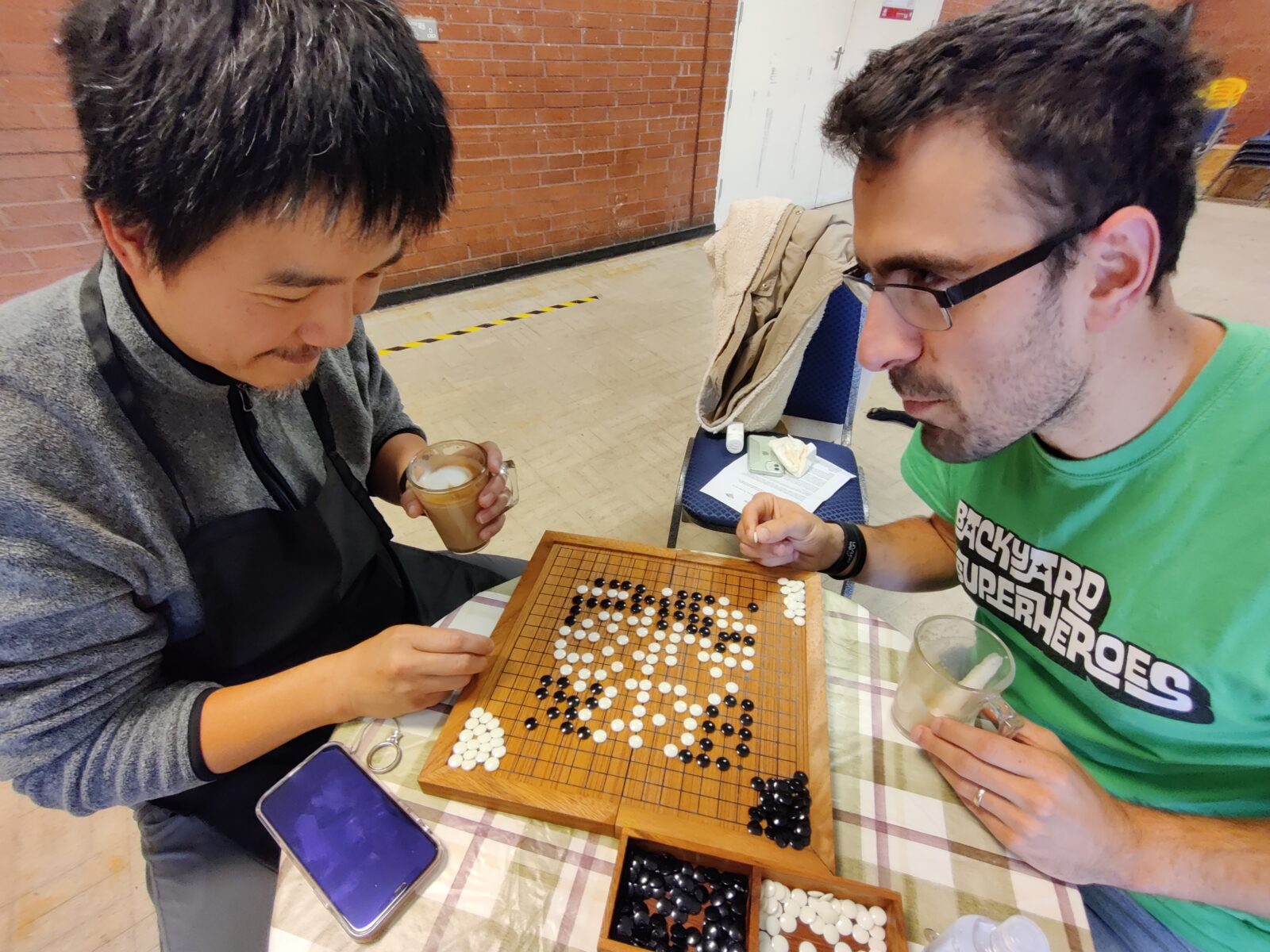 I’ve been playing Go with my friend Vincent for five years now. The game is fun, don’t get me wrong, but it’s the coffee, the chat, and the excuse to make space for life that the game gives us that I really value.
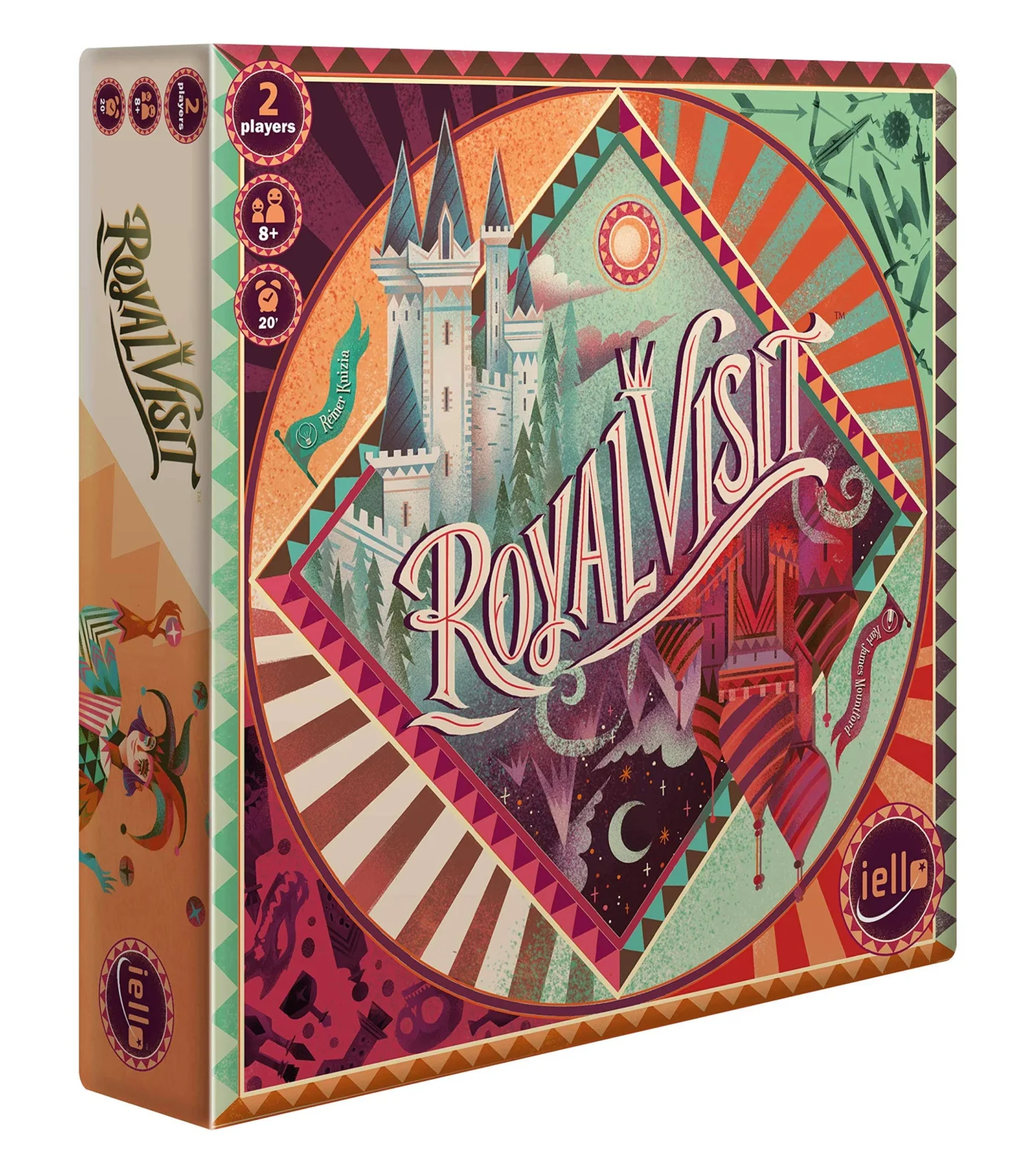
You should do it too! Why not pick up a copy of Royal Visit, and ask someone if they’d like to play with you once a month. You’ll get to play a great game, and make a new friend on the way.