
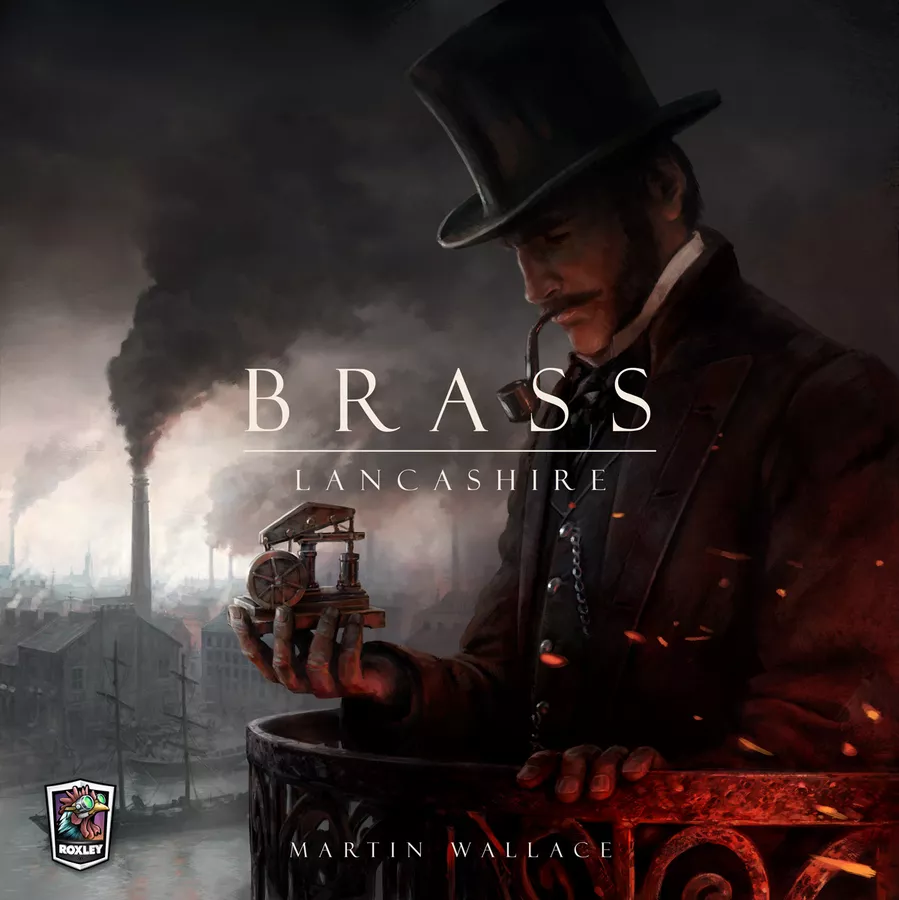
Brass: Lancashire is a re-mastered version of the 2007 game Brass. Set in the heart of Northern England’s industrial revolution, players compete to be the most successful cotton entrepreneur. In a cut-throat map-based economic battle, players sprawl a network of canals, railways and industries across the map, aiming to have the most successful empire after 100 years.
The game is split into two eras; firstly the canal era, with transport via watercourse the only option; followed by the rail era where a wider range of adaptable train lines can be used, but at a cost of burning coal. And if the nearest coal mine happens belongs to your opponent? That’s a shame, you’ve accidentally helped them whilst helping yourself!
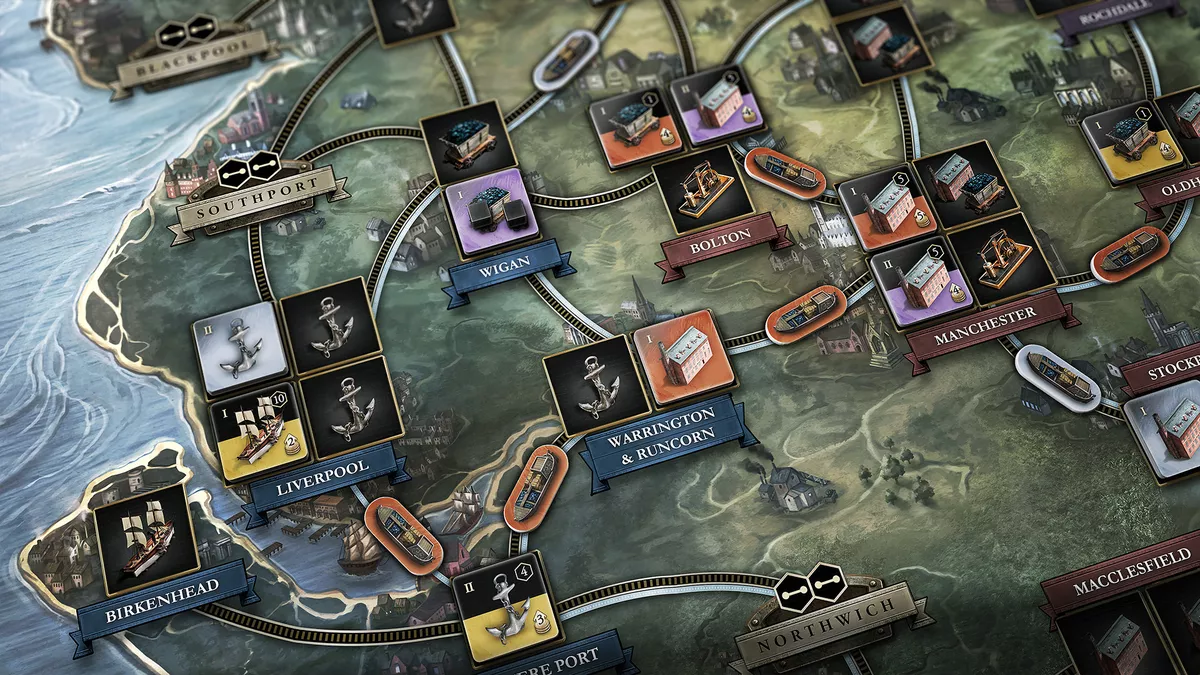
Space on the map is intentionally limited for both transport and factories, meaning that players must work, begrudgingly together, transporting one another’s goods, and reliant on the very competitors they are trying to defeat. Victory points are scored at the end of the each era, based on transport links, and on which of your industry tiles have been “flipped”. Flipped industries have been activated, releasing their goods, and producing an income. At the end of each era, only those tiles that have been flipped are scored—so if you’ve built a gorgeous level IV cotton mill, but failed to actually use it, you won’t be getting any victory points for it.
Brass: Lancashire is a medium-to-heavy game, often lasting two to three hours. It involves a significant amount of game-state analysis; choosing whether to build a railway here, or invest in a shipyard there. Will you take a bank loan now when the costs are lower, or wait until you really need it, but at a higher price? Do you “develop”, to improve the tiles you can place in future, or just get some lesser tiles down onto the board instead? The game thus risks being bogged down with analysis paralysis; even playing and reacting to events on gut instinct remains a valid approach.
Ultimately, at the core of Brass: Lancashire, and the reason for its success, is player interaction. This is not a solo, point-salad Euro. Whether you’re building key routes so that your friends are forced to either detour or to pay you for the privilege, or anticipating which industries will be most valuable—and where—either way you’ll be wrestling with your friends for the spoils of 1870s Manchester in every game.