
Sometimes you don’t have anyone to play games with. It’s not that you don’t have friends – I can already tell that you are a lovely person who is fun to be around – it’s just that you don’t have someone to game with at this particular moment in time.
We’ve all been there. You send a few messages out, but no one is free tonight. “I can do Tuesday!” comes back, but that’s no good, because today is Wednesday. This actually represents a significant problem, because you rather fancied a board game tonight. Sure you could read a book, watch some TV or… shudder… play a computer game… but that won’t quite scratch the itch. Covering a tabletop with colourful bits of cardboard is its own reward; but you have nobody to share that joy with.
Now, solo games exist, you know that; but you don’t own any! It’s never really appealed quite as much as the latest multi-player marvel. Of course, you have a few of ‘the classics’ – the games that are the hallmark of our hobby. There’s a copy of Settlers of Catan over by the coffee table; you’ve got Camel Up, Castles of Burgundy and Carcassonne on the shelf; there’s Ticket to Ride too, if you can remember which cupboard you put it in. But few of them are built with only one person in mind, right?
Don’t worry. I’m here to tell you that you aren’t alone. I mean, you are. Obviously. We’ve just been talking about that. What I mean is; you aren’t alone in your dilemma. We have all been there. In fact, two or three years ago, we literally all were there. The world was under the grip of COVID lockdowns, and no one was meeting up to play games at all. It was a weird and horrible time, it felt like my universe had imploded, and I hope we never end up there again.
The upside of such universal unhappiness is that an awful lot of board game designer were stuck at home with no one to play with. As a result, they took a look at their own games, and realised there needed to be a way to play them alone. As a result, 2021 was the first year in Board Game Geek’s records where more games were released with a solo mode than without one.
It also meant that the creators of classics – the gateway drugs that pulled many of us into this lifelong addiction – realised that established games could be altered to cater to just one at the table. Lots of publishers released official solo rules; even for games that were first released decades ago. You may not have realised this, but amongst your well-loved gaming shelves hide hundreds of solo-friendly games.
All of this means, hopefully, that you can play something tonight, even if it doesn’t say 1+ players on the box…
 Carcassonne
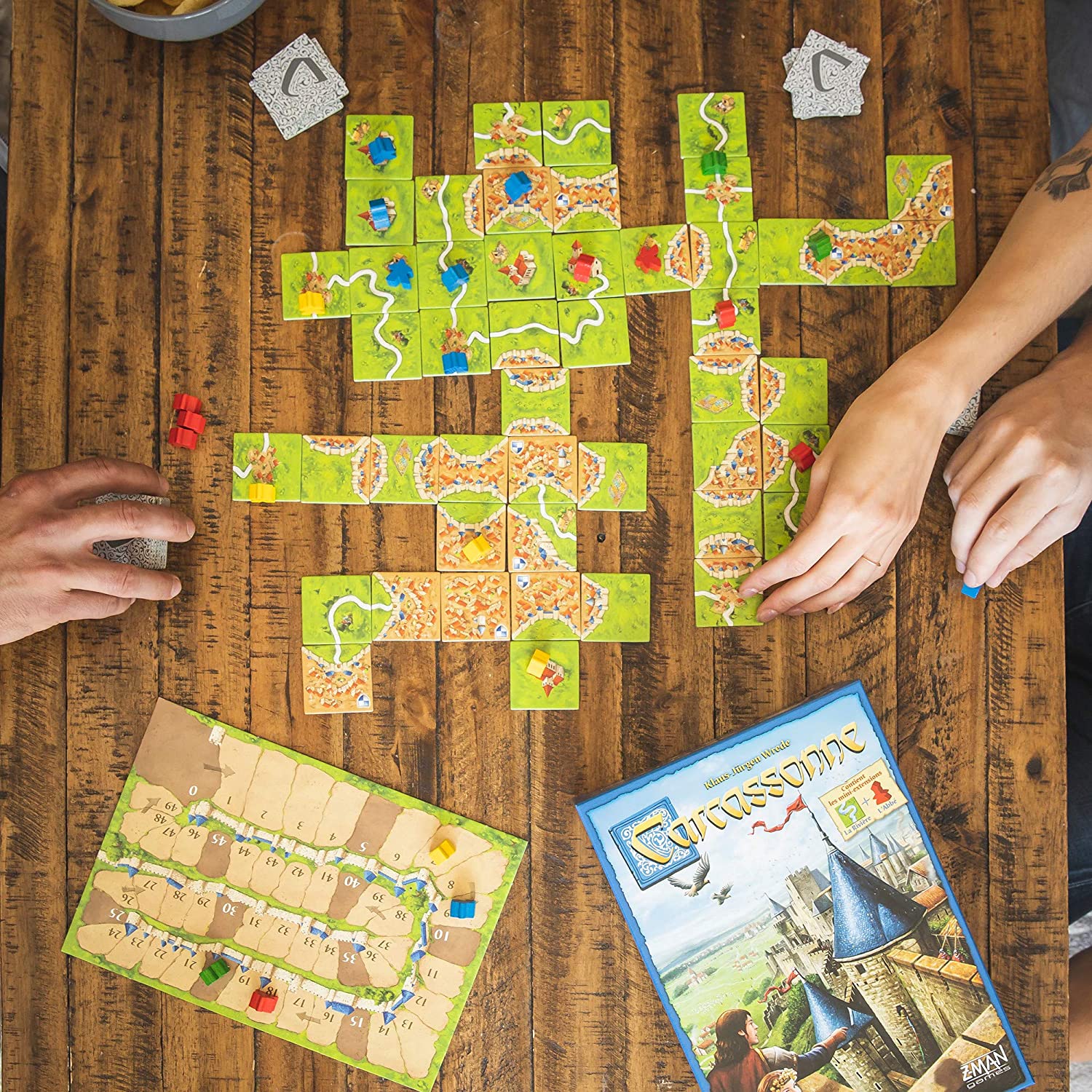
Our first solo stop is the tile-laying titan Carcassonne. For many of us it’s probably our favourite game. It balances the personal puzzle of placing pieces to build a pretty little tableau on the table. The added spice comes with the oppositional layer of competition in building the best things to gain the most points. Obviously the first half of that still works solo, but how does the game function without the opponents. How is the fiesty free-for-all of field fiefdoms when your friends forsake you?
Well, interestingly, the official solo rules – downloadable for free from Z Man Games – keep this element but turn it inside out; you are battling for balance. You take meeples of three different colours and play, effectively, as three different players. You use an abbot meeple to show which colour is active, and try to gather the most points for each – but your score at the end is based on whichever colour scores lowest. A similar approach to scoring as Reiner Knizia’s excellent Ingenious, this presents an unusual challenge; it’s not about just pushing ahead as much as you can in one area. Opportunities taken with blue may hinder you by further hindering your less well-developed score in red.
There are some other adjustments too; no farmers in fields, and you must claim a feature if one exists. This adds tension to the tile placement approach – no more dumping uninteresting tiles round the edges. It’s a slightly more cerebral change, and one that would normally contribute to the problem of analysis paralysis. The joy of solo is that time between turns is never a problem; take as long as you need in order to make the perfect choice! The added thinky-ness also replaces some of the missing interpersonal conflict.
Is it as good as the normal game? Very nearly. Some may even prefer it. If you want more of the same; there’s also Mists Over Carcassonne which has been built from the ground up for solo and co-operative play; fighting the ghost-filled mists flooding over the land.
Small World
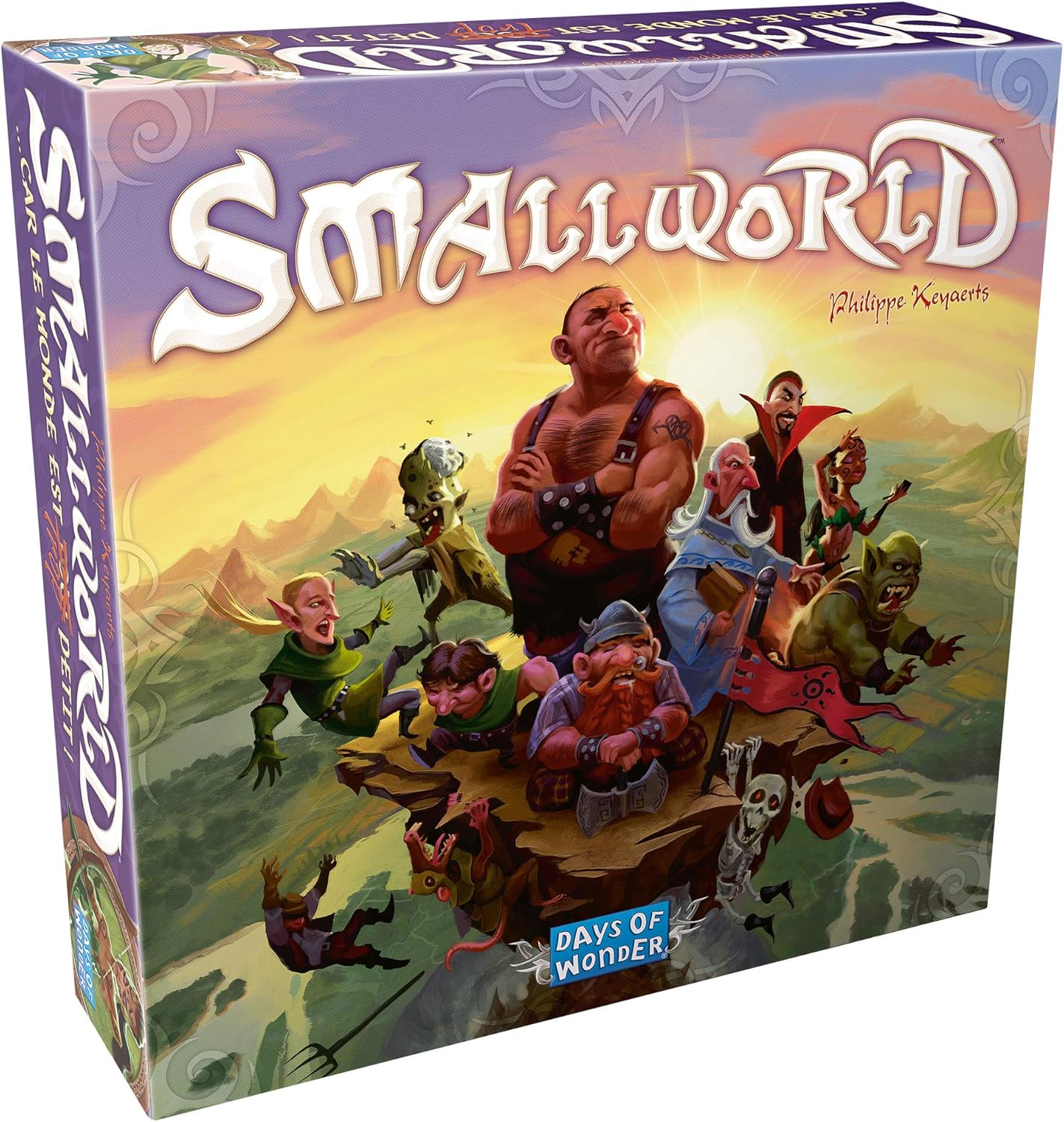
Small World is a well regarded game of tribal conquest and declining dominance. Present on many gamers improbably heaped Ikea shelves, its also indubitably a multi-person game. Players place tribespeople on areas, gaining points for holding and conquering. As turns pass, each tribe loses stamina, faltering and waning. Players must decided when to let each civilisation fade away, replacing it with the next Big Thing. The game models concepts of evolution and casually critiques colonialism, but without taking itself particularly seriously. Different races combine with special powers to meld unique characteristics, such as Forest Skeletons that gain points for occupying forested regions, and bring dead tokens back to life, or Merchant Rats, that have a million tokens and the double the point-earning ability.
Days of Wonder have released official solo rules for free on their website. In The Lost Tribes’ Crusade, you fight against a non-human opponent – The Lost Tribes. Simple but detailed rules govern the opponent’s decisions. Unlike you, the Lost Tribes never go into decline, remaining on the board as a constant menace, and the opponent rules are well-rafted to ensure that they will always strategically take the territory most annoying to you.
Build to work with Small World base game and both the Underground & River World expansions, its a surprisingly slick addition. In fact, it works so well that its hard to believe it wasn’t already part of the game. I’m not sure it quite holds up to satisfaction of crushing your friend’s tribes, but I do think its an excellent training mode for getting to grips with the oodles of potential combinations of races and special powers.
 Pandemic: Legacy
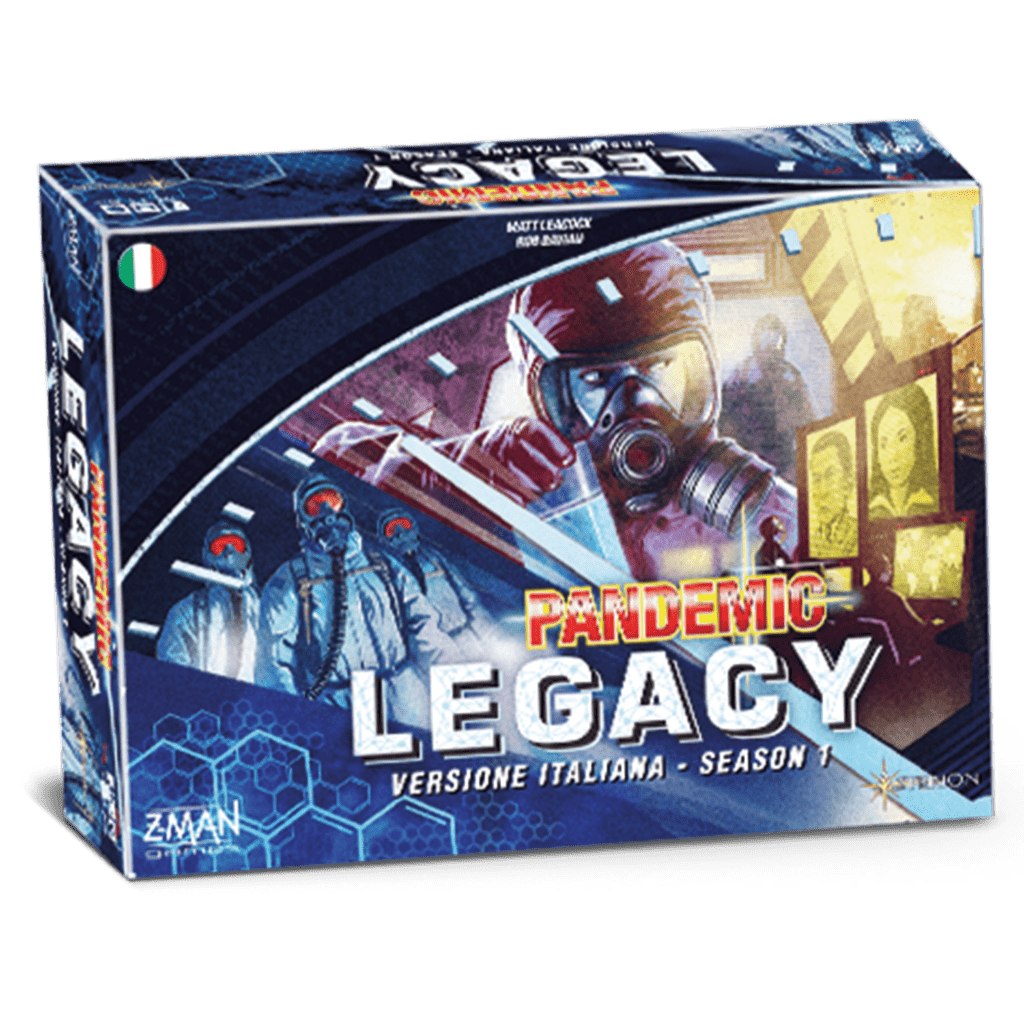
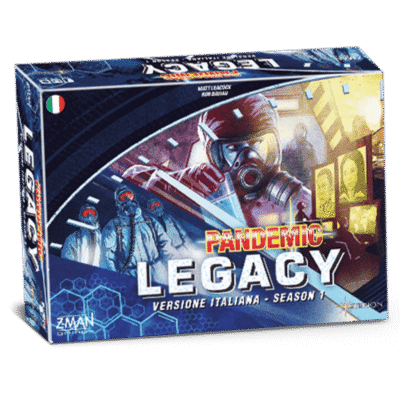
Look, there’s a massive problem with legacy games that none of us talk about. Getting five people round a table is challenging at the best of times. Doing it repeatedly, with the same people, for potentially twenty-four repeated plays of the same game? That’s basically entirely impossible. Not so with a solo attempt! The only co-ordinating you have to do is with yourself.
Not just that, but you can tackle four plays in one go, if you want? Pandemic is a cataclysmic co-operative game that is renowned for having a little bit of a “quarterback” problem; where one opinionated player tells everyone else what to do. Absolutely not a concern if the only player who needs ordering about is you!
Most reports recommend a solo player controlling three characters at once; two characters means that the scary events that Pandemic relies on come less frequently. Pandemic thrives in its tension; it loses something if you intentionally run it in “easy” mode.
Working through a campaign with your friends is fantastic, but doing it on your own sounds pretty attractive too. Unwrapping each of the surprise boxes and cards as you go through, all this exciting stuff, just for you? I envisage an involuntary Gollum-esque “my preeeccioussss!!!” hissing out when your friends notice the box on a shelf and ask if if they can play. Also, if the experience goes well? There’s three seasons of Pandemic Legacy released so far. You may never need to play with anyone else ever again!

A review written for Tabletop Gaming Magazine. Copyright and rights TTG Magazine 2022.