
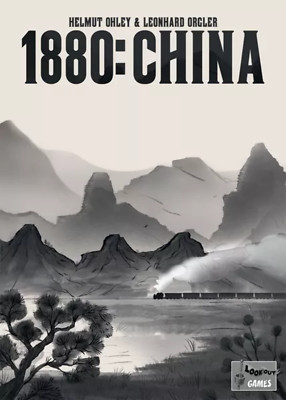
 Ah, Train games. Two short words, able to strike fear into the heart of the most seasoned gamer. And the summit of that terror mountain? Games beginning with two small numbers, “1” and “8”. For the uninitiated, “18xx” is the common name for a series of advanced train-adjacent board games, 1880:China being one of them. Sounds harmless enough, right? Be warned; you are entering the deep end of the cardboard swimming pool.
18xx games generally share four key characteristics: The players run Major Companies operating train networks, and buy and sell shares in those Companies. A game will last a minimum of four calculation-filled hours. And, finally, 18xx games are often cursed with rule books that resemble a Dewey Decimal catalogue more than something you’d use to have “fun”. 1880:China unashamedly fulfils each and every one of these criteria.
The game begins with players bidding to purchase Private Companies, before selecting Foreign Investors. The former provide potentially powerful impacts on your companies’ income, the latter with tactical advantages for the development of your rail systems. They represent just one of many crunchy decisions ahead of you, and provide an example of how unforgiving these games can be. Bidding too little on a Private Company, 4 minutes into the game, could make the next 4 hours fruitless.
Play now runs in a repeating cycle, in an order of Major Companies decided by their founding order and share price. Each player controls their various Companies and Investor, laying track, buying trains and paying out dividends. It is here 1880:China revels in its worst fault; the rule book. The 10,000+ word rule book that doesn’t have an index. Even now, I’m not exactly sure how dividends work in this game. It fails to make it clear whether leftover money goes into the bank or into company coffers; a confusion that dramatically changes the spending power of companies, or impoverishes them. For a multiple-hour economic simulation to have this many unclear rulings regarding money…? We were not impressed.
The funniest thing about this game is the paper currency. It’s split into denominations of 500¥, 100¥, 25¥, 5¥ and 1¥. Paying 49¥ to someone thus requires nine notes. Nine. In a game that already recommends using a spreadsheet in the setup instructions, making the algebra even harder is inadvertent comedy.
Now, if you already know and love 18xx, you aren’t afraid of the byzantine rules. You know when to sell shares and when to wait. You don’t mind that the paper money in the box is pointless; you are already using poker chips. For such players, 1880:China is a modern release of a mostly out-of-print curiosity
Given the price, it’s definitely not without its flaws – there are some unacceptable typos on Company cards, with more than one bearing the three letter abbreviation of the Wrong Major Company – but component quality is generally moderate-to-high.
The big difference to other 18xx titles is the fact that turn order doesn’t change after companies are founded, and the stock rounds are determined by player actions. Thus if trains are bought fast, and income is rising quickly, then Share Rounds come sooner. Compared to titles like 1830, this lends 1880 a more malleable element to the give-and-take of Company ownership. If you buy the last train of a set, the Share Round happens in your turn, giving you the element of surprise… except that everyone else already knows there’s a risk you might do that, so maybe you shouldn’t do it…?
PLAY IT? NO
Look, if you already love train games, sure, pick it up. But if you are new to the genre, there are better options, and if you want an economic, route-building game that doesn’t require an accountancy degree, go pick up Power Grid.
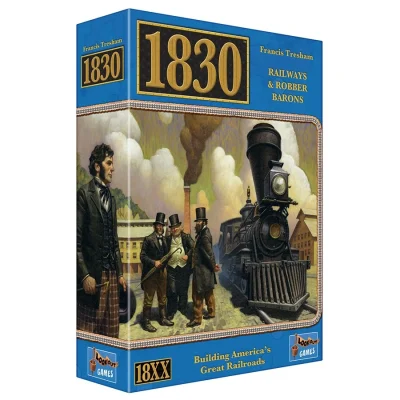 TRY THIS IF YOU LIKED 1830…
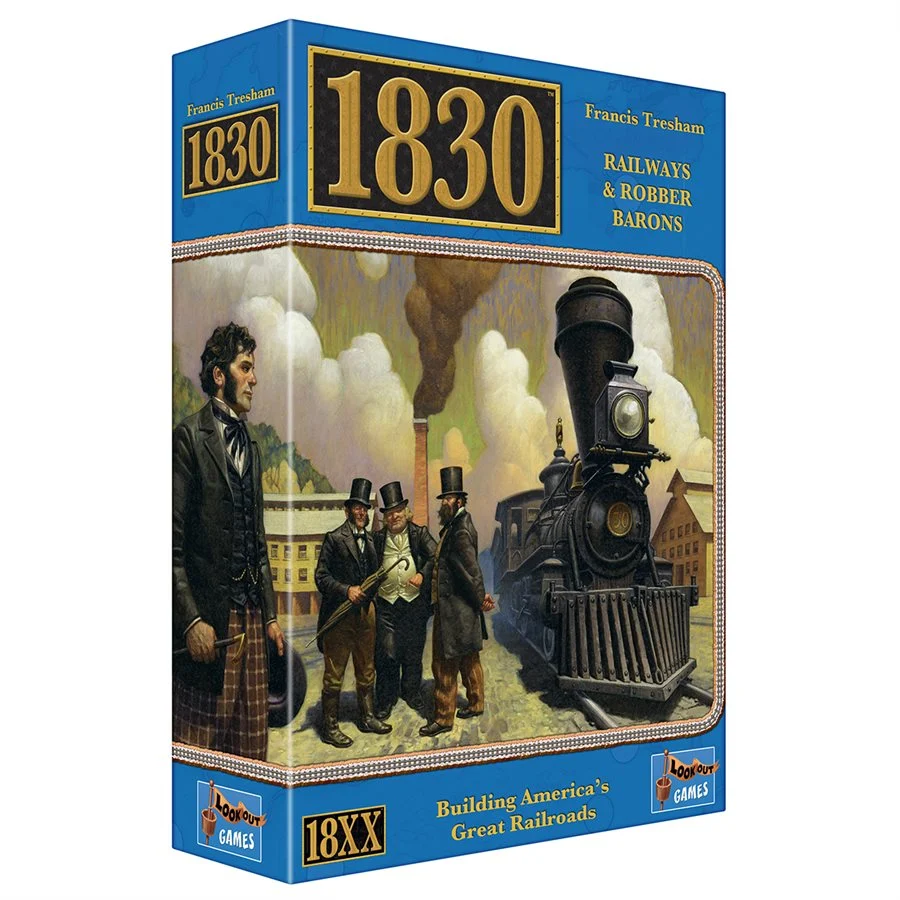
The alteration to turn orders and Stock Rounds heavily impacts one’s planning, and it’s always interesting to try similar ideas on a completely different map. Most other 18xx titles don’t feature the rise of Communism halfway through either!
| About 1880:China | |
|---|---|
| Designer | Helmut Ohley, Leonhard "Lonny" Orgler |
| Publisher | Lookout Games |
| Playcount | 1-4 Players |
| Age | 8+ |
| Price | £60 |
| Contents | 154 share certificates for Major Companies 54 train cards 8 Private Company cards 14 Capitalisation cards 60 building permits 7 numbered cards 0-6 Denominations of paper money worth 37860¥ 84 markers for Major Companies 7 station markers for Foreign Investors 2 wooden train markers 7 company charters for Foreign investors 14 company charters for Major Companies 179 track tiles 1 share price chart 1 trains and building permit board 1 income table 1 game board |
| Rating | No |
A review written for Tabletop Gaming Magazine. Magazine page copyright to TTG Magazine 2022.